
Ferraris, Keanu Reeves, and getting an extra chicken McNugget in your order – some things are just undisputedly cool. They were cool back then, and they’re still cool now. However, some cars were bullied back in high school and are now considered attractive and successful.
Every so often, a vehicle that once elicited groans, rolled eyes, or sheer indifference stages a comeback so dramatic it could be a Hollywood movie montage (cue the wrench-turning and gratuitous synth music). The cars you’ll see here aren’t just glow-ups. They’re full-on automotive redemptions, pulling themselves out of the bargain bin of history to claim their rightful place as cult classics or, in some bewildering cases, cultural icons.
How We Picked These Misunderstood Machines
To pick these rides, we asked a simple question: Which cars went from cringe (before that word was in our vocabulary) to kind of cool? We’re talking about the vehicles you used to ignore at the dealership, but now you’re double-tapping on Instagram or giving a knowing nod at a car meet.
Some of these rides bombed harder than a lead balloon at launch. Some were just too dang weird for their time, like a concept car that escaped the design studio before it was ready for the public. Others were victims of marketing misfires, abysmally timed efforts, or perhaps just being a little too far ahead of the curve. But every single one of them has managed to shed its former shame, earning a second (or third, or fourth) look, whether through pop culture resurrection, the internet’s bizarre cult followings, or sheer, unadulterated nostalgic magic.
You might not like every car mentioned here, but you probably have noticed the public’s general feelings shifting faster than a car about to redline on the highway.
Pontiac Aztek

This is the car that launched a thousand memes and probably just as many therapy sessions for Pontiac designers. When it debuted in 2000, critics and consumers alike lambasted its confused identity. Part SUV, part minivan, part moon rover, and all awkward. Its chunky gray plastic cladding, lumpy proportions, and bizarre rear end were the punchline to every automotive joke for a solid decade. GM designer Tom Peters, who later penned the C7 Corvette, even had to wear this scarlet letter for a while.
But then, Walter White rolled onto the screen in Breaking Bad, and everything changed. The Aztek was resurrected, not as a design marvel, but as an antihero’s humble, beaten-down chariot. Ironically, its very awkwardness that once had car guys grimacing became its charm.
Today, enthusiasts appreciate it as a symbol of audacious design that genuinely tried something weird, even if it didn’t quite stick the landing. With available VersaTrak AWD and a genuinely useful pull-out cooler and tent accessory, it’s now “ugly-cool,” the automotive equivalent of dad shoes. And that, surprisingly, is its strength.
Ford Pinto

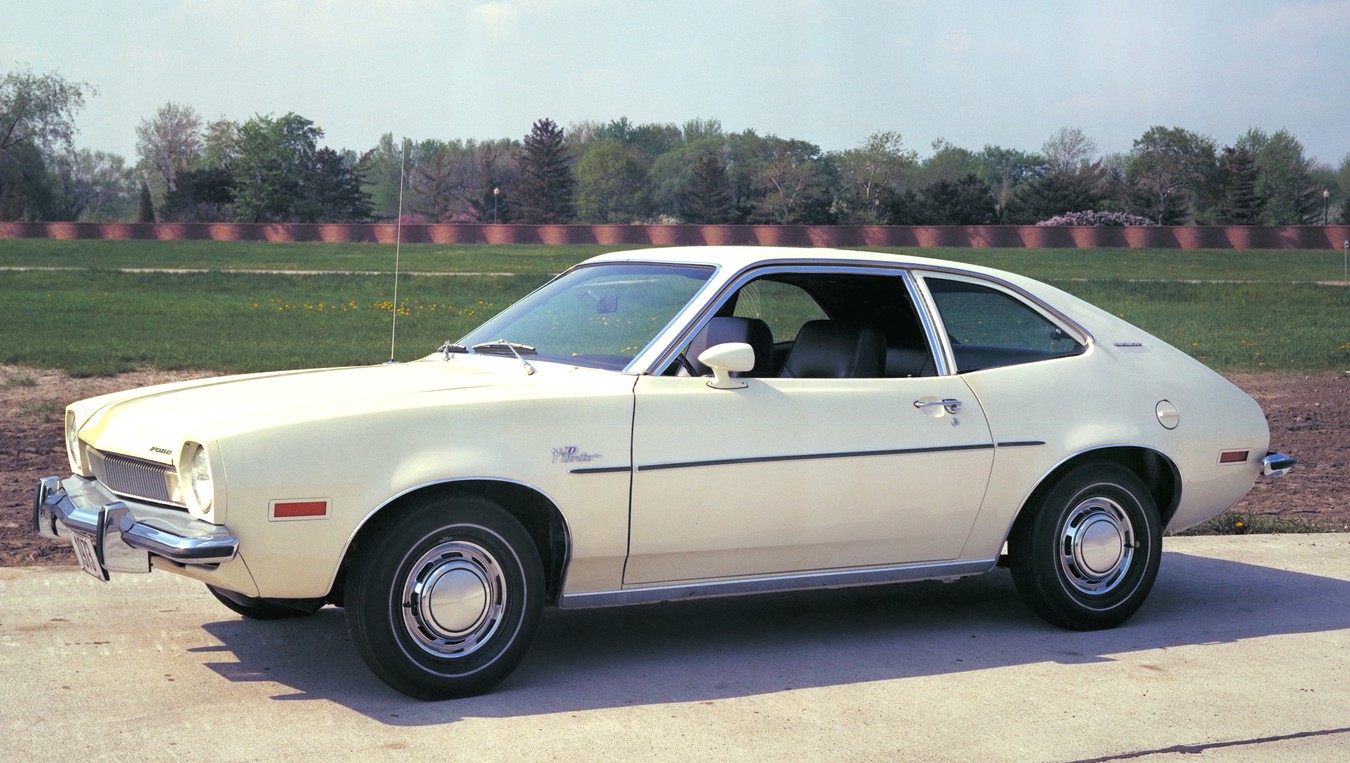
Let’s be real: the Ford Pinto’s reputation was literally explosive. Launched in 1971, this compact commuter became infamous for its rear-mounted fuel tank, which was prone to rupture and burst into flames during rear-end collisions. It became a textbook case study in corporate negligence, complete with the infamous “Pinto Memo” detailing Ford’s cost-benefit analysis of human lives versus recall expenses.
But years later, the Pinto is seeing a bizarre renaissance. Restorers are giving it the full retro treatment — fresh paint, subtly modded engines (perhaps a healthy 2.3L turbo from a later Ford), and its original 70s flair intact. It’s transformed from a cautionary tale into a truly unique conversation piece. And frankly, it was never a bad-looking car; it was just badly executed where it mattered most.
Nostalgia has softened its fiery image, and younger collectors are now embracing Pintos as quirky time capsules of disco-era Americana, ideally with an aftermarket fuel cell.
Chevrolet SSR
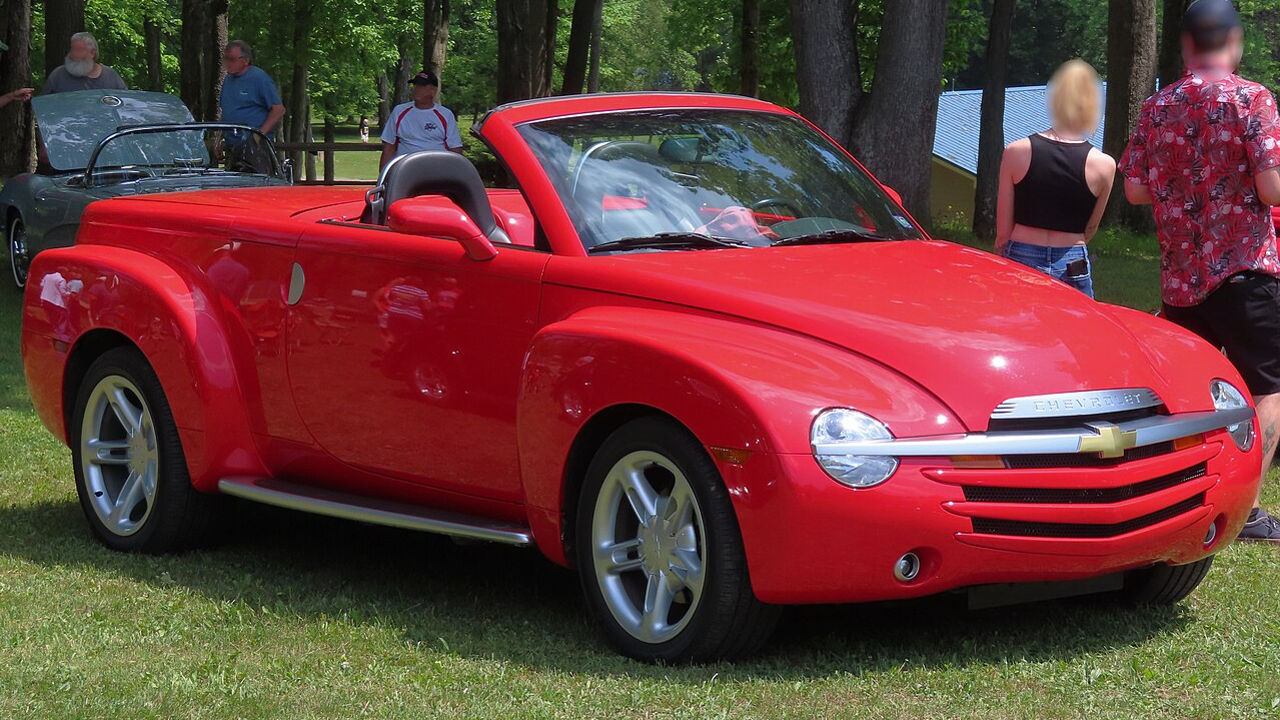
The Chevrolet SSR tried to be a convertible, a pickup, and a retro hot rod all at once. ““My vision was to create a modern interpretation of the early 1950s classic pickup that has become the quintessential choice for street-rod custom trucks. I believed there was an opportunity to build upon that legacy in a new way,” former GM Design VP Wayne Cherry said back then.
For that bold attempt, it was mocked mercilessly upon its 2003 debut. Critics couldn’t categorize it and consumers didn’t know what to do with it, leading to low production numbers of just 24,000 units. But fast forward to today, and the SSR’s bizarre blend of form and function has earned it genuine cult status.
With its rumbling 5.3L V8 (initially 300 hp), later upgraded to a proper 390 hp 6.0L LS2 V8 with an available manual transmission, and undeniably unique retractable hardtop shape, it’s now seen as one of GM’s most audacious oddballs. They genuinely don’t make them like this anymore, and perhaps that’s precisely why we’re finally appreciating its sheer, unadulterated absurdity. It’s a pickup for people who want to have fun while getting stuff done.
Subaru BRAT

The Subaru BRAT (Bi-drive Recreational All-terrain Transporter) was always a peculiar vehicle — an El Camino-style trucklet with actual, federally mandated jump seats in the bed. Originally designed from 1978 to 1987 in the US to evade the infamous “chicken tax” (a 25% tariff on light trucks), it was inexpensive, cheerful, and largely overlooked by the mainstream.
Now? It’s a collector’s darling. Those bed seats? Absolutely iconic (and terrifyingly unbelted). That boxy charm? Peak retro. Gen Z and millennials can’t get enough of its unapologetic quirkiness, and BRATs in decent shape now fetch real money. From loophole-built oddity with selectable 4WD to a rad symbol of defiant design, it’s earned its cult crown. Even former President Ronald Reagan owned one at his ranch, giving the BRAT an odd but undeniable brush with historical fame.
Pull up to a Cars and Coffee in one today, and don’t be surprised if a crowd gathers, half curious, half jealous, all thinking about those questionable rear seats — and how fun it would be to ride in one.
Plymouth Prowler

When the Plymouth Prowler was launched in 1997, it resembled a concept car that had snuck past designers and crept onto the lot. Its audacious hot rod styling was undeniably cool, but it was paired with an underwhelming 3.5L SOHC V6 (initially 214 hp, later 253 hp) and a mandatory 4-speed automatic transmission. Purists scoffed, demanding a V8 and a manual, so only around 11,700 units were ever built.
But decades later, its bold, anachronistic design has aged remarkably well. Prowlers are now seen as brave, beautiful misfits that dared to buck trends — and offer a fun drive in the sun. Enthusiasts are reappraising it not for what it lacked, but for its sheer, undeniable visual presence and its lightweight aluminum chassis. It’s the kind of car people either didn’t get, or still don’t, but that hasn’t stopped it from gaining significant street cred at classic car shows.
It quietly became a sought-after collectible that screams Y2K in the best, most chrome-laden way possible.
AMC Gremlin

No list of automotive oddballs is complete without the AMC Gremlin. Back in 1970, it was American Motors Corporation’s (AMC) budget-friendly, hastily designed solution to the oil crisis — essentially a chopped Hornet platform with a long hood and a dramatically truncated tail. It was universally mocked for its bizarre proportions and often came in eye-watering colors that resembled kitchen appliances from the era.
But today? That kitsch is precisely its key appeal. Gremlins have transformed into lovable, rebellious relics of a bygone, unfiltered design era. When it was released, AMC Design Chief Teague told MotorTrend, “I don’t think the Gremlin’s going to win any styling awards. But at least the car has personality and character, and it has a different-looking little image. It’s not just another little, funny-looking sedan. It’s a cute little wagon that looks like it’ll do the job that we intend for it to do.”
People didn’t seem to get it back then, but now the car community sees the vision. Plus, they’re genuinely rare now, and rarity, as any collector knows, breeds cool. It’s the kind of car that spins heads, not out of derision, but out of sheer, appreciative curiosity.
Chrysler PT Cruiser
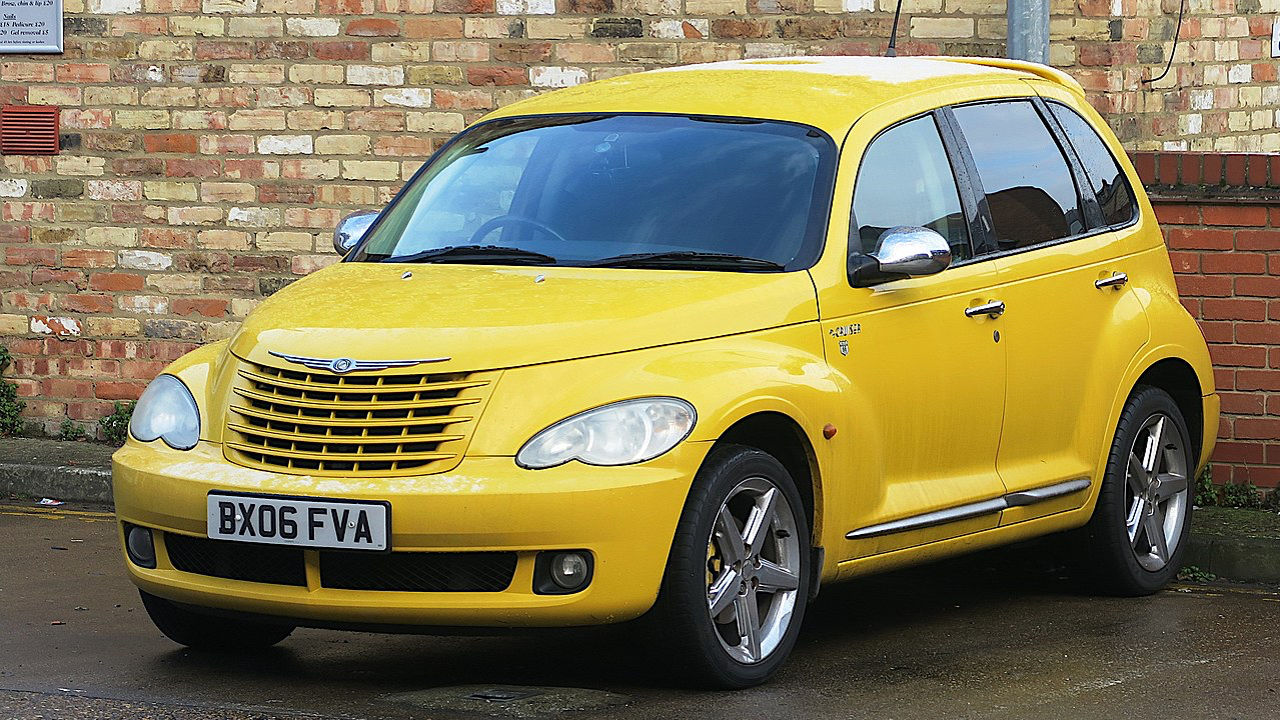
The Chrysler PT Cruiser burst onto the scene in 2000 with its distinctive gangster-era styling, actually winning MotorTrend Car of the Year. Then, almost immediately, it plummeted into becoming the punchline of every Reddit joke. You can easily find countless pictureless, anonymous haters ranting about the PT Cruiser’s “ugly” design.
But here’s the undeniable truth: time has a way of softening even the most vehement hate. Its undeniable utility (especially for its size), massive customizability potential, and sheer retro-futuristic weirdness have earned it a dedicated following. There’s a surprisingly vibrant modding community, and yes, a few brave souls are even LS-swapping these bad boys for truly terrifying results. It’s gone from suburban PTA mom ride to ironic cult cruiser, a car that’s so uncool it’s become undeniably cool again.
Toyota Previa

The Toyota Previa was always too cool for its own good. Produced from 1990 to 1997 in the US, this spaceship-shaped minivan featured a genuinely unique mid-engine layout (with the engine positioned under the front seats), available AWD (All-Trac), and an optional supercharger that boosted its 2.4L I4 engine to 160 hp. It was incredibly over-engineered for a minivan, never quite getting the love it deserved in its heyday. Americans didn’t know what to make of its space-age styling and unconventional mechanicals.
That has changed today. Now, it’s the darling of car nerds everywhere. Previa owners brag about their van’s tank-like longevity, incredible quirk factor, and yes, even its surprising handling. With the JDM crowd giving it props and import culture re-evaluating its credentials, the Previa is the stealth legend of the people mover world. Its panoramic roof was decades ahead of its time; it was as if Toyota had accidentally created a concept car and forgotten to tell anyone it was production-ready. Today, a clean Previa doesn’t just haul kids; it hauls serious respect at tuner meets and retro expos alike.
Cadillac Cimarron

Once considered the poster child for badge-engineering gone catastrophically wrong, the Cadillac Cimarron (produced 1982-1988) was basically a Chevy Cavalier in an ill-fitting tuxedo. Critics and consumers alike felt utterly deceived, and Cadillac’s once-sterling reputation suffered a significant blow.
But a curious phenomenon has taken hold: people now actively collect them, whether ironically or not. There’s a certain charm in its sheer audacity, and its rarity (due to predictably low sales) only boosts its “so bad it’s good” status. In the right circles, showing up in a Cimarron is the ultimate ironic flex — a strange, knowing, inside-joke kind of automotive statement. It’s a beige flag of a car that’s now a knowing wink to automotive absurdity.
Suzuki X-90
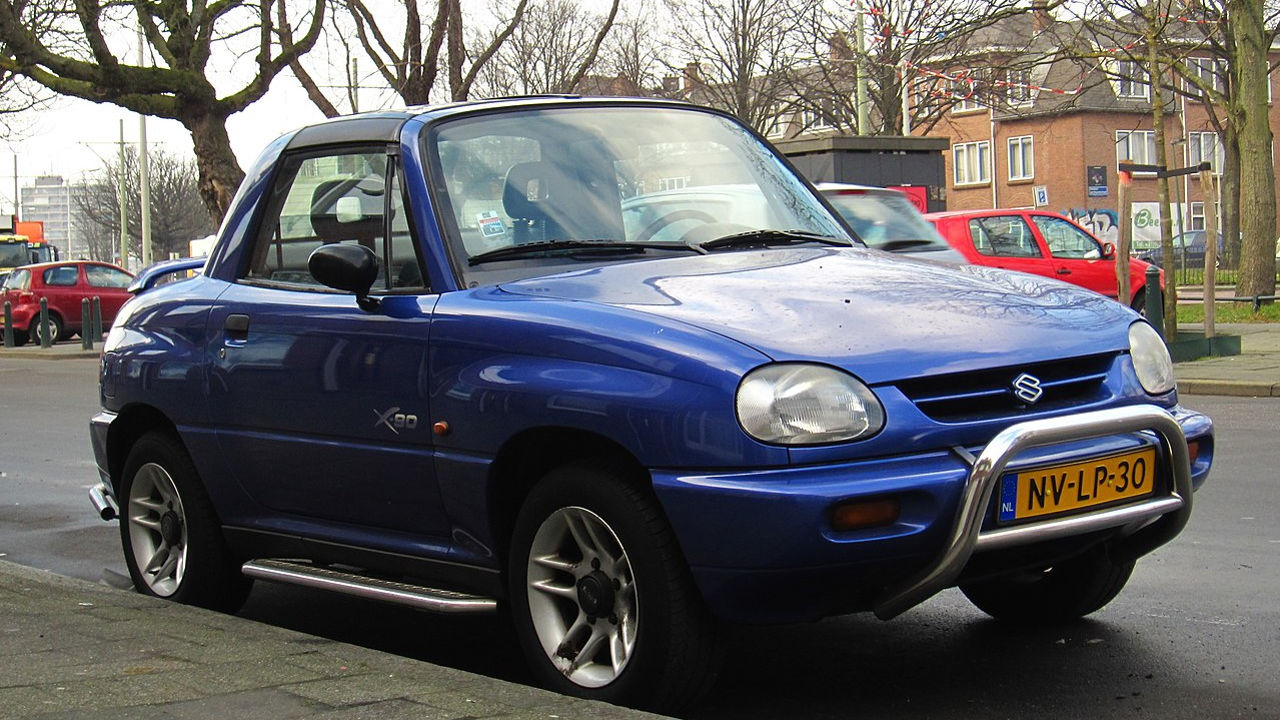
The Suzuki X-90 (produced from 1995 to 1997) was a truly baffling concoction: a two-seater, T-top convertible SUV-coupe hybrid that confused buyers so thoroughly it was swiftly discontinued. Suzuki urged drivers to “get out of their box,” tempting them with a 4×4 that was more bubbly than boxy than its contemporaries. “Not your normal, boring kind of car,” Suzuki said in one ad. Unfortunately, it had maybe rolled a bit too far out of the box and into “what do we do with this” territory.
But today, it’s an adorable oddity. With its distinctly round face and chunky body, it looks like a Hot Wheels concept car that somehow escaped the toy aisle. Off-roading enthusiasts appreciate its surprisingly capable 4WD setup (borrowed from the Vitara), and retro fans adore how utterly, unapologetically weird it is. It’s gone from “what were they thinking?” to “why don’t they make fun, ridiculous stuff like this anymore?”
These days, an X-90 at a Radwood event garners more attention than a fleet of German exotics. It’s proof that quirk, when preserved and appreciated, turns into genuine charm.
Mitsubishi Eclipse (2G)

Early Mitsubishi Eclipses were sporty but often overshadowed by more established rivals. Then came Fast & Furious in 2001, and suddenly, every high schooler with a paper route wanted lime green underglow and a turbo spool. The second-generation Eclipse (1995-1999), specifically Brian O’Conner’s neon green ride in the original film, exploded in value and desirability. It probably inspired a lot of illegal street races and questionable builds after seeing that neon green, massive winged Eclipse use NOS to race by competitors.
Even with a questionable reputation for head gasket issues on early turbo models as well as the issue of a crankwalk, the tuner crowd embraced its 4G63 turbo engine and DSM platform (shared with the Eagle Talon and Plymouth Laser), propelling it to undisputed icon status. It’s a vivid reminder of the early 2000s tuner dream: speed, stickers, and questionable engine reliability. Owning one is like holding onto your late-night PlayStation 2 memories. Yes, Mom, I’m asleep!
Yugo GV

The Yugo GV, imported to the U.S. from 1985 to 1992, was once universally lambasted as the worst car in America. Manufactured in Yugoslavia by Zastava and based on the outdated Fiat 127, it was notoriously inexpensive ($3,990 new), slow (powered by an underpowered 1.1L I4), and barely held together. But that’s precisely why it’s found posthumous affection among a particular crowd.
It represents a specific, bizarre moment in Cold War history, when you could literally buy a communist-built car at K-Mart. Collectors now actively seek them out for sheer novelty and a perverse sense of nostalgia. It’s the automotive equivalent of an Ed Wood film: so utterly, gloriously bad, it’s undeniably fascinating. In an ironic twist, pristine Yugos are now harder to find than a ’65 Mustang. And when you do, it’s not just a car; it’s an immediate conversation starter at every gas station, guaranteeing puzzled looks and knowing nods.
From Punchlines to Parking Lot Legends

In the grand, often bewildering scheme of automotive history, it’s not always the sleekest, fastest, or most technologically advanced cars that leave the most lasting impression. More often, it’s the ones with the wildest stories. The underdogs. The misunderstood misfits. The cars on this list remind us that actual cultural value isn’t always born in the showroom with glowing reviews; it’s earned over time, in greasy parking lots, on Reddit threads, and yes, sometimes in the gritty glow of a cult Netflix binge or a tuner meet behind a Denny’s.
What defines a car as “cool” isn’t always raw performance specs or stellar resale value. Sometimes, it’s pure, unadulterated audacity. Sometimes, it’s a potent hit of nostalgia for a simpler, weirder time. And sometimes, it’s just surviving long enough for the world to catch up to its unique charm, finally.
So next time you scoff at a weird little wedge in traffic or a boxy beast from 1998, take a moment. Remember: today’s automotive embarrassment might be tomorrow’s iconic collectible. Or, at the very least, a $12,000 Radwood flex that gets more attention than a Porsche.