The automotive world moves so fast that some incredible cars seem to slip through the cracks. Whether overshadowed by louder rivals, hampered by poor marketing, or simply too far ahead of their time, many of these machines never got the spotlight they deserved.
Make no mistake, none of these cars deserve to be forgotten. Some were engineering marvels, others were performance beasts, and the rest were just misunderstood. Here’s a look back at some truly awesome cars that time and the public mostly forgot.
Picking The Forgotten
This article is based on my personal opinion, focusing on cars that left a lasting impression on me despite being largely absent from mainstream conversation.
All facts, figures, and specs come from manufacturers and reputable sources outlets, like MotorTrend, Car and Driver, Parkers, Evo, and Road & Track.
Volvo 480 Turbo

Wedge-shaped cars seemed to be all the rage in the ’70s and ’80s. Volvo arrived fashionably late with the 480 in 1986. It was Volvo’s first-ever front-wheel-drive car, featuring a transverse-mounted four-cylinder engine under its hood and ultra-cool pop-up headlights.
But with so many different hot hatches to choose from in the late ‘80s, the Volvo 480 couldn’t match up to the competition and quickly faded into obscurity.
Alfa Romeo SZ

The Alfa Romeo SZ will forever be one of the most jaw-dropping classic Italian sports cars ever made. Designed by coachbuilder Zagato and hand-built in Milan, the striking SZ made a significant impact in the late 1980s.
But with just around 1,000 examples built, according to Stellantis Heritage, and an appearance not quite to everyone’s taste, the SZ remains a cult icon among true Alfisti.
BMW Z1
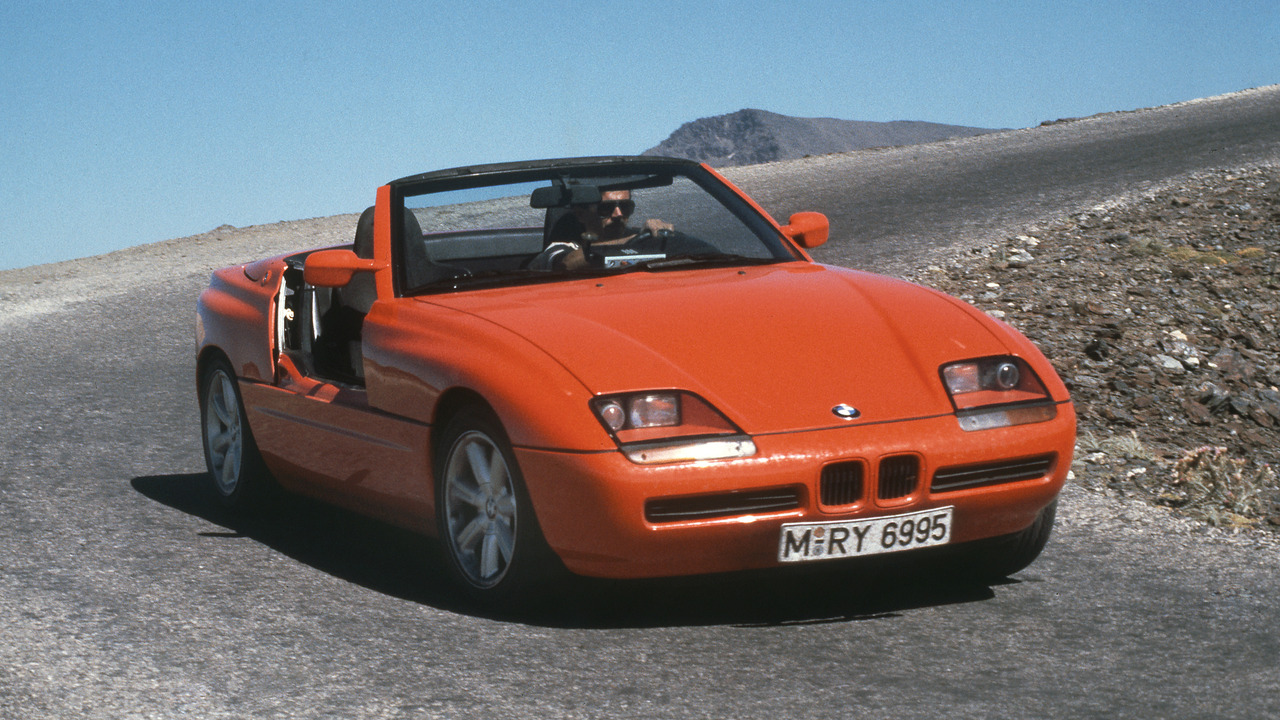
In 1989, BMW showcased its first Z car, the Z1. In traditional cabrio sports car fashion, it was rear-wheel drive, had a manual transmission, and featured a retractable canvas roof. But that’s about where conventional ends for the Z1.
Its standout features were its vertical sliding doors that vanished into its body, and body panels that could be swapped for a different color. BMW only made 8,000 examples of the Z1, so the chances of spotting one of these pretty BMWs in the wild are rather slim.
Mitsubishi Pajero Mini

According to MotorTrend, kei cars are “the smallest street-legal passenger cars, vans, and trucks that you can buy in Japan.” In my opinion, everyone loves Kei cars. But because they were only sold in Japan, many often forget they exist.
The Pajero Mini is essentially a bite-sized version of the Mitsubishi Pajero. But don’t let its cutesy appearance fool you, it’s just as capable as the full-size variant with a driveline that allows you to choose between two- and four-wheel drive and other off-road goodies.
Alfa Romeo 145 Quadrigoflio

Even as an Alfa Romeo fanboy, I am ashamed to admit I almost forgot about the 145 Cloverleaf’s existence. According to Parkers, the 145 Cloverleaf takes 8 seconds to go from 0 to 60 mph.
Albeit no match to modern-day hot hatches, the 145 stood out due to its flamboyant design (those were different times). It’s a shame the 145 was overshadowed by the army of other fun-to-drive cars from the ‘90s.
Suzuki X-90
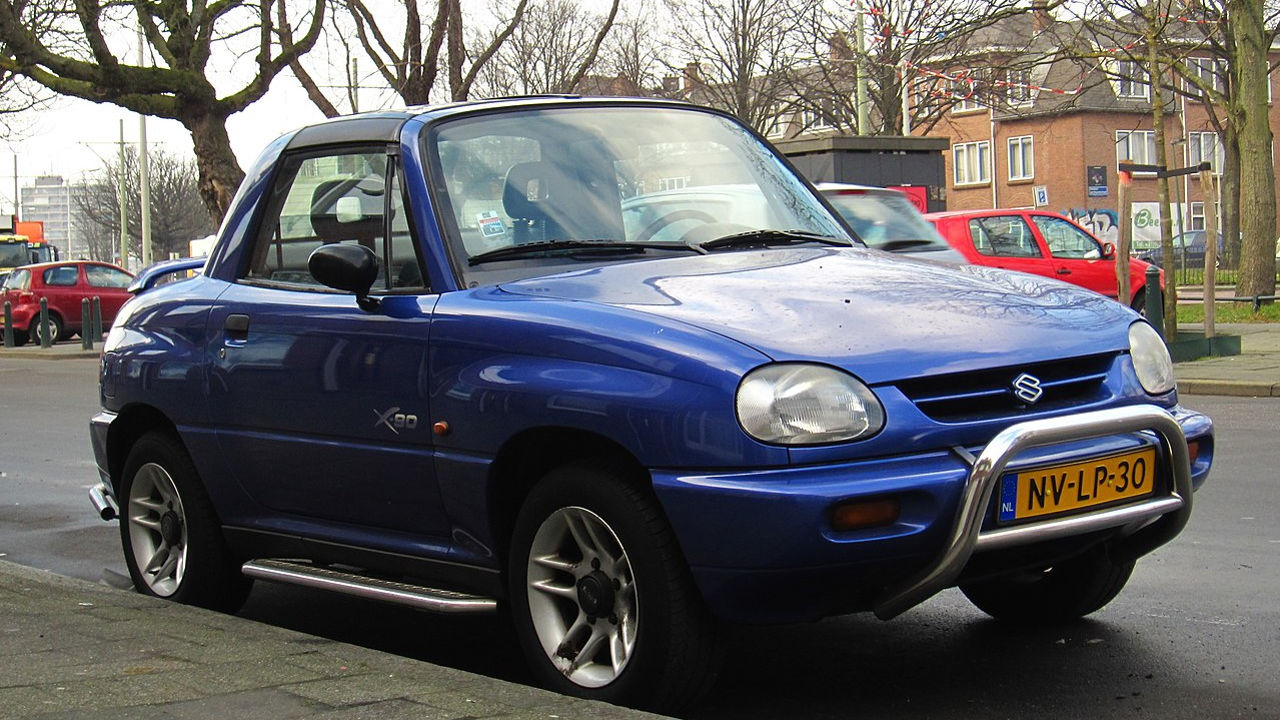
Suzuki called the X-90 “the world’s first two-seater SUV coupe.” If you were to ask me, I’d say the X-90 wasn’t a smash hit with the crowd because of its conflicted target audience.
On the one hand, it’s an off-road-capable SUV with a proper four-wheel-drive system and low-range gearing. On the other hand, it looks like a cute little gerbil, something not every cross-country enthusiast would associate with ruggedness. That said, it’s still an awesome piece of machinery.
Isuzu VehiCross
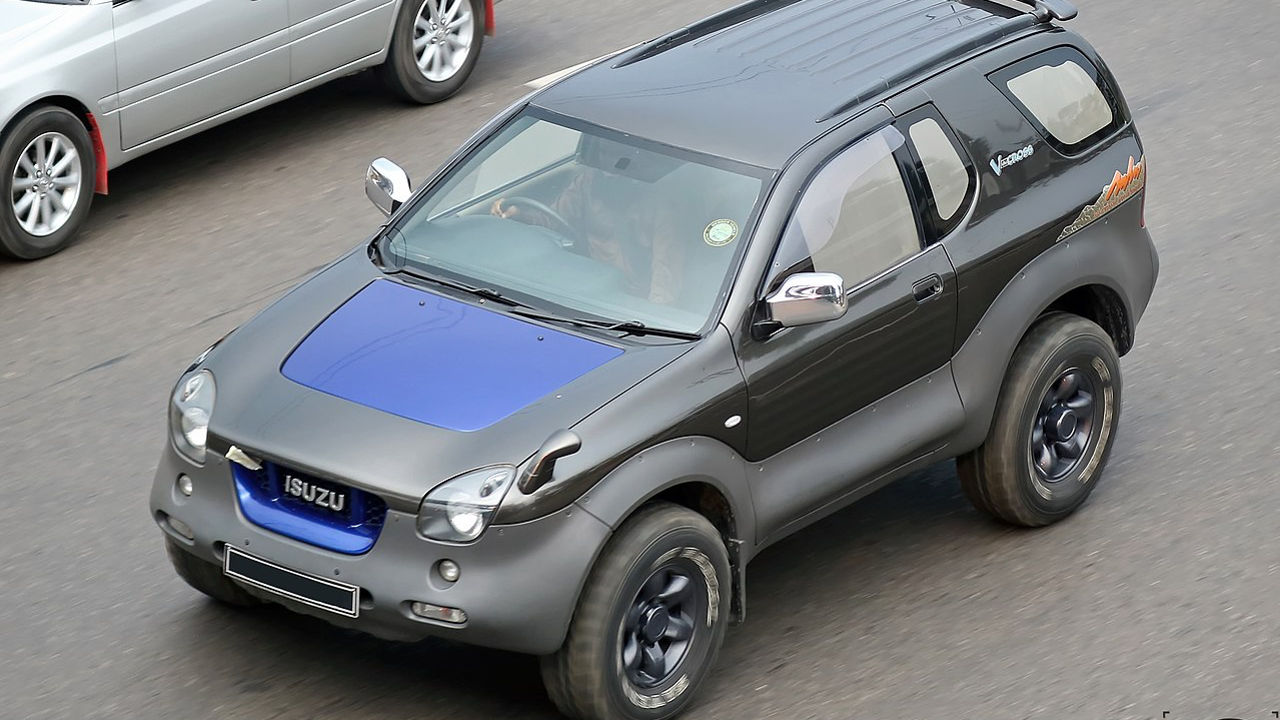
Usually, the quirkier the car, the more people talk about it. But after more than 25 years, no one seems to drool over the Isuzu VehiCross like they once did.
According to MotorTrend, Isuzu called the VehiCross “the sport/ute equivalent of a cross-trainer shoe.” I couldn’t have said it better myself. Its utilitarian design and host of purposeful drivetrain upgrades make the VehiCross one of the best vehicles for exploration.
Qvale Mangusta

Qvale was a short-lived Italian carmaker that produced only one car model, the Mangusta. According to Car and Driver, the Mangusta features the same V8 found in the Ford SVT Mustang Cobra.
Its body was made from three layers of molded resin, and its eye-catching design was the work of Marcello Gandini, the man who also sketched the Alfa Romeo Montreal, Lamborghini Countach, and Fiat X1/9. However, with an MSRP of $84,200, more affordable and well-known alternatives were available at the time.
Renault Avantime

Here’s a riddle for you: What luxury car has two pillarless doors, a V6 engine, a manual transmission, and a top speed around 137 mph (220 km/h) (often quoted as up to 140 mph in some period sources)? Behold one of the world’s most obscure minivans, the Renault Avantime.
The design project manager, Thierry Metroz, said he “wanted someone walking around the car to be continually astonished.” I think it’s safe to say his mission was a success, making the Avantime a future classic.
Alfa Romeo 156 GTA Sportwagon

The Alfa Romeo 156 GTA sedan is an awesome car that some gearheads still rave about, but the estate version thereof, the 156 GTA Sportwagon, is very rarely spoken about.
Under its hood sat an exquisite 3.2-liter V6 to complement its stunning Walter de Silva design. However, there was one thing that caused some controversy among enthusiasts, the front-wheel drive.
Infiniti M45 (Second-Generation)
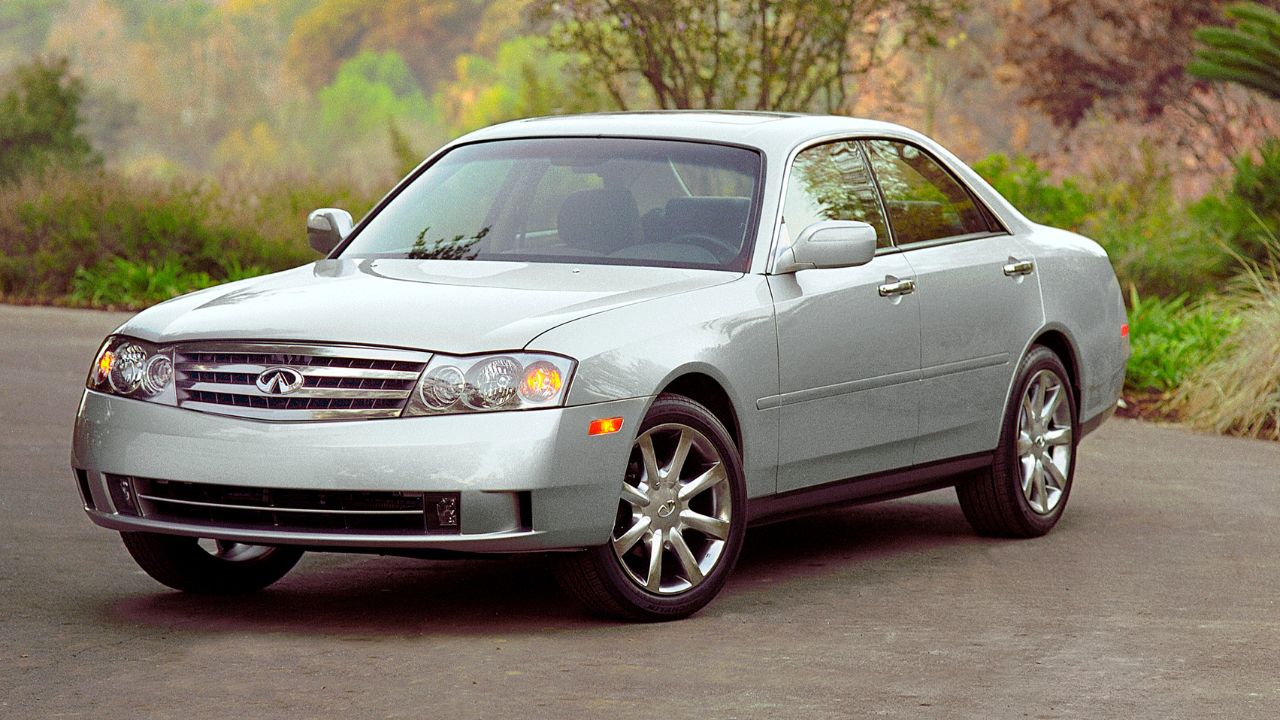
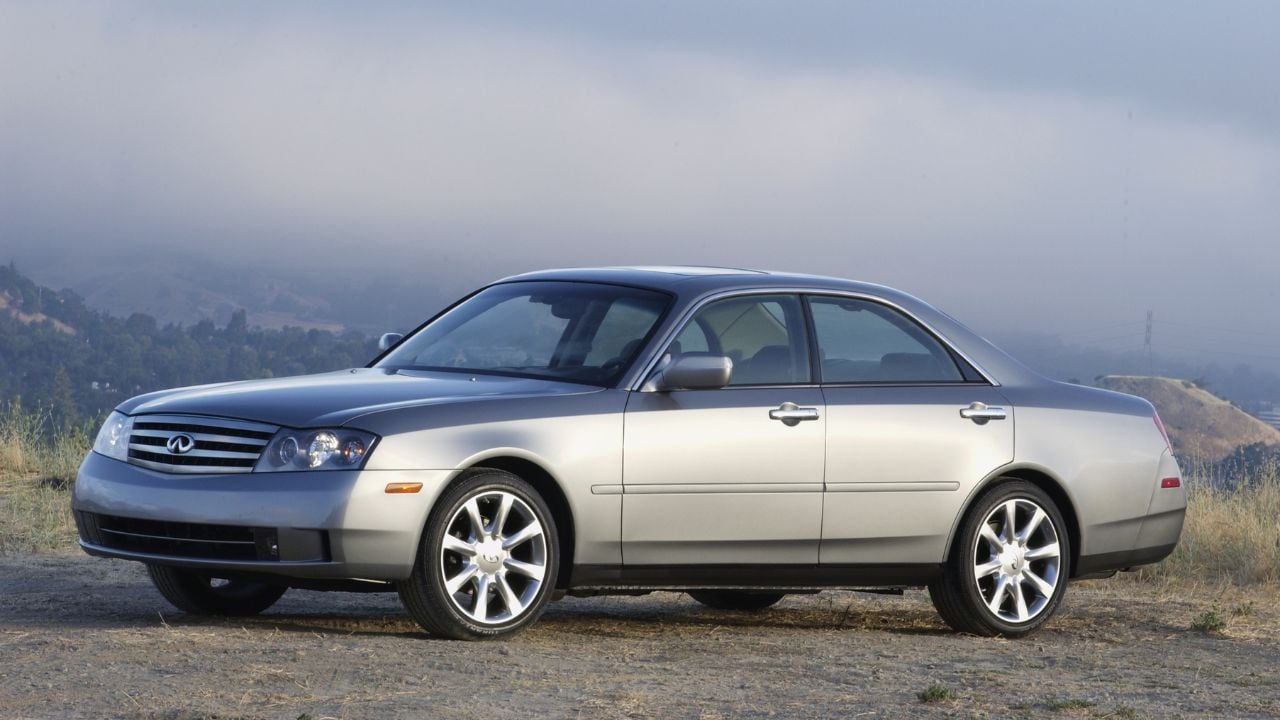
To the average onlooker, the Infiniti M45 wouldn’t get more attention than any other Japanese sedan. That’s exactly what makes the M45 one of the best sleepers of all time.
Hiding beneath its handsome, yet not-so-striking body is a 4.5-liter V8 engine producing 340 hp and 333 lb-ft of torque. But on the inside, it remains a luxury car at heart, with “Sojourner” leather seats that are heated and cooled, wood trim, and a Bose sound system.
Lexus IS 300 SportCross
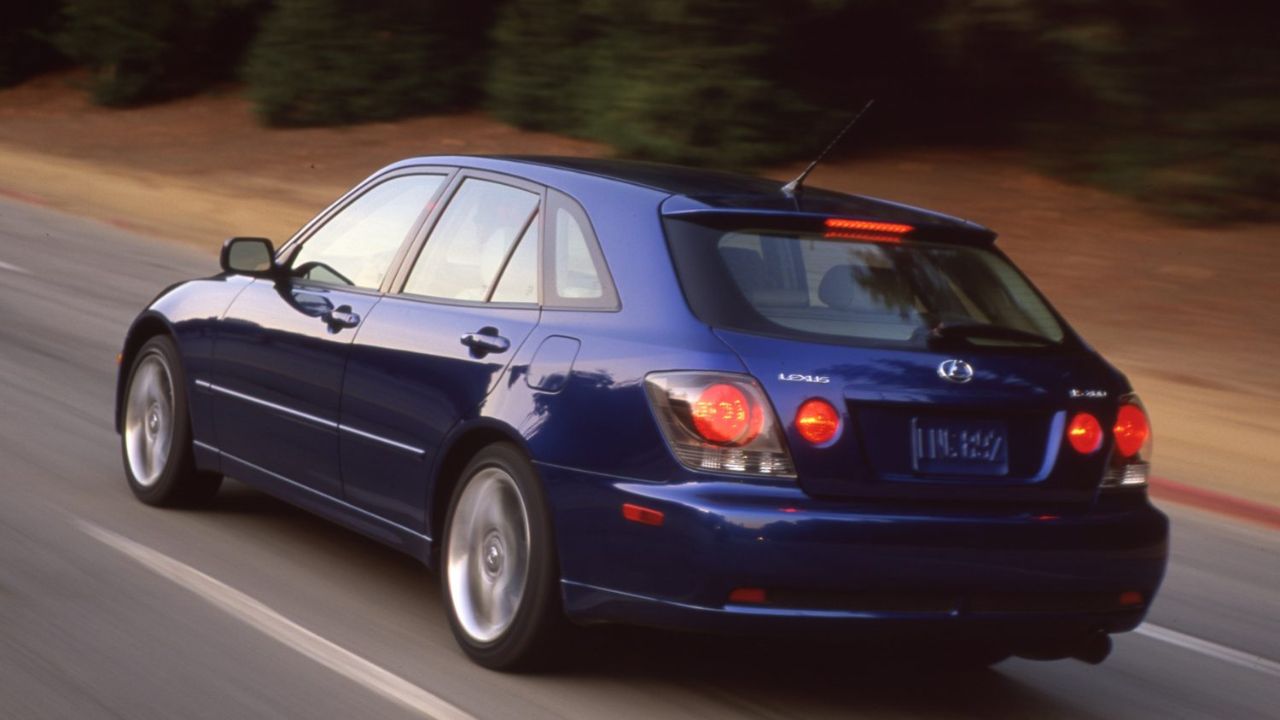
I recall Doug DeMuro making a video of the Lexus IS 300 SportCross a few years back. Needless to say, I was gobsmacked to find out it had the same engine found in the Mark IV Toyota Supra, the reliable 2JZ.
Despite being the lesser sought-after version of the 2JZ, the naturally aspirated 2JZ-GE, it doesn’t take away from the novelty of having a mundane-looking, rear-wheel-drive Japanese station wagon with the same engine as a Toyota Supra. The only thing that hindered the IS 300 SportCross from becoming an instant icon is that it didn’t come with a manual transmission, just a 5-speed automatic.
Daihatsu Copen (First Gen)

Welcome to the second kei car of the article, the Daihatsu Copen, and it’s probably the closest thing you’ll find to a road-legal toy car. Car and Driver managed to crawl from 0 to 60 mph in around 11-12 seconds. But that doesn’t matter.
Its roof went down, it had a stickshift transmission, and it was the perfect alternative for someone craving an affordable convertible sports car that would stand out from everything else on the road, even if it couldn’t keep up with them.
Volvo V70 R

The Volvo V70 R is such a sleeper that many people overlook its impressive performance capabilities.
Despite its somewhat ordinary styling, the Swedish wagon boasts a rowdy 2.5-liter turbocharged five-cylinder engine under its hood, producing 296 hp and 295 lb-ft of torque. Volvo claims this is enough to rocket you from 0 to 60 in less than 6 seconds.
Bristol Fighter

Bristol was a British carmaker that hand-built high-performance sports cars. One of their best creations, the Fighter, was powered by an 8.0-liter Viper V10 engine.
Evo Magazine reports that the Bristol Fighter had a claimed top speed of 210 mph and a 0-60 mph time of 4 seconds flat. Other notable features include gullwing doors and a gorgeous, aerodynamic design that yields a drag coefficient rating of just 0.28.
Pontiac Torrent GXP

The Pontiac Torrent is a rather bland SUV based on the first-generation Chevy Equinox. However, Pontiac made a souped-up version of it called the GXP. According to Car and Driver, the Torrent GXP has the same 3.6-liter V6 as the Equinox Sport.
Albeit not as rowdy as other performance SUVs, the Torrnet GXP remains a mostly forgotten one, still.
Wiesmann MF5

If you’ve never heard of the Wiesmann MF5 before, I feel sorry for you. Initially, Wiesmann built 43 examples that featured the 5.0-liter S85 V10 engine found in the BMW E60 M5.
After that, Wiesman squeezed a twin-turbocharged V8 into its retro sports car, enabling it to exceed 190 mph. All in all, fewer than 200 hardtop and convertible Wiesmann MF5 models were ever made, making them an exceptionally rare sight.
Mini Clubman JCW (R55)

The first-generation Mini Clubman is a rather peculiar car, a middle ground between a small hatchback and a station wagon, with two rear doors allowing access to the trunk. But many remember the Clubman. The John Cooper Works (JCW) version, on the other hand, is not so much.
Under the hood was a 1.6-liter turbo-four that produced more than 200 hp. Albeit not a performance car, the original Clubman JCW combines performance and practicality into a peculiar package that I find charming.
Mini Cooper S Inspired by Goodwood

The idea of a Rolls-Royce-inspired Mini Cooper is wild. And very real. The Cooper S Inspired by Goodwood is finished in a Rolls-Royce exclusive color called Diamond Black metallic.
On the inside, nearly the entire cabin is finished in another Rolls-Royce exclusive color, called Cornsilk. On top of that, the dashboard and door handles contain Walnut Burr, a trim exclusive to Rolls-Royce cars, too. No wonder it cost £41,005 ($52,940) when new.
Audi A1 Quattro

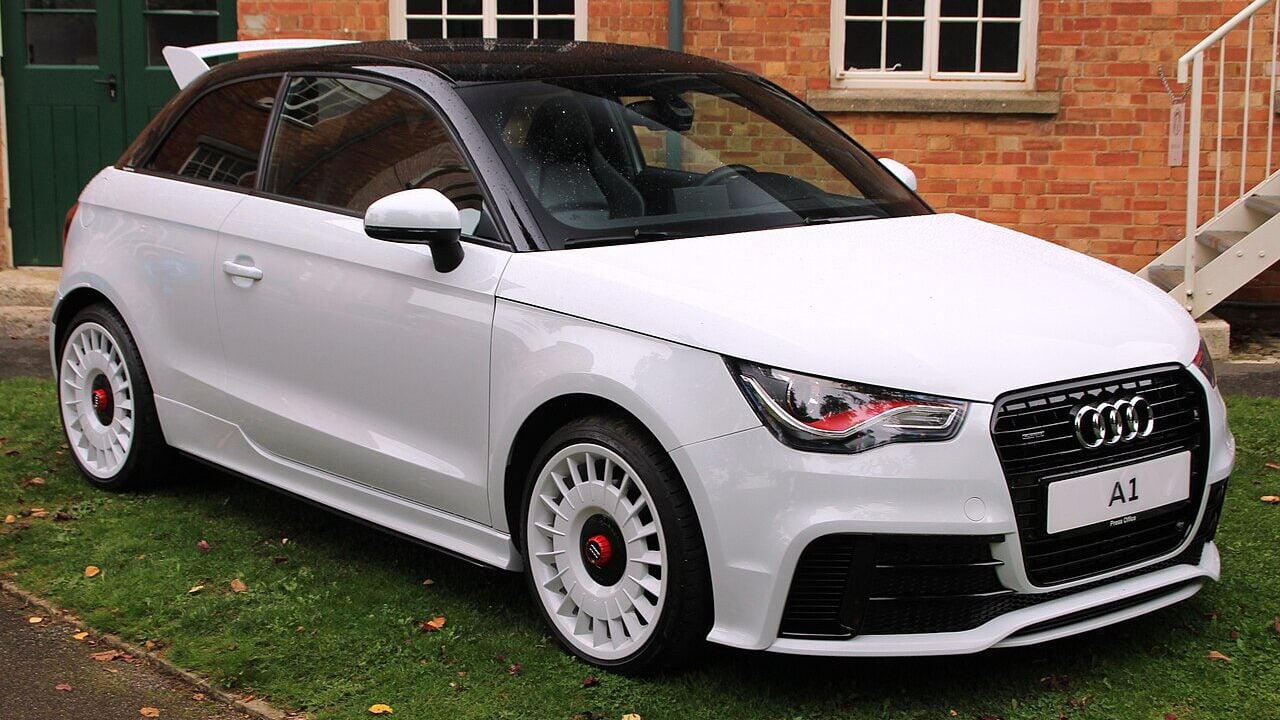
The Audi A1 is Audi’s entry-level hatchback based on the Mk5 Volkswagen Polo. In base model specs, it’s nothing to write home about. That said, Audi produced a limited edition with 333 examples, featuring a 252-hp turbo-four engine, a six-speed manual transmission, and a rally-inspired design.
All A1 Quattro models were painted white and featured matching white multi-spoke wheels, complemented by black and red trim pieces that fully embodied their rally racing DNA.
Peugeot RCZ-R

Believe it or not, Peugeot made a cool coupe sports car that your old aunt didn’t crave with all her heart. Being a front-wheel-drive vehicle with a double-bubble roof and a posh interior, the RCZ was a direct competitor to the Audi TT. It just lacked some sports car pizzazz.
That is, until they made the RCZ-R. Top Gear reports that the RCZ-R is a stiffer, angrier, and more expensive version of the RCZ, packing 266 hp under its hood. And I reckon if it were all-wheel-drive, the RCZ-R would have been a strong contender to the Audi TTS.
Donkervoort D8 GTO

If you’re a Forza Horizon fanatic, the Donkervoort D8 GTO might not be completely strange to you. To the rest, it looks like a go-kart with a funny name. But it’s so much more than that.
This funky Dutch car houses a turbocharged five-cylinder Audi engine and weighs around 680–700 kg (about 1,500–1,540 lb), depending on specification, making it the perfect driver-focused convertible. As a result, the Donkervoort reaches 62 mph from a standstill in just 2.8 seconds, and did I mention the doors go up?
Aston Martin Lagonda Taraf
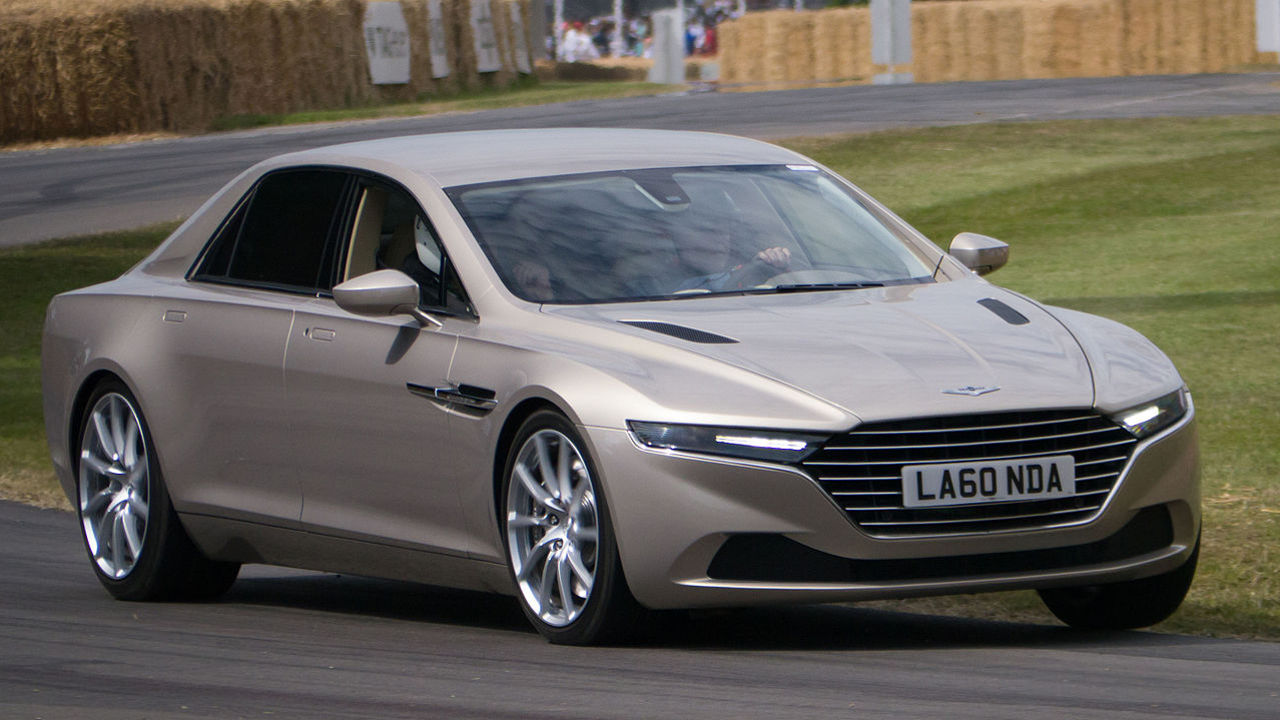
Aston Martin has produced a few Lagonda models over the years, with some gaining a cult following. That said, the latest Lagonda model, dubbed the Taraf, has yet to receive its recognition.
According to Car and Driver, the Taraf’s exterior was made from carbon fiber, and under its hood sat a naturally aspirated V12. The thing that turned most people off was its $1 million price tag. Then again, I’d argue this is infinitely more special than the majority of other luxury sports sedans from prestigious brands like Bentley and Rolls-Royce.
Everyone Deserves A Second Chance

History isn’t always fair, especially in the car world. While some models become icons, others fade into obscurity, remembered only by die-hard enthusiasts and the occasional Reddit thread.
However, these forgotten machines reveal something important: the automotive world is full of hidden gems. Some were misunderstood. Others were stereotyped. A few were just too bold for their time. Yet, all of them have something that makes them special. It’s time we celebrate these cars again, not just for what they were, but for what they dared to be.