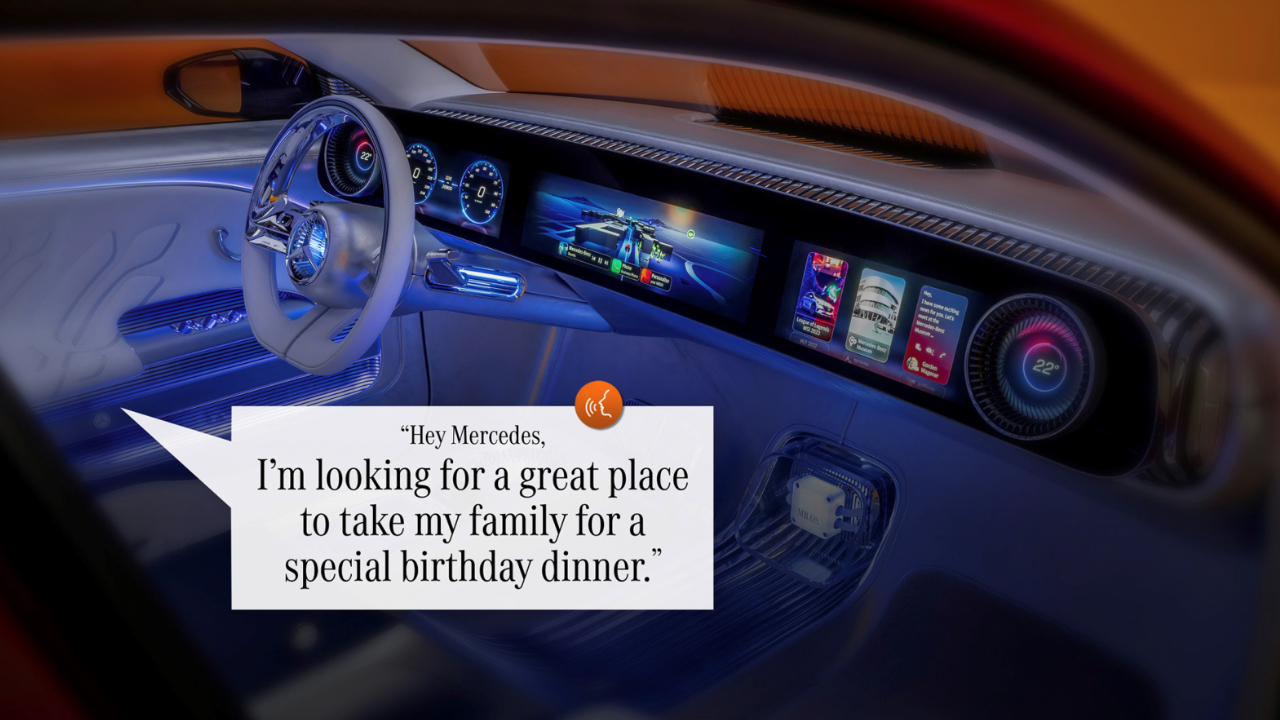
Mercedes-Benz is taking in-car navigation to the next level with the help of Google Cloud’s AI technology. Soon, drivers using the MBUX Virtual Assistant will be able to ask detailed questions about nearby points of interest — like restaurants, landmarks, or gas stations — and get real-time, conversational responses.
This innovation is powered by Google’s Automotive AI Agent, a new system that enhances natural-language interactions within vehicles. The feature will debut in the upcoming Mercedes-Benz CLA later this year, with plans for a broader rollout in future models.
What Makes This Special?
For years, voice assistants in cars have been hit-or-miss. They could follow basic commands like “Call Mom, ” or “Find a gas station,” but anything more complex often led to frustration. Mercedes-Benz and Google Cloud are changing that by integrating AI that understands context, retains conversational memory, and pulls fresh, accurate data from Google Maps.
Imagine asking your car, “Where can I find a great steakhouse nearby?” and then following up with, “Do they have good reviews?” or “What’s their signature dish?” Instead of generic, outdated responses, the MBUX Virtual Assistant will provide relevant, real-time details, making road trips and city driving more intuitive and enjoyable.
Real-World Impact
This technology isn’t just about convenience — it has the potential to reshape the driving experience. By offering more natural conversations, drivers can get the information they need without taking their hands off the wheel or eyes off the road.
For urban drivers, this could mean seamlessly finding parking garages, understanding restaurant hours, or even learning about local landmarks while driving through a new city. For long-haul travelers, it ensures better route planning and up-to-date information on rest stops and fuel stations.
Challenges and the Road Ahead
While this AI-driven system is a big step forward, it’s not without hurdles. Privacy and data security are ongoing concerns, as voice assistants require continuous learning from user interactions. Mercedes-Benz has emphasized its commitment to data protection, but ensuring user trust will be key.
Additionally, while AI-assisted navigation is impressive, it still relies on external data sources. Internet connectivity and map accuracy will play crucial roles in making the system as reliable as promised.
The Future of In-Car AI
Mercedes-Benz and Google Cloud’s collaboration signals a broader shift in automotive technology, where cars become not just vehicles, but intelligent companions on the road. With AI evolving rapidly, future enhancements could include deeper personalization, predictive recommendations, and even more advanced safety features.
As the automotive industry embraces AI, one thing is clear: the days of robotic, limited voice assistants are fading, making way for a smoother, more human-like driving experience.