Anyone with enough money can walk into a dealership and purchase a supercar. No special racing license is needed, and that’s okay because modern-day supercars are as easy to drive as your average sedan.
It wasn’t always like this, though. Back in the day, it took some serious skill to keep one of these speed machines on the road.
We’ve created a list of 13 supercars known for their sketchy behavior when pushed to perform. For that reason, they should only be driven by those with plenty of experience.
Porsche Carrera GT

“Porsche built the mid-engined Carrera GT from 2003 to 2006 (sold mainly as a 2004–2006 model-year car).” Only 1,270 cars were built during that time. It soon became known as one of the rawest and scariest models to ever emerge from Stuttgart, largely thanks to its naturally aspirated V10 engine producing 612 PS (450 kW).
It can launch to 62 mph in just 3.9 seconds and reach a top speed of 205 mph. Commonly referred to as one of the last analog supercars, the Carrera GT was more than a handful to keep on the road. It’s now infamous as the model involved in Paul Walker’s fatal 2013 crash (he was a passenger), and Jay Leno famously spun one during a Talladega oval run filmed in 2005.
Dodge Viper

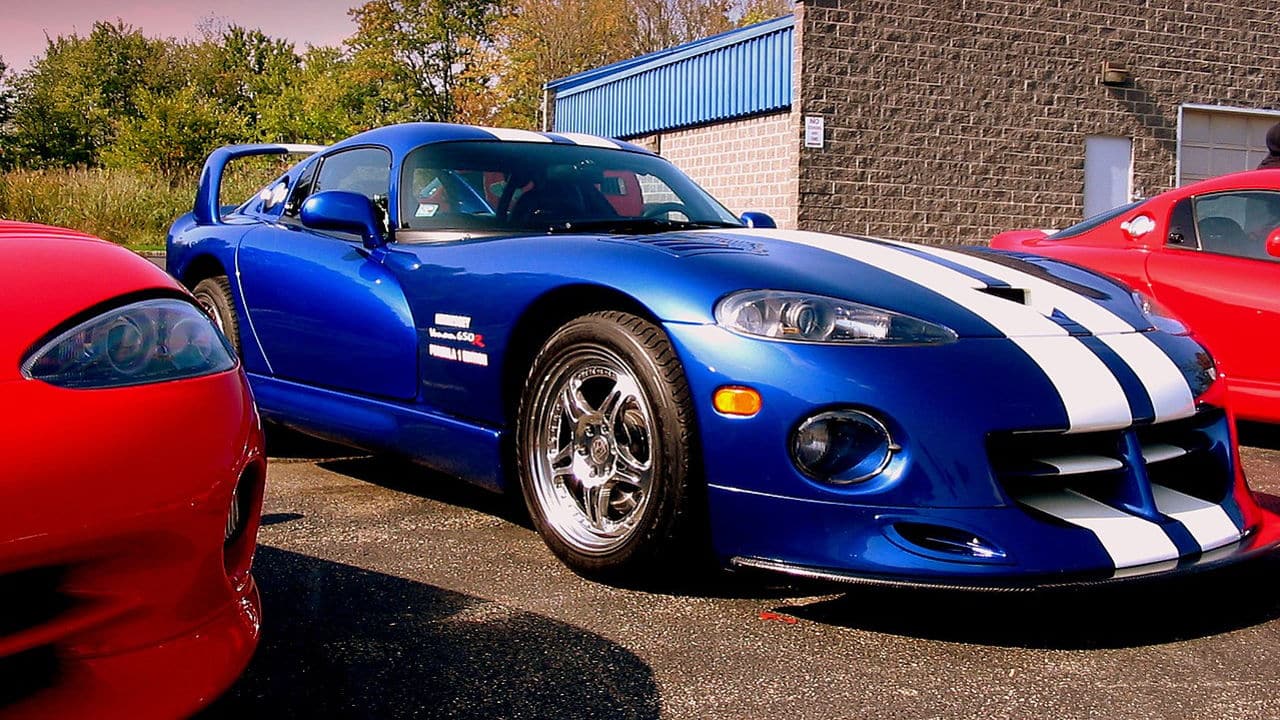
When Dodge introduced the first-gen Viper, it helped bring V10 power into modern American sports cars; early Vipers were also notably light on electronic driver aids The 8.0-liter unit under the GTS model’s long hood produced an impressive 450 wild American horses, making it an untamable beast.
Early Vipers shipped without ABS, traction control, or stability control, and airbags didn’t arrive until the mid-1990s, so driver skill mattered a lot. With time, the V10 engine grew to 8.3 and 8.4 liters, and while Dodge eventually included some basic safety features and driver aids, the Viper would bite if it was disrespected.
Koenigsegg CCR

Koenigsegg is now a household name, and the Swedish carmaker has built some of the fastest production cars the world has ever known.
The brand’s early models, like the CCR, earned a reputation for being challenging to drive at high speeds. With a twin-supercharged 4.7-liter V8 producing 806 hp and a top speed around 241 mph, it doesn’t take a rocket scientist to realize the Koenigsegg car isn’t for inexperienced drivers.
Koenigsegg CCX

Following the CCR, Koenigsegg introduced the CCX in 2006. Much of the formula remained unchanged from its predecessor, as it used a twin-supercharged V8 making about 806 hp.
The CCX was driven around the Top Gear Test Track by Ben Collins, better known as The Stig. Over the years, he set faster lap times than many Formula One drivers, but even he couldn’t keep the CCX on the track during his lap and slid into a tire wall.
Pagani Zonda
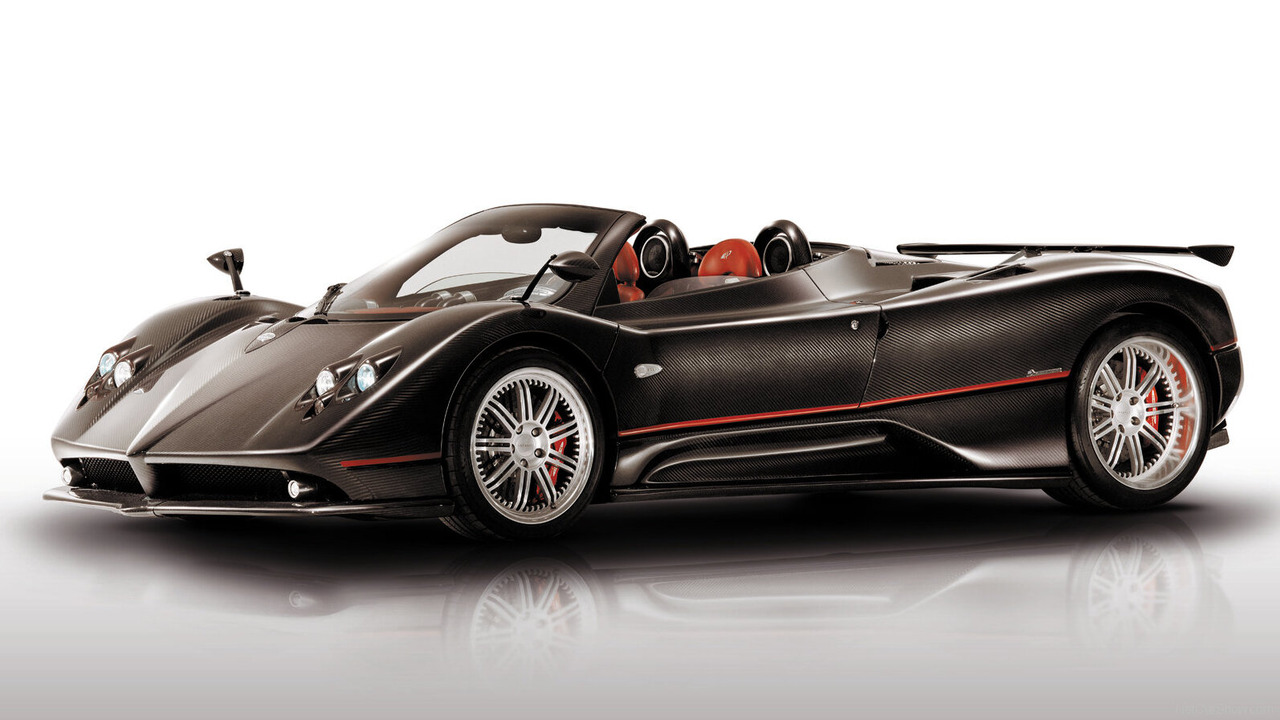
When Pagani introduced the original Zonda in 1999, jaws dropped throughout the automotive industry. It didn’t look like any other supercar at the time, and the craftsmanship was second to none.
The Zonda wasn’t all show and no go, either. Behind the driver, early Zondas used a Mercedes-Benz AMG-sourced 6.0-liter V12 making about 394 hp (later Zonda variants climbed well beyond 700 hp). With minimal electronic aids to help keep those horses in check, the Zonda was a handful to keep on the road. Lewis Hamilton has said his own Zonda 760LH is “terrible to drive,” despite praising its sound.
TVR Speed 12

TVR was never a big name in the sports car industry, at least not outside the UK. TVR built the Cerbera Speed 12 for racing, and the road-car plan was abandoned after TVR decided it was too extreme; later sources commonly cite around 840 hp and roughly 1,000 kg (2,205 lb).
The prototypes were eventually dismantled for parts, but TVR later rebuilt one car and sold it to a private owner. It’s powered by a 7.7-liter V12 engine that sends about 840 hp to the rear wheels; TVR claimed a top speed of around 240 mph. Did we mention that the Speed 12 had no safety features like airbags or traction control?
TVR Tuscan Speed Six

Far from as lethal as its bigger sibling, the Speed 12, the TVR Tuscan Speed Six is still challenging to drive. It featured a range of TVR Speed Six inline-six engines, producing up to 380 hp.
That’s not a lot of power by today’s standards, but remember that TVR didn’t really believe in safety features—even airbags weren’t included.
Noble M600

Noble is another British supercar company that’s relatively unknown outside the land of tea and crumpets. Its M600 model has an engine from a Volvo XC90, which doesn’t sound very impressive until you find out it’s a 4.4-liter V8 that produces 650 hp, giving it a top speed of 225 mph.
In true British fashion, Noble wanted to keep the M600 as light as possible, making it very tail-happy in the corners. Those with a heavy right foot should definitely look elsewhere.
Porsche 930 Turbo

No one would ever claim that the regular 911 is a supercar, but strap a turbo on the engine, and it’ll keep up with Italy’s finest all day long. Porsche introduced the first road-going turbocharged 911 in 1975, and it soon became one of the most memorable cars they’ve ever made. Part of that is down to its deadly reputation.
It didn’t take long for the Porsche 930 Turbo to earn its nickname “the Widow Maker” due to its penchant for sending bankers and Wall Street traders backward off cliffs and into trees.
RUF CTR Yellowbird

Back in the 1980s, those who felt a standard Porsche 911 Turbo was a bit lame could get the truly bonkers RUF Yellowbird.
RUF based the Yellowbird on a 911 Carrera, but by the time they were done, it had a larger engine fitted with a couple of turbochargers, giving it a top speed of 211 mph. In Road & Track’s April 1987 ‘World’s Fastest Cars’ contest, the CTR was designated the fastest production car, recording a 211-mph top speed. RUF test driver Stefan Roser drove it around the Nürburgring, going sideways through every corner.
Caparo T1

Caparo Vehicle Technologies built the Caparo T1 as a “road-going Formula One car.” There’s no denying that the Caparo T1 has a purposeful design; as F1 cars have certain features, and road cars must adhere to specific regulations, this is just a combination of the two.
Unfortunately, the combination didn’t work particularly well from a design point of view, and it’s even worse to drive. Like an F1 car, the T1 severely lacked grip at slow speeds, so using it in traffic is not recommended. It was powerful, though. Fitted with a slightly detuned 3.5-liter IndyCar V8 engine, it made 575 hp at 10,500 rpm.
McLaren F1

The McLaren F1 from the 1990s is one of the most iconic supercars ever made. It features a 6.1-liter V12 engine developed by BMW, a gold-covered engine bay, a central driving position, a three-seat cabin, and even reasonable luggage space.
Thanks to its 618 hp, it’s still the world’s fastest naturally aspirated car, with a top speed of 240.1 mph, a record it has held since March 1998. However, it takes a skilled driver to keep it in check. Elon Musk has said he crashed his uninsured McLaren F1 in 2000 while showing off to Peter Thiel, and Rowan Atkinson crashed his McLaren F1 in 1999 (minor) and again in 2011 (major) before later selling it.
Lamborghini Countach
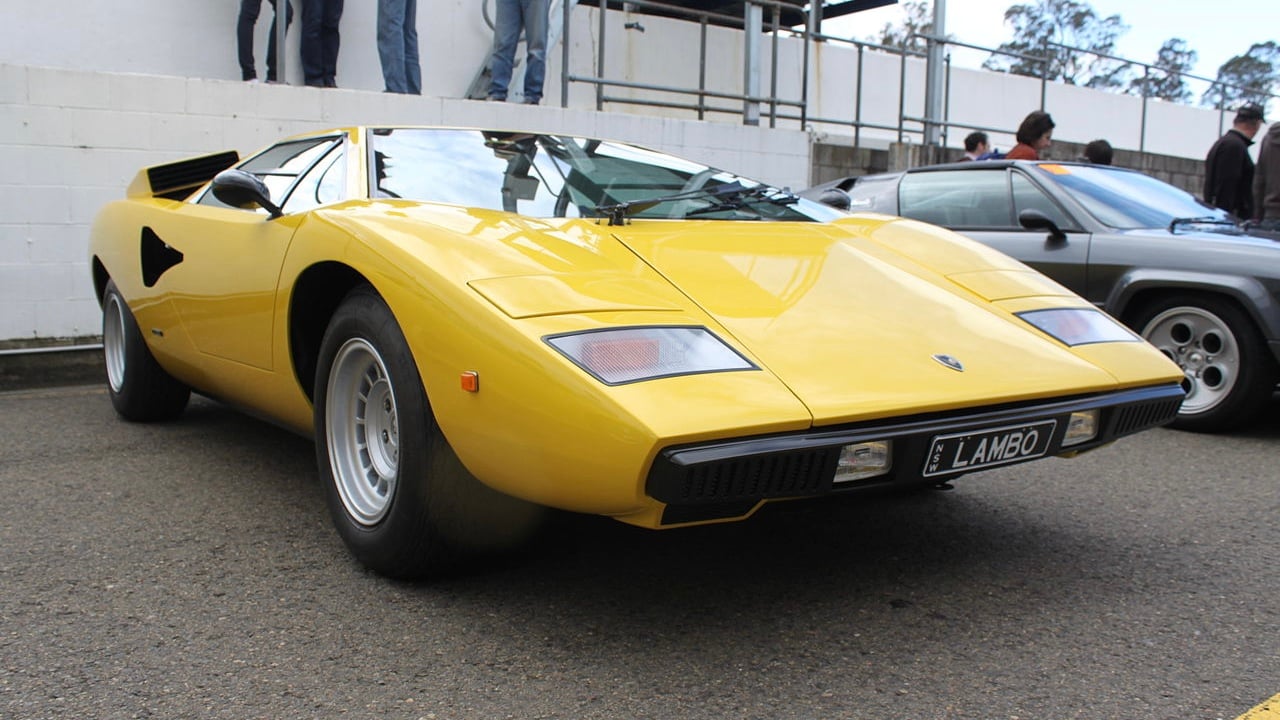
Lamborghini launched the Countach in the 1970s, but its heyday was certainly during the 1980s. Low, wide, and wedge-shaped, nothing could match the Lamborghini Countach’s looks, and with time, it grew even wilder as it gained fender flares and wings, both front and rear.
It didn’t just look like a fighter jet on wheels; thanks to a mid-mounted V12 engine, it sounded like one, too. However, the Countach had a cramped cabin, a horrible seating position, poor visibility, and notoriously heavy controls. It was nothing like today’s supercars, and driving it fast required a lot of skill, guts, or stupidity.