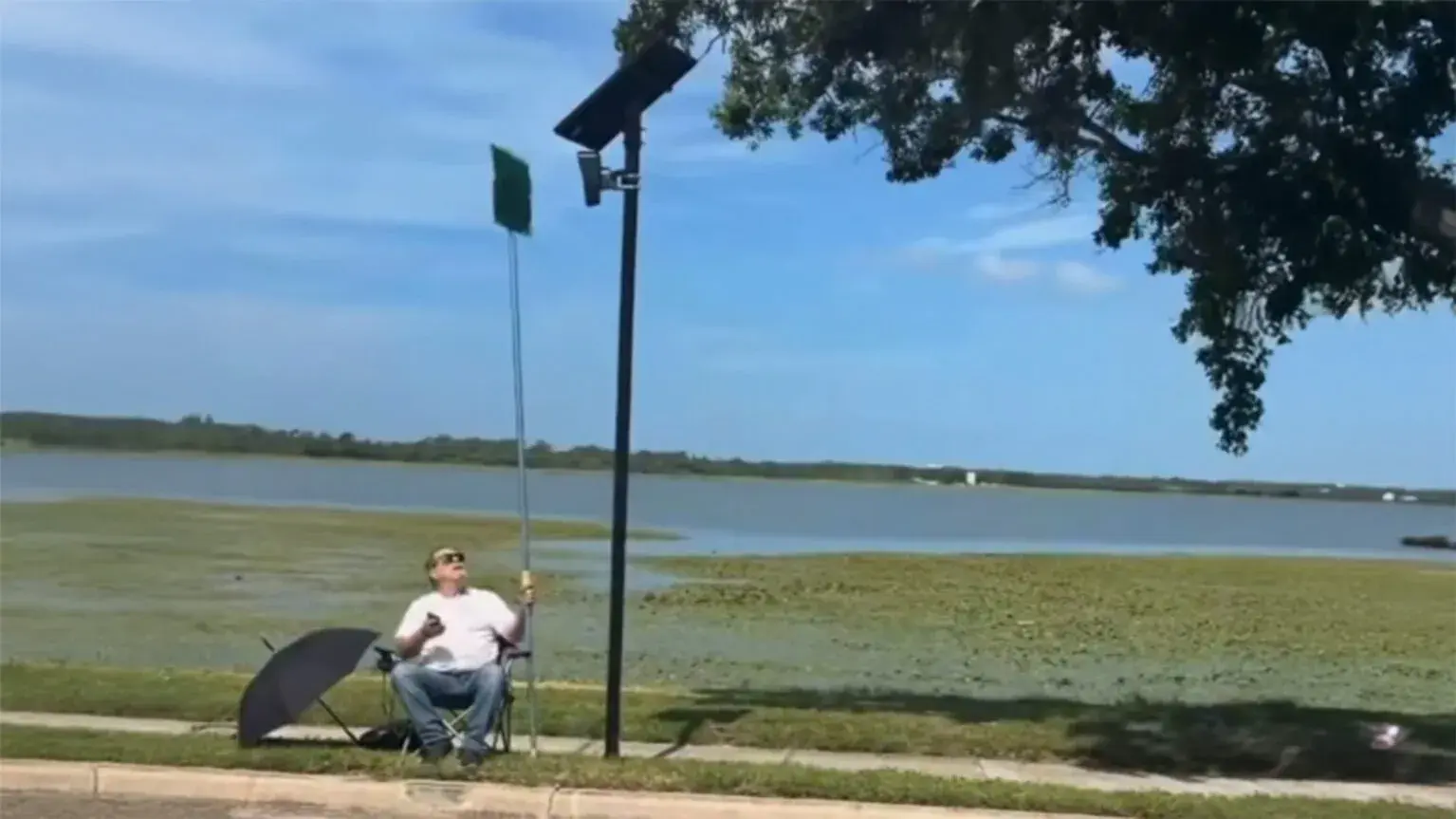
A post shared on X by Matt Van Swol has drawn widespread attention to an unusual form of protest taking place in St. Petersburg, Florida. The video and photos show 77-year-old retiree Carl Gunn standing beneath an automated license plate reader and blocking its view with a homemade sign mounted on a long pole.
Rather than damaging the camera, Gunn says he wants to peacefully demonstrate against the growing use of automated license plate reader (ALPR) technology. His approach has sparked fresh discussion about the balance between public safety, surveillance, and personal privacy.
The demonstrations have taken place on Saturdays in St. Petersburg, where local reports say police use roughly 50 Flock Safety automated license plate reader cameras throughout the city. Gunn’s actions are aimed at the technology itself rather than any individual camera or company.
Although Flock Safety is one of the best-known manufacturers of ALPR systems, similar technology is used by numerous law enforcement agencies across North America. Gunn’s peaceful protest highlights people’s concerns about how license plate data is collected, stored, and used.
A Peaceful Form of Protest
🚨WOW!!!
A 77-year-old Florida man staged a one-man protest against a Flock camera, blocking it’s view by holding a 12-foot POOL SKIMMER against it.
He was caught on camera being interrogated by police and a man driving by says, “What’s your name? I’ll bail you out!”
Then… pic.twitter.com/jjfl9Xl3pQ
— Matt Van Swol (@mattvanswol) July 28, 2026
FOX 13 reports that Gunn began demonstrating after seeing incidents in which ALPR cameras were vandalized. Rather than following that path, he looked for a way to express his concerns without causing damage.
His method is straightforward. Gunn positions himself beneath a camera and raises a sign high enough to obstruct its field of view while remaining on public property.
The protest is designed to temporarily prevent the camera from capturing license plates during his demonstration. It leaves the equipment untouched and avoids any permanent alteration to the system.
Police Have Allowed the Demonstrations
St. Petersburg police officers have spoken with Gunn during at least one of his demonstrations. Published accounts state that officers allowed him to continue, and there have been no reports that he was arrested during these protests.
Whether this method is fully protected under local law remains uncertain. No court ruling has determined whether temporarily blocking an automated camera’s view in this manner is lawful in every circumstance.
That legal uncertainty could become more important if similar demonstrations become more widespread. Future cases may ultimately clarify where peaceful protest ends and unlawful interference begins.
The Debate Goes Beyond Flock Safety
Flock Safety has become one of the most recognizable names in the automated license plate reader industry, but it is far from the only supplier. Companies including Rekor Systems, Axon, Motorola Solutions, Genetec, and others also provide ALPR systems to government agencies.
Several cities have chosen not to renew contracts with one provider before signing agreements with another. Those decisions suggest that many agencies view the technology itself as valuable regardless of which company manufactures the equipment.
For critics such as Gunn, however, the manufacturer is largely beside the point. Their concerns focus on how license plate data is collected, stored, shared, and used rather than whose logo appears on the camera.
Why ALPR Cameras Are Controversial
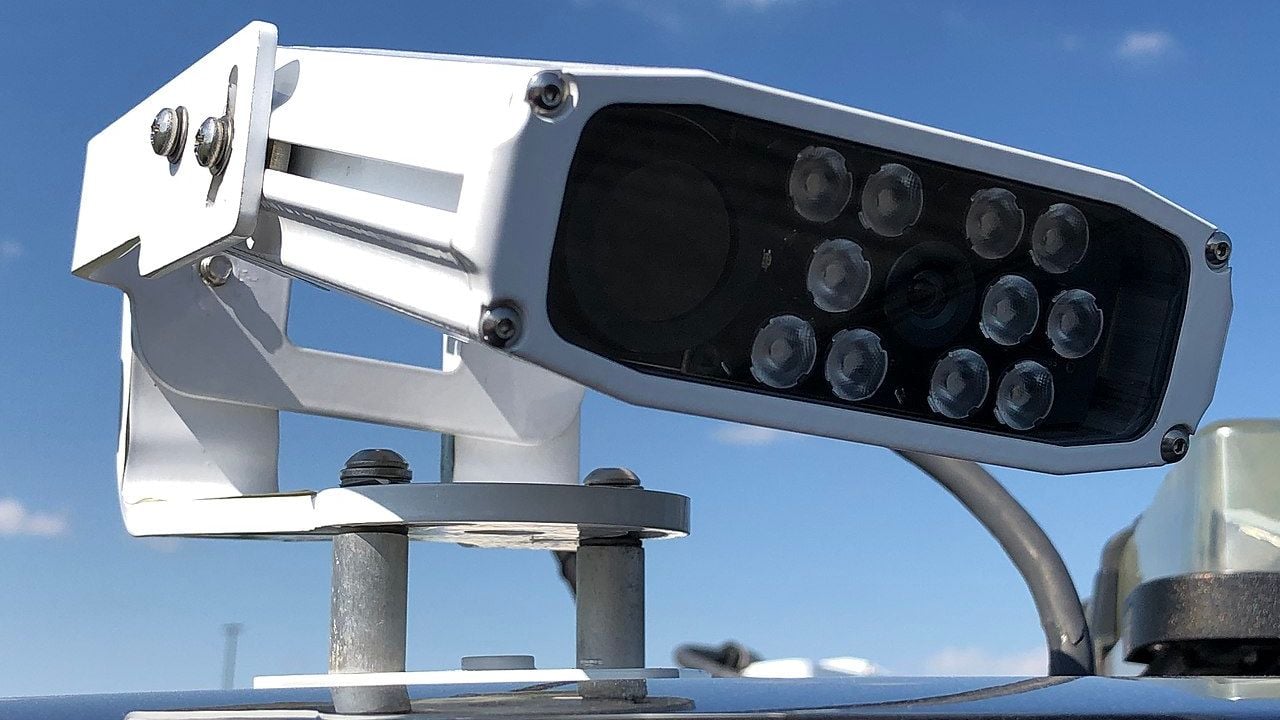
Automated license plate reader systems continuously capture images of passing vehicles and record license plate information. Law enforcement agencies often use the technology to identify stolen vehicles, locate wanted suspects, investigate crimes, and search historical vehicle movement data.
Privacy advocates have raised concerns that widespread deployment could enable extensive tracking of drivers who are not suspected of any wrongdoing. Questions surrounding data retention periods, database access, and information sharing between agencies continue to fuel public debate.
Supporters counter that the systems have become valuable investigative tools that can quickly identify vehicles connected to serious crimes. They argue that the technology improves public safety while reducing investigative workload for officers.
A Small Protest Highlighting a Bigger Discussion
Gunn’s demonstrations are modest in scale, but they reflect a national conversation about surveillance technology and individual privacy. By choosing a peaceful approach instead of damaging equipment, he has attracted attention to the issue without becoming part of a vandalism investigation.
As more communities consider expanding or limiting automated license plate reader programs, debates over privacy, transparency, and oversight are likely to continue. Gunn’s weekly protests show that opposition to the technology can take forms other than courtroom challenges or property damage.
Do you think automated license plate reader cameras strike the right balance between public safety and privacy, or should their use be more tightly restricted? Let us know where you think that balance should be drawn.