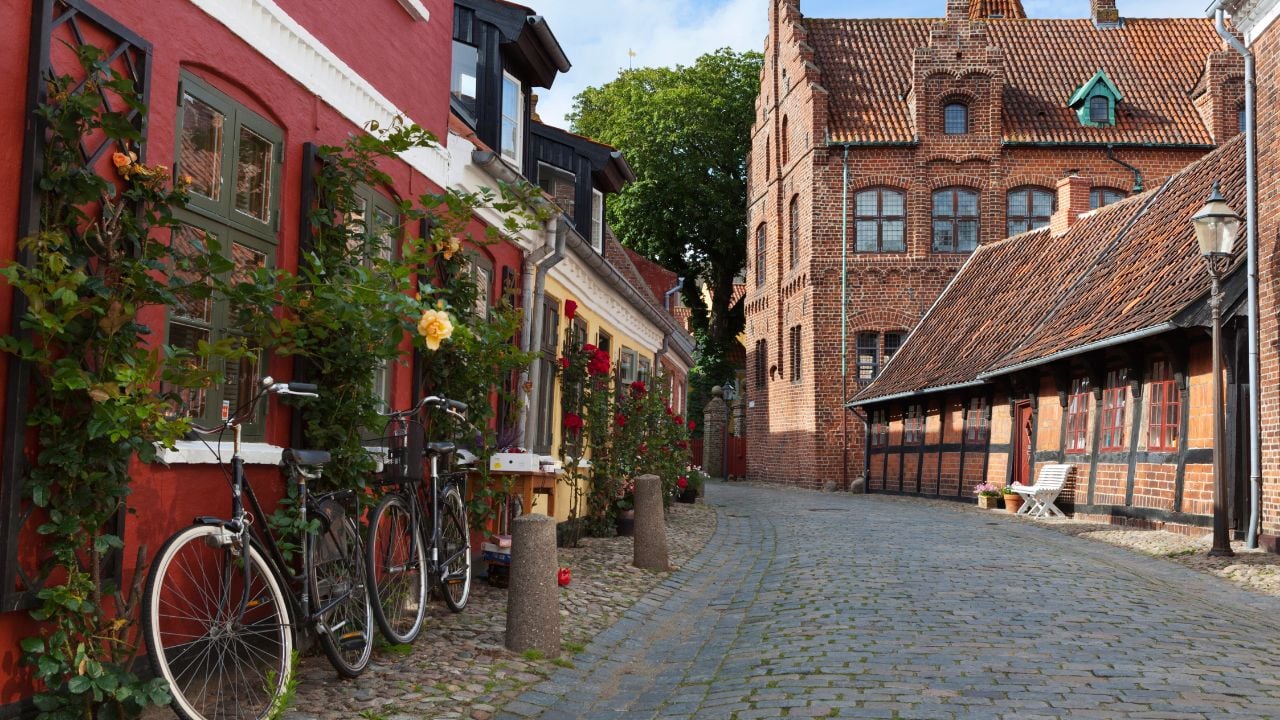
Some trips win you over before you have done anything impressive. You step into a narrow street after rain, see warm light in a bakery window, hear water moving under a small bridge, or find a square where the old facades seem to lean toward each other. Nothing huge has happened yet, but the place already feels worth the journey.
The destinations below are good for that kind of travel. They are not empty villages where the whole plan is “relax,” and they are not crowded postcard giants where every corner comes with a queue. They sit somewhere better: pretty enough to slow you down, interesting enough to keep you walking.
Come for old streets, rivers, timber-framed houses, white lanes, castles, mining history, food, and countryside close by. Stay long enough for the small parts to do their work: a bridge view, a tea room, a hilltop lane, a shop window, a snowy street, or a quiet moment beside the water.
A weekend can be enough in each place, but do not be surprised if the last walk takes longer than planned.
1. Monschau, Germany
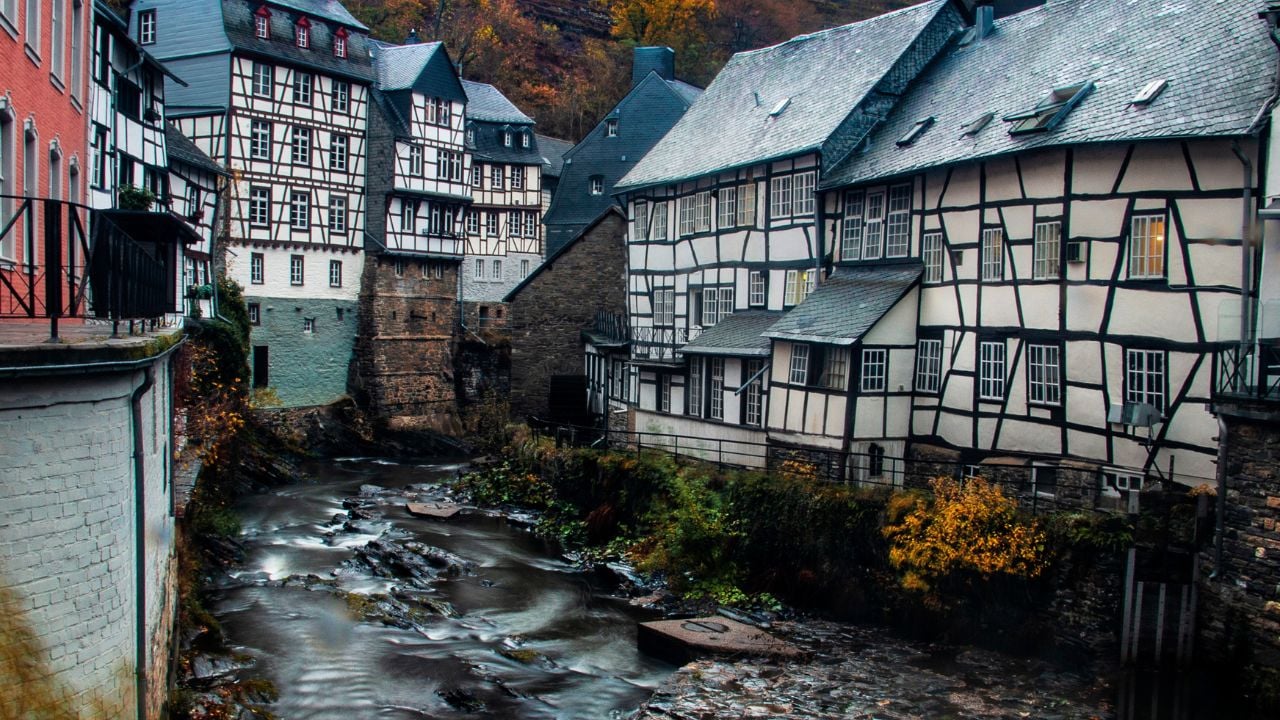
Monschau looks almost unfairly pretty when the Rur River bends through the old center. Half-timbered houses sit close to the water, slate roofs stack into the narrow valley, and little bridges keep pulling you from one side of the river to the other. It is small, yes, but not in a boring way. It is small in the way that makes every turn easy to follow.
Eifel Tourism describes Monschau’s historic center through half-timbered houses, regional specialties, a castle, and old alleyways. That is exactly the right way to approach it. Do not start with a schedule. Start by walking beside the river and letting the old town tighten around you.
The best views come when you climb a little. From higher up, Monschau looks pressed between wooded slopes, with rooftops, chimneys, church towers, and the river all packed into the valley below. The town feels especially good in cooler weather, when windows glow, cafés look warmer, and the stone lanes shine after rain.
Leave time for the small stops. A mustard shop, a bakery, a café table, a riverside bench, or a slow look at the old facades can fill more of the afternoon than expected. Monschau does not need to be dramatic. The river, timber, slate, and steep valley already know what they are doing.
2. Ribe, Denmark
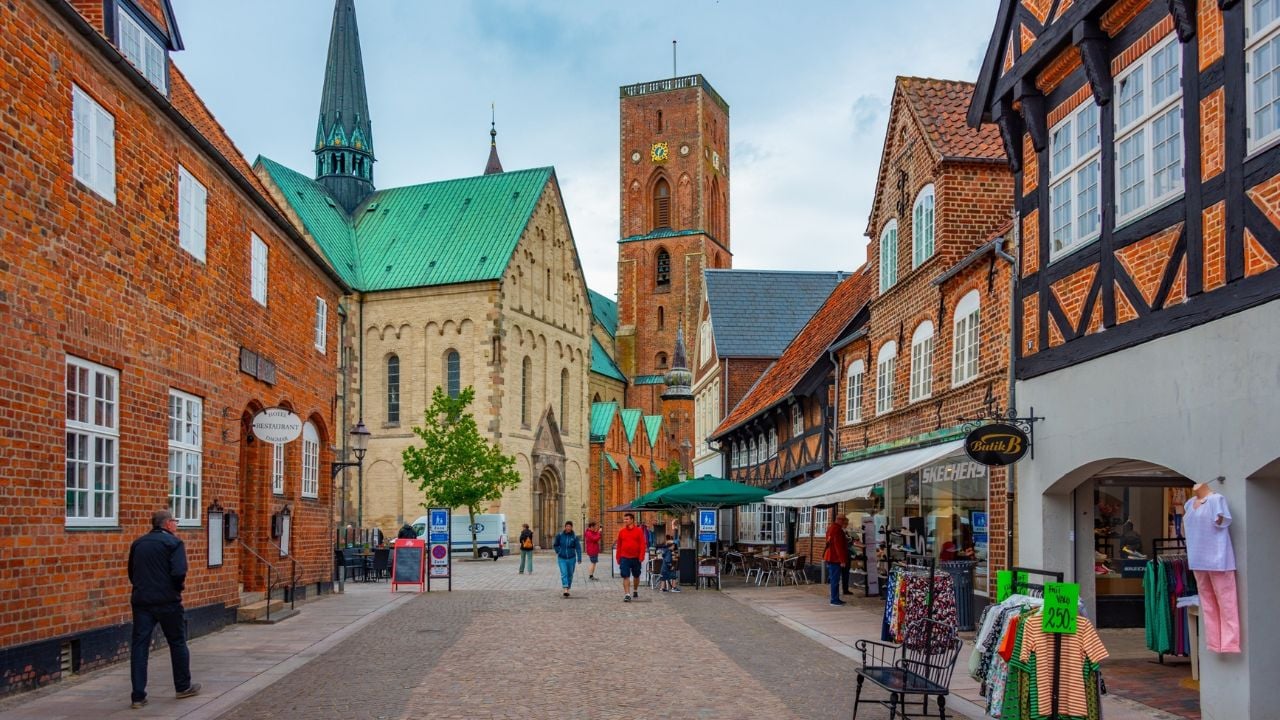
Ribe feels old without feeling frozen. The streets are cobbled, the houses are low and close, and the cathedral keeps appearing between roofs as you walk through the center. It is the kind of town where you slow down even if you did not plan to, because the lanes are too good to rush through.
Destination Vadehavskysten calls Ribe Denmark’s oldest town and says its history stretches back to around 710 AD. The same source points to cobbled narrow streets, well-preserved houses, and plaques that tell pieces of the town’s history. That history is visible in a very simple way: doors, brick, old lamps, quiet corners, and streets that still feel human in scale.
Stay overnight if you can. Ribe is better when the day visitors thin out and the cathedral area gets quieter. Walk after dinner, when the streets lose some of their daytime movement, and the old houses feel more like a real town than a museum setting.
The Wadden Sea coast gives the trip a wider edge. One part of the visit can be the compact old town, the cathedral, coffee, and small shops; another can be broad skies, tidal flats, birds, and open air near the coast. That contrast makes Ribe more than a pretty historic stop. You get a small town with deep roots and a wild landscape waiting close by.
3. Škofja Loka, Slovenia
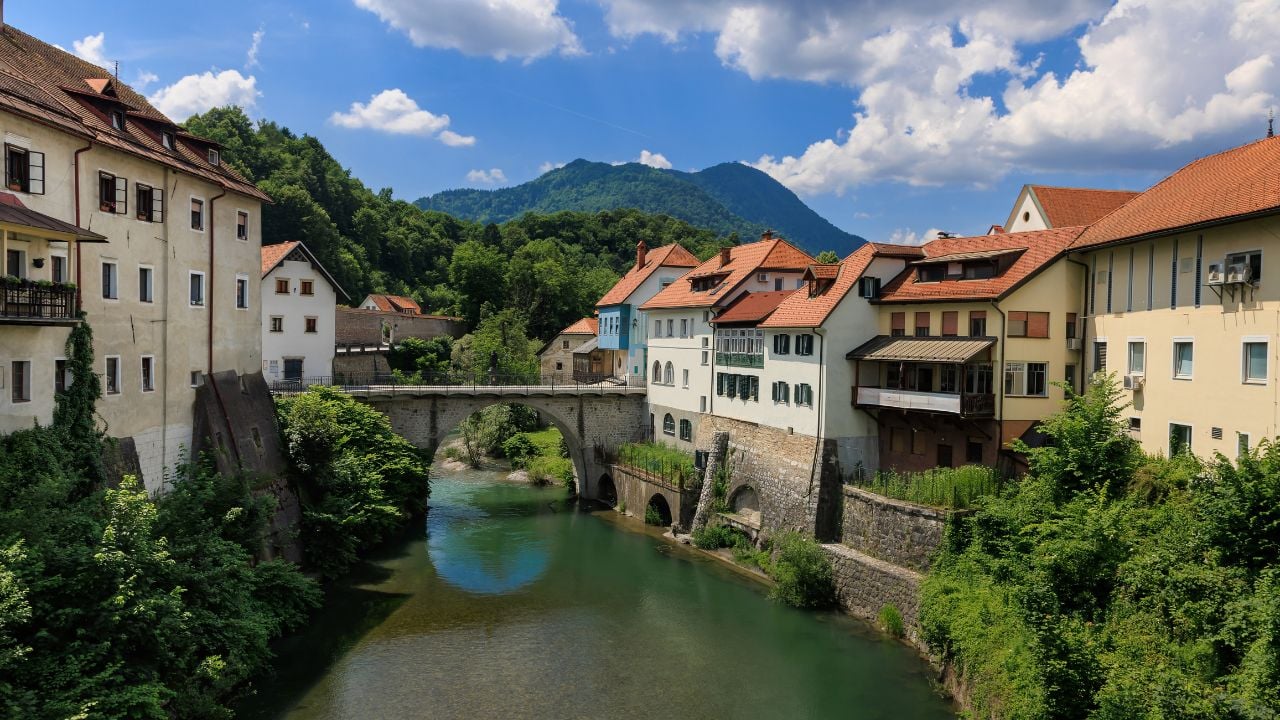
Škofja Loka is the kind of place that makes you wonder why more people do not talk about it. The river, bridge, castle, painted facades, and hills are all close together, so the first walk already gives you a little bit of everything.
Slovenia’s official tourism site describes Škofja Loka as a historic town of tradition and creativity near Ljubljana. The old core, castle above the streets, and nearby hills make it easy to turn a short visit into more than just a quick stop on the way somewhere else.
Begin at the Capuchin Bridge. The stone bridge crosses the Selška Sora River and leads toward the old town, with the castle ridge rising above the roofs. Enjoy Škofja Loka says the bridge was built in the mid-14th century and is one of the town’s symbols.
From there, walk into the center slowly. The streets are compact, but they do not feel flat or dull. Look at the painted facades, old doors, small passages, and the way the town keeps turning back toward the river. If you have time, climb toward the castle for the wider view. The payoff is simple: rooftops below, hills around you, and a town that suddenly looks even more complete than it did from the bridge.
4. Lavenham, England
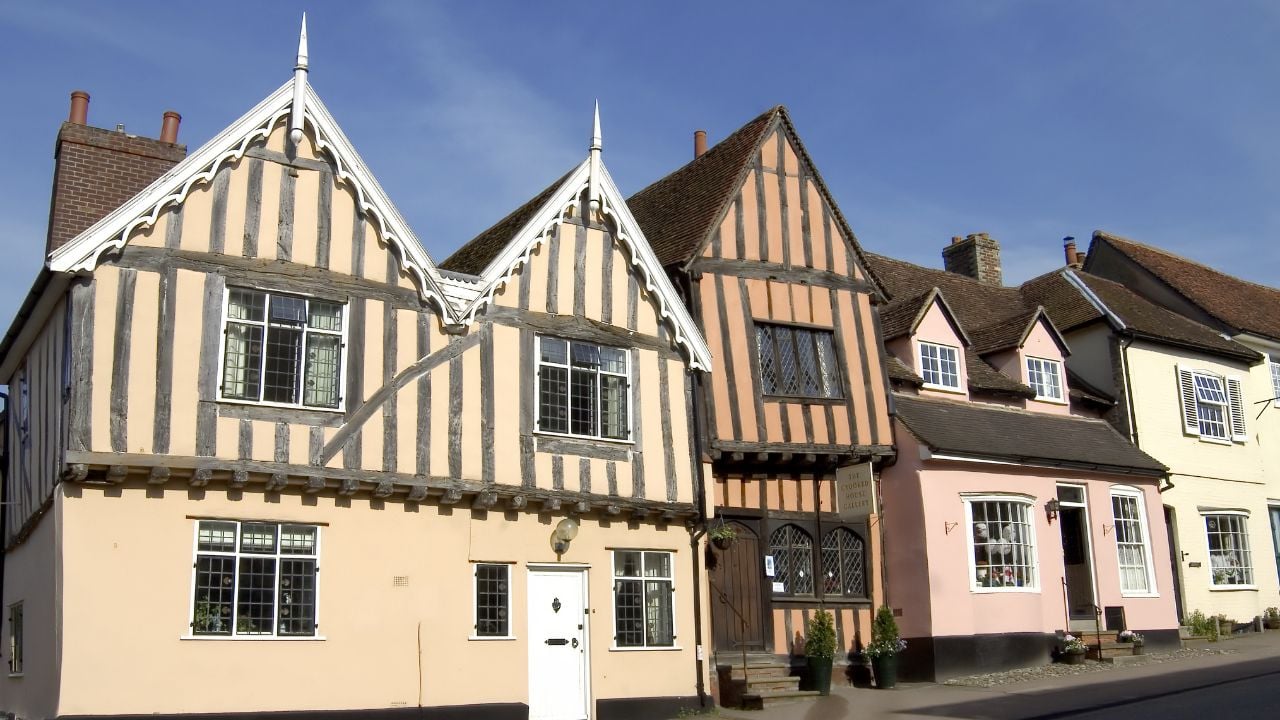
Lavenham is full of buildings that look like they have been leaning into village gossip for centuries. Timber frames twist, upper floors tilt, old beams bend, and the whole place seems too crooked to be real until you remember that this is what age actually looks like when nobody has flattened it into a theme park.
The National Trust describes Lavenham Guildhall as one of the most spectacular timber-framed buildings of medieval England, standing at the heart of village life. That is a good place to begin, but the village itself is the real attraction. Walk slowly and the facades keep changing character: some neat, some wonky, some handsome, some almost cartoonishly uneven.
Lavenham’s wealth came from the medieval wool trade, and the village still carries that history in its streets. Local tourism sources note its large collection of listed medieval timber-framed buildings, including houses dating back to the 14th century. You do not need to know every date to enjoy it. Just look at the beams, plaster, brick, windows, and doorways.
Keep the plan modest. Browse a shop, stop for tea or lunch, walk through the market place, then take another loop because you probably missed a building the first time. Lavenham is not a place for rushing. It is a place for noticing how much personality old wood can have.
5. Locorotondo, Italy
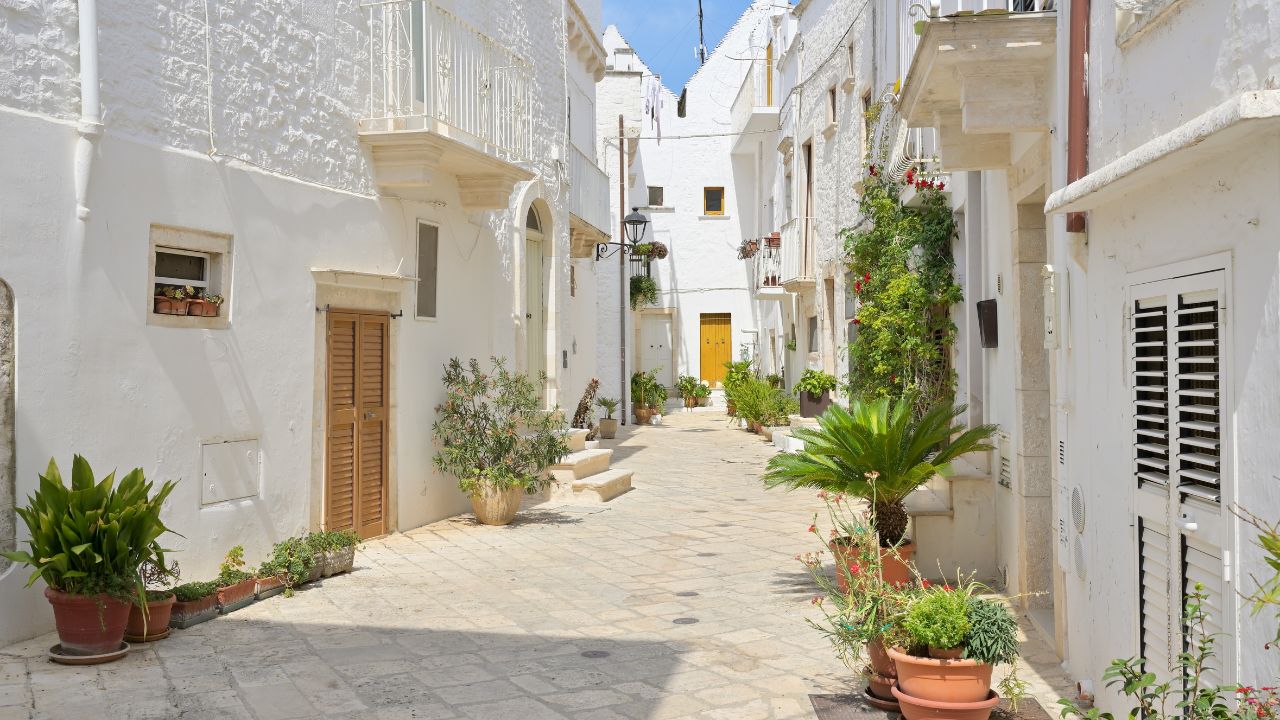
Locorotondo is bright in the way southern Italian towns can be bright: white walls, pale stone, potted plants, small balconies, and lanes that seem to hold the sun even when they are quiet. The old center sits on a hill in the Itria Valley, so the countryside is never far from the edge of town.
Visit Puglia describes Locorotondo as one of Puglia’s most characteristic ancient villages and places it in the Valle d’Itria, in the land of the trulli. Italia.it describes the wider valley through red soil, olive groves, vineyards, and white trullo houses under a blue sky. That is the landscape waiting outside the old lanes.
Walk the circular center before lunch. Turn into the white streets, look at the balconies and doorways, and let the route curve without trying too hard to control it. Locorotondo is too small for a grand itinerary, and that is a good thing. The pleasure is in the clean walls, quiet corners, flower pots, and sudden views over the valley.
Stay for aperitivo if you can. Late afternoon is when the town starts looking softer, with light on the white walls and the countryside dropping away beyond the edge of the old center. Add a glass of local wine, a slow walk, and maybe a view toward the trulli-dotted valley, and the day has more than enough.
6. Røros, Norway
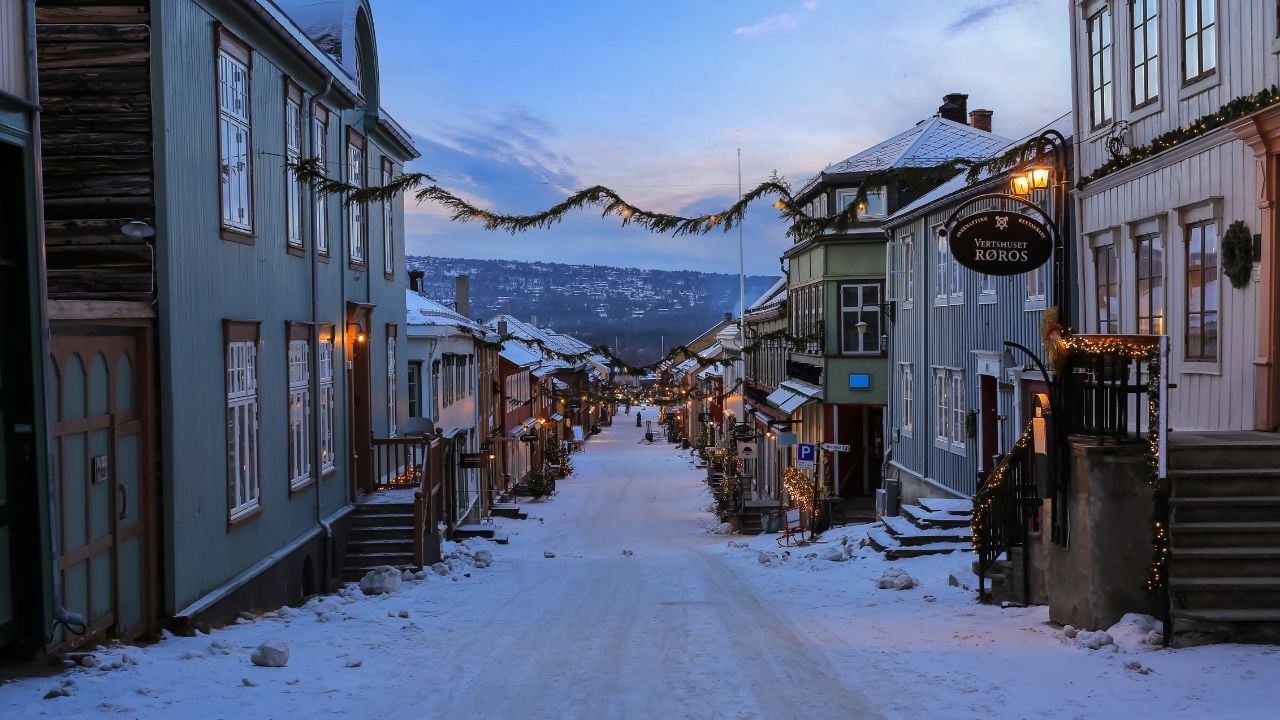
Røros is the kind of Norwegian town that looks built for winter, but it is not only a snow-globe destination. Wooden houses line the streets, the old mining history sits behind the pretty facades, and the landscape around town feels wide, open, and cold even when the weather is kind.
UNESCO says Røros Mining Town and the Circumference is linked to copper mines established in the 17th century and worked for 333 years until 1977. The World Heritage site includes the town, industrial-rural cultural landscapes, a smelter area, and a winter transport route. It also notes that Røros contains about 2,000 wooden one- and two-storey houses and a smelting house.
That mining past keeps Røros from feeling like a decorative village. Walk through the streets and you are not just looking at cute wooden buildings. You are walking through a place shaped by copper, hard winters, smoke, work, transport routes, and people who lived close to the edge of what the landscape allowed.
Visit Norway describes Røros as one of Europe’s oldest wooden towns, known for old wooden houses, local food, the annual Christmas market, and old copper mines such as Olav’s Mine. Winter gives it the obvious magic: snow on roofs, warm windows, Advent lights, and streets that feel made for a slow walk in good boots.
Summer is quieter in a different way. The wooden houses still hold the town together, but the big skies and open landscape become more visible. Go for the history, stay for the food, walk the streets twice, and leave time to understand why a remote mining town became one of Norway’s most memorable places.