There is a special kind of frustration reserved for great cars that always felt just out of reach. Not overpriced. Not overhyped. Just absent. America has never lacked for sports cars, but it has missed some truly fascinating ones, the machines that European and Japanese enthusiasts got to know firsthand while U.S. buyers were left reading road tests, staring at magazine photos, and wondering why nobody bothered to federalize the things. That is what gives this topic its sting.
These were not forgettable oddities. They were cars with real character, real engineering identity, and in a few cases the kind of myth that only grows stronger when a market never gets them new in the first place.
There is one important line to draw before the list starts. This article is about sports cars that were never officially sold new through U.S. dealers. A few individual examples later reached American soil through private import, military channels, the 25 year rule, or special exemptions. That is a different story. The six cars below still fit the headline because American buyers never got the normal showroom experience. No brochures at the local dealership. No official launch. No easy path. Just distance, desire, and the lingering suspicion that we were the ones left out.
The Standard For Making This List

A car did not make this article just because it was rare or because a few Americans happened to lust after it from afar. It had to meet a stricter test. First, it had to be a genuine sports car or homologation special with a strong performance identity, not simply an unavailable trim of something ordinary. Second, it had to be absent from official U.S. new car sales. Third, it had to feel meaningful enough that the absence still matters today. That last part is important. Plenty of cars never reached America for good reason. The ones below still feel like losses.
What unites these six is not country of origin or price. It is the sense that each one offered a version of the sports car idea that American buyers would have understood immediately. Lightness. Theater. Mid engine balance. Rally bred madness. Handmade eccentricity. In one case, pure technological excess. They are cool for different reasons, but they all share the same aftertaste. They were exactly the sort of cars people here would have argued about, fallen for, and remembered.
Alpine A110

The modern Alpine A110 is one of the clearest examples of a car America should have loved immediately. It is compact, light, mid engined, and built around the kind of agility first philosophy that so many modern performance cars have gradually drifted away from. Alpine’s own materials for the current generation describe the entry A110 with a 252 hp turbo four, while the later range also included stronger 300 hp versions and the radical 345 bhp A110 R Ultime.
Just as important as the power figures is the structure underneath. Alpine built the car around a full aluminum architecture and kept the focus on responsiveness rather than brute force. That is why the A110 always read as something more interesting than a simple Cayman alternative. It felt like a modern French answer to the old idea that sports cars should be light on their feet before they are heavy with numbers.
So why never America? Because Alpine never sold the current A110 in North America. Only now is the brand openly exploring America more seriously, with the next generation A110 reportedly undergoing U.S. crash testing. That detail actually makes the car’s long absence more frustrating, because it confirms what many enthusiasts always suspected: the market here made sense, but the certification and business case did not line up soon enough.
The result is a sports car that spent its whole life being exactly the sort of thing American drivers claim they want, while remaining a European privilege all the same.
Toyota Sports 800

The Toyota Sports 800 looks tiny enough to dismiss until you understand what it was trying to be. This was Toyota’s first true production sports car, a featherweight coupe from the mid 1960s built around simplicity, efficiency, and delicacy rather than headline power.
Toyota’s own historical material notes a 790cc horizontally opposed twin, rear wheel drive, and a featherweight approach that gave the car a sharp, low effort character. It was not fast in the American muscle sense, but that misses the point entirely. The Sports 800 matters because it showed Toyota already understood the appeal of small, nimble, beautifully judged sports cars long before the MR2, Celica, or 86 entered the conversation. It is a reminder that the company’s enthusiast instincts run much deeper than many people assume.
The reason it never made it to America is unusually clear. Toyota’s own history says the Sports 800 was never officially sold or exported outside Japan. Most were right hand drive, and while about 300 left hand drive examples were built for American military personnel in Okinawa, that was not the same thing as a U.S. showroom launch. A handful later reached the States privately, but America never got the car in any official sense.
That absence feels especially poignant now because the Sports 800 would probably have been cherished here by the same people who later fell hard for Lotus Elans, early Hondas, and every lightweight Japanese coupe that followed. Instead, it became one of Toyota’s most charming lost opportunities.
Lancia Stratos HF Stradale
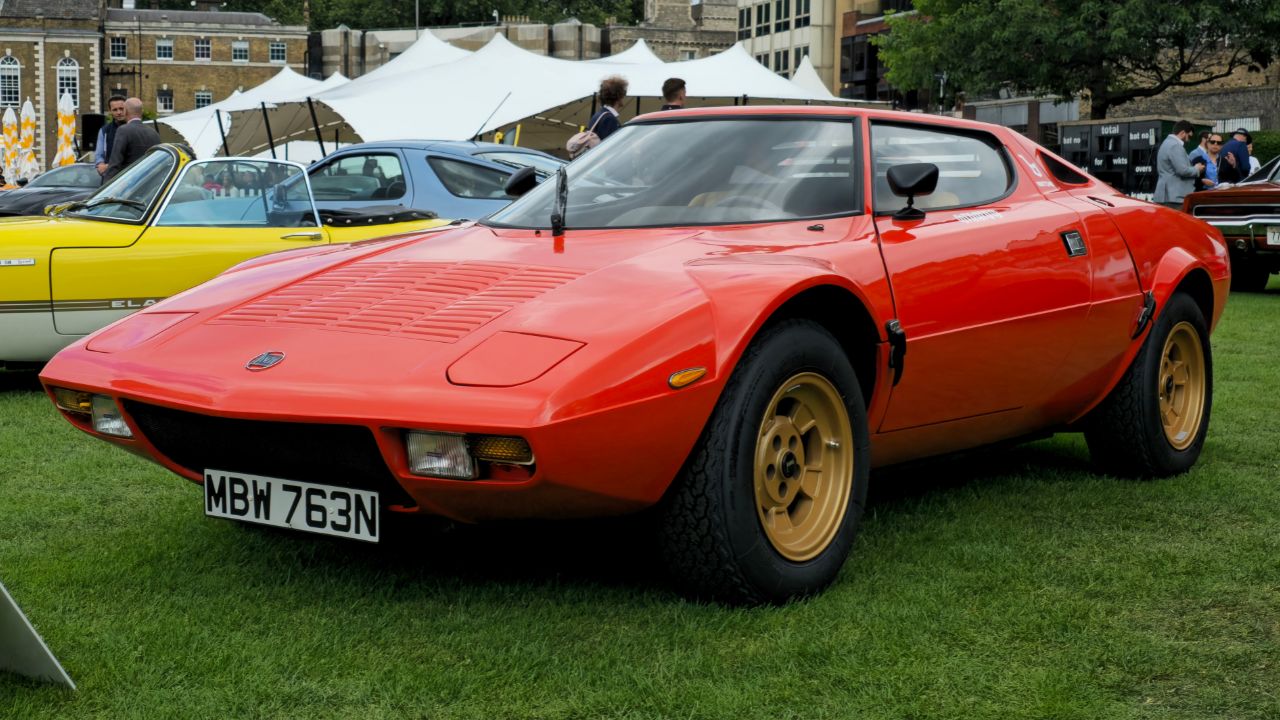
There are sports cars, and then there are cars that look like they escaped from a stage set built for a rallying fever dream. The Lancia Stratos HF Stradale belongs firmly in the second category. It was conceived around competition from the start, with a tiny wheelbase, dramatic Bertone styling, and a Ferrari sourced 2.4 liter Dino V6 mounted transversely behind the seats.
Auction and heritage sources consistently describe the road car as one of fewer than 500 Stradales built for Group 4 homologation, usually putting the total at 492, with around 190 hp in street form. That is enough to make it historically important before you even mention its three straight World Rally Championship titles. The Stratos was not merely cool. It reset the tone of what a rally homologation car could look and feel like.
America missed out on the Stratos in the way it missed out on many of the greatest homologation specials of the era: no official sales effort, no meaningful market plan, and no practical reason for Lancia to spend the money needed to make such a niche machine work here.
Hagerty’s overview of cars never sold in North America includes the Stratos while noting that an individual example later came to the U.S., which is exactly the distinction that matters. Americans could eventually import one. They could not walk into a dealer and buy the thing new. That matters because the Stratos is exactly the sort of car that would have become legend here on contact. It already is, only from a frustrating distance.
Porsche 959

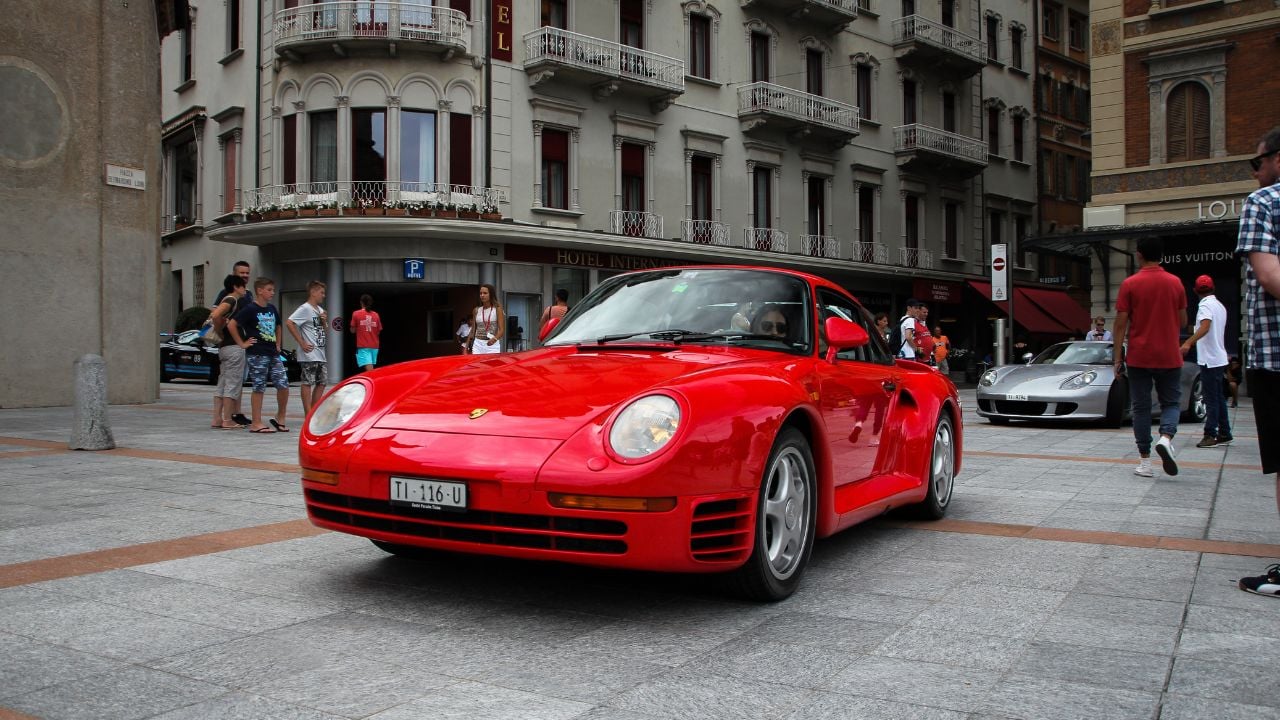
The Porsche 959 may be the most famous “forbidden fruit” car in this whole conversation because Americans did not merely miss it. They spent years arguing with the law over it. Porsche’s own heritage materials still describe the 959 in appropriately reverent terms: a technological flagship with a 2.85 liter twin turbo flat six producing 450 hp, electronically controlled all wheel drive, and production limited to 292 cars.
In its time it was not simply quick. It was a glimpse of the future wearing a 911 silhouette. That is what made the 959 so intoxicating. It combined supercar pace with engineering sophistication that felt almost unfair for the period, and it did so from a company already trusted by serious drivers. The car did not just look advanced. It seemed to arrive from ten years ahead.
Why did America miss it? Because the 959 could not meet U.S. federal requirements in time, and none were destined for standard U.S. sale when new. Contemporary reporting and later retrospectives make clear that the car’s failure to comply with U.S. safety and emissions rules is what kept it out of normal American hands, eventually helping inspire the Show or Display exemption years later. That long legal afterlife only deepened the car’s mystique. Plenty of unavailable sports cars feel like missed chances. The 959 felt like a challenge to the system itself. That may be why its absence in America became almost as famous as the car.
Renault Sport Spider
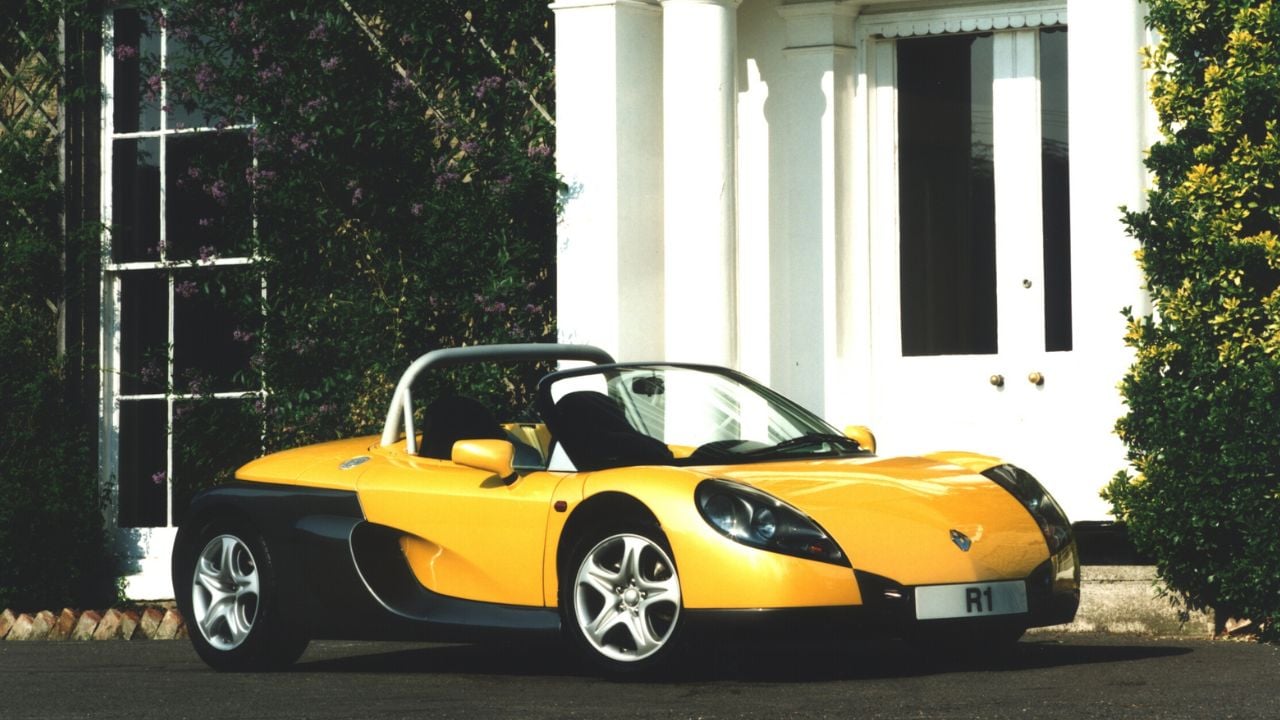
The Renault Sport Spider feels like the kind of car a major manufacturer would never dare approve now, which is part of why it remains so appealing. Renault’s own museum description captures the personality perfectly: 150 hp from a four cylinder engine, an aluminum chassis, very low weight, and a startling lack of comfort oriented compromises, including no power steering, no ABS, and in its earliest form not even a proper windscreen.
This was not a sports car designed to flatter the broadest possible audience. It was designed to feel raw, exposed, and vivid, more like a road legal one make race series special than a conventional roadster. With 1,726 built from 1996 to 1999, including 90 Trophy versions, it never had the volume to become mainstream even in Europe, but that only adds to its charm now.
The reason America missed it is much simpler than the car itself. Renault had already left the U.S. market by 1987, years before the Spider went on sale in 1996, so there was no active American retail presence to bring it here. Road & Track’s recent coverage was blunt about the result: the Renault Sport Spider was never officially sold in America.
That is a shame, because the Spider offered a flavor of sports car experience American buyers rarely get from large manufacturers. It was odd, light, mischievous, and just impractical enough to feel romantic. The kind of machine that would never have sold in huge numbers here, but absolutely would have earned a cult.
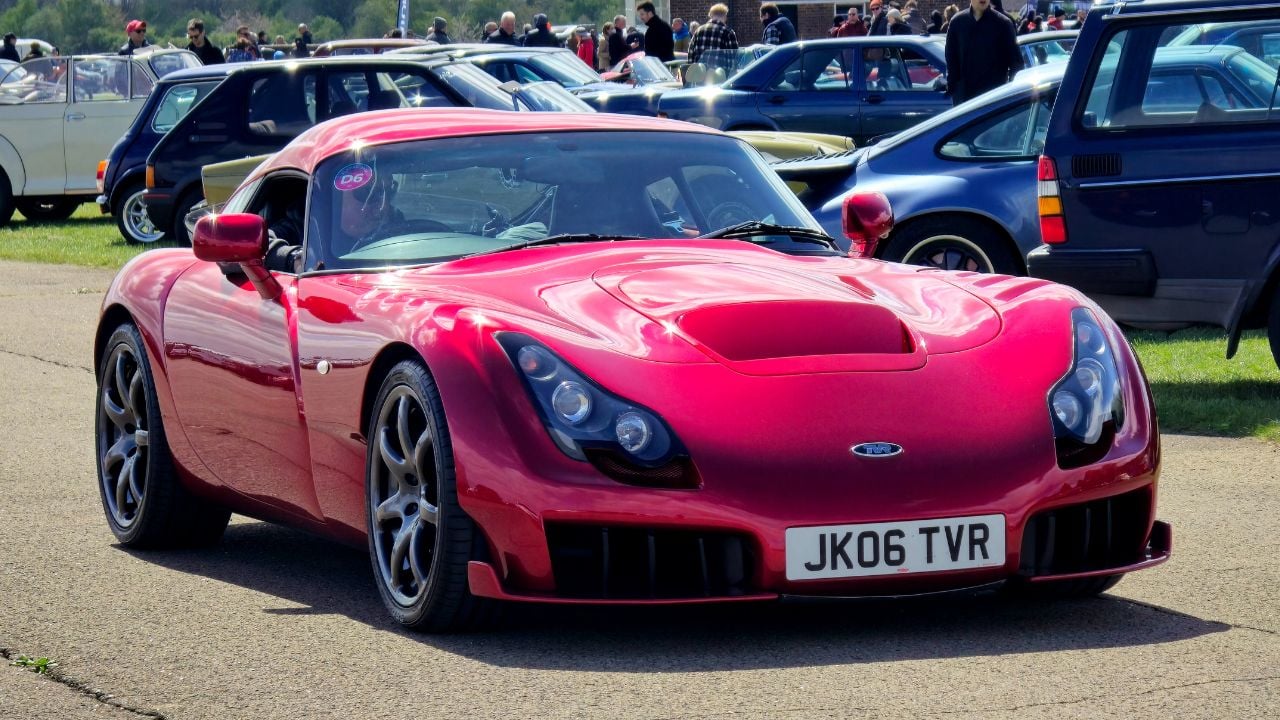
TVR Sagaris
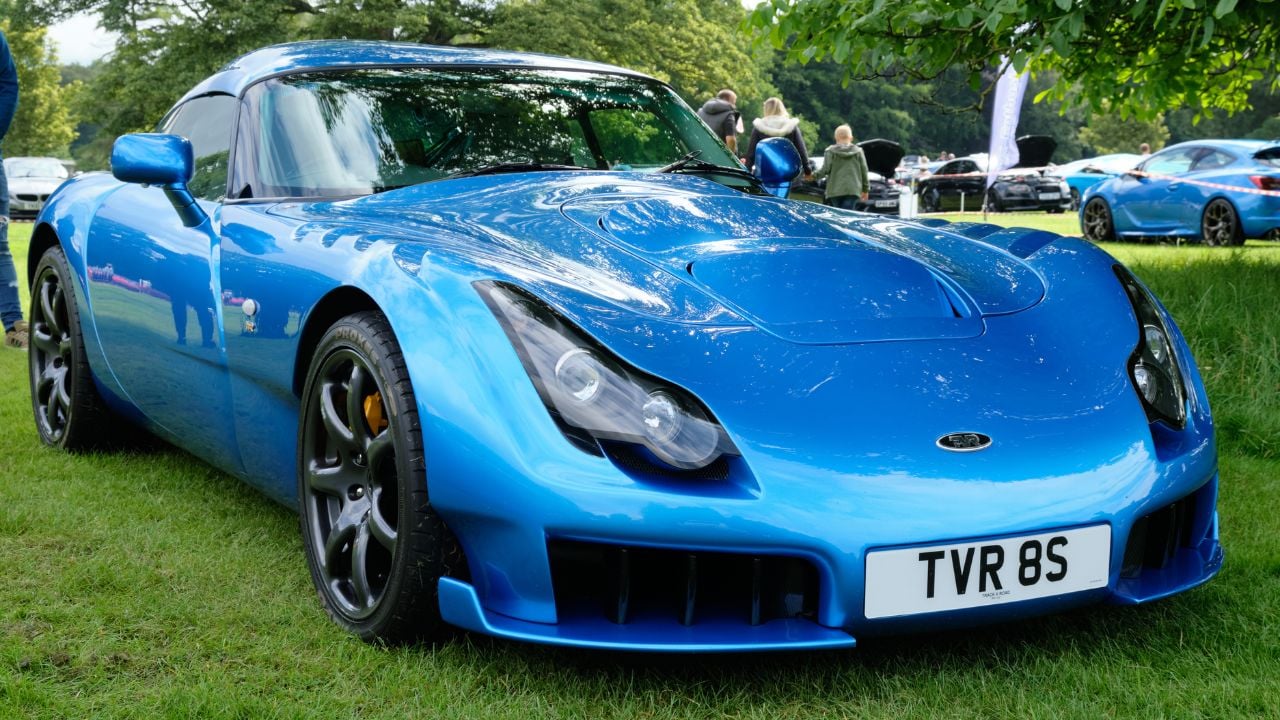
If the Renault Sport Spider was the stripped back minimalist, the TVR Sagaris was the complete opposite. This car looked like it had been drawn by somebody who believed restraint was a personal insult. Vents, slashes, wild surfacing, a long nose, a compact cabin, and underneath it all a naturally aspirated 4.0 liter straight six with up to 406 bhp.
British road test sources still describe it as one of the maddest and most memorable TVRs ever built, and that feels about right. The Sagaris had the kind of design that made parked cars look dangerous. It was not polished in the German sense. It was theatrical, handmade, and gloriously unreasonable, which is exactly why enthusiasts still talk about it with the mixture of affection and caution normally reserved for very charismatic bad ideas.
America never got the Sagaris because TVR itself was already gone from the U.S. retail picture long before the car arrived. Hagerty notes that TVR stopped selling cars in America for good around 1987 after being burned by its earlier U.S. experience. The Sagaris did not appear until 2005, which meant there was no official American path for it in the first place. That matters because the Sagaris feels exactly like the sort of machine that would have built a cult following overnight here.
Americans have always had room in their hearts for wild, difficult, overpowered sports cars with suspicious ergonomics and unforgettable styling. The Sagaris would have fit that tradition perfectly. Instead, it became another legend admired from across the Atlantic.
The Cars That Hurt More Because We Never Got Them
The most interesting thing about all six of these cars is not simply that they stayed away from U.S. showrooms. It is that each one represents a different version of what a sports car can be. The Alpine is the modern lightweight purist. The Toyota is the delicate origin story. The Stratos is rally bred theater. The 959 is forbidden technology.
The Renault is rawness from a major manufacturer. The TVR is chaos with headlights. That range is what makes the absence feel so rich. America did not miss six versions of the same idea. It missed six wildly different answers to the same question: what makes a sports car unforgettable?
Maybe that is why cars like these linger so strongly in the imagination. Distance improves myth, and unavailability sharpens desire. A great sports car already invites fantasy. A great sports car that never officially came here becomes something even more powerful. It becomes a private obsession shared by thousands of people who all had to admire it the hard way, through stories, photos, and the occasional imported example that felt almost unreal in the wild. The American market has always had plenty to enjoy. It just never had these six when it mattered most.