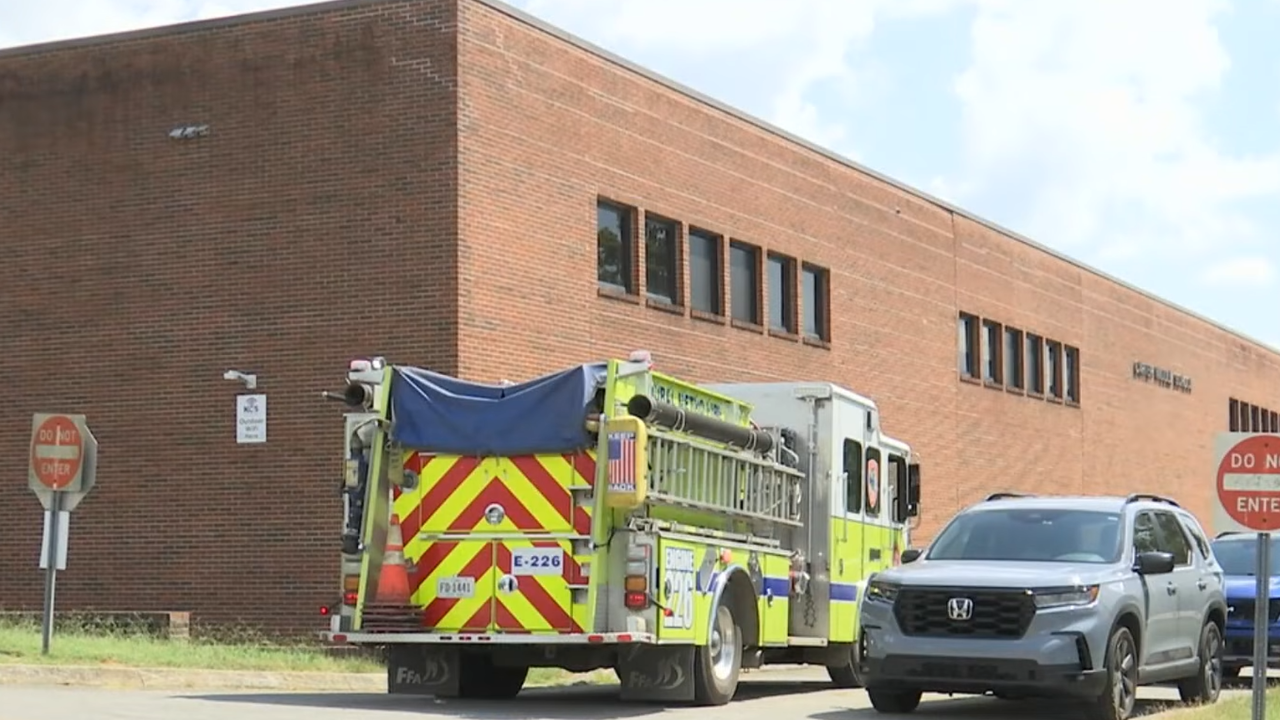
A bomb threat written on a bathroom wall sent roughly 600 Carter Middle School students onto a football field in eastern Knox County, Tennessee, on Sept. 4. By the time the emergency was over, 21 students had been taken to hospitals with heat-related illnesses.
The Knox County Sheriff’s Office said it was notified of the threat at about 9:56 a.m. Students were moved to the field around 10:25 a.m. while K-9 teams searched the school, then allowed back inside at approximately 11:27 a.m. The sheriff’s office estimated they spent about 50 to 55 minutes outside.
Knox County Schools Superintendent Jon Rysewyk has defended the staff’s initial response, saying employees followed the district’s existing evacuation procedures and brought out water, offered shade, prioritized medically fragile students, and opened an air-conditioned field house. But he also acknowledged a consequential gap: the all-clear came before every student had actually received water.
Students who spoke with WATE described the evacuation differently from the district’s broad account. They said water and shade did not reach everyone, described classmates becoming sick, and said some students asking for water were told to wait while staff worked through the emergency.
Out In The Heat
Embedded media follows; please allow a moment to load.
The evacuation unfolded with temperatures in the upper 80s and a heat index in the mid to upper 90s, according to WBIR. Rysewyk said more than 20 students were transported as a precaution and all were discharged within hours. WATE reported the total as 21.
Two students interviewed by WATE said they watched classmates struggle after the evacuation. One described a friend who had to be carried because he could barely walk. Another student, who said she has asthma, recalled asking for water, being told to wait, and later becoming dizzy and light-headed.
The students also alleged that teachers began taking phones from some students who were texting their parents. That claim comes from the students’ account in WATE’s report; the supplied district response did not establish why phones were taken or how broadly that happened.
Rysewyk did not dispute that some students went without water before the evacuation ended. He said staff had enough for everyone and were distributing it systematically, but students were cleared to return to the building before that process reached every child.
A New Variable
The district’s after-action review is examining whether Carter Middle followed its existing safety plan, how long different parts of the response took, and what should change. Rysewyk said the basic priority of getting students out of a threatened building quickly is unlikely to change.
What may change is what happens next. He said the district needs clearer decision points once students reach an evacuation site so staff can account for environmental conditions such as extreme heat.
That distinction became immediately relevant. When Hardin Valley Middle School received another bomb threat on Sept. 8, students were moved into the nearby high school’s gym rather than an outdoor site. Rysewyk said staff assessed the circumstances and selected the gym as the alternate location.
Carter Middle also received another threat that morning. Rysewyk said officials suspected copycat behavior but emphasized that each threat still had to be treated seriously.
What Comes Next
The original Sept. 4 threat remained under investigation. Rysewyk said officials had strong leads and believed they could be close to identifying who was responsible.
For the district, the other unresolved question is now procedural. Carter’s staff may have followed the evacuation plan they had, but the superintendent has acknowledged that the plan did not fully account for what nearly an hour outside with a heat index in the mid to upper 90s could mean for hundreds of middle school students.