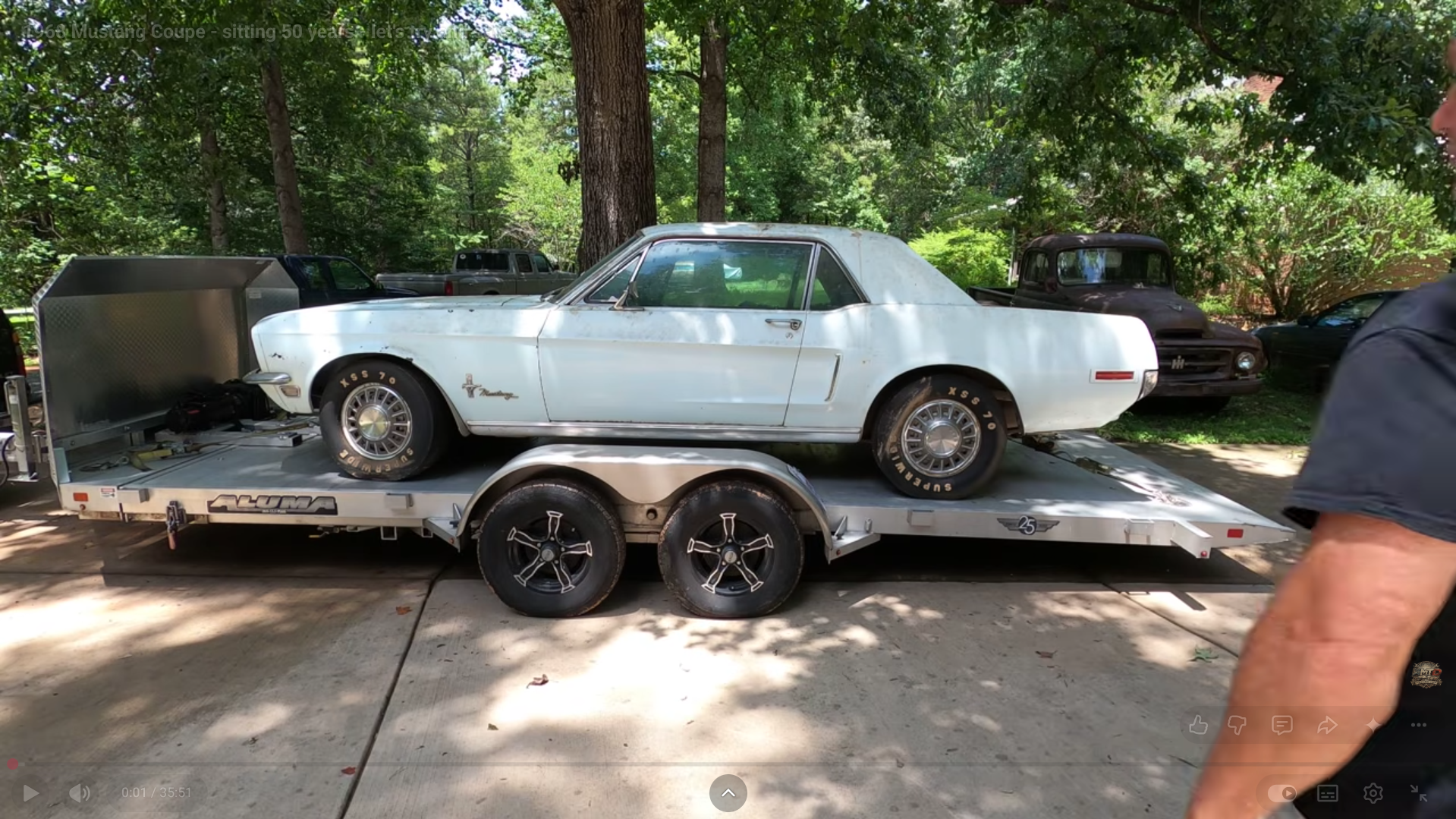
Barn finds rarely emerge ready for the road, and this 1968 Ford Mustang is no exception. After spending roughly 50 years tucked away in a Georgia barn, the long-dormant coupe has finally been dragged back into daylight for the first stages of what could become a full mechanical revival.
The Mustang was recovered by Scott from the YouTube channel Always More To Do, who had already rescued another classic Mustang from the same property. Before any attempt could be made to start the engine, however, the car needed a serious cleanup and an honest assessment of what five decades of storage had done to it.
Mechanically, the outlook is still uncertain. The Mustang does not currently run, has no functioning brakes, and arrived with only three tires holding air, meaning even unloading it from the trailer required some patience.
Its cosmetic condition initially looked surprisingly promising for a car that had been parked for so long. Once the layers of dust and barn grime started coming off, though, it became clear that parts of the body had survived much better than others.
Fifty Years Of Dirt Came Off First
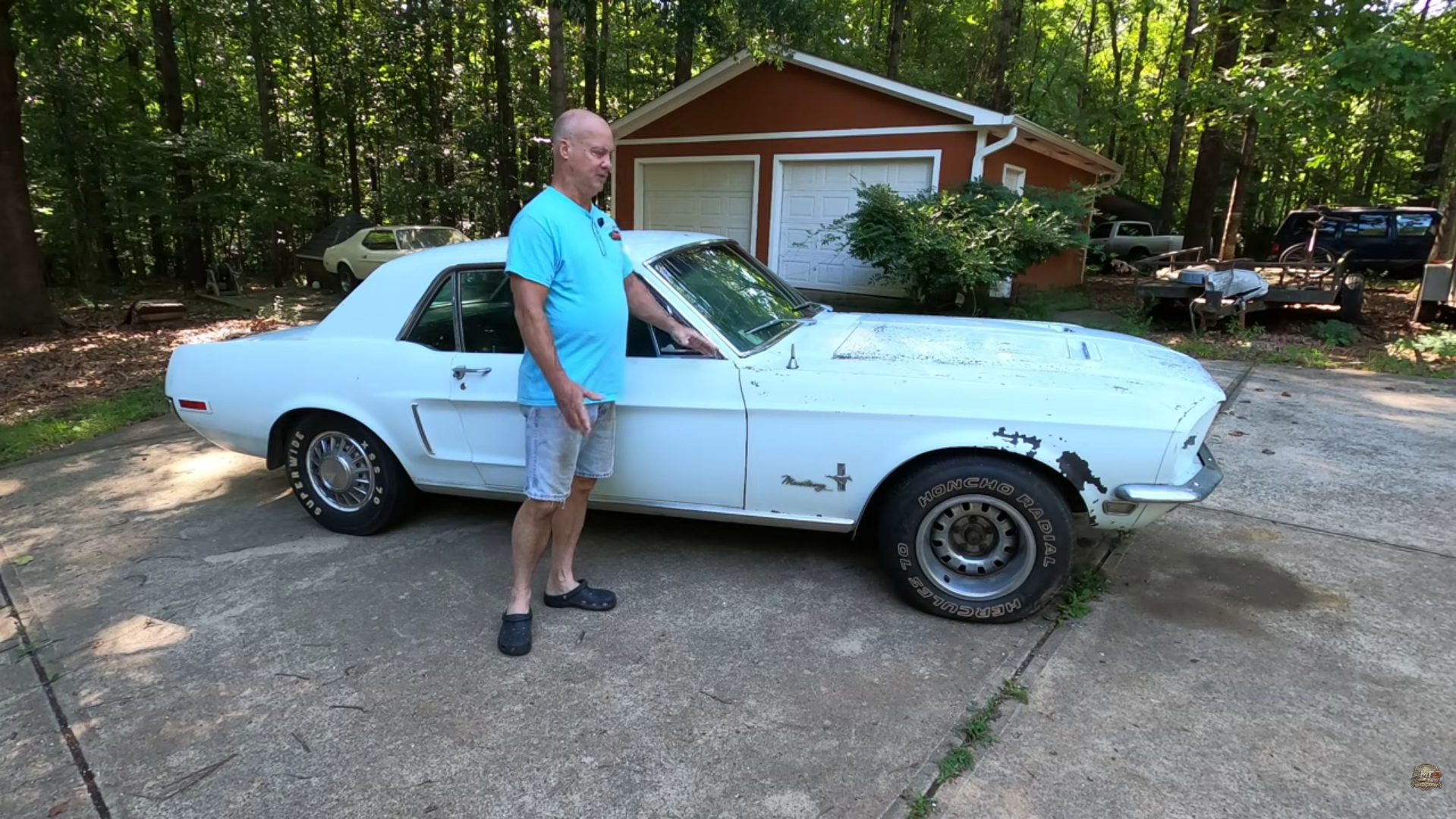
Scott began with a pressure washer, attacking decades of loose debris around the body, trim, chrome, and panel gaps. Some of the contamination came away easily, while other areas appeared to contain heavier grime that needed considerably more effort.
A hand wash followed to reveal what was actually hiding underneath. That was when the condition of the paint became easier to judge, particularly across the hood and front fenders.
The rear half of the car showed some encouraging signs. From the doors backward, much of the finish appeared capable of being cleaned and revived, while the front end told a very different story.
The Rear Paint Could Be Saved
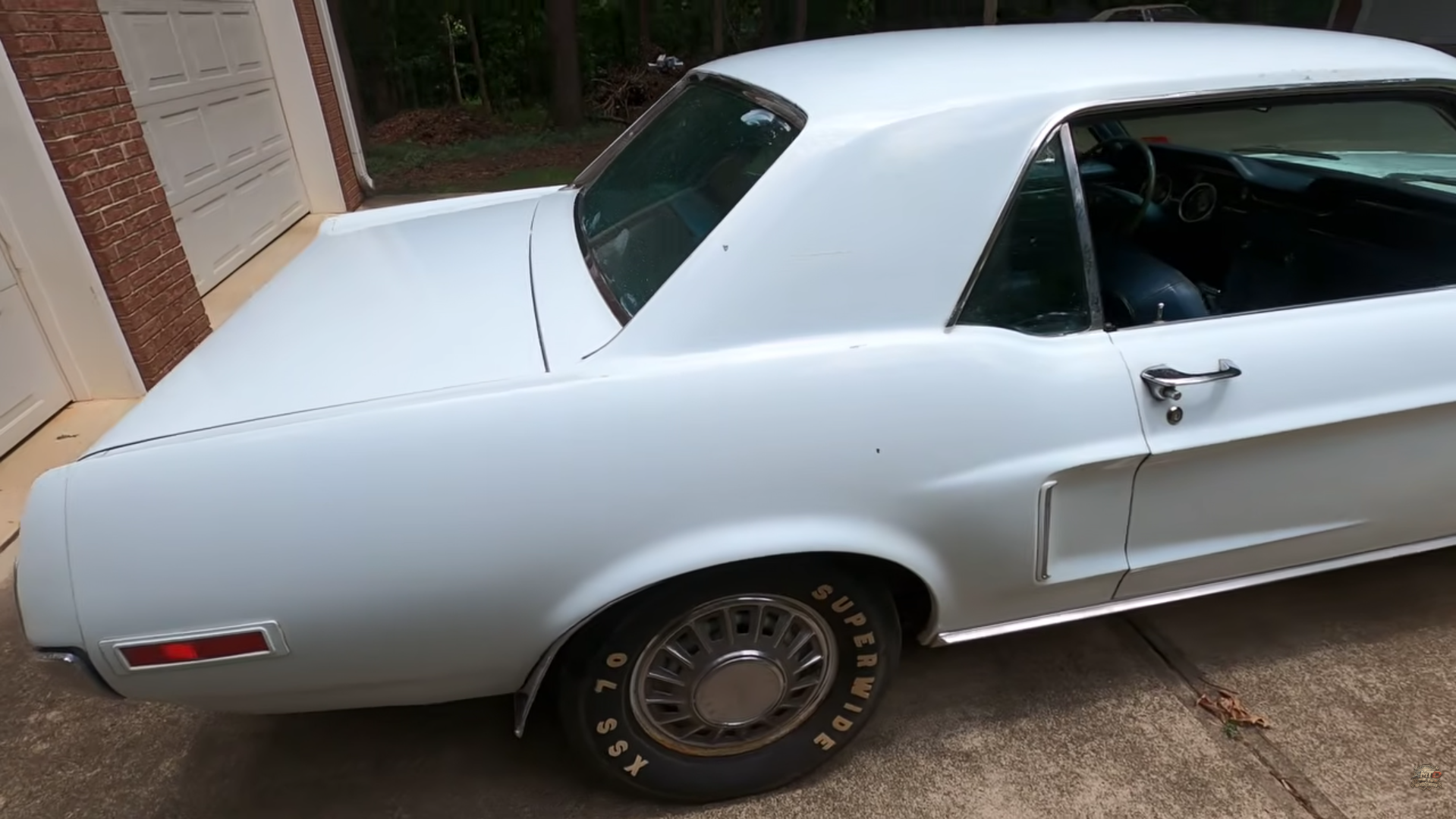
The Mustang received a clay-bar treatment across the more promising sections of the body to pull embedded contamination from the paint. That removed a surprising amount of staining, although some deeper marks remained and required compound.
Scott then tested a small section with polishing compound and found that the old paint still had some shine left in it. Two passes were ultimately needed across most sections, with the horizontal surfaces proving particularly stubborn after decades of collecting dirt.
The vertical panels cleaned up more easily, although they still required a second compounding pass for the best result. By the time the work was finished, the rear portion of the Mustang looked dramatically better than it had when it emerged from the barn.
The Front End Was Beyond Saving
Unfortunately, no amount of detailing was going to rescue the nose. Scott concluded that the hood and front fenders had been repainted at some point, likely after an earlier accident or repair.
That old repaint had deteriorated badly, with loose material flaking away even during washing. Attempting to machine-polish those panels would likely have stripped even more paint and potentially exposed bare metal.
For now, that means the front section needs sanding and repainting rather than detailing. A full respray may eventually happen, but the immediate priority appears to be getting the Mustang mechanically healthy enough to drive again.
The Real Revival Has Yet To Begin
Getting this 1968 Mustang back on the road will require far more than a fresh-looking body. Scott expects the car to need tires, brake work, wheel cylinders, attention to the fuel system, and a thorough inspection of the engine before any serious attempt is made to run it.
That engine evaluation will determine how ambitious the next stage becomes. After sitting for roughly half a century, there is no guarantee that the existing powertrain will simply wake up with fresh fluids and fuel.
Even so, the first phase has already revealed that this Mustang is far from hopeless. Half the paint responded impressively to careful cleaning and compounding, while the structure appears intact enough to justify further work.
After 50 years in hiding, this Mustang has at least made it far enough to get another chance. What would you do with this old Mustang — preserve as much of its barn-find character as possible, or give it a full restoration? Should they rebuild the original drivetrain if it can be saved, or use the opportunity to upgrade it with a more modern V8 and brakes? Let us know in the comments.