The 1950s were a wild and wonderful time for car design. Fresh off the optimism of World War II’s end and riding the wave of the Space Age, automakers let their imaginations run wild. Rockets were flying, television was booming, and America was dreaming big, and its cars reflected that bold new future.
Designers took cues straight from jet fighters and science fiction, sketching vehicles that looked ready to blast off rather than back out of a driveway. Chrome sparkled under showroom lights, tail fins reached for the stars, and bubble-top canopies gave drivers panoramic views that felt downright cosmic.
Concept cars became rolling art pieces that showed the public what “tomorrow” could look like. Some ideas were practical innovations decades ahead of their time, while others belonged in a sci-fi movie; all of them captured a rare sense of optimism that’s hard to replicate today.
Here are 12 vehicles from the 1950s that still look surprisingly futuristic, even in the 21st century.
1956 Buick Centurion

This concept car featured a bubble-top canopy instead of a traditional roof, giving passengers a panoramic view that wouldn’t look out of place on a modern autonomous vehicle. The rear-mounted camera system that fed images to a dashboard screen was genuinely ahead of its time; rearview cameras wouldn’t become commonplace on production cars until decades later.
Buick only built one, and it toured the auto show circuit as a glimpse of motoring’s future.
1959 Cadillac Eldorado

Those massive tail fins weren’t just for show; they represented the peak of automotive extravagance and remain instantly recognizable decades later. At nearly 19 feet long and featuring bullet-shaped taillights, the Eldorado looked like it could achieve liftoff at any moment.
The design was so bold that it still influences custom car builders and retro-futuristic aesthetics today.
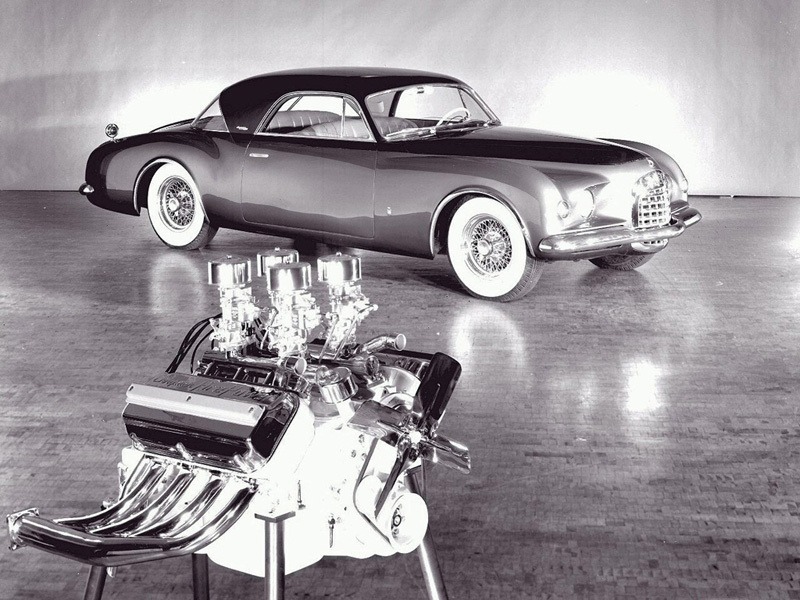
1951 Chrysler K-310

This concept car introduced Americans to the idea of a true grand touring coupe with European influences and American ambition. The K-310 featured a sleek, low profile with wire wheels and a distinctive grille that pointed toward more aerodynamic thinking.
Some of its styling themes echoed in later Chrysler designs, proving that concept-car ideas can filter into production over time.
1955 Lincoln Futura

If this car looks familiar, that’s because it was later transformed into the original Batmobile for the 1960s TV series. The original version featured a double-bubble canopy, dramatically curved bodywork, and a pearlescent white paint job that seemed to glow.
Ford reportedly spent around $250,000 building it, a figure that works out to several million dollars today, making it one of the most expensive concept cars of its era.
1958 Ford Nucleon

This concept never got past the scale model stage, but the idea was genuinely wild: a nuclear-powered car with a small reactor in the trunk. Ford envisioned a future where drivers would swap out depleted reactor cores at service stations instead of filling up with gas.
While this alternative fuel technology never materialized (thankfully, perhaps), the design itself looked like pure science fiction with its compact cabin pushed forward and the power unit clearly visible in the rear.
1956 Oldsmobile Golden Rocket

This concept featured a tilting roof canopy that opened to let passengers in, similar to modern supercars with gullwing or scissor doors. The interior was just as futuristic, with individual pods for the driver and passenger, plus a center console designed around luxury and convenience.
Oldsmobile was serious about luxury, and the Golden Rocket showed what happened when designers had permission to dream big.
1959 Chevrolet Corvette Sting Ray Racer

This was a pure racing concept that introduced the Stingray name and a design language that would define Corvettes for years. The wraparound windscreen, hidden headlights, and knife-edge body lines created a silhouette that still looks modern.
It was campaigned in SCCA competition by drivers including Dr. Dick Thompson, proving it wasn’t just a pretty show car but a genuine performer.
1954 Plymouth Explorer

This Ghia-built Plymouth show car was designed by Luigi Segre and wore sleek, Italian-influenced styling that looked radically different from Plymouth’s production lineup.
Though it never reached production, the Explorer showed that American manufacturers were experimenting with layouts that wouldn’t become common until much later.
1953 General Motors Firebird I XP-21
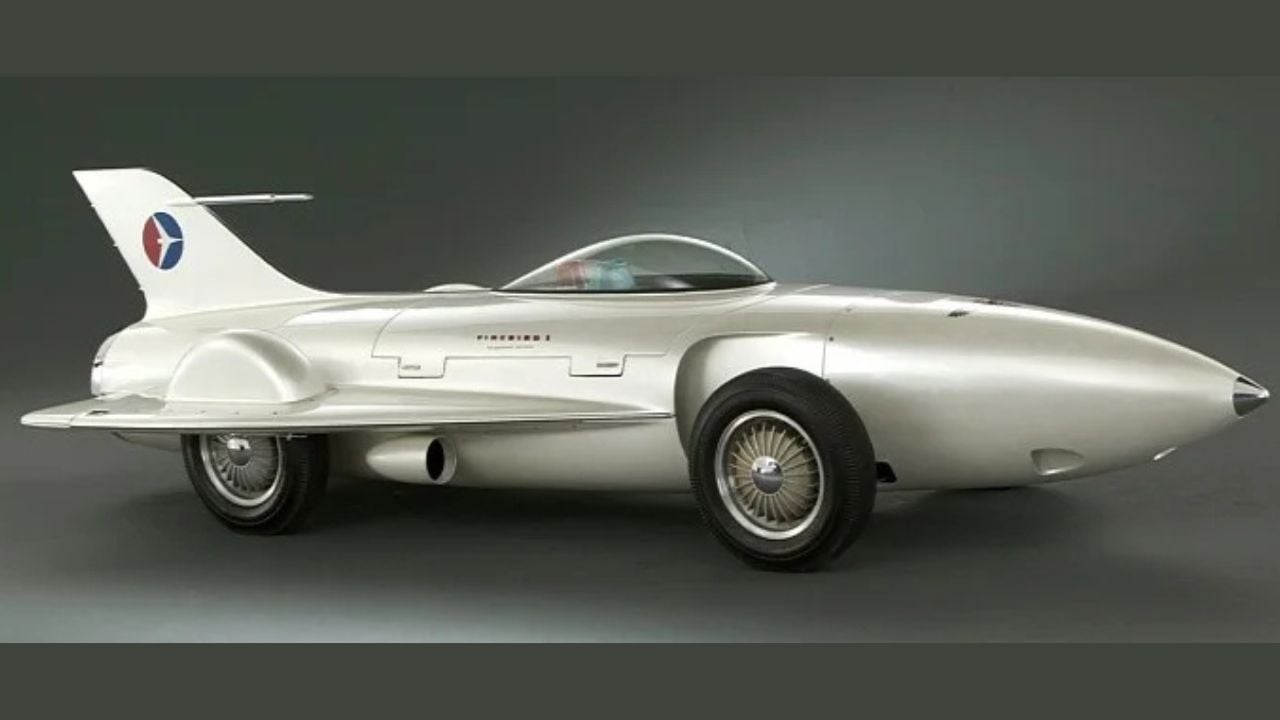
This wasn’t a car so much as a jet fighter on wheels, complete with a tail fin and a gas turbine engine borrowed from aircraft technology. GM built it as a serious exploration of turbine power for automobiles, and it actually ran and drove, though the 370-horsepower engine was hardly practical for daily use.
The Firebird I proved that the line between aerospace and automotive engineering was getting blurrier by the day.
1956 Packard Predictor

Packard’s Predictor concept featured hidden headlights, a reverse-slant rear window, and other futuristic styling touches meant to preview a possible design direction for the brand. The Predictor introduced ideas that would become standard features decades later, particularly in luxury vehicles.
It’s a shame Packard didn’t survive to see many of these innovations reach production across the industry.
1956 Pontiac Club de Mer
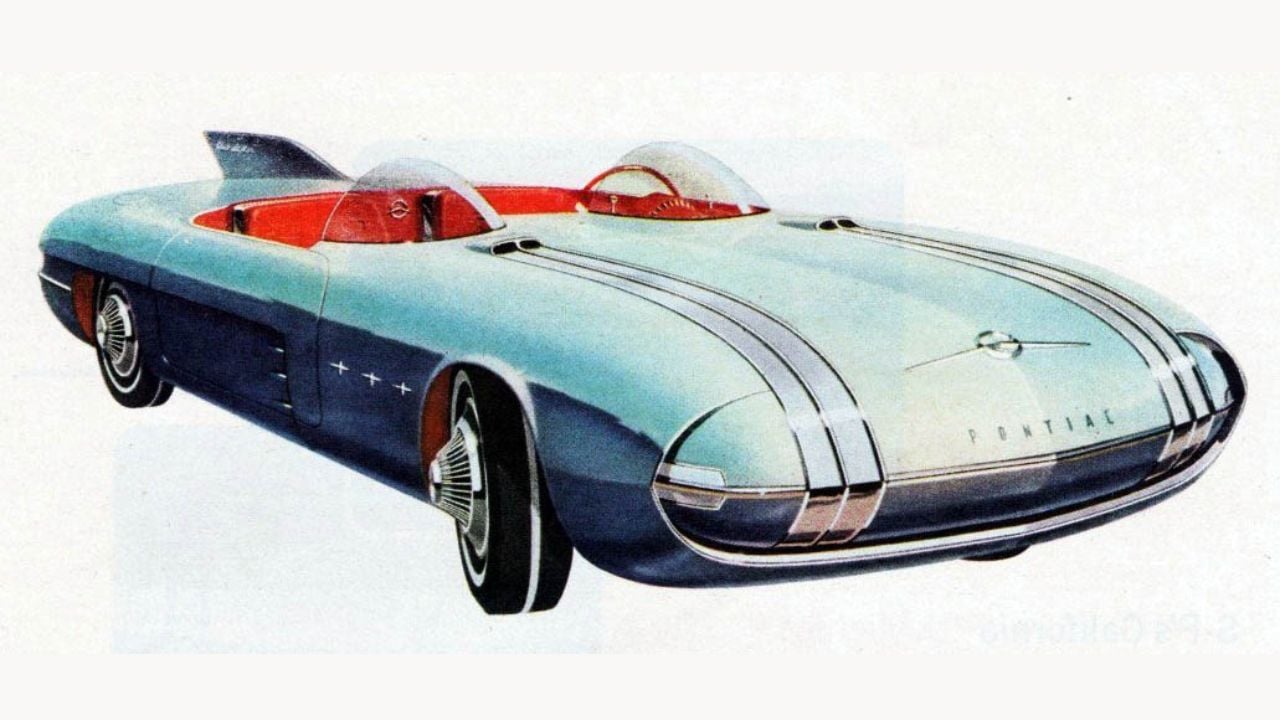
This low-slung concept looked more like a Le Mans racer than a typical American show car, with smooth curves and minimal ornamentation. The twin-cockpit design gave each occupant their own space, separated by a central divider that housed the instruments. Pontiac was clearly thinking about performance and aerodynamics in ways that wouldn’t become mainstream until European sports cars changed the conversation.
1957 Cadillac Eldorado Brougham

This production car actually made it to showrooms, with only 704 built over two model years, and its base price was over $13,000 when new, roughly the kind of money that translates to well into six figures today. It featured air suspension, automatic headlight dimming, and a brushed stainless steel roof at a time when such luxuries were almost unheard of.
The Brougham proved that Cadillac’s futuristic thinking wasn’t limited to concept cars they’d never build.
Tomorrow, Built Yesterday

Looking back at these 1950s designs, it’s clear that automakers were trying to build the future. Some of their predictions, like backup cameras and retractable headlights, eventually came true. Others, such as nuclear reactors in the trunk, thankfully, remained in the realm of wild imagination.
What stands out most today is how fresh many of these designs still look. The lines, proportions, and sheer ambition remind us that bold ideas tend to age far better than cautious ones.
The 1950s proved that the future doesn’t always arrive on schedule, but when it does, it’s often inspired by dreamers who dared to imagine it decades earlier.