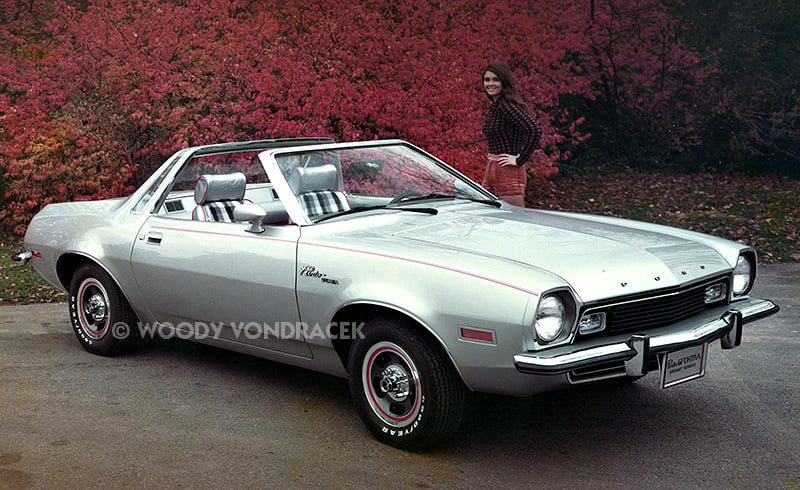
Automakers have no shortage of forgotten experiments, but some survive only through a handful of photographs and the recollections of the people who helped build them. This unusual Ford Pinto–based targa car is one of those rare cases — a hand-crafted design exercise that never reached production, yet reveals just how experimental Ford was willing to be in the early 1970s.
Recently surfaced archive images, paired with firsthand insight from one of the artisans involved, offer a rare look at a Pinto that was transformed into something far more distinctive than its economy-car roots would suggest.
A Pinto, Reimagined
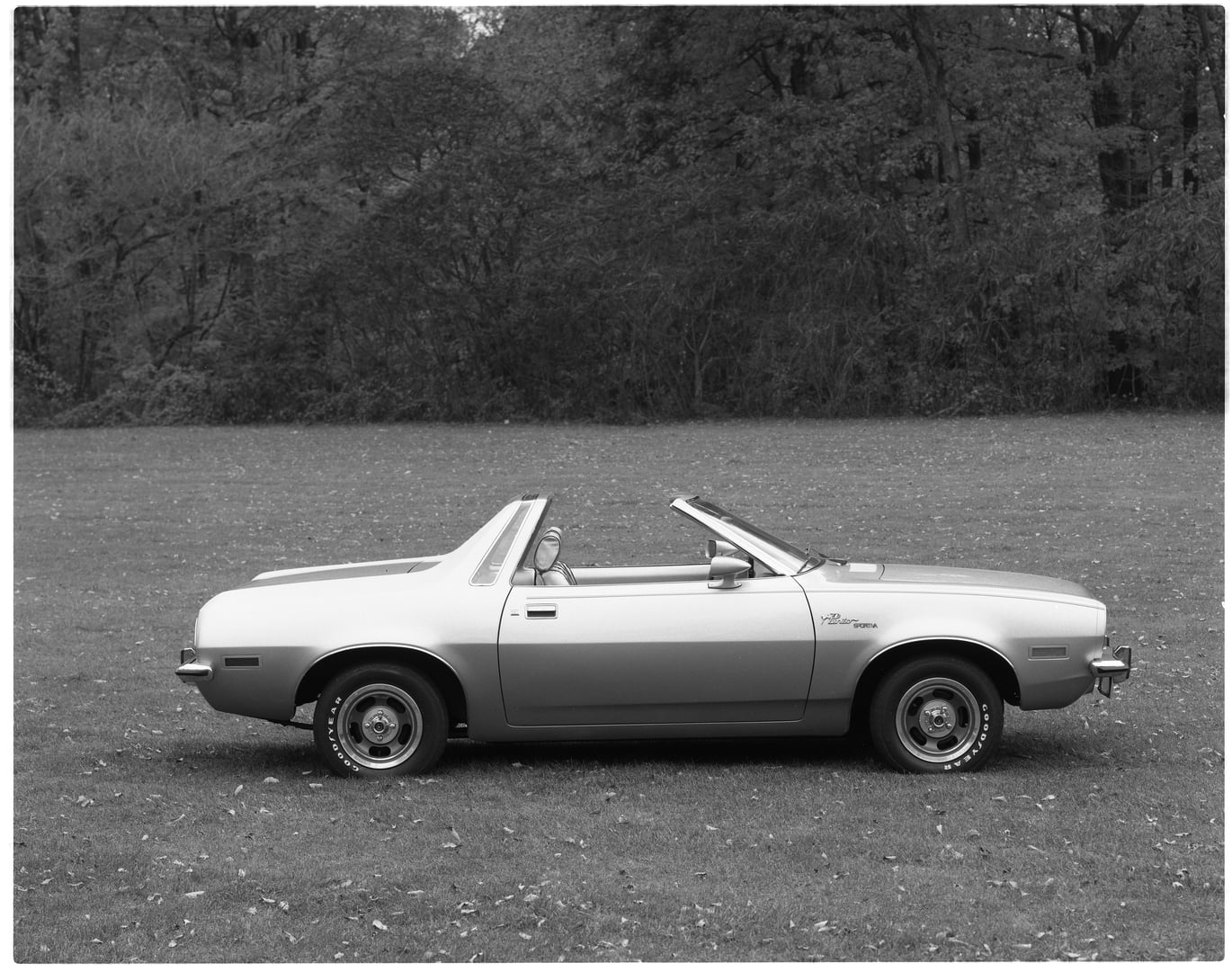
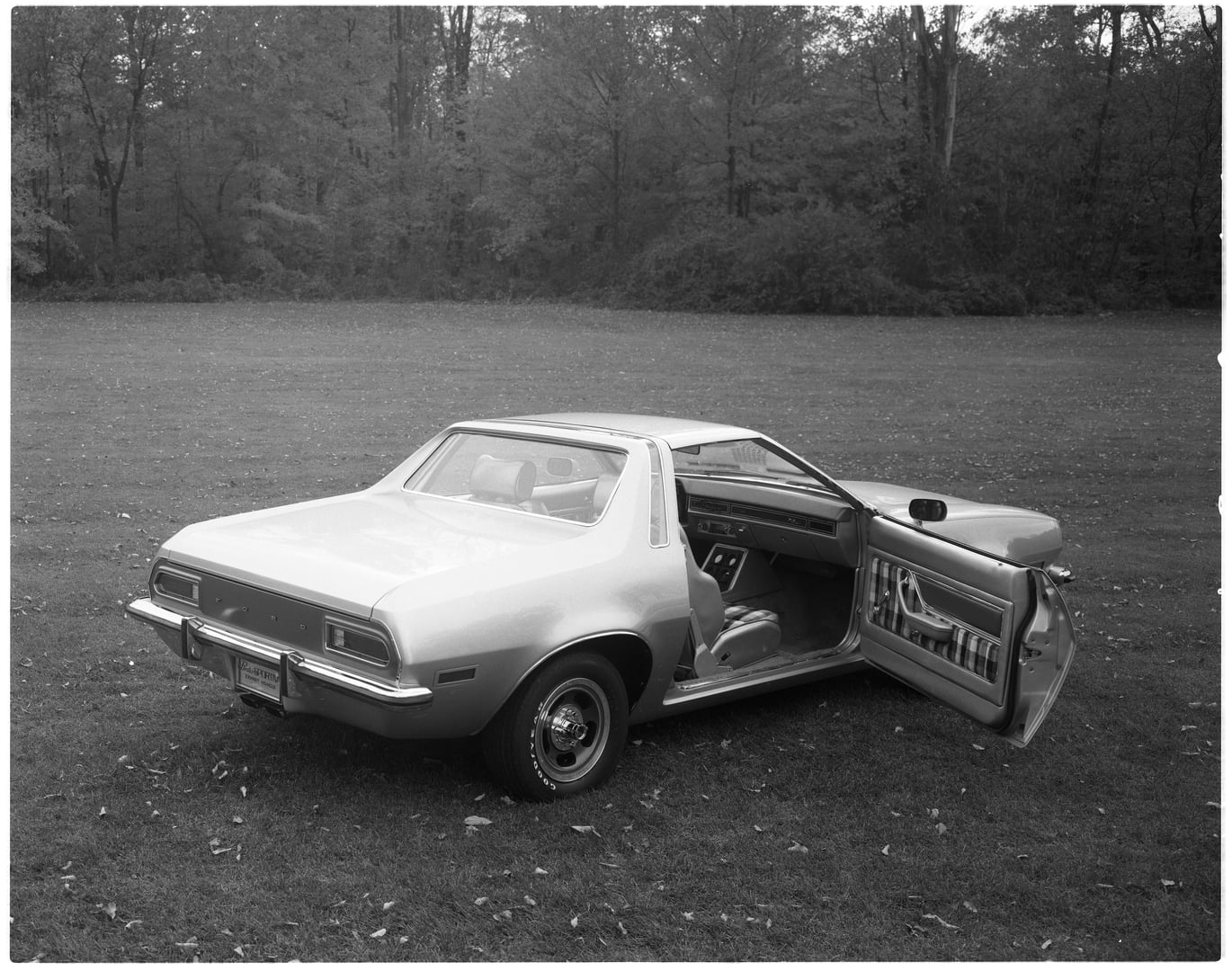
At a glance, the car’s proportions clearly place it within the Pinto family. But nearly everything above the beltline tells a different story. The fixed roof was replaced by a removable targa panel, while a wide, body-colored hoop frames the cabin and defines the open-air layout.
The result is a compact coupe that feels closer in spirit to contemporary European targa designs than anything Ford sold at the time, suggesting this project was less about production intent and more about exploring new design ideas.
Here at Guessing Headlights, we’ve always had a soft spot for targa tops and T-tops — the kinds of designs that split the difference between a coupe and a convertible while giving cars a distinctive personality of their own. That’s why this Pinto-based targa experiment resonates with us. It takes a humble platform and applies an idea we genuinely love, resulting in something unexpected, playful, and unmistakably of its era.
A Vertical Window That Redefined the Targa Hoop
One of the most unusual elements of the Pinto targa experiment isn’t the removable roof panel itself, but the window integrated directly into the targa hoop, a detail we feel is a striking design choice. The panel sat within the roll-bar-shaped structure, visually dividing it and creating the appearance of a double roll bar when viewed from the side.
According to Woody Vondracek, who fabricated the piece, the window was made from 3/16-inch thick acrylic, formed over a mold, and polished smooth. It was held in place by a custom-machined, chromed, solid brass molding, designed with a slot sized precisely to accept the acrylic
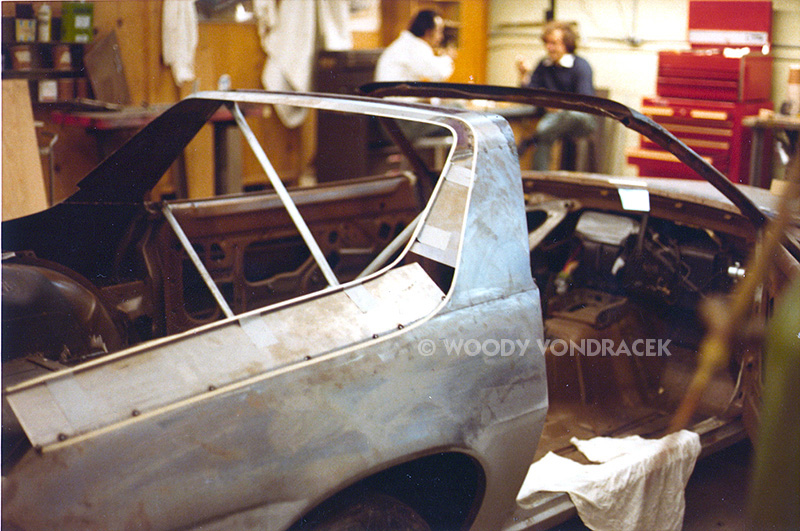
Two full-width moldings — one on each side of the opening — secured the panel, with seams positioned low on either side of the hoop. During installation, the molding was filled with black silicone before the acrylic was slid into place. The assembly was then fastened to the body using machine screws threaded into tapped holes in the molding itself.
Once installed, the excess silicone was carefully cleaned away, leaving only a thin black line visible along each edge of the window.
Despite its appearance, the structure itself wasn’t an actual roll bar. As Vondracek notes, it was a sheet-metal frame, designed to support the roof opening and the integrated window rather than serve as a structural safety component.
Purpose-Built Details Inside and Out
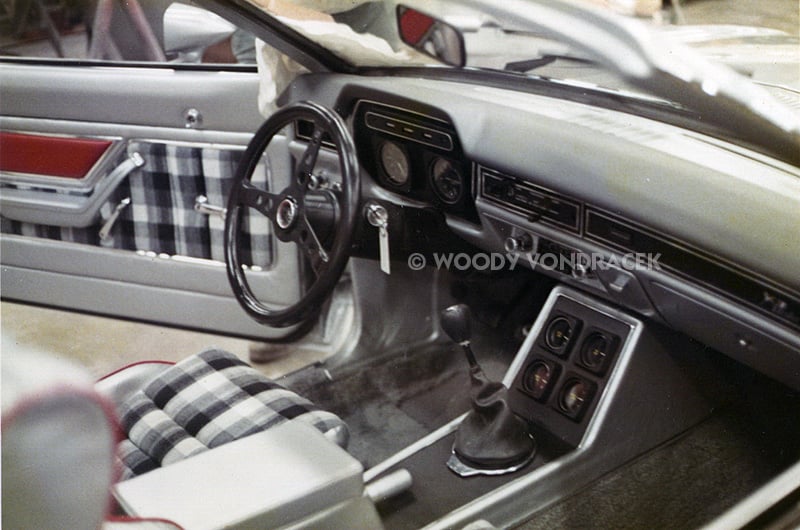
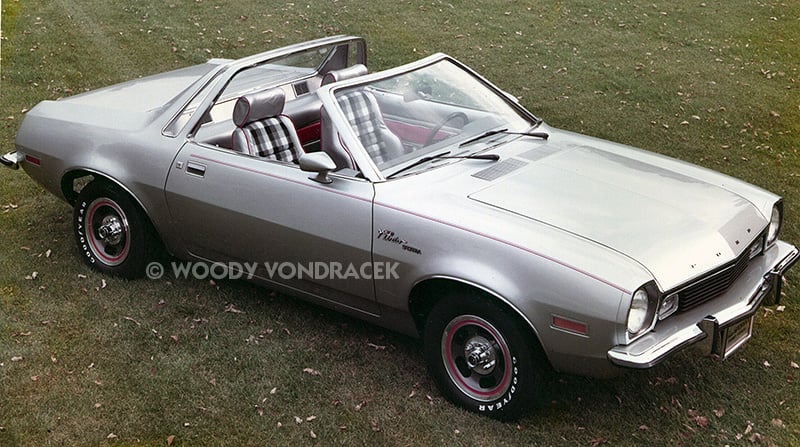
The interior reflects the same experimental mindset seen on the exterior. A custom instrument layout places the tachometer and speedometer directly in front of the driver. At the same time, additional gauges — including oil pressure, temperature, and fuel — are grouped neatly in the center console for easy visibility.
Whether the upholstery work was completed in-house or supplied by Ford isn’t definitively documented. Still, the overall execution aligns with the car’s role as a design exercise rather than a finished production prototype.
The fabrication effort extended to the front of the car as well. The grille was built explicitly for this project, with the chrome top and bottom bars formed from ¼-inch-thick 2024-T3 aluminum. Vondracek bent the pieces around custom forms using a roller device he constructed for the job.
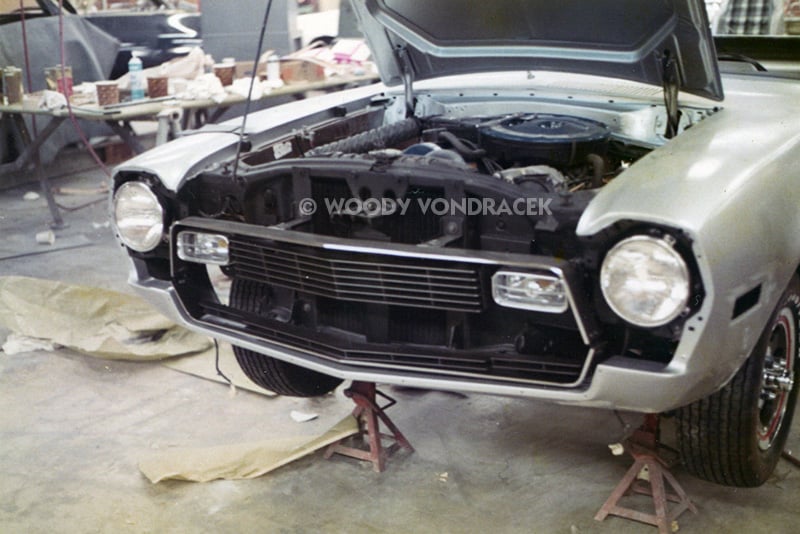
Each bar was made in left and right halves, carefully welded together at the center before being sent out for chrome plating. Only the leading edges received a bright chrome finish; the remaining surfaces were painted in a dark gray metallic shade known as Argent, a color widely used in Ford design studios during the period and often reserved for special projects and internal studies.
Thinner horizontal aluminum bars filled the grille opening, interlocking to create a layered, almost architectural look that feels far more deliberate and detailed than anything fitted to a production Pinto.
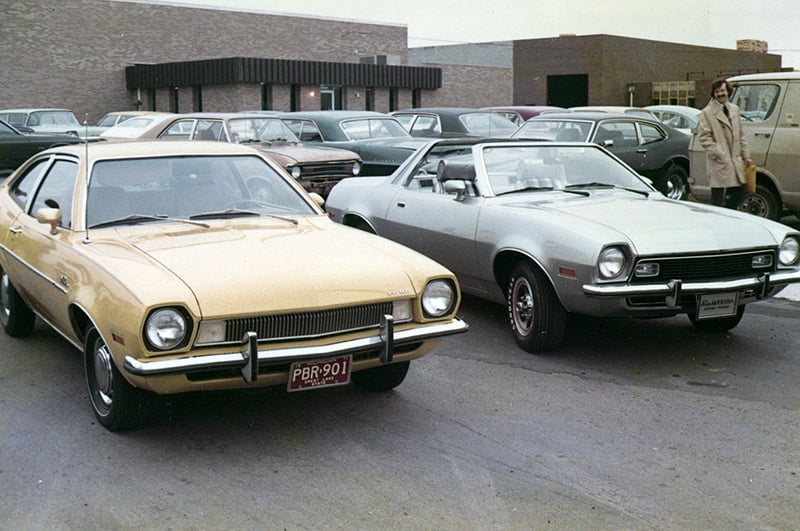
Some exterior components appear to have been sourced from elsewhere in Ford’s parts catalog. The parking lights, for example, are believed to be borrowed from a Ford Maverick, though that detail remains unconfirmed.
That kind of parts-bin experimentation was common inside automaker studios at the time, allowing designers to move quickly and evaluate proportions, lighting signatures, and visual balance without the delays of developing bespoke components for an internal project or dedicated tooling, while also keeping costs and timelines in check.
A Glimpse Into Ford’s Experimental Era
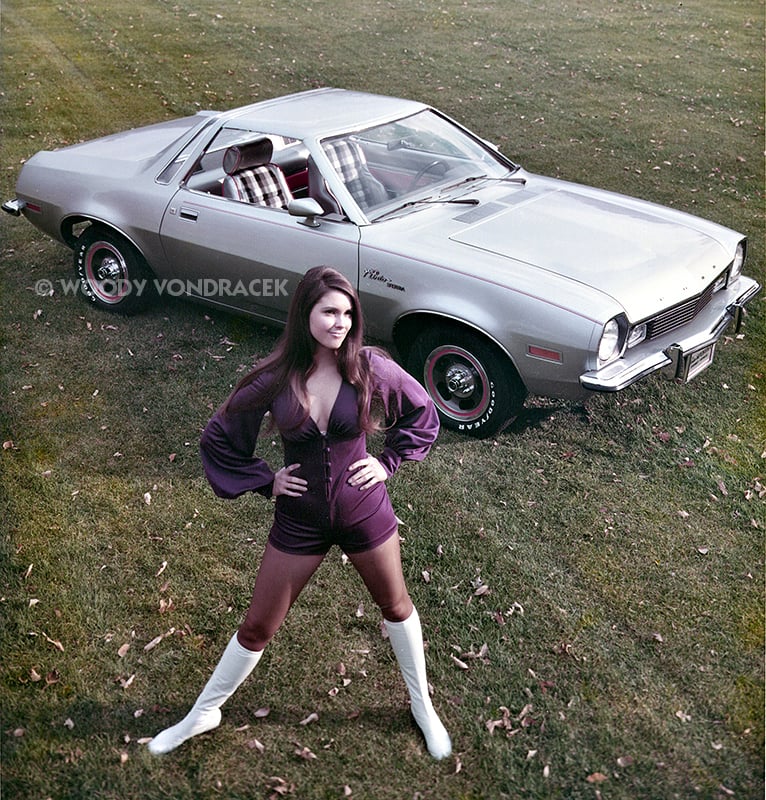
There’s no evidence this Pinto targa was ever intended to reach showroom floors. Instead, it appears to have been a hands-on styling and engineering study — the kind of internal project automakers frequently pursued in the 1970s to test ideas, materials, and proportions.
The photographs themselves reinforce that impression. Shot in fabrication spaces, parking lots, and relaxed outdoor settings, the car is presented in a way that feels intentional and unfiltered, capturing a genuine snapshot of experimentation in motion rather than a carefully scripted auto-show reveal.
An Unexpectedly Cool Experiment
Most experimental vehicles disappear quietly, leaving behind little more than a line item in an archive. In this case, original photography and firsthand fabrication notes preserve a rare snapshot of Ford’s willingness to push even its most modest platforms in unexpected directions, to see what might be possible at the time.
The Pinto targa may never have worn a window sticker or rolled onto a dealership floor. Still, decades later, it stands as a reminder that innovation often happens far from the spotlight — shaped by artisans, curiosity, and ideas that were never meant to play it safe.