
While the Ford Taurus is a relatively unknown name outside the United States, few people realize just how important the model was. Not only because of strong demand and sales, but also because of the way it changed the entire American auto industry. Every few years, a product appears on the market that completely turns a company’s situation around.
It doesn’t just attract many buyers who would never have considered that brand before, but it also sets standards that even far more famous rivals fail to follow.
The 1985 Taurus Shocked America’s Family-Car Market

When Ford debuted the Taurus and its twin, the Mercury Sable, in 1985, it gained a large number of buyers overnight, people who had previously driven only foreign cars, while the Honda Accord and Toyota Camry suddenly seemed like old news.
It’s hard to know exactly when Ford began work on the Taurus, and most stories say it happened in 1979, after the world was hit by the oil crisis. Still, before we get into the history of this legendary car, we need to look at what Ford’s internal policy was like during the 1970s.
Ford’s 1970s Strategy Collided With the Oil Crises
The company was led until near the end of that decade by Henry Ford II, while his right-hand man was the brilliant marketing expert Lee Iacocca. Their strategy was very simple: cars had to be big, powerful, richly equipped, and expensive. That strategy produced excellent results until the first oil crisis, 1973, after Egypt and Syria attacked Israel in the 1973 Yom Kippur War, followed by the Arab oil embargo, and then another crisis arrived six years later after a change of power in Iran. Suddenly, everything that had worked so well for so many years no longer produced results, and that was only the beginning of the problems.
CAFE Standards Forced a Rethink
CAFE was enacted in 1975, with the first passenger-car standards applying to model year 1978 (18 mpg), rising to 19 mpg by 1979 and 20 mpg by 1980, and ultimately 27.5 mpg by 1985 (with interim targets set by NHTSA).
Ford considered which direction to go. It was clear to Henry and Iacocca that the market was changing and Japanese rivals were taking a larger share of the pie, but they still weren’t sure that front-wheel drive was the solution. It had advantages, such as economy and better space utilization, but it was more expensive to produce.
Although Henry cut the budget for the U.S. market by more than two billion dollars, much of it was spent developing the Fiesta, so the company still didn’t have the finances for another completely new platform. In the mid-1970s, the decision was made that the new platform, code-named Fox, would remain rear-wheel drive, and as a result Hal Sperlich was fired from Ford in 1976 and joined Chrysler in 1977.
Since Sperlich and Iacocca were close friends, the Italian’s position also wasn’t safe at the company, and the paranoid Henry didn’t want to see a foreigner as his successor. On July 13, 1978, Henry Ford II fired Lee Iacocca even though a year earlier he had delivered about $2 billion profit (as widely reported at the time) for the company.
The Fox Platform Bought Ford Time-But Not a Mid-Size Answer
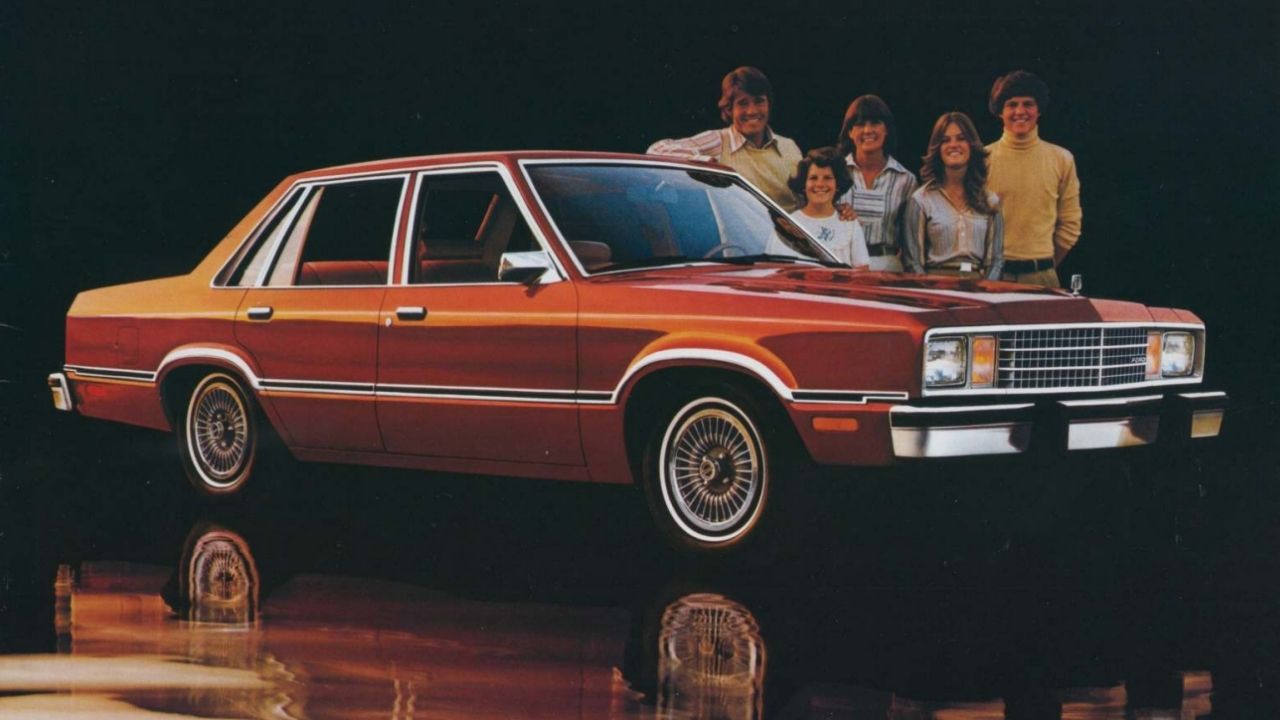
Fortunately for Ford, the Fox platform turned out to be a huge hit. The first cars built on Fox were the Ford Fairmont and Mercury Zephyr, which debuted in 1978. They arrived as replacements for the Ford Maverick and Mercury Comet. Although they weren’t attractively designed, their boxy lines made excellent use of space. They were also light, so much so that a four-door Fairmont with a V8 and automatic transmission still weighed only 1,360 kg.
While new emissions standards were killing power, Ford decided to focus on comfort and luxury, and it proved to be a major success: In 1978, Ford built about 460,981 Fairmonts alone, showing how strongly the new Fox-platform compacts were received. The oil crisis also seemed like old news, and buyers were once again turning to bigger, more powerful products.
However, the very next year brought another oil crisis, and the public turned again to smaller, more economical, cheaper cars, ones Ford simply didn’t have. Ford’s market share fell to its lowest point since World War II, but the real shock came in 1980, when sales volume dropped by more than 500,000 vehicles. Ford recorded a loss of $1.54 billion. That same year, retired Henry was replaced by Philip Caldwell, who began refreshing the lineup.
Philip Caldwell’s Reset: Design, Global Thinking, and Front-Wheel Drive

Caldwell’s first move was to bring designer Jack Telnack back to the U.S. He was born in Detroit, but had spent most of his career in Ford’s European and Australian divisions. Telnack returned to America at the end of the 1970s, and the aerodynamic style had clearly made a strong impression on him.
Caldwell then approved the project for Ford’s first global car, the Escort, developed by engineers and designers from all over the world. Although the two Escorts wouldn’t end up sharing as many parts as Ford originally hoped, the front-wheel-drive car (and its twin, the Mercury Lynx) became a major success.
Slightly larger models followed, the Ford Tempo and Mercury Topaz, which also sold in large numbers, but the company still had a huge problem in the so-called midsize class. Ford’s representatives there were the Ford LTD and Mercury Marquis, large, boxy cars on the Fox platform, but their sales were only a fraction of the competition’s.
By that, we mean the Toyota Camry and Honda Accord, the two best-selling cars in America at the time. Caldwell realized that if Ford wanted to surpass Japanese competition, it would need to follow the same steps as the Escort and Tempo, and in the late 1970s he approved a new project worth as much as $3.5 billion. The new car, which was decided would be called Taurus (Bull), thus became the most expensive Ford in history.
How Taurus Was Developed Differently Than Typical U.S. Cars

With the Taurus, Ford introduced a completely new way of developing a product, at least by American standards. In the past, designers and engineers worked separately, which often resulted in a vehicle that looked like a fairly random collection of parts. This time, Telnack again handled the design, but worked together with engineers to ensure the whole car fit together, so it looked like it had been developed by one person.
Ford made another important change as well. In the past, companies told customers which products they should buy and which features mattered. This time, Ford invited a large number of potential buyers and listened to what they wanted from a sedan and wagon.
The company was surprised that some details it hadn’t focused on before, such as insurance costs and engine access, played a key role for customers. Ford also bought a large number of competing cars, as well as significantly more expensive products, and studied them in detail.
The Aerodynamic Design That Made Boxy Rivals Look Dated
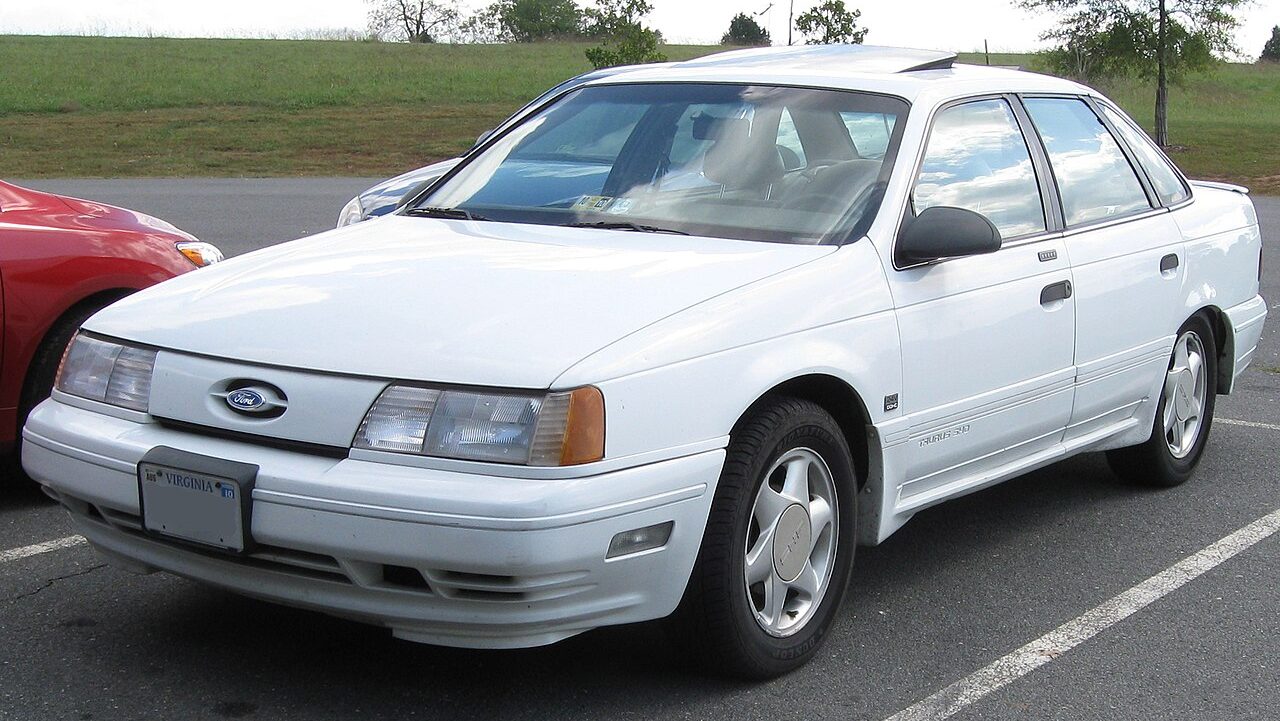
This time the plan wasn’t for the Taurus to be just as good as the competition, it had to be better in every way. While the mechanical side wasn’t a major problem, the biggest concerns fell on designer Telnack. He experimented with several ideas, including one with a glass roof (later seen on the Subaru SVX), but abandoned it, explaining it was too radical.
While most American cars of the era relied on boxy shapes, Jack Telnack wanted something radically different. He believed that although boxy designs maximized interior space, they were aerodynamically inefficient, contributing to higher fuel consumption and reduced stability at speed. One of his key inspirations was the third-generation Audi 5000, which was widely quoted with a drag coefficient of around 0.30. By comparison, the 1986 Ford Taurus achieved a drag coefficient of roughly 0.32, while its sleeker sibling, the Mercury Sable, was often promoted as being even more aerodynamic, with figures cited as low as 0.29.
The Launch, the Hype, and Ford’s Biggest Gamble
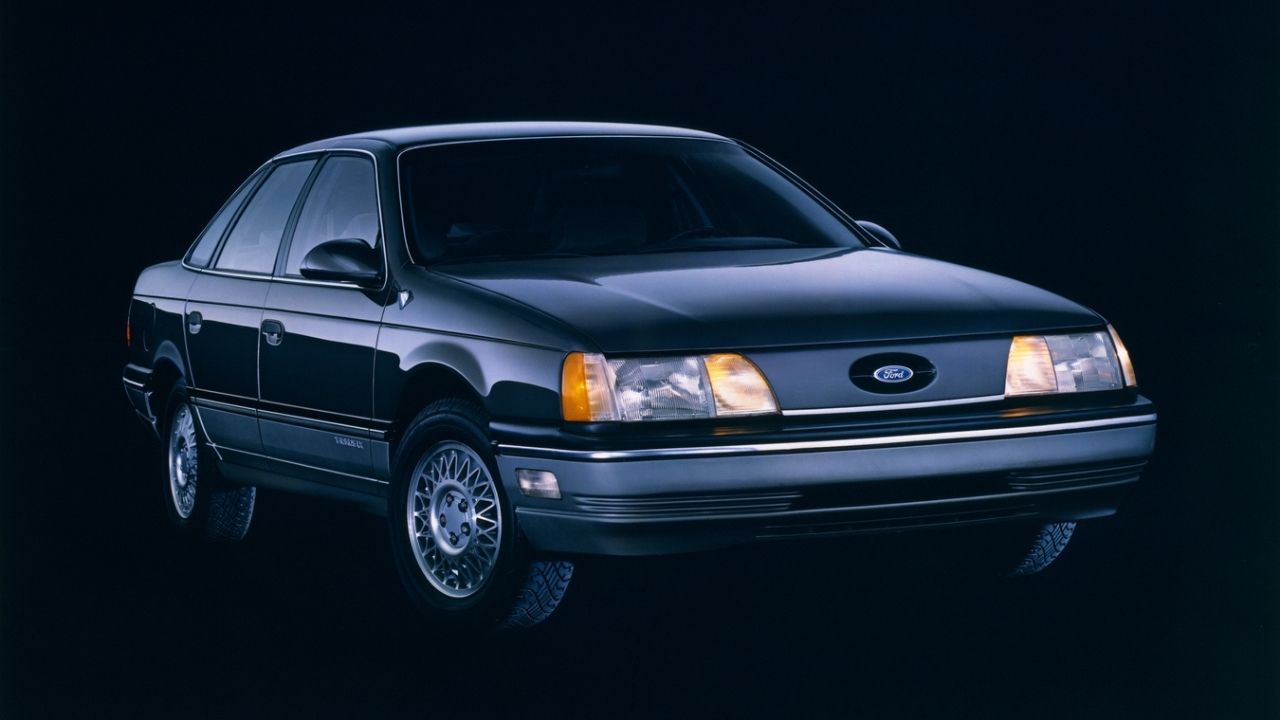
Ford unveiled the Taurus and Sable in 1985 and launched them for sale on December 26, 1985 as 1986 models, while sales began about six months later. To say the public was surprised is an understatement. Never before had an American family car been seen with such aerodynamic lines, along with so much glass for better visibility.
Even before the official launch, Ford filmed several commercials in which the car appeared next to flying saucers, followed by a role in the popular film RoboCop, where the Taurus was chosen because of its futuristic design. In the film, the story takes place in 2028 in Detroit, and all police officers, including RoboCop himself, drive the Taurus.
With such an advanced design, Ford knew it would turn off many buyers who felt the product was too radical. For that reason, the manufacturer continued producing the boxy, rear-wheel-drive LTD (which the Taurus was meant to replace) even after the newcomer went on sale.
General Motors and Chrysler also didn’t believe the car would be successful. Chrysler believed its boxier front-wheel-drive K-car derivatives would better match American tastes at the time. Ford knew the risk as well: it invested its last cash reserves into development, and if the Taurus and Sable hadn’t succeeded, the American giant would have been forced into bankruptcy.
What the First Taurus Offered: Size, Seating, and Trims
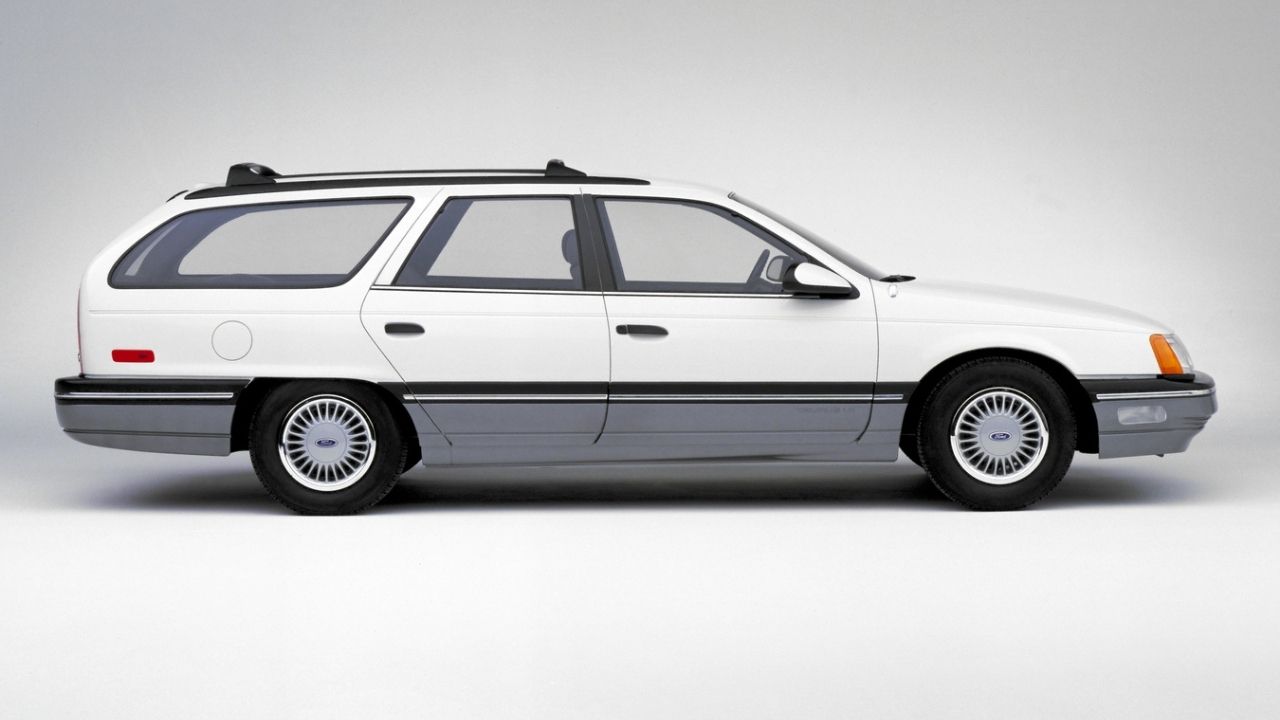
The Taurus and its twin, the Mercury Sable, measured 4,785 mm in sedan form, or 4,874 mm as wagons, with a curb weight of just 1,380 kg. One of the model’s key features was that, unlike Japanese competitors, it could seat up to six as a sedan (with the front bench) and up to eight as a wagon with the optional third-row seat.
The Taurus was one of the few cars in the class that could be had with a front bench seat, and a very large number of buyers chose this option. Buyers could choose among four trim levels: L, MT-5, GL, and LX. The L and MT-5 were sparsely equipped, and the only difference between them was the transmission.
As its name suggests, the MT-5 offered a five-speed manual transmission, while the L offered a three-speed automatic. The top trim was the LX, with air conditioning, power windows and seats, and a cassette radio. As expected, Mercury was positioned one step above Ford, so the Sable was available only as the GS and LS.
For 1986, Taurus offered a 3.0-liter V6 rated at 140 hp and a 2.5-liter four-cylinder rated around 88 hp. The MT-5 paired the 2.5 with a five-speed manual, while automatics were offered across the range depending on model. Base pricing started around $10K for the cheapest Taurus trims, while better-equipped versions climbed into the mid-teens (and Sable typically carried a premium).
Awards and Sales: How Taurus Became a Benchmark
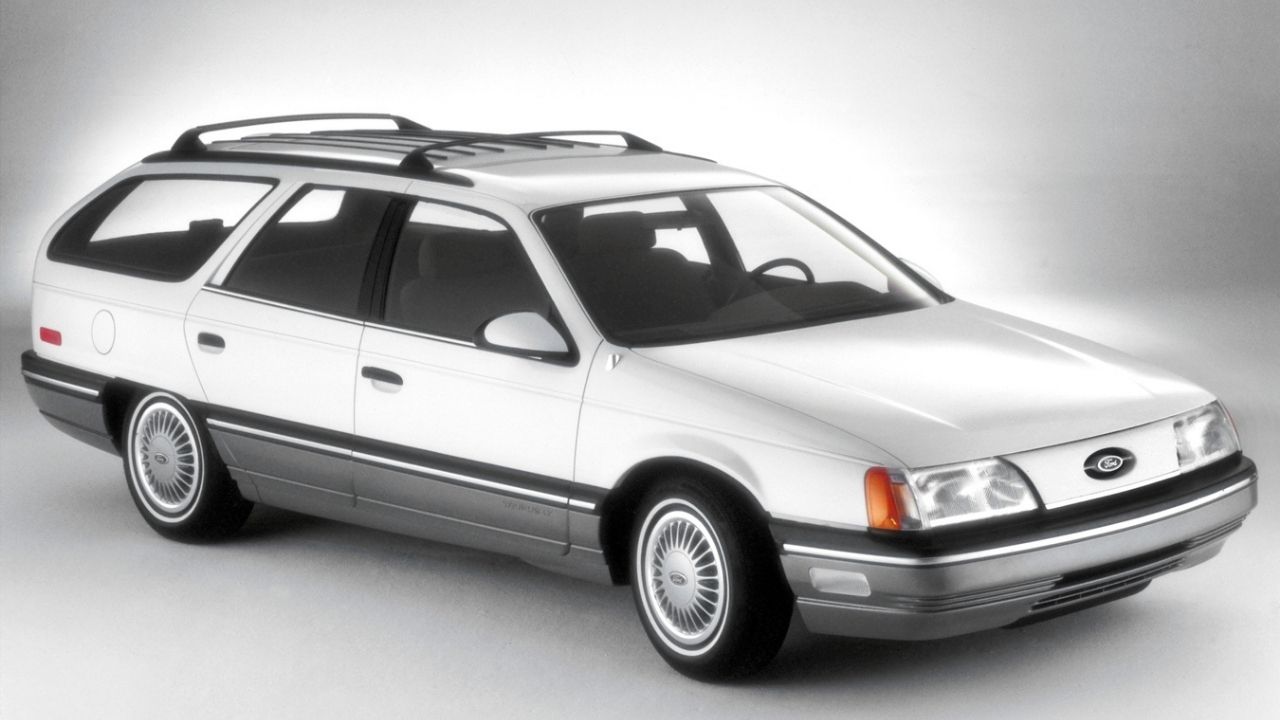
If anyone doubted that the Taurus and Sable would be a success, that doubt was quickly removed, and these two cars proved to be the most popular cars of their time. Popular Mechanics was the first magazine to test an early prototype and had only praise for its stability and quietness. The Taurus also won a large number of awards, the most significant being Motor Trend’s Car of the Year.
Even today, nearly 40 years after its debut, many consider the Taurus one of the most important products of its era. Buyers agreed with journalists’ opinions, and first-year sales totaled 236,362 Tauruses and 95,638 Sables. The second year was even better, with 374,763 Tauruses and 121,313 Sables, and for the first time since 1924, Ford surpassed GM in earnings in 1986.
More Power and a Surprise Icon: The Taurus SHO
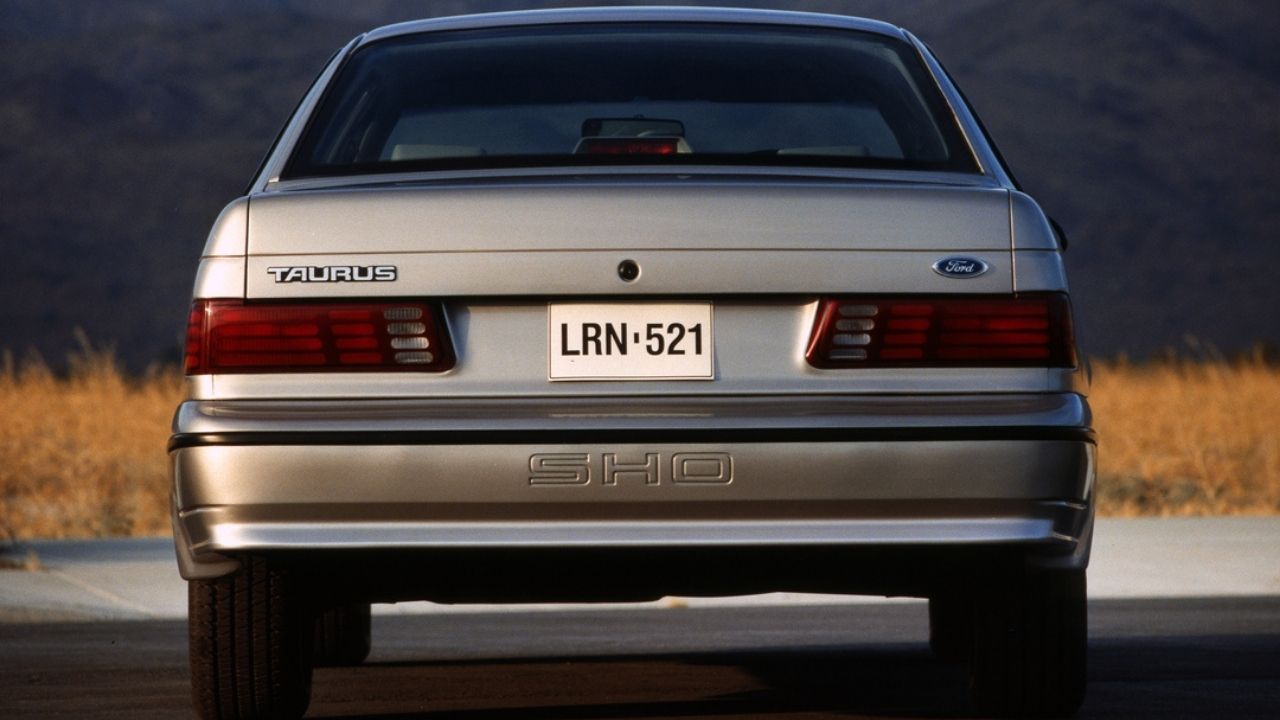
With such success, Ford had little reason to make changes, but in 1988 a 3.8-liter engine was added. Although it produced the same 140 horsepower, its torque was significantly higher. Big news arrived in 1989 with the introduction of the SHO (Super High Output) version. This car came about completely by accident and without intent. In the mid-1980s, the American giant was working on a new two-seater as a competitor and contacted famous Japanese engine maker Yamaha to develop an engine. While the Japanese did their part, the small two-seater class completely died off, and Ford canceled the project.
That meant the company had a large number of engines it had to do something with. The decision was made to put that engine into the Taurus, and the result was excellent. The new 3.0-liter engine produced 220 horsepower, and with 0–100 km/h in 6.6 seconds and a top speed of 229 km/h, the SHO was one of the fastest sedans on the domestic market.
It’s worth noting that the only faster sedans were the BMW 740i and 750i with V8 and V12 engines, which cost about three times as much. The SHO also added more aggressive bumpers and more equipment, and in the first year around 15,000 examples were sold despite a high price of $20,000 (today’s $51,850). The first-generation Taurus remained on sale until 1991, and by then about two million units had been sold.
Second Generation: Refinement, Safety, and Best-Seller Status

The second generation arrived in 1992 and, with the exception of the doors, every design detail was new. However, the styling was similar, leading many to think it was merely a facelift. The design was still very aerodynamic and one of the more desirable shapes of the early 1990s, and throughout its history it received strong praise.
For 1992, a driver airbag was standard and a passenger airbag was optional; dual front airbags became standard for 1993. Technically, the second generation was slightly larger and heavier, and buyers could again choose between a sedan and wagon. The poorly selling four-cylinder engine and three-speed automatic were dropped, leaving only V6 engines (3.0 and 3.8 liters).
The Sable returned as well, with a few design changes, along with the SHO. This performance version continued using the same 3.0-liter engine and five-speed manual, but later an optional 3.2-liter engine was added. It produced the same 220 horsepower and arrived as a response to Ford research showing many buyers avoided the SHO because it wasn’t available with an automatic.
For that reason, the 3.2-liter block was available only with a four-speed automatic. Between 1992 and 1996, the Taurus was the best-selling car nameplate in the United States, knocking the long-time leader Honda Accord from the top spot. It was also briefly exported to Japan, where it failed to make a notable impact.
The 1996 Redesign: Oval Styling, Big Claims, and Backlash

All eyes were on the Detroit Auto Show in 1995, where the 1996 Taurus was set to debut. Telnack again handled the design and once said that the task of completely changing the Taurus was equivalent to redrawing the Mona Lisa. Once again, designers and engineers worked together, and Telnack wanted to create the same kind of revolution as ten years earlier.
He also wanted oval lines to become the company’s signature and for all products to move in a similar direction, something that would later prove to be the wrong path. In any case, Telnack got the green light, and the Taurus design, love it or hate it, attracted attention everywhere it appeared.
Once again Ford bought and dismantled the Toyota Camry and Honda Accord and proudly claimed its entry was more comfortable, quieter, and handled better in corners. But, as expected, the design drew the most attention. Some said the Taurus looked too much like the Chrysler Concorde, others like the Lincoln Mark VIII, but there’s no doubt certain details seemed out of place.
This especially applied to the large rear glass, which was predictably oval, and the small spoiler that looked like it was borrowed from a much smaller car. The interior received major praise, not only for design and quality, but also for how it fit with the rest of the vehicle. Ford wanted even the smallest sound, including the way the doors closed, to trigger positive reactions from buyers, and it didn’t disappoint.
The Third-Gen SHO Went V8-and Then Faded Away
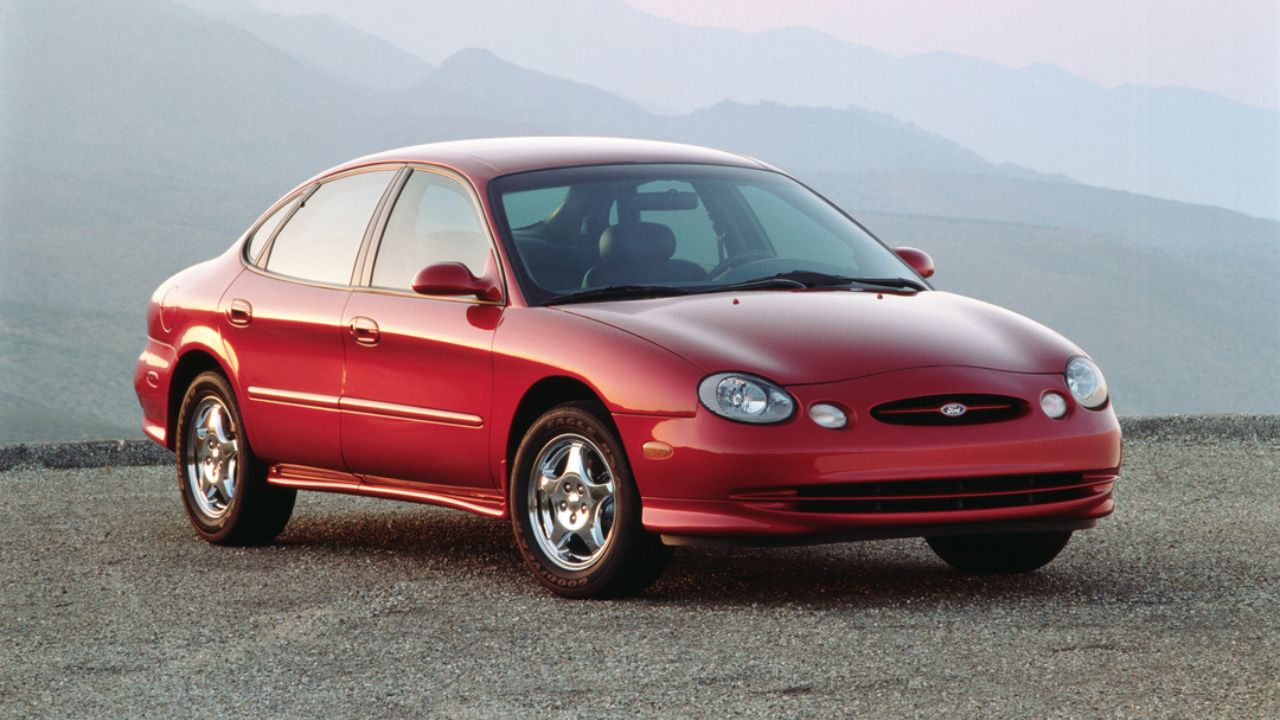
This time, buyers could choose between only two trims, GL and LX, aimed at attracting more serious, deeper-pocketed customers. Available again as a sedan and wagon as both Taurus and Sable, the new model brought certain mechanical changes. The 1996 redesign continued with the 3.0-liter Vulcan V6 (alongside higher-output variants), paired with four-speed automatics across the lineup, and it was available with 145 or 200 horsepower. This was very important for Ford, especially since the Taurus significantly outpowered the competition. The only transmission offered was a four-speed automatic.
The SHO returned as well. Yamaha, with help from Cosworth, developed a new 3.4-liter gasoline V8 with 235 horsepower, and the only transmission was the aforementioned automatic. For the first time, overall length exceeded five meters, so the SHO didn’t deliver the same performance as its predecessor. Although sales started decently and about 9,000 were sold in the first year, quality problems with the Japanese engine reduced sales volume by 70% in the following years, and the SHO was quietly discontinued after 1999.
Fleet Sales Helped Volume-And Hurt the Taurus Long-Term
In any case, sales of the 1996 Taurus started slowly, so Ford was forced to add a cheaper G package after just six months. Those who drove the car praised its driving characteristics, but the design remained an issue. Ford tried to attract additional buyers with incentives like discounts for Camry and Accord owners and low interest rates, all in an effort to keep the Taurus the best-selling car in the domestic market.
It succeeded, and more than 400,000 units found buyers in 1996, enough to remain ahead of the Camry and Accord, but as many as 51% of sold examples went into so-called fleet sales. Not only were such products sold to rental car companies with huge discounts, but they also damaged the Taurus’s resale value for a long time. In 1999, the car would lose its title as the best-selling car and never regain it. We’ll mention a couple of interesting details related to the third generation, such as the fact that sales briefly took place in Australia, as well as that the Taurus had a respectable racing history in NASCAR.
Fourth Generation: A New Look, Same Headwinds

The fourth generation arrived in 2000 and largely highlighted problems within the American auto industry. On the positive side, the decision was made for the Taurus to adopt the “New Edge” design language introduced two years earlier on the very successful Focus. From the side profile, the Taurus still resembled its predecessor, but the front and rear were completely new.
The interior, which had received plenty of praise on models built between 1996 and 1999, didn’t change significantly, and there were also several new trims such as SE and SEL. To mark the company’s centennial, Ford offered 4,000 special Centennial Edition examples in 2003. Buyers could again choose Taurus and Sable as sedans or wagons with the same mechanicals as before, except the SHO, which was discontinued.
While sales were solid at first, a large number of Tauruses still went into fleet sales, meaning Ford lost money on every unit sold. The better-selling Honda Accord and Toyota Camry were later joined by Nissan’s Altima, and by 2004 Ford began considering discontinuing this legendary car.
The 2006 End-and Ford’s Confusing Replacement Strategy
The situation inside the company wasn’t great, and Ford lost large sums in the early 21st century thanks to poor quality and shifting consumer tastes. Sales for civilian production ended in 2006, while commercial use lasted one year longer.
The last Taurus and Sable rolled off the production line in October 2006. Ford initially didn’t plan a direct replacement, although it introduced two similar products. The first, the Ford Five Hundred (and its wagon version, the Freestyle) and the Mercury Montego, were larger and arrived in 2005, while two years later the smaller Ford Fusion and Mercury Milan appeared. This decision drew significant criticism in the media. Many criticized not only Ford, but also General Motors and Chrysler for neglecting their legendary cars instead of improving them the way Japanese competitors did. A big reason was also the strong sales of SUVs and pickups, which Ford wanted to focus on.
Alan Mulally Revived the Nameplate-But Not the Momentum
The Five Hundred, Freestyle, and Montego had several positive traits, such as optional all-wheel drive and a high-quality interior, but with a weak 3.0-liter V6 (203 horsepower) and a boring design, they certainly didn’t attract much attention from buyers. Just as the public assumed it was the definitive end for the Taurus and Sable, Alan Mulally (photo below) became head of Ford. This former Boeing executive actually knew very little about cars, but he was a specialist with numbers and marketing.
How poorly Mulally thought of Ford is perhaps best confirmed by the fact that on his first day on the job, he showed up in a Lexus LS, which he said was the best car in the world. Mulally quickly got to work, and while reviewing future plans, he noticed there was no Taurus among them.
When he asked why, he was told the Taurus had been discontinued two years earlier. Unlike his predecessors, Mulally knew what kind of image the car had, and by mid-2007 he announced it would return to production. He admitted the Five Hundred had been a mistake and that the car originally should have been called Taurus.
The new Taurus officially went on sale in 2008, but it was nothing more than a Five Hundred with a revised front end and a new 3.5-liter engine producing 263 horsepower. The Montego also changed its name to Sable, while the Freestyle was now known as the Taurus X. Buyers noticed the strong similarity to the forgotten predecessors, and sales never exceeded 52,000 examples.
The 2010 Taurus Went Big-And Brought Back the SHO
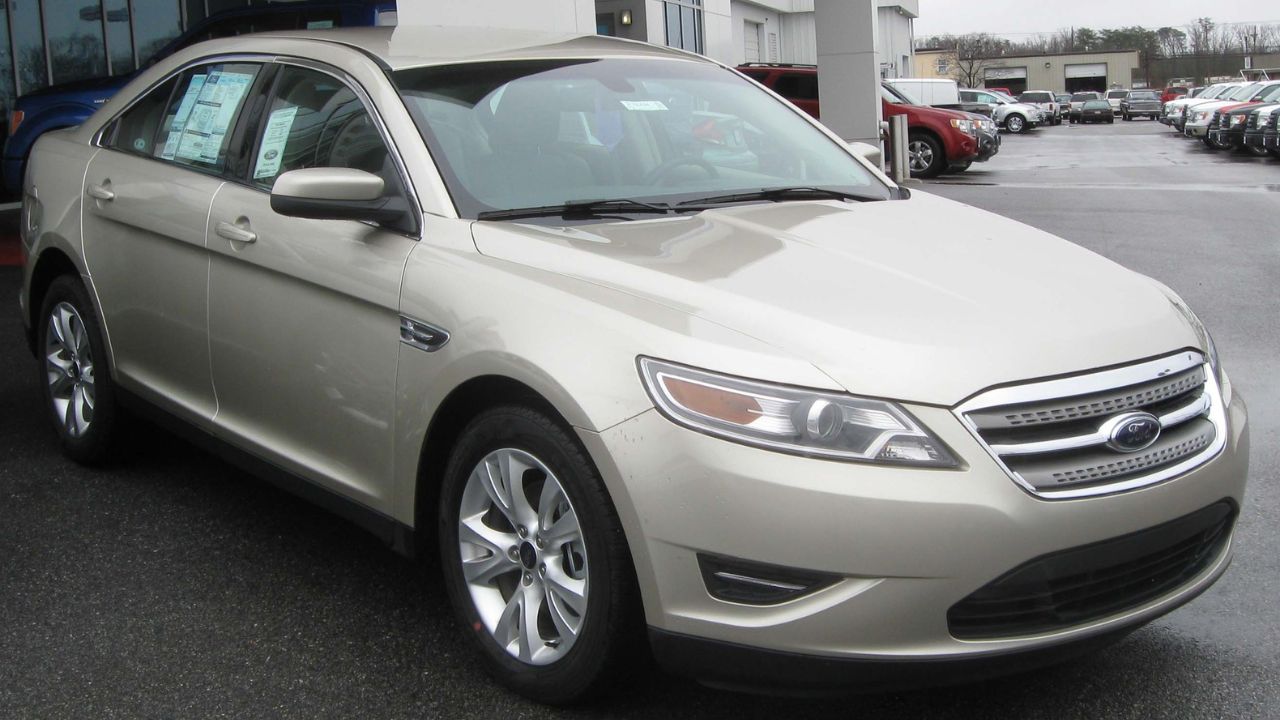
An all-new Taurus debuted in 2010 at the Detroit Auto Show and went on sale a few months later. The beautiful design impressed many from the start, but the lack of interior space for its exterior dimensions was certainly disappointing. That doesn’t mean the interior was criticized, though, media concluded it was better equipped than the Infiniti M45 and quieter than the Acura RL, both cars with far higher prices.
As the Fusion continued winning buyers, the decision was made for the Taurus to fill the role of Ford’s largest car. It was now 5,154 mm long and weighed 1.9 tons, making it the largest Taurus in history. To move such a large car, Ford had to equip it with powerful engines. The standard engine was a 3.5-liter V6 with 290 horsepower, and the lineup was later expanded with a 2.0-liter EcoBoost (turbo) with 240 horsepower.
However, the biggest news arrived in mid-2010 when the SHO returned. With the same V6 in turbo form, it produced 365 horsepower and offered all-wheel drive, giving it 0–100 km/h in just five seconds. With a high starting price of $27,000, often exceeding $40,000 in Limited trim, the Taurus never sold in huge numbers, usually reaching around 75,000 units. The Taurus was also the only model offered, and only as a sedan, while the entire Mercury brand was discontinued after 2010; however, the luxury Lincoln MKS (photo below) was built on its platform.
Ford Ended Most Sedans-And Taurus Disappeared Again
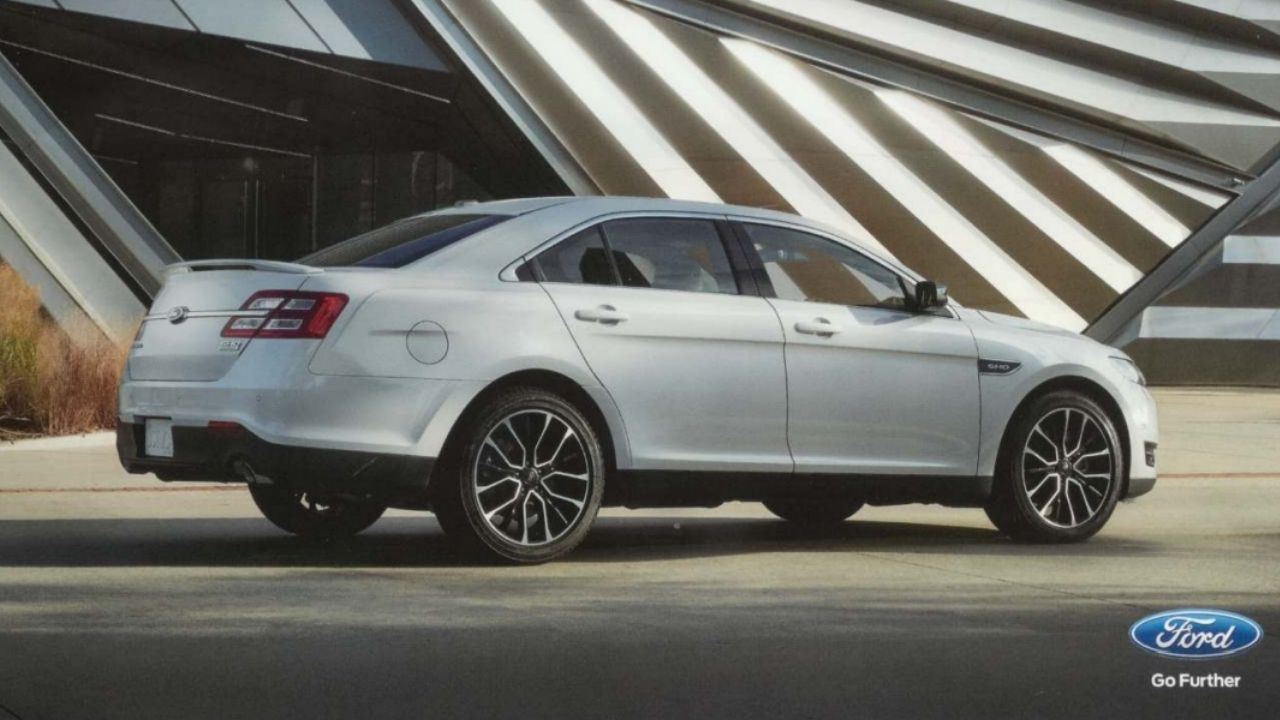
During 2018, Ford announced it would discontinue all cars except the Mustang in order to focus on larger SUVs and pickup trucks. That marked another end for the Taurus, which was already eight years old by then and clearly showing its age compared to modern competition such as the Chevrolet Impala and Toyota Avalon. A car with the same name is sold in China, but it is not related to the American model.
Why Taurus Still Matters
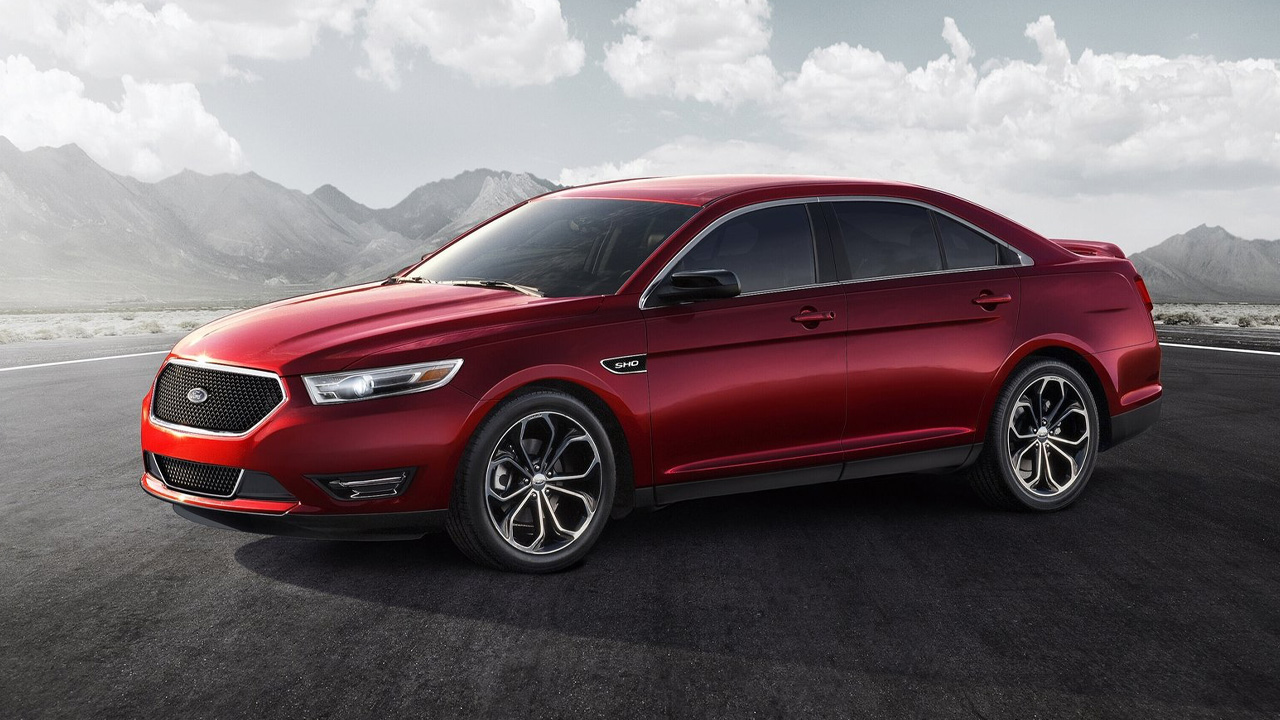
Since 1986, more than eight million Tauruses have found buyers, making it one of Ford’s most successful products in history. However, its success is far greater than the numbers alone suggest, from the way it modernized the class to saving Ford from certain bankruptcy. It may not be as famous as the Model T, Mustang, or F-150, but some will go so far as to say the Taurus is the most important Ford in history. And they wouldn’t be wrong.
This article originally appeared on Autorepublika.com and has been republished with permission by Guessing Headlights. AI-assisted translation was used, followed by human editing and review.