Colonial America is more than a chapter in a textbook, it’s a living, breathing world scattered across some of the most atmospheric towns and cities in the United States. Walk their cobblestone streets, and you can almost hear the echo of wagon wheels or see lanterns flickering in the windows of centuries-old homes. These places are time capsules: some polished and elegant, others rugged and raw, but all alive with the stories of Indigenous peoples, early settlers, merchants, rebels, and visionaries. Every corner holds a whisper of the past, preserved in weathered wood, iron gates, and sun-bleached docks that once bustled with trade.
From New England seaports to Southern enclaves that survived war and weather, these historic cities let you step directly into the world of the 1600s and 1700s. They don’t just preserve history, they perform it. You might watch a blacksmith hammer red-hot iron, walk into a tavern where revolution brewed, or explore a fort that defended America when it was still just an idea. Each city offers a different glimpse into the colonial story, woven from courage, conflict, beauty, and change.
Whether you’re a history lover, a photographer chasing golden-hour light on old façades, or a traveler craving places with soul, these twenty historic destinations bring colonial America roaring back to life. Prepare to wander through centuries, no time machine required.
Williamsburg, Virginia

Colonial Williamsburg is America’s most ambitious living-history town, a full-scale restoration of an 18th-century capital, complete with actors, tradespeople, and costumed interpreters who make the past feel startlingly present. Horses clatter over brick streets, taverns glow with candlelight, and restored homes open their doors to tell stories of merchants, enslaved people, artisans, and politicians who shaped early Virginia. Everywhere you look, history breathes: fireplaces crackle, looms hum, and gardens brim with heirloom herbs and vegetables.
Strolling down Duke of Gloucester Street, you feel the immersive pull of the era. You can watch a silversmith craft delicate bowls, listen to the harpsichord inside the governor’s palace, or take part in a mock trial in the colonial courthouse. The daily reenactments and demonstrations don’t feel staged, they feel lived-in, emotional, and grounded, reminding visitors of the everyday triumphs and tensions that defined early America. Even the scent of woodsmoke drifting from chimneys adds texture to the experience.
As night falls, lantern tours guide you to haunted corners and hidden courtyards where whispers of the past seem almost tangible. Meals are served in period taverns where waiters dressed in waistcoats recite the day’s offerings from memory. Williamsburg offers not just historic education but a full sensory immersion, a place where the line between present and past dissolves beautifully.
Boston, Massachusetts

Boston is a city where colonial history sits right beneath your feet, literally marked on the sidewalks through the Freedom Trail, a red line guiding you through churches, burial grounds, meeting houses, and the homes of revolutionaries. This is the city where patriots plotted rebellion in smoky taverns, where tea was dumped into the harbor in a symbolic act of defiance, and where iconic voices sparked the American Revolution. Everywhere you turn, Boston whispers: something important happened here.
The North End brings the past to life with narrow brick alleys, Paul Revere’s home, and Old North Church, where lanterns once signaled the British march. Over in Beacon Hill, gas lamps glow above brick sidewalks, giving the neighborhood a timeless, colonial charm. Boston Common, founded in 1634, remains a bustling green space just as it was centuries ago, filled with people gathering, strolling, and debating, a tradition that never left.
Yet Boston isn’t a museum; it’s a powerful balance of old and new. Sky-scrapers rise beside Colonial-era churches, and the sound of street musicians blends with the hum of modern life. When you walk the Freedom Trail at sunset, the city seems to layer time, one moment you’re surrounded by 21st-century commuters, the next you’re standing before the graves of patriots who imagined a nation that hadn’t yet been born. It’s a rare place where history doesn’t feel distant, it feels personal.
Savannah, Georgia

Savannah seduces you long before you learn its history. Spanish moss drapes from ancient oaks, cobblestone streets snake through elegant squares, and historic mansions glow under the soft coastal light. But beneath its beauty lies a rich and complicated colonial past, a world of trading ports, plantations, diverse settlers, and stories of resilience that helped shape an iconic Southern identity.
The city’s plan, designed in 1733, remains one of the most beautiful urban designs in America. Each historic square offers a different mood: quiet memorials shaded by oaks, fountains bubbling in morning light, or bronze statues celebrating the tradespeople, soldiers, and enslaved Africans who lived here. The historic district feels like a European city transformed by Southern breeze, intimate, walkable, and textured with centuries-old brick.
Savannah also embraces its shadows. Ghost tours weave through alleyways, past cemeteries and row houses where legends linger, and down to the waterfront where commerce once thrived. The scent of magnolia mixes with salty river air, and the entire city feels suspended in time, effortlessly colonial yet vibrantly alive.
Charleston, South Carolina

Charleston is a masterpiece of colonial architecture and effortless elegance. Founded in 1670, it was one of the most influential cities of the colonial South, a bustling port filled with merchants, plantations, and artisans. Today, pastel-colored homes line the Battery, wrought-iron balconies curl like lace, and church steeples dominate the skyline. Every detail, from cobblestones to courtyard gardens, feels like a page from early American history.
Stroll down King Street or Rainbow Row, and you’ll feel Charleston’s timeless charm. Historic homes boast grand piazzas designed to capture ocean breezes, and the city’s markets still echo with the energy of daily trade. Beneath the surface of beauty lies a deeper story, one woven with African, Caribbean, and European influences, reflected in cuisine, crafts, music, and community traditions that endure to this day.
Charleston’s colonial forts add power to its narrative. Fort Sumter, Fort Moultrie, and the surrounding harbor offer a dramatic backdrop to the city’s role in early American defense and later conflicts. Whether exploring historic plantations, wandering old cemeteries, or watching the sunset from a waterfront promenade, Charleston connects past and present as only a true colonial city can.
Annapolis, Maryland

Annapolis feels like walking into a living 18th-century painting, one filled with sailboats, stately brick homes, and narrow streets leading toward the Chesapeake Bay. As the capital of Maryland and once a temporary capital of the United States, it carries a political and maritime history that still shows in its architecture and rhythms. The Maryland State House, the oldest in continuous use, looms proudly over the city like a monument to early American governance.
Along the waterfront, the scent of salt and seafood fills the air as wooden ships dock beside sleek modern sailboats. Colonial buildings line Main Street, creating a seamless blend of old and new. Annapolis isn’t frozen in time; it has simply chosen to keep its colonial heart visible and beating. Sailors in crisp uniforms from the U.S. Naval Academy mingle with visitors exploring centuries-old taverns and courthouses.
At sunset, the city becomes even more atmospheric. Golden light floods the harbor, illuminating rooftops and domes, and street lamps flicker on one by one. It’s a place where colonial history doesn’t just survive, it thrives, celebrated and lived daily by a community that cherishes its roots.
Newport, Rhode Island

Newport may be famous for its Gilded Age mansions, but its colonial past is equally captivating. The city was founded in 1639 and quickly became a hub for religious freedom, seafaring trade, and early American entrepreneurship. Colonial houses, some painted crisp white, others sun-weathered and cozy, line narrow lanes that overlook sparkling harbors filled with sails.
Newport’s colonial district bursts with life. You can wander through historic homes like the Wanton-Lyman-Hazard House or visit the Great Friends Meeting House, a symbol of Newport’s early Quaker presence. Brick storefronts, stone wharves, and colonial-era taverns still stand strong, their floors creaking with age and memories.
The ocean horizon gives the city a cinematic quality at every turn. As waves crash against coastal cliffs and sailboats glide into the harbor, you can almost imagine colonial merchants navigating the same waters centuries ago. Newport blends maritime romance with historical gravitas, making it one of New England’s most atmospheric colonial enclaves.
Philadelphia, Pennsylvania

Philadelphia is the beating heart of American independence, a city where ideas became movements and movements became a nation. The Old City district still boasts narrow brick alleys, colonial taverns, and historic homes where many of America’s founding fathers lived, debated, and worked. Independence Hall, where the Declaration of Independence was signed, remains one of the most sacred sites in American history.
Liberty Bell, Christ Church, Carpenter’s Hall, each landmark feels like a step deeper into the American origin story. Even the layout of the city, with its grid and walkable streets, reflects William Penn’s 17th-century vision for an orderly, welcoming community. Wander through Elfreth’s Alley, America’s oldest residential street, and you’ll see colonial architecture perfectly preserved.
Yet the city hums with modern creativity. Murals and markets blend with historic squares, and jazz clubs sit beside centuries-old buildings. Philadelphia doesn’t cling to history, it engages with it, weaving past and present into a vibrant urban fabric.
St. Augustine, Florida

America’s oldest continuously inhabited European-founded city, St. Augustine predates Jamestown and Plymouth, making it a treasure chest of colonial stories that stretch back to the 1500s. Spanish fortifications, whitewashed walls, and cobblestoned streets give the city an Old World charm unlike anywhere else in the U.S. Castillo de San Marcos, the star-shaped fortress overlooking the bay, stands as a testament to 450 years of resilience.
The old town buzzes with life: balconies draped in flowers, courtyards shaded by palms, and small cafés tucked behind thick stone walls. The architecture blends Spanish, British, and early American influences, reflecting centuries of cultural evolution. Lantern-lit streets at night feel like stepping into a storybook filled with explorers, artisans, and settlers.
The waterfront adds another layer of magic. Boats glide past ancient bastions while seabirds circle overhead, and the tropical air carries both history and romance. St. Augustine is vibrant, soulful, and defiantly colonial, a place where time refuses to flatten the past.
Providence, Rhode Island

Providence combines colonial architecture, intellectual energy, and riverfront charm into a city that feels both historic and forward-thinking. Founded in 1636 by Roger Williams as a haven for religious freedom, it remains one of the most culturally rich and architecturally preserved colonial cities in New England. Federal-style homes, old mills, and colonial buildings frame the city’s hilly neighborhoods.
The East Side, home to Brown University and leafy Benefit Street, offers one of the best collections of colonial homes in America, each lovingly preserved, each with stories stretching back centuries. Walking this historic mile feels like moving through a living architectural museum where every doorframe, shutter, and lantern reveals craftsmanship from another era.
Down by the river, cobblestone paths and arched bridges reflect in calm water lit by evening sunlight. Providence blends artistic vibrancy with academic soul, making its colonial core feel alive and evolving rather than simply preserved.
New Castle, Delaware

New Castle is a quaint, underrated jewel along the Delaware River, a place where cobblestone streets, stately brick homes, and swooping church steeples paint a picture straight out of the 1600s. The town was shaped by Dutch, Swedish, and British settlers, giving it a layered colonial identity unique among early American cities.
The Historic Green anchors the city with elegance and quiet pride. This grassy square, framed by colonial buildings and shade trees, has been the town’s heart since before the American Revolution. Around it stand the Dutch House, the Old Courthouse, and Trinity Church, each one holding centuries of stories in its beams and bricks.
New Castle’s waterfront offers peaceful walks and sweeping river views that feel unchanged from the colonial era. Time moves slowly here, letting you savor the calm, history-rich atmosphere that makes this small city unforgettable.
Yorktown, Virginia

Yorktown is where the American Revolution reached its dramatic finale, where British General Cornwallis surrendered to George Washington, effectively ending the war. The city’s colonial streets and serene waterfront offer a surprisingly peaceful setting for such intense history. Historic homes, grassy battlefields, and reconstructed forts make this a place where the echoes of war feel close but gentle.
The Yorktown Battlefield is sprawling and surprisingly quiet, its rolling hills dotted with cannons and interpretive markers. As you walk along the paths, you can almost hear the distant drumbeats and commands of soldiers. Nearby, the American Revolution Museum brings the era to life through immersive exhibits and reenactments.
Down by the riverfront, cafés and shops sit beside colonial-era buildings, and the breeze carries both salt air and history. Yorktown is proud, poignant, and beautifully preserved, a place where America’s story reached its pivotal turning point.
Jamestown, Virginia

Jamestown is where English America began, a place of survival, conflict, and unlikely endurance. The original fort and settlement from 1607 may be gone, but archaeological discoveries and careful reconstructions have brought the colony’s earliest days back to life. Walking among these excavations feels like time traveling into America’s fragile beginnings.
The Jamestown Settlement museum expands that sense of immersion with recreated villages, ships, and fortifications staffed by costumed interpreters. You can walk into thatched huts, watch demonstrations of 17th-century trades, and board full-scale replicas of the Susan Constant and Discovery. Everything feels tactile and immediate, connecting you to the struggles and resilience of early settlers and the Indigenous communities they encountered.
Surrounding marshes and wooded trails add a layer of natural beauty that contrasts with the colony’s difficult history. Jamestown is raw, emotional, and essential, a reminder that America’s story started with far more uncertainty than triumph.
Portsmouth, New Hampshire

Portsmouth brings colonial New England to life with salty sea breezes, brightly painted homes, and a waterfront that once thrived with commerce and shipbuilding. Founded in 1630, this city was a major port in early America, and its colonial core remains one of the most beautifully preserved in the country.
The Strawbery Banke Museum, an outdoor living-history neighborhood, is the centerpiece. Homes from different centuries stand side by side, each with its own story told by costumed interpreters. Through them, you’ll experience life as it was for merchants, immigrants, artisans, and children across generations. The smell of woodfires and fresh herbs in colonial gardens deepens the sensory immersion.
Portsmouth’s waterfront streets and harbor cafés add modern charm to the historic scenery. Watching boats glide past brick warehouses at sunset, you feel both the weight and the wonder of a town that has witnessed four centuries of American history.
New London, Connecticut

New London was built on maritime ambition, and its colonial past still shows in narrow streets, lighthouse views, and old customs houses along the Thames River. Founded in the 1600s, it quickly grew into a bustling seaport where whaling, trade, and navigation shaped its identity.
Fort Trumbull stands as a reminder of the city’s strategic importance, its stone walls watching over the river since colonial times. Old homes and colonial churches line the nearby streets, their shutters and chimneys preserving the simplicity of early New England architecture. You can almost picture sailors unloading goods as children played barefoot in the dusty streets.
Today, New London blends its colonial legacy with vibrant arts, waterfront dining, and the enduring rhythm of passing ships. It’s a city that still hears the ocean’s call, just as it did centuries before.
Harpers Ferry, West Virginia

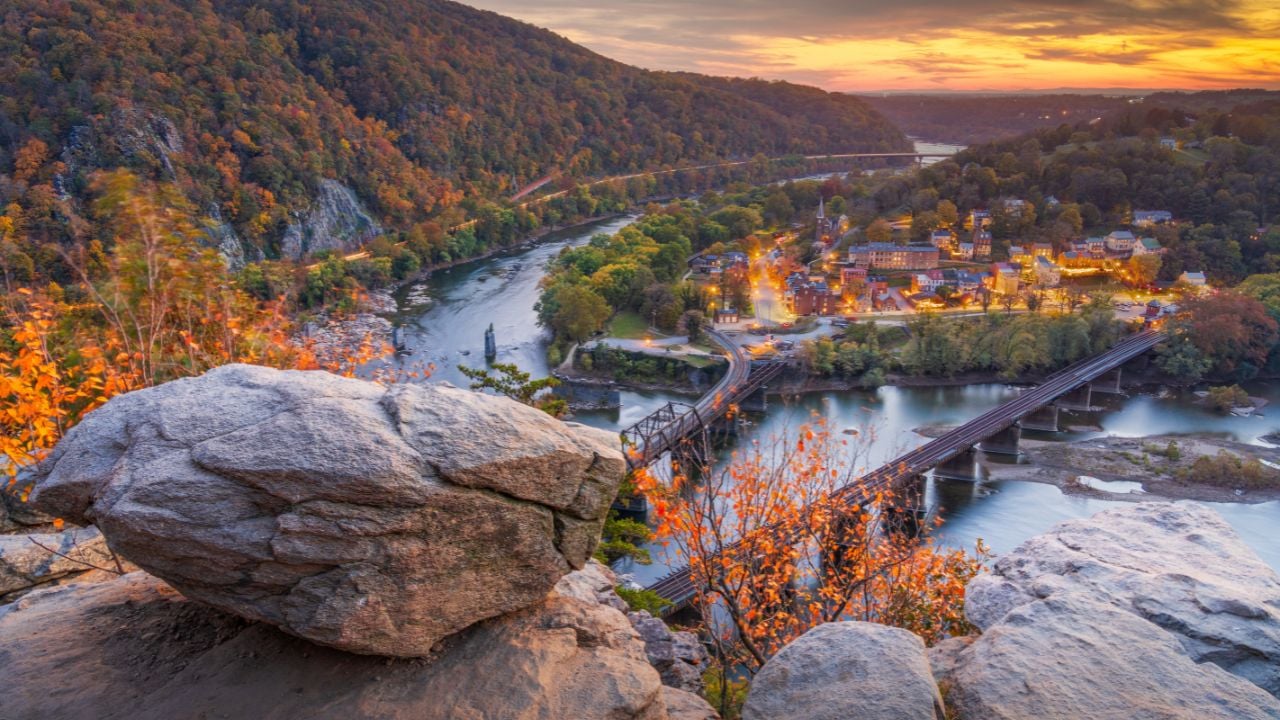
Harpers Ferry is one of the most dramatically located colonial towns in America, sitting at the confluence of the Potomac and Shenandoah Rivers. Its steep streets, brick buildings, and panoramic overlooks feel straight out of a historical painting. Though most famous for the events leading to the Civil War, its earlier colonial past is equally vivid, shaped by trade, industry, and river navigation.
The lower town, preserved with incredible care, offers scenic views at every turn. Walking through its shops and museums, you hear the sound of rushing water and see cliffs rising sharply around you, a constant reminder of the rugged frontier life early settlers faced. The combination of history and nature makes Harpers Ferry uniquely immersive.
Climb up the Maryland Heights trail, and you’ll look down on the town exactly as travelers did centuries ago. The vista connects eras: colonial trading boats, Civil War troops, modern hikers, all woven into one powerful landscape.
Plymouth, Massachusetts

Plymouth is where the Mayflower landed in 1620, launching one of the most famous colonial stories in American memory. Though small, the town carries an outsized historical weight, with landmarks and museums that illuminate the daily lives, struggles, and hopes of early settlers.
Plimoth Patuxet Museums bring this history to life with reconstructed villages staffed by role-players who converse, cook, and work exactly as the Pilgrims and Indigenous Wampanoag people did. Their stories are layered, nuanced, and essential for understanding early America. Visitors often feel a surprising emotional connection, especially when walking through the earthy, fire-warmed homes.
Down by the harbor, the replica Mayflower II floats gently on the water, its wooden decks a living tribute to transatlantic endurance. The town’s charming streets and ocean views complete the sense of timelessness, making Plymouth both educational and profoundly atmospheric.
Fredericksburg, Virginia

Fredericksburg blends colonial charm with layers of American history that stretch into the 19th century. But its 18th-century roots are still powerfully present in its brick homes, historic churches, and riverside warehouses. The city once thrived as a port and trading center, and its preserved downtown feels like a seamless continuation of that early American story.
Walking through Old Town, you’ll find taverns where revolutionaries debated, gardens framed by white picket fences, and shops housed in buildings that predate the Declaration of Independence. The Ferry Farm, George Washington’s boyhood home, adds deeper context to the colonial narrative. Even the sidewalks seem to hum with historic energy.
Fredericksburg brings history to life through museums, reenactments, and seasonal festivals. Its blend of old architecture and modern vitality makes it one of the most approachable colonial cities for curious travelers.
Alexandria, Virginia

Alexandria rests along the Potomac River like a preserved 18th-century port framed by modern Washington, D.C. It was founded in 1749 and quickly became a commercial hub filled with merchants, sailors, and craftsmen. Old Town Alexandria remains a stunning colonial district, with brick sidewalks, gas lamps, and row houses in shades of cream, brick red, and navy.
King Street, the city’s historic backbone, is lined with colonial-era buildings transformed into boutiques, markets, and restaurants. The waterfront, once an active dock bustling with tobacco shipments, still rings with maritime charm. Walking through these streets feels like strolling through an elegant slice of colonial life sharpened by urban energy.
Historic homes, museums, and preserved taverns offer stories of early American life, while cobblestone alleys and quiet squares add intimacy to the city’s colonial personality. Alexandria’s mix of living history and modern culture makes it irresistible.
Concord, Massachusetts

Concord is often remembered for its Revolutionary War moments, but its colonial era set the stage for the philosophical and political ideas that would shape early America. Its meadows, woodlands, and colonial homes create a peaceful but powerful sense of place, a town where voices once debated liberty, community, and destiny.
The Old North Bridge still marks the spot where colonial militias faced British troops, but surrounding it are colonial farms, clapboard homes, and winding rivers that give context to the daily lives of those early settlers. Walking these grounds feels like leafing through the pages of a living history book.
Concord’s charm lies in its serenity. White steeples, stone walls, and quiet ponds connect past and present, while museums preserve artifacts that deepen the colonial narrative. It’s a place where intellect and independence were born, shaped by the landscapes and ideals of a small but influential community.
Beaufort, North Carolina

Founded in 1709, Beaufort is one of the South’s oldest coastal towns, a maritime jewel where colonial charm meets salt air and Southern breeze. Its historic district is framed by waterfront homes, wooden boardwalks, and narrow streets lined with brightly painted houses that watch over the harbor like old friends.
The town’s colonial-era plan remains intact, filled with stories of pirates, merchants, enslaved people, and seafarers who shaped the coastal economy. Visit the old jail, explore period homes, or stroll past graveyards where weathered headstones lean under moss-covered branches. You can almost hear the creak of old ships and the echo of colonial trade.
Along Taylor’s Creek, the scenery turns almost dreamlike, wild horses graze across the water on Carrot Island, sailboats drift silently, and the sun sets over marsh grasses in hues of amber and pink. Beaufort is effortlessly historic and endlessly atmospheric.