
Often (to our frustration), concept cars are just automotive eye candy: beautiful, impossible dreams that manufacturers wheel out to auto shows, only to crush our souls when the production version looks like a beige appliance. Well, Hyundai’s throwing that playbook out the window with their new Three concept, and car enthusiasts should be paying attention.
This isn’t just another flight of fancy destined to live forever in the “what could have been” hall of fame. The Korean automaker has been remarkably honest about its concept-to-production pipeline lately, and its track record speaks volumes. The stunning Concept 45 became the Ioniq 5 that’s been turning heads on dealer lots. The Seven concept morphed into the three-row Ioniq 9. Now, the Three is telegraphing what’s coming next in Hyundai’s electric future, and it looks like we might actually get to drive something this cool.
Back to Basics, Forward to the Future
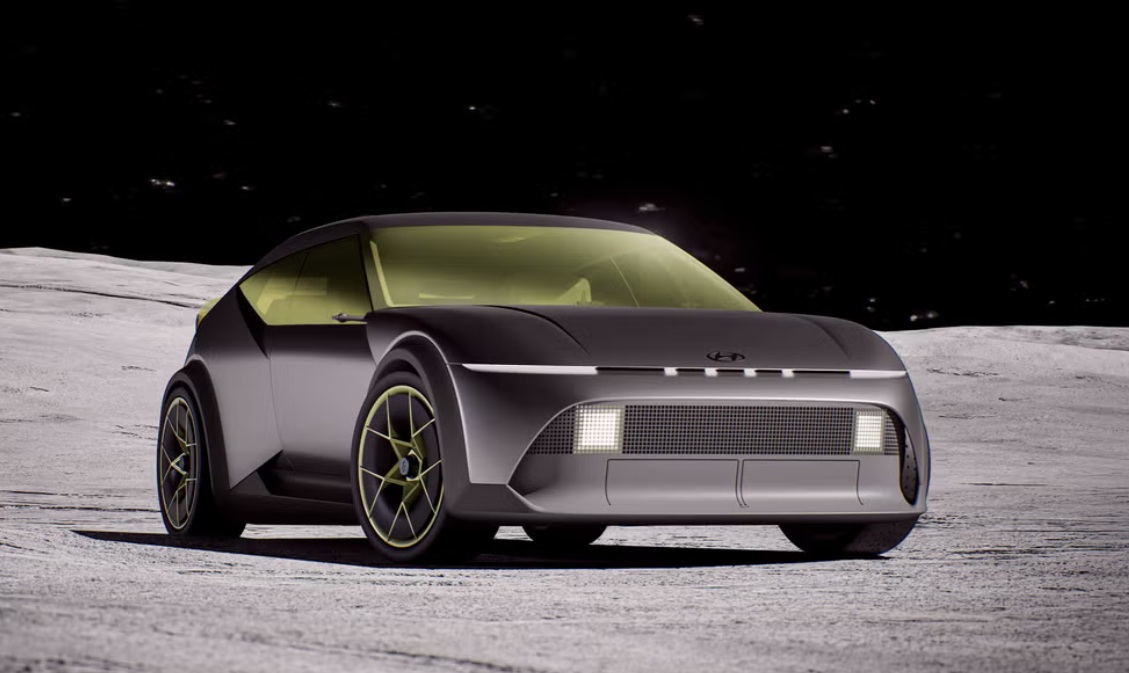
After teasing us last week, Hyundai revealed the Three at the IAA Mobility 2025 in Munich, and it definitely has lived up to the hype so far. But before we look forward, let’s take a look at how we got here.
The story behind the Three’s design is refreshingly analog in our digital world. When Nicola Danza, Hyundai’s head of exterior design in Europe, sat down with his team to create this compact urban EV, they did something radical — they put down their tablets and picked up paper. Old-school paper models. Cutting, folding, bending, experimenting with shape,s the way designers did decades ago.
“Everything is digital now,” Danza explained at the Munich auto show. “Everything is fast, fast, fast. When it was time to develop this car, we went back to the roots.” That hands-on approach yielded something special: a matte steel concept with neon yellow accents that manages to look both retro-inspired and utterly futuristic.
The result is what Hyundai calls an “Aero Hatch” silhouette: think hot hatch meets spaceship. The paper experiments revealed three key design elements that flow into each other: a wraparound C-pillar and shoulder line, plus a bonnet that extends around the wheel arches. When you open the front door, the diagonal line from the seat continues the exterior’s flow — the kind of design cohesion that separates great cars from forgettable ones.
More Than Just Pretty Lines

The Three isn’t just about looking good parked at a car meet or in a Home Depot parking lot. This is Hyundai’s first compact Ioniq concept, previewing what’s likely to be the Ioniq 3: an urban-focused EV that could finally give enthusiasts an electric hot hatch worth getting excited about.
While Hyundai kept powertrain details under wraps, the visual cues suggest this isn’t going to be another penalty box EV. The rear end design, which the team playfully dubbed “May the Downforce Be with You,” hints at performance intentions. Those aren’t exhaust pipes you see at the back; they’re speakers. Because when you can’t have the growl of a proper exhaust, you might as well embrace the absurdity and make some noise anyway.
The parametric pixel lighting carries forward Hyundai’s current design language, but there are easter eggs throughout that show the designers had some fun. Check out the smiley face on the rear wheel arch that looks suspiciously like an electric plug: the kind of detail that separates a thoughtful design from corporate committee-think.
Interior Insights Worth Watching

Hyundai has been transparent that their concept interiors tend to be more experimental than what reaches showrooms, but the Three’s cabin offers some intriguing glimpses of where automotive technology might be heading.
The modular “Bring Your Own Lifestyle” widgets flanking the steering wheel, chunky, adaptable buttons inspired by early tech gadgets, suggest a customizable interface that could actually work in real life. The idea of the steering wheel and widgets extending toward you when you’re actively driving, then retreating for a more relaxed experience during highway cruising, feels like the kind of thoughtful ergonomics that could translate to production.
Even Mr. Pix, the car’s shape-shifting digital co-pilot, represents thinking beyond the typical infotainment screen. Sure, it’s probably too whimsical for soccer parents, but it shows Hyundai considering how we’ll interact with our increasingly connected vehicles. And frankly, we’re sick of carmakers targeting tired parents as the demographic.
Why This Time Feels Different

The automotive world is littered with concept cars that promised everything and delivered disappointment. But Hyundai has earned some credibility here. They’ve shown they can take wild concepts and turn them into production cars that retain their essential character. EVs with character? Gimme! Finally!
Danza was refreshingly direct about the Three’s production intentions: “Usually, as you see from our past, every concept car has a meaning. So when we show a new concept, especially the exterior, it hints at the next production car you will see in the near future.”
For enthusiasts tired of electric vehicles that prioritize efficiency over emotion, the Three concept represents something we haven’t seen much of in the EV space: personality with substance. If Hyundai can deliver even 80% of this concept’s visual impact in a production Ioniq 3, they’ll have created something genuinely special in the compact EV segment.
The electric future doesn’t have to be boring. Hyundai’s Three concept proves that with the right approach, we can have our electrons and enjoy them, too. Now we just have to wait and see if they’ll actually build the thing — but given their recent track record, the odds are looking pretty good.