
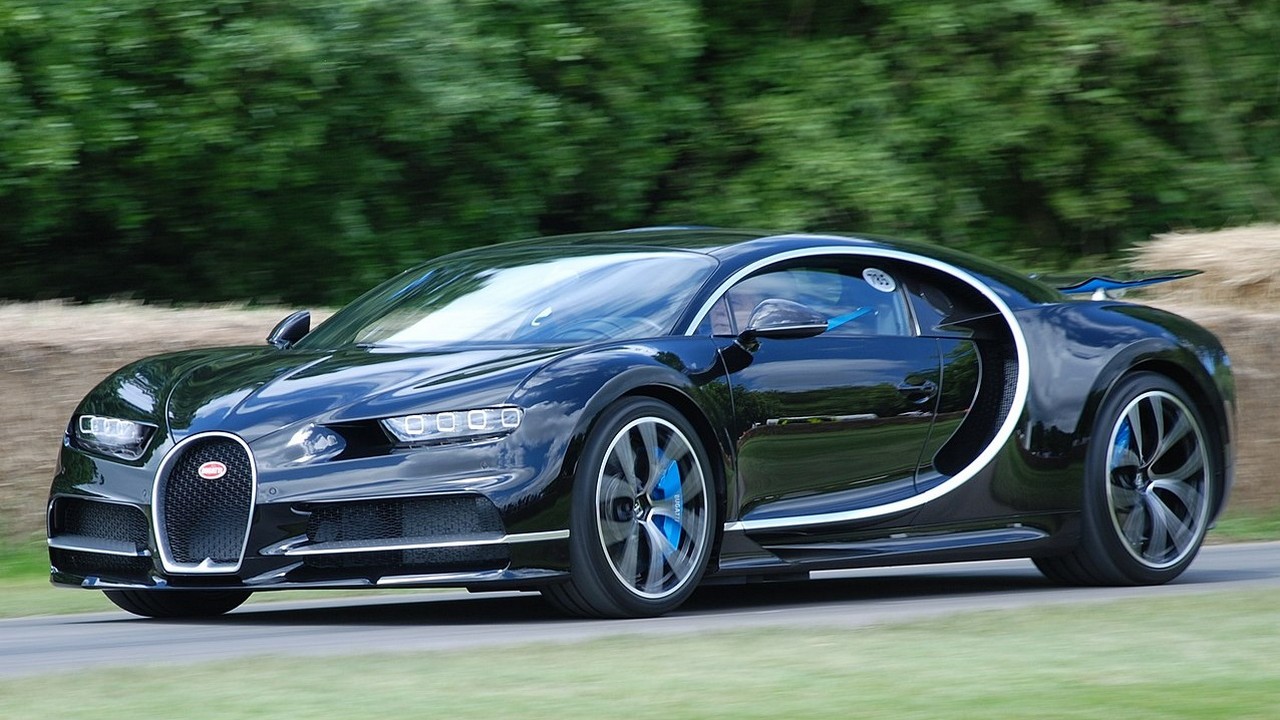
When you drop several million on a Bugatti Chiron, you probably expect a few perks. Bragging rights, sure. Neck-snapping acceleration, absolutely. But unlimited access to replacement parts when something breaks? Apparently, that’s negotiable.
Florida-based car influencer Alex Gonzalez found himself in exactly that predicament when his Chiron allegedly got “blacklisted” by the factory. No parts, no service, no love from Molsheim. So Gonzalez did what any frustrated owner with a large social media following would do in 2025: he threatened to fire up his 3D printer and make the parts himself.
And that’s when Bugatti CEO Mate Rimac slid into his DMs.
The Ultimate Modern Standoff
@fxalexg Bugatti is being very cooperative
Picture this: A wealthy influencer in Florida, standing next to his disabled hypercar, issuing ultimatums on Instagram like he’s negotiating a hostage situation. On the other side, the head of one of the world’s most exclusive automotive brands, typing furiously on his phone because some guy with a Ring light just threatened to turn a multimillion-dollar engineering masterpiece into a DIY project.
Welcome to the future of luxury car ownership…
Gonzalez laid it out plainly for his followers. His Chiron couldn’t get parts through official channels. Bugatti had supposedly blacklisted the car. He was stuck with a 1,500-horsepower paperweight. His solution? Give the company 24 hours to restore support, or he’d start manufacturing components himself using 3D printing technology.
The countdown was on. And the internet was watching.
“Hey Man, Bugatti CEO Here”

Now, most CEOs would handle this through lawyers, PR firms, and strongly worded press releases written in conference rooms that smell like leather and regret. But Rimac took a different approach. He opened Instagram, found Gonzalez’s account, and sent a direct message that started with the most casual power move imaginable: “Hey man, Bugatti CEO here.”
You can almost hear the record scratch.
The conversation that followed was part engineering lecture, part reality check. Rimac made it clear that 3D printing structural parts for a car that can hit 260 mph isn’t just inadvisable — it’s borderline suicidal. The tolerances on Chiron components aren’t suggestions. They’re the difference between a controlled rocket ship and an uncontrolled disassembly at highway speeds.
Rimac wrote: “You can’t 3D print parts for a Bugatti. Your gearbox and carbon fiber monocoque are probably damaged – those can’t be 3D printed. Just like lights and body panels. We want to help you do this in the most cost efficient way. If the monocoque and gearbox don’t need replacing, this will cost a lot less than everyone talks about.”
What coulda been a private situation was made public when Gonzalez screenshotted the whole exchange and posted it for everyone to see. Suddenly, a conversation between a frustrated owner and a concerned CEO became public property, dissected by thousands of armchair engineers and keyboard warriors across every platform.
Safety vs. Sovereignty

Let’s be real for a second. Bugatti has a point. When you’re building cars that make fighter jets look slow, every single component matters. These aren’t hood ornaments we’re talking about. The parts in question could be load-bearing, heat-critical, or safety-essential pieces that undergo testing most of us can’t even pronounce.
Rimac’s argument boils down to this: your home 3D printer, no matter how fancy, cannot replicate the standards required for a car engineered to survive forces that would turn a Camry into confetti. The company isn’t being difficult—they’re trying to prevent a very wealthy person from accidentally turning themselves into a physics lesson.
But from Gonzalez’s perspective, there’s another principle at stake. He bought the car. It’s his. If Bugatti won’t support it, what’s he supposed to do? Let it sit in his garage forever like the world’s most expensive sculpture?
That’s the tension at the heart of this whole mess. When does a manufacturer’s responsibility for safety override an owner’s right to maintain their own property?
The Internet Picked Sides (Naturally)

As you’d expect, the car community split faster than a Chiron hits 60 mph. One camp rallied behind Gonzalez, viewing him as a folk hero standing up to corporate gatekeeping. Why should a brand control what someone does with a car they fully own? If the man wants to risk it with a 3D printer, that’s his choice, right?
The other side — mostly engineers, track rats, and people who actually understand material science — backed Bugatti. These folks pointed out that “ownership” doesn’t mean you can ignore physics. Nobody wants to be on the same highway when someone’s homemade turbo housing gives up at 200 mph.
Fan pages and commentary channels had a field day. Memes proliferated. Timelines were constructed. Every new screenshot became a fresh news cycle. Car culture accounts turned the saga into appointment viewing, complete with countdown clocks and play-by-play breakdowns that made it feel less like a service dispute and more like a pay-per-view event.
What This Says About Modern Hypercar Ownership
Strip away the drama and the DMs, and you’re left with a genuinely interesting question about the future of ultra-luxury cars in the age of social media.
Twenty years ago, this would’ve been handled quietly. A phone call, maybe a visit from a regional manager, some behind-the-scenes negotiation. Problem solved, no headlines. But now? Now every dispute has an audience. Every grievance can become a global spectacle. And every influencer with a smartphone is a potential PR crisis waiting to happen.
Manufacturers like Bugatti operate in a world of extreme control. Every car is tracked, every service documented, every part validated. They see themselves as stewards of these machines, not just builders. But owners — especially younger, digitally savvy ones — increasingly view hypercars as personal platforms. They’re not just vehicles. They’re content. They’re brand extensions. They’re proof of status that only counts if other people see it. I’ve seen how that’s impacted previously stuffy events like Monterey Car Week, and I can’t say I like it.
Either way, when those two worldviews collide, you get spectacles like this.
The Real Question Nobody’s Asking

Here’s what’s wild about this whole situation: we still don’t know exactly why Gonzalez’s car was allegedly blacklisted in the first place. Was it modifications? Payment issues? Some breach of contract buried in the fine print? Bugatti hasn’t publicly confirmed the blacklist claim, and Gonzalez’s version of events is, naturally, his version.
But that ambiguity didn’t matter. The narrative was already set. Underdog owner versus big corporation. David with a 3D printer versus Goliath with a factory in France. The truth became almost irrelevant once the story went viral.
And that, more than anything, might be the real lesson here. In the social media age, perception moves faster than facts. By the time Rimac sent that DM, the court of public opinion was already in session. He wasn’t just responding to one guy in Florida. He was responding to millions of people watching the show.
Because let’s be real: we are never gonna run into this problem. How many of us have a blacklisted Bugatti? Show of hands! It’s not a situation most people will encounter, making it more a question of the way we use social media. Although most of us aren’t influencers either. Thank goodness. As one comment read: “Hard to get emotionally invested in a dispute featuring the levels of privilege and corporate greed on display here on the one hand; but on the other anyone who can spook an imperious corporation and have them act responsibly gets a thumbs up.”
Where Do We Go From Here?

As of now, the immediate crisis appears to have cooled. The 24-hour deadline came and went. No 3D-printed parts have been publicly installed (that we know of). Rimac made his case, Gonzalez made his, and the internet moved on to the next outrage.
But the underlying tension isn’t going anywhere. As more hypercars get sold to influencers and content creators, these kinds of public disputes will become more common. Manufacturers will have to decide how much control they’re willing to cede, and owners will have to figure out where their rights end and physics begins.
One thing’s for sure: the next time someone threatens to 3D print parts for a multimillion-dollar hypercar, it probably won’t shock anyone. This saga set a precedent. It showed that even the most exclusive brands aren’t immune to a well-timed Instagram post and a ticking clock.
Just maybe leave the structural components to the professionals. Your followers might love the content, but your next of kin probably won’t appreciate the paperwork…