A good test drive can make someone reconsider everything they thought they knew about a car. For one Tesla skeptic, however, even an impressive demonstration of the company’s Full Self-Driving technology wasn’t enough to get him thinking about a trip to the dealership.
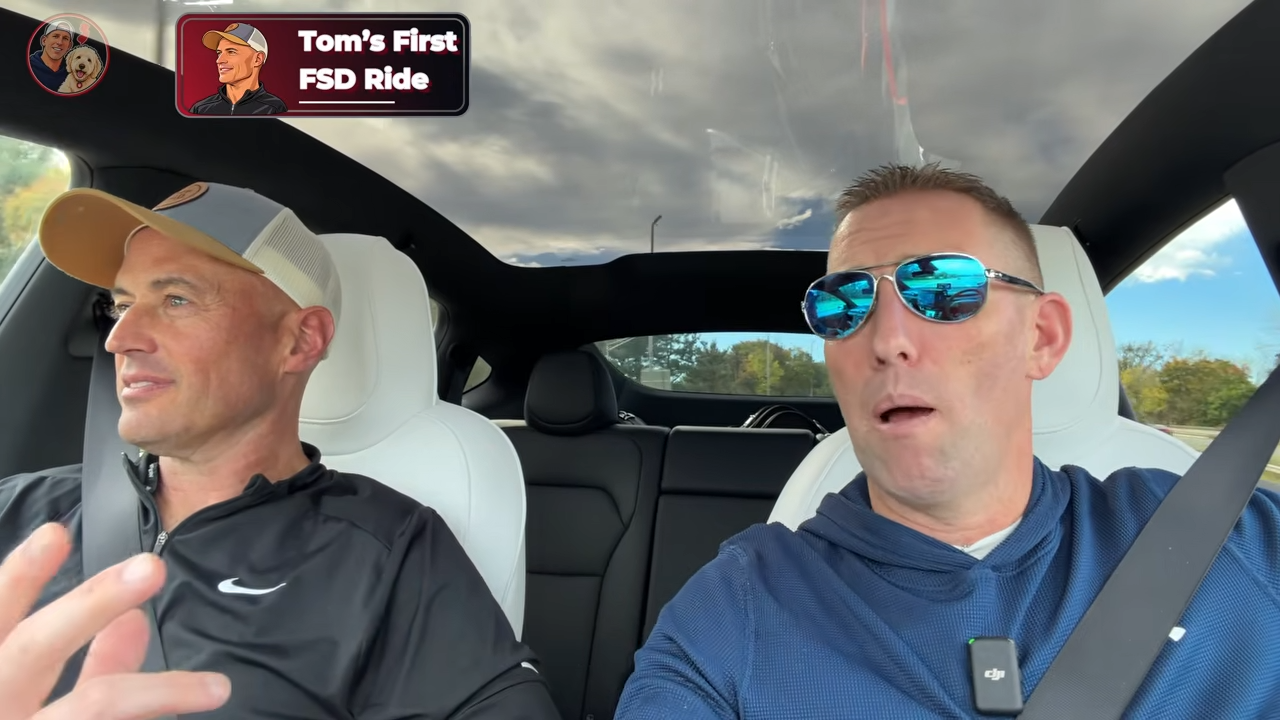
Keith, the creator behind the YouTube channel Jersey Tesla, recently invited his friend Tom along for an extended ride in his Model Y. Rather than simply explaining the technology, Keith wanted to let the car demonstrate what it could do in everyday traffic.
The video, published publicly on November 25, 2026, attracted more than 3,100 views within a day. What makes the conversation interesting is how quickly Tom acknowledges the appeal of the technology, even as he remains firmly opposed to owning a Tesla.
Most disagreements between car enthusiasts eventually come down to performance, reliability, styling, or price. These two friends found themselves debating something rather different: whether the person running a car company should influence someone’s decision to buy its products.
A Convincing Ride
Embedded media follows; please allow a moment to load.
Early in the conversation, the pair recalled an encounter with a Ford Explorer that had cut them off near an exit. Tom admitted that the incident frightened him, while Keith credited the Tesla with handling the situation without escalating it.
“I did feel very protected,” Tom said, joking about how Keith had instinctively moved his arm in front of him.
As the journey continued, Tom became increasingly curious about the car. He asked how it determined its speed, prompting Keith to demonstrate different driving profiles with names ranging from Sloth to Mad Max. Apparently, even a Tesla skeptic can get impatient with a Tesla taking its time.
Tom was particularly interested when the Model Y adjusted its speed after encountering a lower speed limit. The conversation eventually moved to battery charging habits and voice-controlled navigation, with the pair adding a restaurant stop to their journey without manually entering an address.
One Major Dealbreaker
Tom’s objection had little to do with electric vehicles. He explained that he might consider buying a comparable vehicle from another manufacturer, but Tesla CEO Elon Musk’s political involvement made owning a Tesla difficult for him to justify.
Keith questioned why the personal activities of a company’s CEO should outweigh the merits of its products. Tom, meanwhile, explained that where his money went mattered to him, particularly when he disagreed with how a prominent business leader used his wealth to influence politics.
Tom also indicated that his objection wasn’t limited to one political party. He said he would have similar concerns about a business leader heavily supporting the other side.
Putting Safety First
Keith raised a more difficult hypothetical question. If Full Self-Driving could be shown to save lives, would those safety benefits be enough to change Tom’s purchasing decision?
Tesla’s own Vehicle Safety Report reports lower collision rates when its supervised driving technology is engaged. However, those manufacturer-reported figures cannot establish exactly how many people would otherwise have died in crashes, the hypothetical figure Keith wanted Tom to consider.
Despite its name, Full Self-Driving (Supervised) remains a driver-assistance system. Tesla requires drivers to remain attentive, supervise the vehicle, and take control whenever necessary.
As their ride approached its end, Keith asked Tom whether he had enjoyed experiencing the technology. Tom didn’t hesitate to give the car credit, answering with a resounding “100%.”
His purchasing decision, however, hadn’t changed. Tom made clear that his objection wasn’t directed at Keith or other Tesla owners, but at Musk himself.