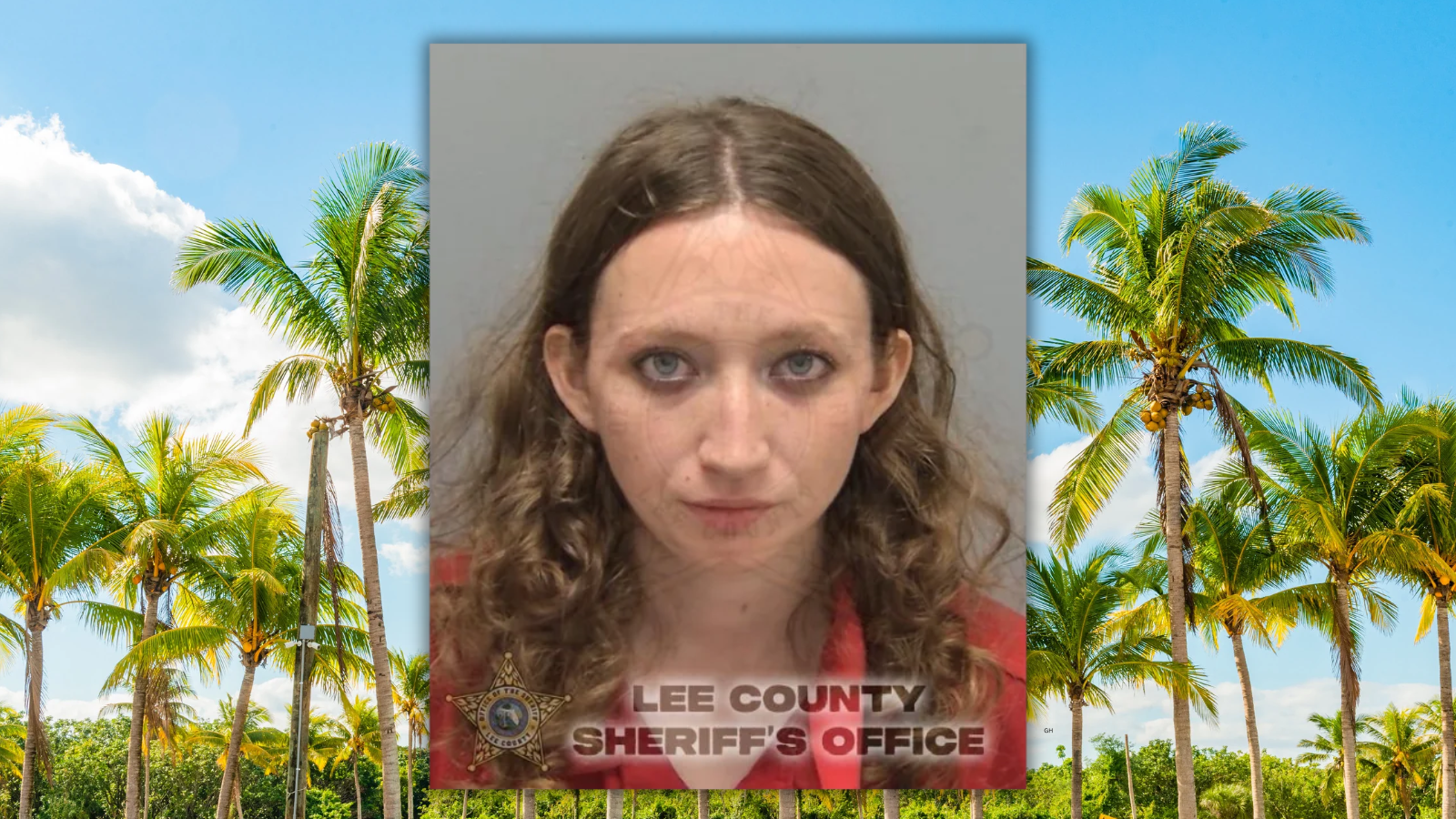
A 21-year-old Florida woman was arrested after state troopers clocked her driving 112 mph on Interstate 75 and later recorded breath alcohol levels more than twice the legal limit.
Jaidah Nicole Estep, of Fort Myers, was driving a gold 2007 Toyota SUV southbound through Lee County around 1:11 a.m. November 1, when Florida Highway Patrol Trooper F. Jerezano spotted her speeding near mile marker 120. A laser device measured 112 mph from 1,173 feet away in a posted 70 mph zone.
After stopping Estep near Bonita Springs, Jerezano reported smelling alcohol. Trooper Miguel Gutierrez, a drug recognition expert assigned to FHP’s DUI unit, arrived and documented bloodshot, watery eyes, a flushed face, and an odor of alcohol. Estep acknowledged drinking one and a half beers approximately an hour earlier.
She told Gutierrez she was returning home from Charlotte County and approaching the North Fort Myers exit at mile marker 143. The trooper informed her they were already roughly 20 miles south of that location. Estep claimed her GPS was off, but investigators found her phone’s navigation was active and had already directed her past her home.
Roadside
Still wearing what Gutierrez believed was a ladybug Halloween costume, Estep agreed to roadside sobriety exercises.
During the horizontal gaze nystagmus test, which examines involuntary eye movements associated with alcohol impairment, Gutierrez documented all six standard indicators. He also observed vertical eye movements, difficulty converging her eyes, and visible body sway.
Estep struggled to maintain her balance during the walk-and-turn, stopped walking, missed heel-to-toe steps, stepped off the line, and turned improperly. During the one-leg stand, she put her foot down and subsequently couldn’t remember what number she had reached while counting.
A National Highway Traffic Safety Administration validation study found accuracy rates of 88% for the eye test, 79% for the walk-and-turn, and 83% for the one-leg stand when classifying drivers relative to a 0.08 blood alcohol concentration. Officers correctly classified drivers in 91% of cases when considering all three exercises together. Those results reflect research conditions, not guaranteed accuracy in individual arrests.
Gutierrez arrested Estep at approximately 1:38 a.m. Her SUV was towed, and she was transported to jail without incident.
One and a Half?
Estep agreed to breath testing using an Intoxilyzer 8000, which measures alcohol through infrared absorption. Her samples registered 0.165 and 0.153, exceeding both Florida’s 0.08 legal limit and its 0.15 threshold for enhanced DUI penalties.
For perspective, a woman weighing approximately 115 pounds, as Estep’s booking record lists, might reach 0.16 after consuming roughly four to five standard 12-ounce beers containing 5% alcohol in a relatively short period. Actual results vary with drinking duration, physiology, and other factors. The report does not identify the size or strength of Estep’s reported drinks.
Florida’s evidentiary testing procedures require two samples within 15 minutes, with results differing by no more than 0.020. Estep’s readings differed by 0.012, meeting that agreement criterion, although instrument maintenance and other procedural requirements cannot be independently verified from the arrest report.
Gutierrez noted that daylight saving time ended during the investigation, making the breath-testing timestamps appear earlier than the arrest.
714 Feet
At 112 mph, a vehicle travels approximately 164 feet per second. An additional half-second of reaction time means covering another 82 feet before braking even begins.
NHTSA identifies deterioration in reaction time at a blood alcohol concentration of 0.10 and substantial impairment in attention, vehicle control, and information processing at 0.15.
A Toyota RAV4 tested by Car and Driver stopped from 70 mph in 183 feet. Extrapolating that braking performance suggests approximately 373 feet from 100 mph and 468 feet from 112 mph.
Adding an illustrative 1.5-second reaction interval at 112 mph produces a total estimated stopping distance of 714 feet, nearly 2.4 football fields.
These calculations assume dry pavement, effective brakes and tires, and comparable braking performance. Estep’s exact Toyota model, vehicle condition, and actual reaction time weren’t established.
Charges
The citation documented no collision, injuries, or property damage.
Estep faces separate DUI and first-offense reckless driving charges. Florida’s dangerous excessive speeding law criminalizes traveling 50 mph above the limit, or at least 100 mph under specified dangerous conditions. Her speed was 42 mph over the limit, and FHP charged reckless driving, which carries up to 90 days in jail for a first conviction.
Lee County records show Estep was booked at 2:57 a.m. and released at 10:30 a.m. after posting $500 bond. She entered written not-guilty pleas, and both cases remained open in the records reviewed. Her reckless driving citation lists a November 30 court date.
All parties are presumed innocent unless and until proven guilty in a court of law.