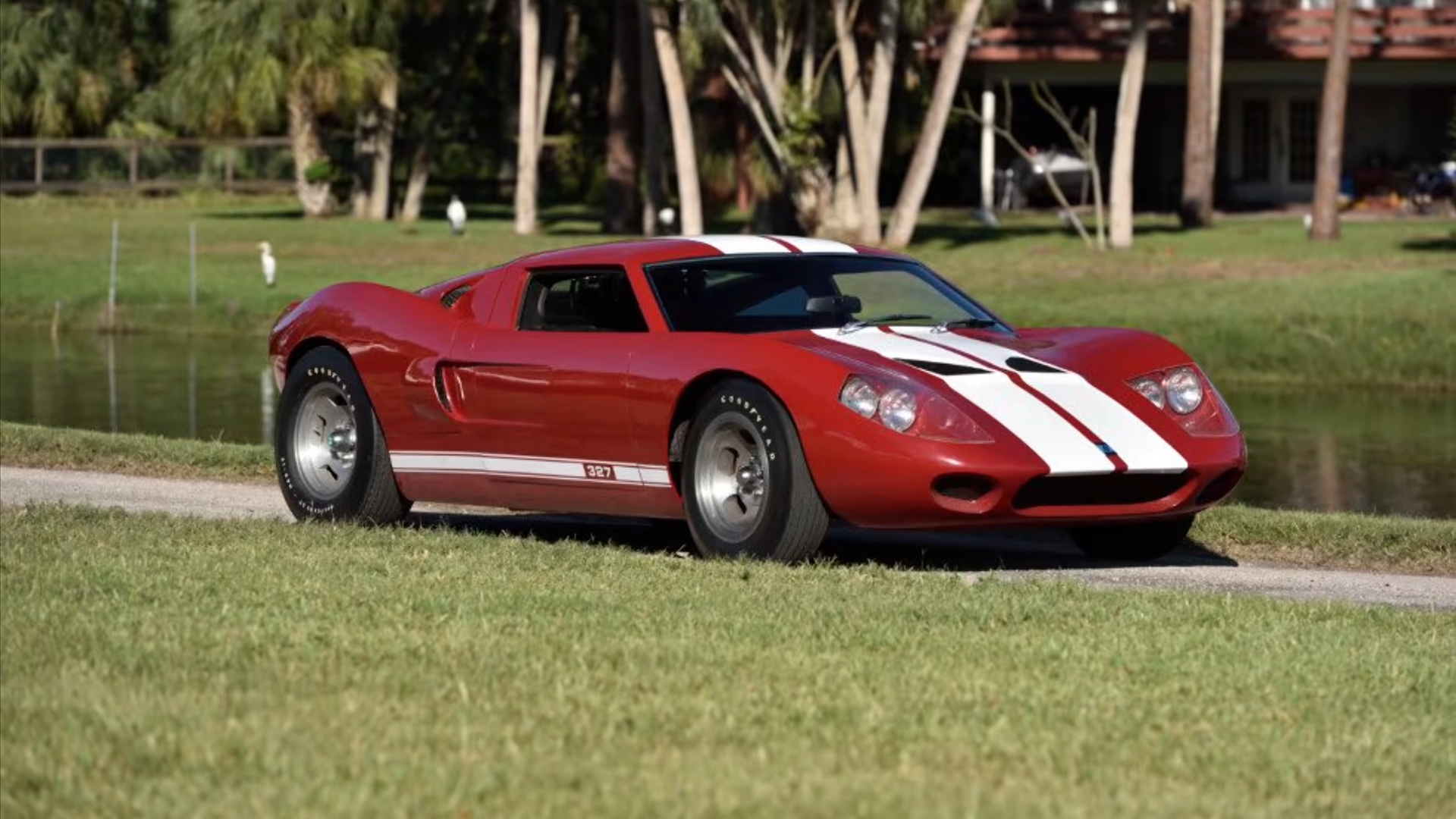
A car could look ready for a bedroom poster and still have an old Volkswagen engine behind the seats. During America’s kit car boom, buyers could order the body of their dreams and supply the rest themselves.
For someone priced out of a Ferrari, that was a tempting deal. Magazine ads brought sports car ownership within reach of people willing to trade their spare time for a lower purchase price.
A November 5 video from Lost Empire Media looks back at those garage builds, including the Bradley GT and Sterling. Both offered shapes that stood out even without an Italian badge on the nose.
Finishing one took more than finding a cheap donor car. As the video explains, fitting panels, sorting wiring, and building an interior could turn a low-cost purchase into years of work.
Some Assembly Required
Embedded media follows; please allow a moment to load.
With its body separate from the floorpan, the Beetle gave builders a useful base. They could remove the familiar rounded shell while keeping the running gear, then fit fiberglass bodywork in its place.
That approach allowed small firms to sell cars that looked far removed from the VW underneath. The Bradley GT had a low body and gullwing-style openings, while the Sterling’s roof lifted so the driver could climb inside.
Sterling also had a real business behind its space-age shape. The Sterling Kit Car Owners Association traces American production to San Lorenzo, California, in 1973, after two business partners brought the British Nova design across the Atlantic.
Fiberglass had already helped Bruce Meyers build a different kind of car. His Manx dune buggy used VW parts for trips across the sand, rather than trying to pass for an expensive road car.
The historic record for the first Manx adds a detail often lost in the shorthand: its fiberglass body carried the structure itself. Later versions used a shortened VW floorpan after the early design proved too costly to produce.
A Familiar Shape
Copying an exotic car brought a separate risk. Ferrari took replica seller Carl Roberts to court over bodies modeled on the Daytona Spyder and Testarossa.
In its 1991 ruling, a federal appeals court described fiberglass shells fitted to donor cars such as Corvettes and Fieros. Most kits sold for about $8,500, while a fully equipped, ready-to-drive version was available for about $50,000.
Roberts argued, among other things, that buyers knew they were getting replicas. The court still upheld an order barring production of the two models, finding that Ferrari’s protected designs extended to their exterior shape.
That case concerned specific copies, rather than every home-built sports car. It also shows why a replica maker’s legal problem could reach beyond a badge or name.
Still Being Built
Lost Empire Media points to Factory Five as one company carrying the build-it-yourself business forward. Its component cars let owners choose a powertrain rather than keep whatever engine came with an aging donor.
A Factory Five-hosted supplier brochure shows how that works in practice. BluePrint Engines offers matched engine and transmission packages for several Factory Five kits, shipped together and ready to install.