
Imagine filling your car with something a restaurant would otherwise throw away, then driving past the gas station without stopping. That’s the idea behind an experiment involving an aging diesel Audi and several containers of used cooking oil.
British automotive YouTuber Autoalex wanted to find out whether discarded vegetable oil could provide a practical alternative to expensive diesel. His plan involved collecting waste oil from local food businesses, cleaning it, and putting it straight to work.
The experiment required a suitable vehicle, so he bought a battered 1993 Audi 80 diesel wagon for £2,000, roughly $2,600. With 186,000 miles on the odometer and a faulty alternator, it wasn’t exactly a promising starting point.
However, the Audi possessed one crucial feature that made the experiment possible. It’s also the reason owners of modern diesel vehicles shouldn’t attempt the same trick.
Why This Old Audi Can Burn Vegetable Oil

The Audi’s older diesel injection system uses a mechanical fuel pump that is better suited to handling thicker vegetable oil than the delicate high-pressure systems found in modern diesels. Modern common-rail diesels operate at extremely high pressures with tighter tolerances, making untreated vegetable oil a serious risk to expensive injection components.
Before experimenting, Alex and Taylor repaired the alternator’s worn brushes, restoring charging voltage to 14.3 volts. With the engine running properly, they could turn their attention to fuel.
Turning Restaurant Waste Into Fuel
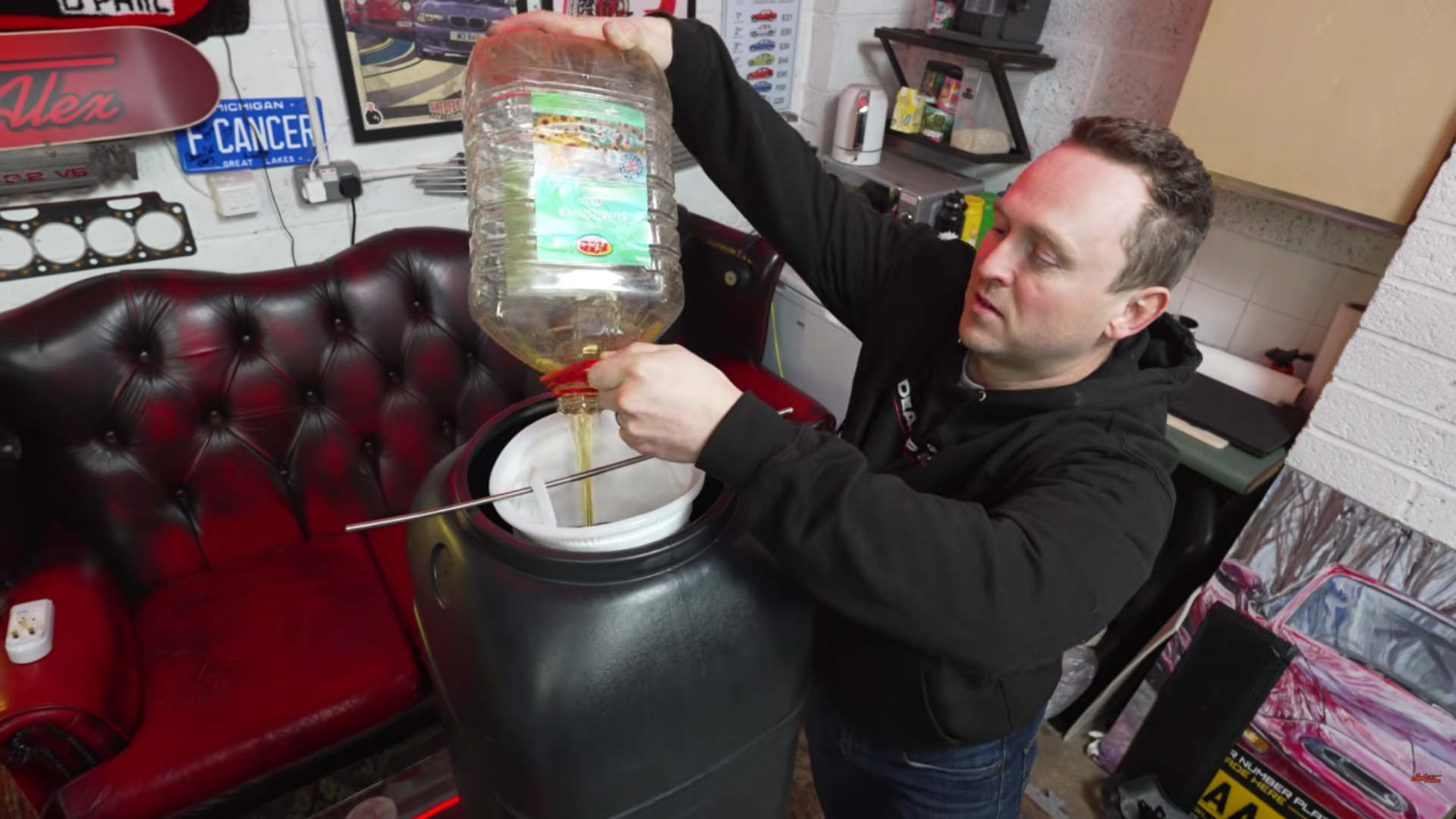
They collected approximately 50 liters of discarded cooking oil from food vans, cafés, and fish-and-chip shops, then poured it through five-micron filter socks into a 100-liter container, removing visible debris before allowing the liquid to settle.
A separate fuel tank was then installed in the Audi’s cargo area, connected through new fuel lines while retaining the original engine-mounted fuel filter. The arrangement allowed the experimenters to use vegetable oil without permanently filling the factory diesel tank.
When the engine continued running after the remaining diesel cleared the lines, Alex announced, “It’s running on veg.”
The Road Test Revealed the Trade-Offs

The Audi successfully cruised at highway speeds during a trip into central London. However, Alex and Taylor noticed a strong cooking-oil smell, while the fuel supply dwindled faster than expected.
They also carried spare fuel filters because thicker vegetable oil can cause blockages. As they explained, “If you want to ensure, like, proper longevity for the fuel pump and injectors and filters and stuff, there are a few more processes.”
Free Fuel Comes With Conditions
The Audi completed roughly 80–90 miles running on vegetable oil, although they bought a few liters of fresh cooking oil at a service station to ensure they could get home.
The experiment demonstrated that waste oil can power a suitable older diesel, but basic filtering doesn’t guarantee long-term reliability. Fuel preparation, cold-weather viscosity, engine compatibility, and maintenance all matter—and modern common-rail diesels are poor candidates for this approach, so only try this if you have an old diesel engine you’re not afraid to break.