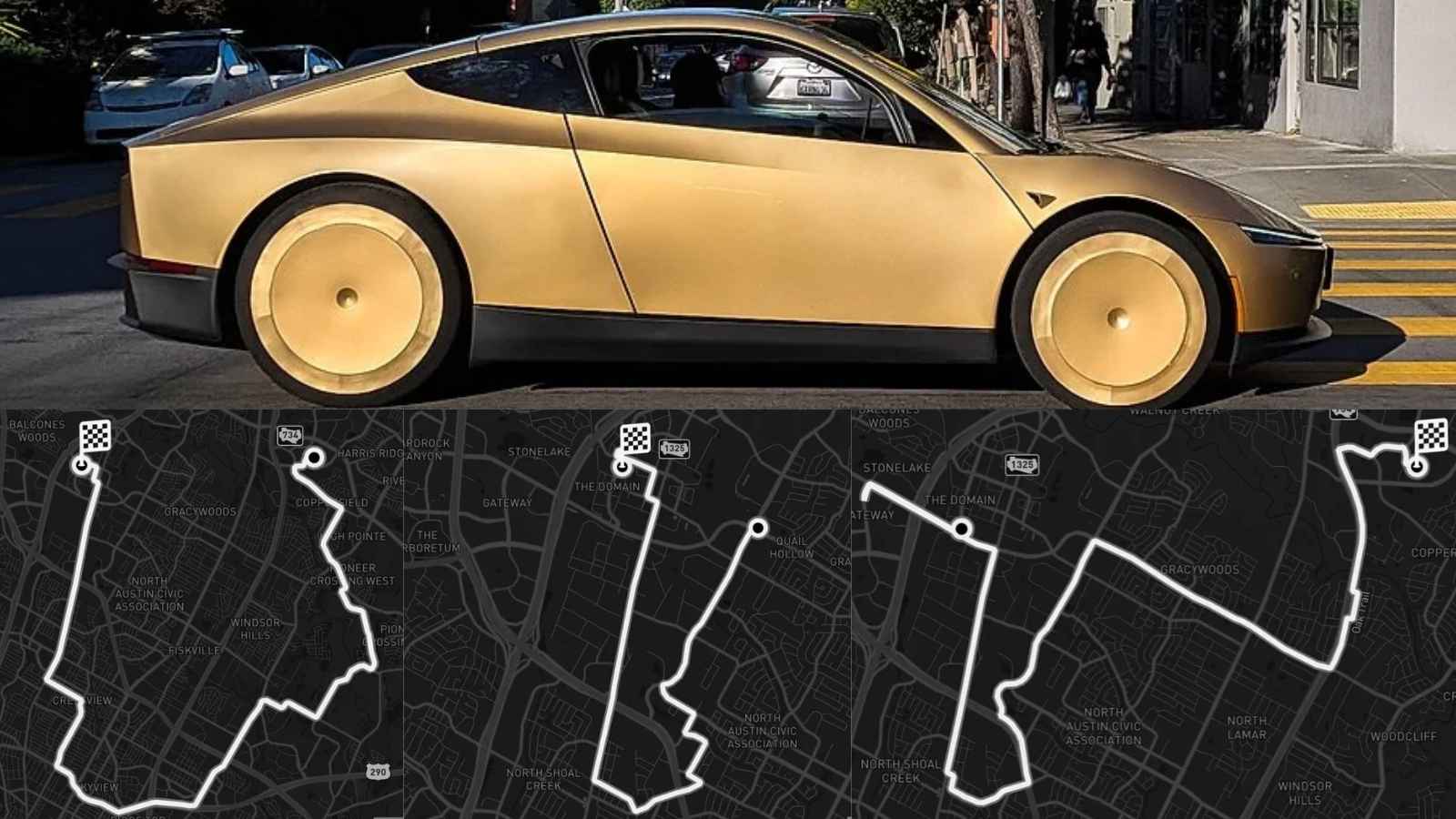
A passenger in Austin, Texas, decided to try Tesla’s Robotaxi service three times in one day. By the second ride, something about the routes had caught his attention. The cars seemed to be going much farther than needed to reach their destinations.
Rather than taking what appeared to be the shortest path, the Robotaxis followed longer routes through the city. It happened on all three trips, which took place within just five hours.
The rider shared screenshots of the routes on Reddit on November 10, hoping someone could explain the strange pattern. His post soon drew replies from other Tesla owners and Robotaxi passengers who had noticed similar behavior.
Some thought the cars were avoiding certain roads for safety. Others wondered whether Tesla’s navigation system was making poor choices. The discussion raised a question that matters to anyone paying for a ride: Why travel farther than necessary?
Taking The Scenic Route
Strange Robotaxi Route Pattern
by
u/avgInfoSecGuy in
TeslaFSD
In a post on r/TeslaFSD, user avgInfoSecGuy shared maps from his first day using Tesla’s Robotaxi service in Austin. Each showed a route he believed could have been much shorter.
The passenger first became suspicious after his second trip. By the third, he had noticed enough of a pattern to ask Reddit for an explanation.
He also wondered whether Tesla might be using the longer routes to gather mapping information. That was only his theory, however, and the post offered no proof that Tesla was collecting data through unnecessary trips.
Unlike a driver using regular navigation, a Robotaxi passenger cannot simply turn onto a different street. One commenter asked whether riders could choose another route in the app, as Tesla owners can sometimes do with their own vehicles. Another user replied that the Robotaxi service did not offer that option.
A Possible Explanation
One of the more detailed replies focused on railroad crossings. A commenter suggested that Tesla might be planning routes around certain crossings and highways rather than choosing the shortest path.
Looking more closely at the Austin maps, the commenter pointed to West Braker Lane and nearby MetroRail tracks. The route appeared to take the car farther south, toward Ohlen Road, instead of following a more direct path.
The suggestion offered a possible reason for the extra driving. A self-driving car might choose a longer route to avoid a crossing it has trouble handling. Still, nothing in the discussion showed that Tesla had programmed the Robotaxis to avoid those particular streets.
Another passenger described a similar experience while leaving Austin’s Mueller neighborhood. Two trips headed toward very different parts of the city, yet the Robotaxi followed nearly identical roads for part of each journey.
Same Roads, Different Trips
The Mueller passenger’s experience added another detail to the discussion. If two trips heading in different directions used much of the same route, the cars might be following a limited set of preferred roads.
That could help explain why the original poster encountered so many detours during his first day. The service may have been choosing roads it could handle more easily, even when other streets offered a shorter trip.
For passengers, though, the difference is easy to notice. A ride that appears simple on a map can become much longer when the vehicle takes an indirect route. Without an option to choose another path, the rider is left following the car’s decision.
The original poster’s screenshots documented three such trips in just five hours. In the comments, railroad crossings and preferred roads emerged as possible explanations for the unusual paths.