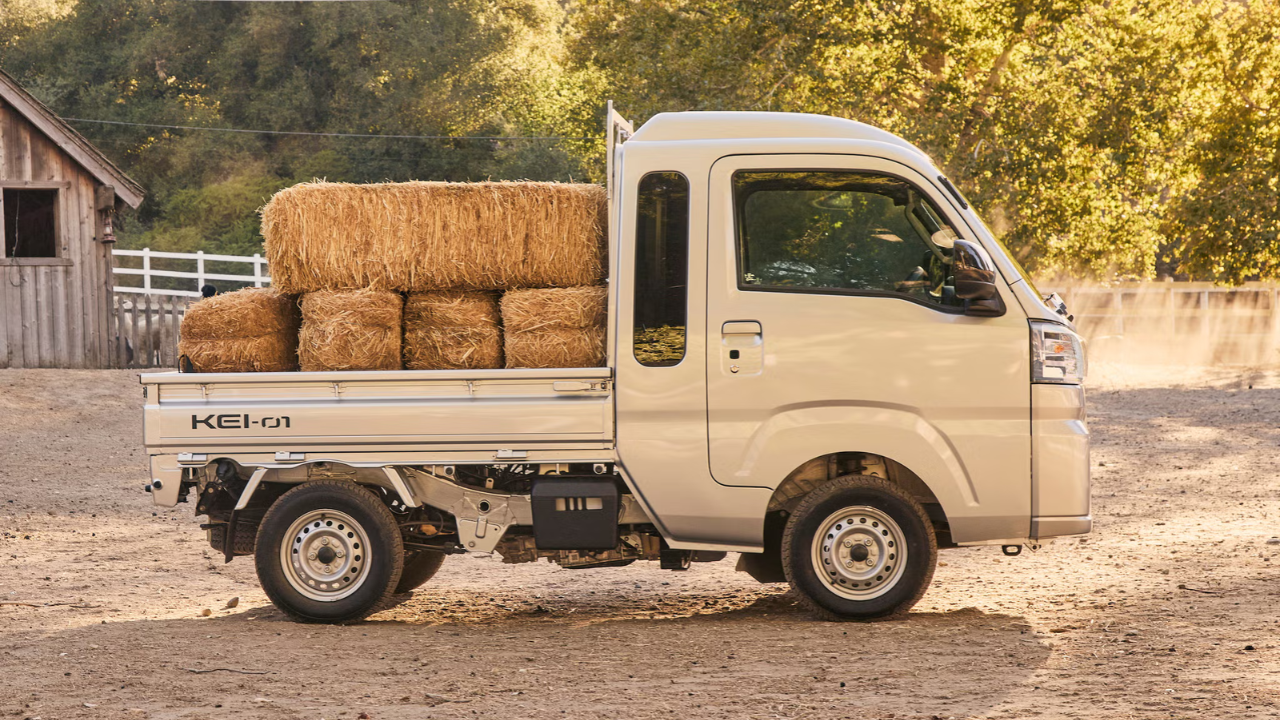
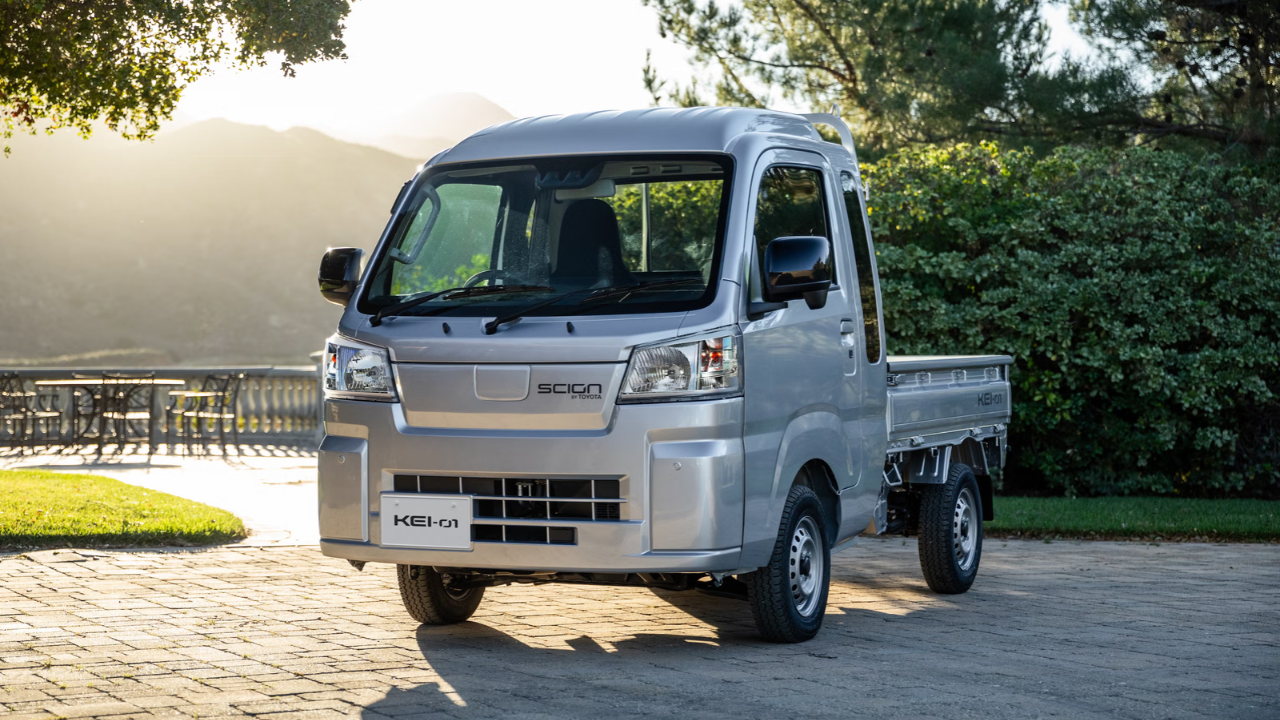
Toyota is bringing a tiny Japanese-style pickup truck to America, but there’s a catch. The new Scion KEI-01 has four-wheel drive, a useful cargo bed, and a top speed of just 25 mph. It also has something most American drivers aren’t used to seeing: a steering wheel on the right.
The truck is set to arrive in the second half of 2027, with production planned at Toyota’s Princeton, Indiana, plant. At just over 11 feet long, it’s far smaller than the Tacoma or Tundra.
Toyota is also using the little pickup to bring back Scion, a brand it retired in 2016. Rather than returning with sporty cars aimed at young drivers, Scion will now focus on unusual vehicles and new transportation ideas.
Anyone hoping to park one in their driveway may be disappointed, though. Toyota plans to sell the KEI-01 to commercial fleets first, and there’s no guarantee regular customers will ever get a chance to buy one.
Small But Capable
The KEI-01 takes its design from Japan’s popular kei trucks. These small work vehicles are built to carry loads through narrow streets, farms, and crowded work areas where larger pickups aren’t practical.
According to MotorTrend, Toyota’s new truck closely resembles the Japanese-market Toyota Pixis, which is based on the Daihatsu Hijet.
Under the seats sits a 660cc three-cylinder gasoline engine paired with a continuously variable transmission. Toyota hasn’t released a horsepower figure, although the similar Pixis produces around 50 horsepower in non-turbocharged form.
Despite its size, the KEI-01 can carry up to 600 pounds in its cargo bed. Three folding sides make loading tools or supplies easier, while selectable four-wheel drive helps with snow, mud, and rough ground.
The enclosed cabin also includes heating, air conditioning, adjustable seats, and storage space behind the occupants. It’s a small truck, but Toyota hasn’t stripped away the basic comforts.
Why Just 25 MPH?
The speed limit is no accident. Toyota designed the KEI-01 to meet federal requirements for low-speed vehicles rather than the stricter standards that apply to regular highway vehicles.
That classification allows the truck to reach a maximum speed of 25 mph. Where owners can legally drive it will depend on state and local laws, making it better suited to short trips than everyday highway travel.
Japanese kei vehicles are already popular overseas. Bloomberg reports that minicars account for roughly one-third of new-vehicle sales in Japan, where smaller vehicles can qualify for lower taxes and other benefits.
Toyota sees a possible market for similar trucks in the United States, especially among businesses that don’t need a full-size pickup for every job.
Buyers Must Wait
There’s another major difference between the KEI-01 and Toyota’s other trucks. When sales begin, individual buyers won’t be the intended customers.
Toyota says the initial rollout will be a limited fleet pilot program through selected dealers. Farms, universities, municipalities, and businesses could all find uses for the compact pickup.
The company may eventually offer limited retail sales if demand supports the move. However, it hasn’t announced a price or confirmed when private buyers might get access.
That leaves enthusiasts with an unusual situation: Toyota is introducing an American-built kei truck, but the people most excited to own one may have to watch businesses buy them first.
Built In Indiana
Toyota plans to invest $34 million in its Princeton factory to prepare for KEI-01 assembly. According to the Indiana Economic Development Corporation, the expansion is expected to create about 50 jobs.
The same plant already builds larger Toyota vehicles, including the Highlander, Grand Highlander, and Sienna, as well as the Lexus TX.
Scion’s return also includes two concept vehicles. One is the SxS, an off-road machine with a hybrid powertrain producing more than 300 horsepower. The other is the BKE, a compact electric two-wheeler designed for short trips.
Neither concept has a confirmed production date. For now, the KEI-01 is the vehicle leading Scion’s comeback, with Indiana assembly scheduled to begin in the second half of 2027.