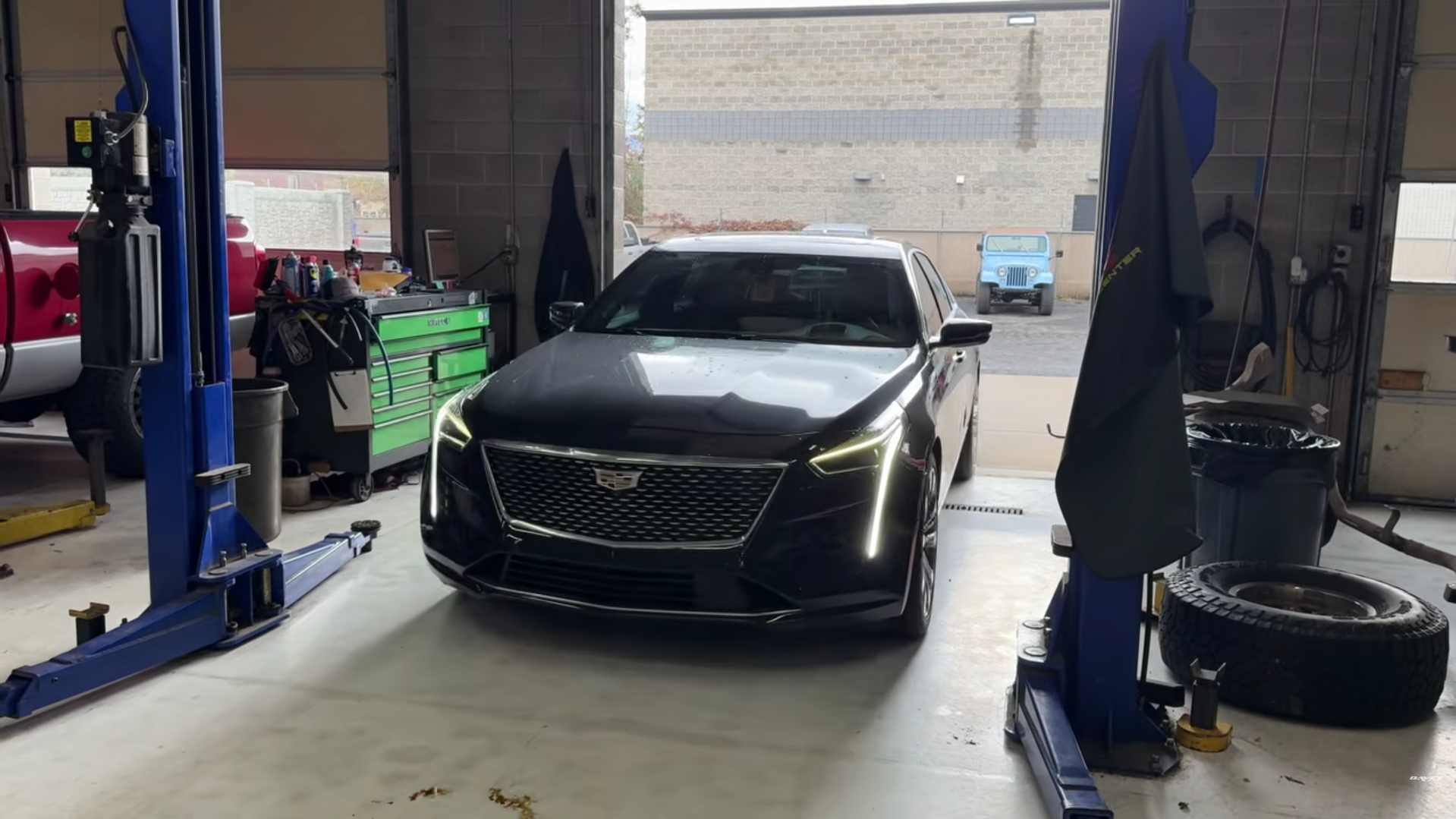
A Cadillac CT6-V Blackwing with just 69,000 miles shouldn’t be spending months in a repair shop with an unresolved misfire. However, one California owner’s dream-car purchase quickly became an exhausting struggle to get his luxury performance sedan running properly.
The trouble began when the Cadillac started shaking on the freeway, eventually triggering a flashing check-engine light. What initially seemed like a repairable problem turned into months of unsuccessful diagnostic work.
After seeing another Blackwing repair on the Dave’s Auto Center YouTube channel, the owner decided to ship his Cadillac to the shop. Mechanic Kyle was assigned the job, having recently tackled a similarly challenging engine.
The previous dealership had identified zero compression in cylinder four, raising concerns about serious internal damage, but when Kyle began investigating, he found something that suggested a completely different explanation.
Five Months Without a Solution
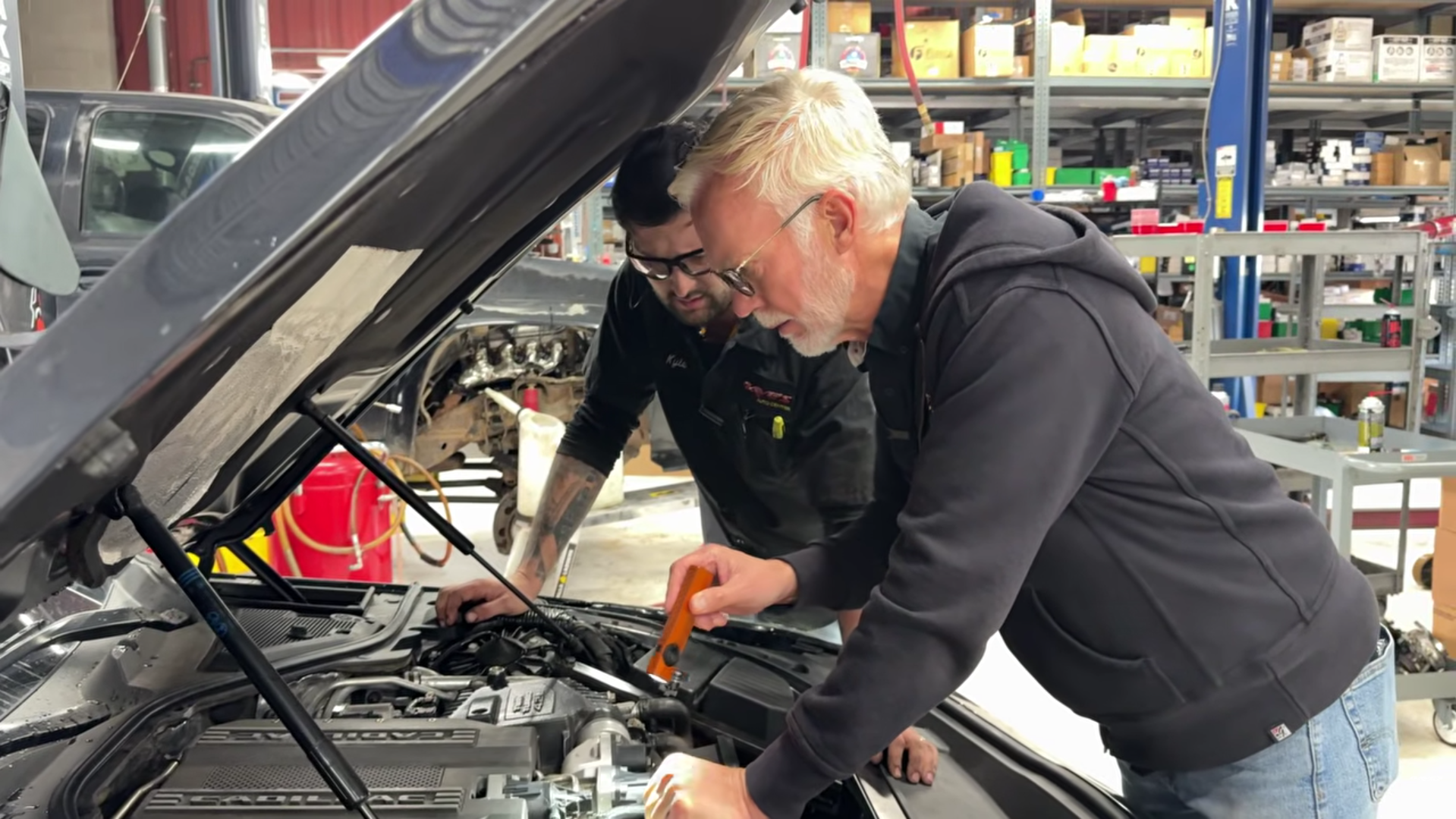
The owner, Michael, had purchased the Cadillac in February 2025 and described it as his dream car. According to his account, the dealership kept it for roughly five months while investigating the misfire.
Its work involved electronic modules, sensors, and other potential causes, but the original problem was unsolved. A subsequent compression test revealed cylinder four had no compression, while the other cylinders reportedly measured around 150 psi.
A Borescope Reveals the Unexpected
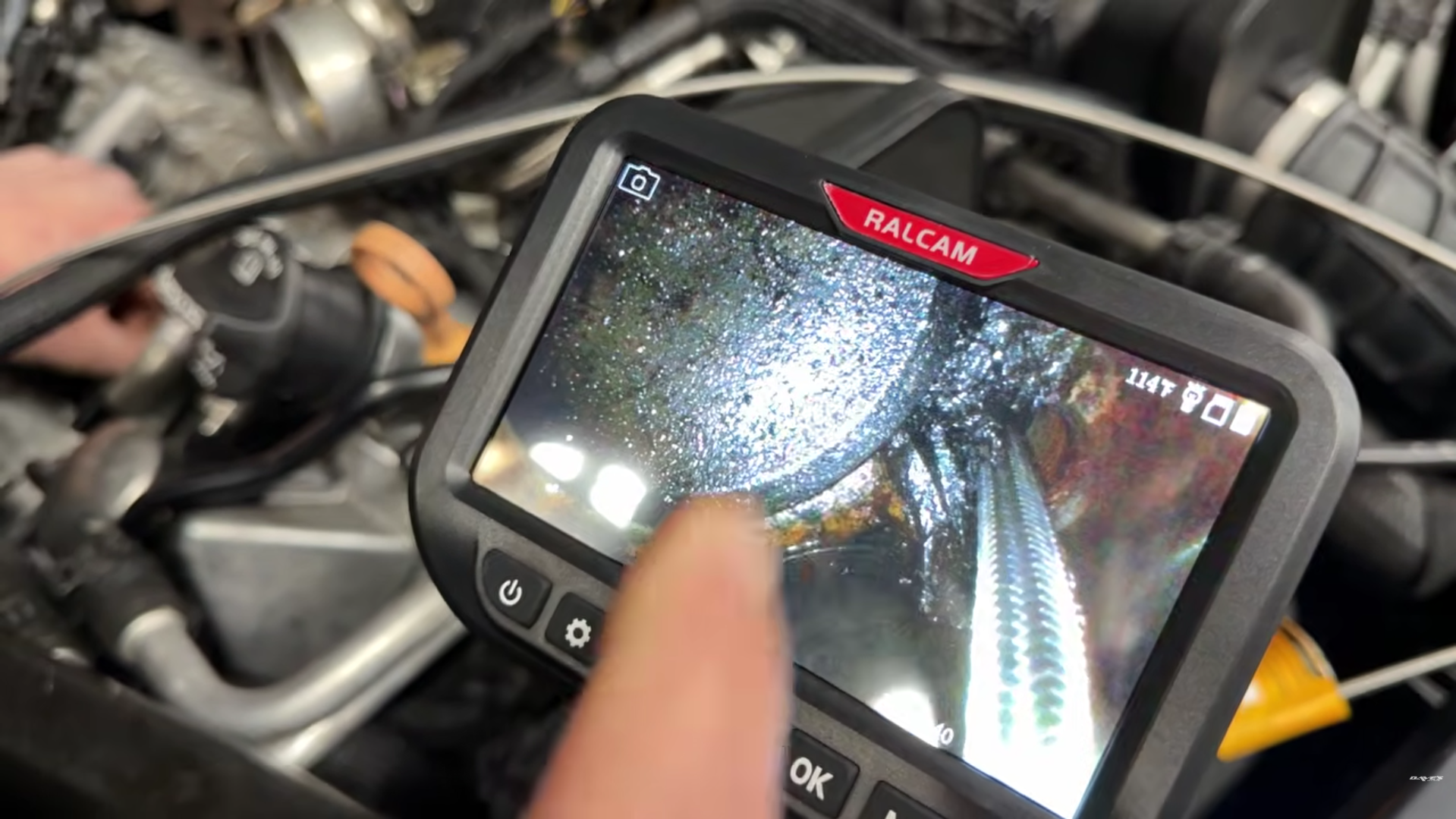
Rather than immediately dismantling the engine, Kyle removed the spark plugs and inspected the affected cylinder. He spotted an obstruction even before inserting a borescope.
The camera revealed an unidentified piece of material trapped between an intake valve and its seat, preventing the valve from closing properly. That explained how the cylinder could lose compression, although the team still needed to determine whether the valve or piston had suffered damage.
The Mystery Isn’t Solved Yet
The obstruction looked like plastic or another hardened material, but the mechanics couldn’t identify it. They also couldn’t determine how it had entered the engine, particularly after examining the intake components for obvious damage.
The borescope showed no clear signs of piston impact, offering some encouragement. However, the inspection couldn’t rule out hidden damage or establish the material’s origin.
A Potentially Expensive Repair Gets New Hope
Dave explained that accessing the obstructed valve would require removing the engine because of the Blackwing’s tightly packaged engine bay. Once accessible, the team planned to extract the material, inspect the valve, and retest compression.
If the cylinder regained compression without evidence of damage, the engine might be repairable without replacing major internal components. Michael was relieved to hear that possibility after months of uncertainty.
The video ended before the engine was removed or the obstruction identified, with Dave promising a follow-up. While the breakthrough wasn’t a completed repair, there’s now a diagnosis in place that finally gave the owner a plausible path forward.