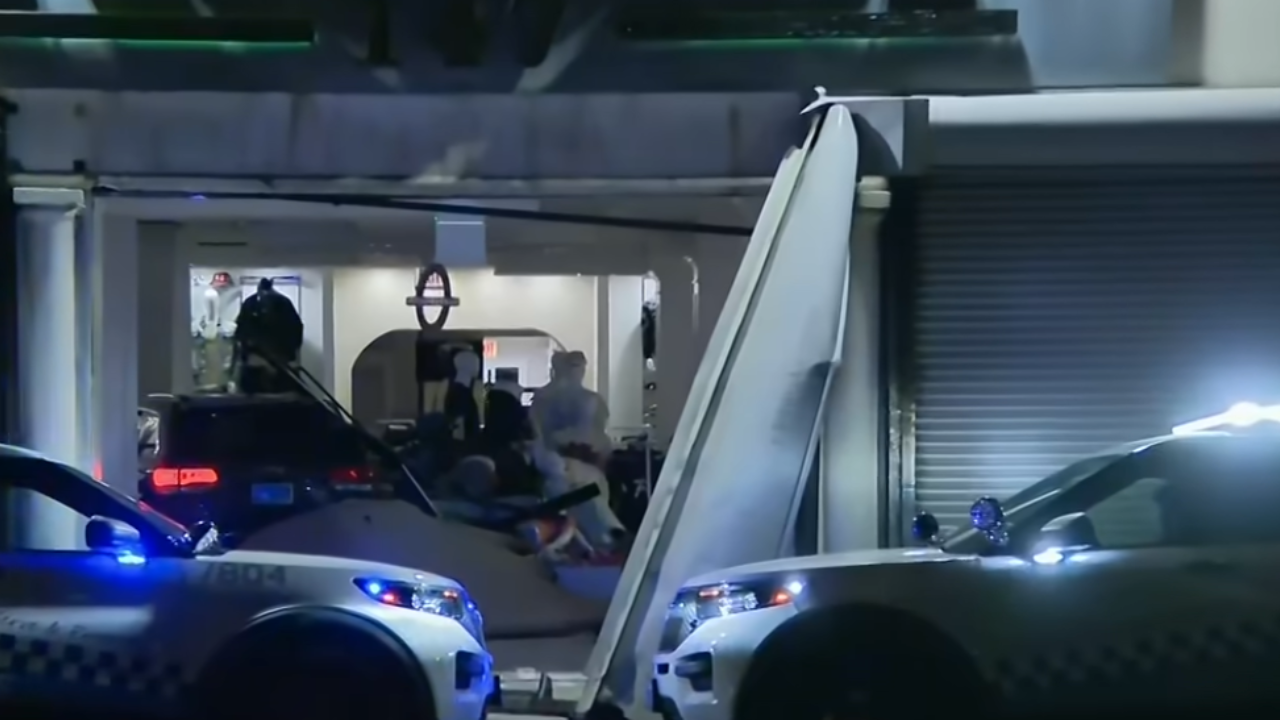
Across Chicago, security cameras keep recording a costly sight. SUVs slam into storefronts, glass flies, and thieves rush inside to grab cash, goods, or ATMs. But a closer look at the footage reveals something else. Many of the vehicles being used are Jeeps.
The pattern caught the attention of CBS Chicago, which reviewed surveillance videos and stolen vehicle records. Its investigation, published November 5, found that Jeep SUVs have become common sights in smash-and-grab burglaries across the city.
For Jeep owners, the problem can begin long before a vehicle crashes into a business. Thieves are stealing the SUVs from streets and parking spots, sometimes using technology that allows them to bypass traditional keys.
Illinois police say modern car theft has changed. Instead of breaking into an ignition and hotwiring a vehicle, thieves can use electronic equipment to program keys. That has left some owners facing repeated thefts, even after getting their vehicles back.
A Familiar Sight
Embedded media follows; please allow a moment to load.
The CBS Chicago investigation shows one Jeep after another being used to break into businesses. In some cases, thieves use the SUV to force their way through a wall or entrance before going after an ATM.
One example came in August, when a gray Jeep crashed into a convenience store in Chicago’s Bucktown neighborhood. Two people entered and tried to steal an ATM but fled without it, leaving the vehicle behind.
The Jeep’s owner told CBS Chicago that thieves had taken it from outside his home before the burglary.
Hundreds Taken
Records obtained by CBS Chicago from the Chicago Police Department show how widespread Jeep theft has become.
In 2019, Chicago recorded 427 stolen Jeeps. By 2024, that number had climbed to 1,702. The total dropped to 1,180 in 2025.
Through August 1, 2026, another 659 Jeeps had been reported stolen. The Grand Cherokee was the most targeted model, accounting for just under 400 of those thefts.
For Logan Square resident Brian Fox, those numbers reflect a problem he knows well. Across three different Jeeps, he has dealt with four thefts. Each time, someone took his vehicle from the street.
Fortunately, Fox recovered all four vehicles. Still, getting them back has not stopped him from worrying about another theft.
Beyond Hotwiring
Lt. Adam Broshous of the Illinois Statewide Auto Theft Task Force told CBS Chicago that car thieves have moved away from traditional hotwiring.
Electronic key programming has become a major concern, particularly with Jeep and Dodge vehicles. Broshous said those brands were among the first his task force encountered when the method became more common.
The Chicago Police Department has also identified portable key-programming devices as a method used to steal Dodge, Chrysler, and Jeep vehicles.
During the CBS investigation, locksmith Jordan Kielnhofer raised another concern. Although Illinois locksmiths undergo background checks, equipment used to make and program vehicle keys can be obtained online with fewer safeguards.
Kielnhofer also described locksmith employees being threatened at gunpoint while responding to calls.
Broshous did not identify a specific Jeep security defect. Instead, he pointed to the growing availability of technology and information that can help thieves steal modern vehicles.
Stellantis Responds
CBS Chicago contacted Stellantis, the parent company of Jeep and Dodge, about the thefts.
The automaker said its vehicles meet applicable federal safety and security standards. It also stressed that vehicle theft is not limited to one manufacturer and that the company continues working to improve its products.
Meanwhile, the Dodge Durango has become the most frequently stolen Dodge model in Chicago, according to the station’s analysis.
For owners trying to protect their vehicles, Broshous recommends using a garage whenever possible. He also suggested steering wheel locks as another way to discourage thieves.
Fox has noticed those old-fashioned locks making a comeback. After having three Jeeps stolen a total of four times, he is now considering using one himself.