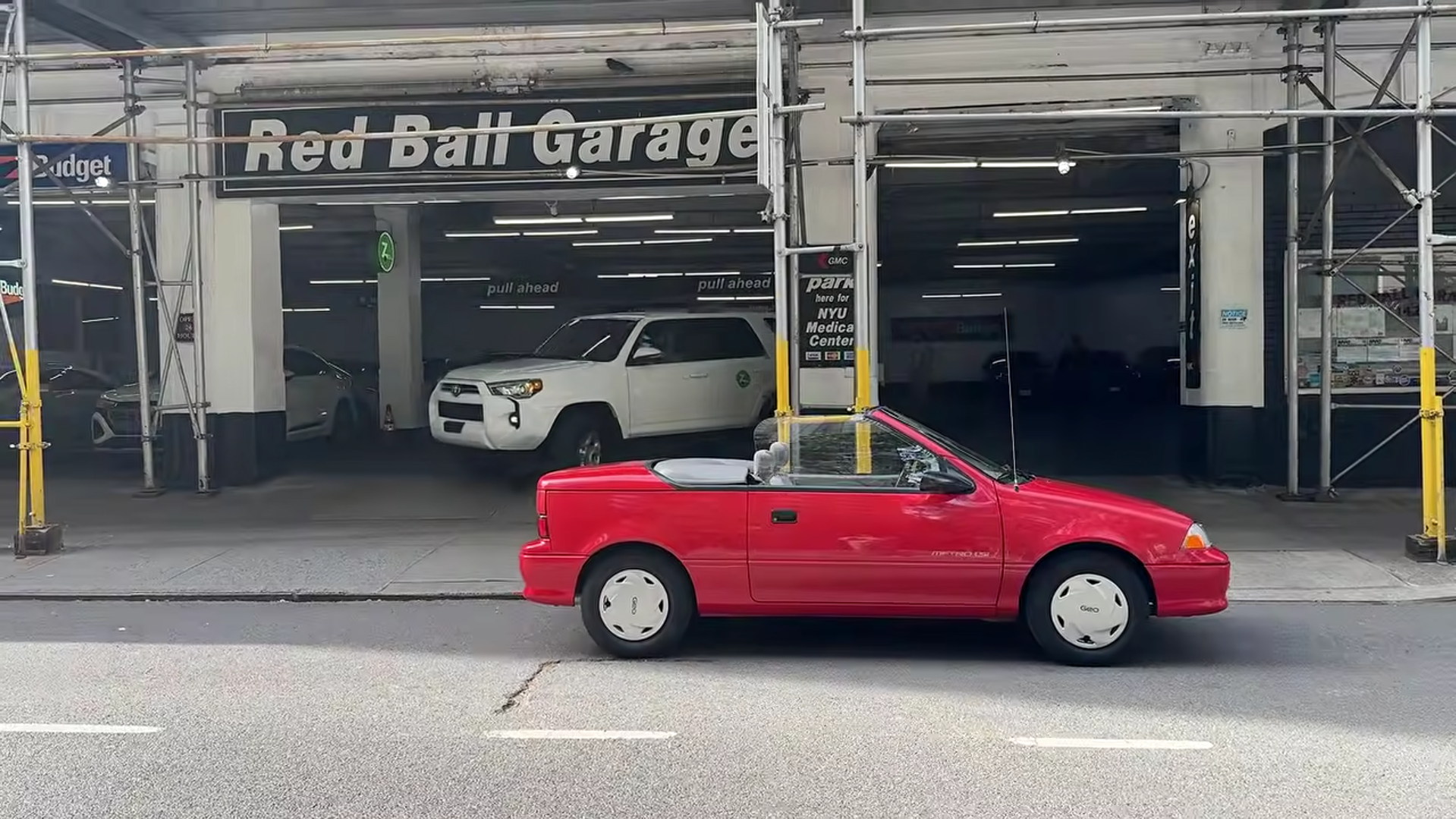
The Cannonball Run is usually associated with powerful cars, elaborate preparations, and drivers determined to cross America as quickly as possible. In absolutely no scenario does a 1992 Geo Metro convertible with a three-cylinder engine fit that description, which clearly made it an appealing choice for one particularly ambitious enthusiast.
Mitchell Kohrmann wanted to attempt his own version of the famous New York-to-California challenge without an expensive performance car or a support crew. His weapon of choice was a tiny economy convertible designed to save fuel rather than devour interstate miles.
As documented on his YouTube channel, the journey would cover 2,838 miles, beginning at Manhattan’s Red Ball Garage and ending at the Portofino Hotel in Redondo Beach, true to Cannonball tradition. Before leaving, he put the Metro on a dynamometer to find out exactly how much power he had available.
The result was a measly 43 not-so-wild stallions at the wheels, leaving little room for error on steep highways or mountain passes. Kohrmann nevertheless set off hoping to complete the crossing in under 48 hours. What could possibly go wrong? Well, as it turns out, almost everything!
A Tiny Car With Some Big Problems
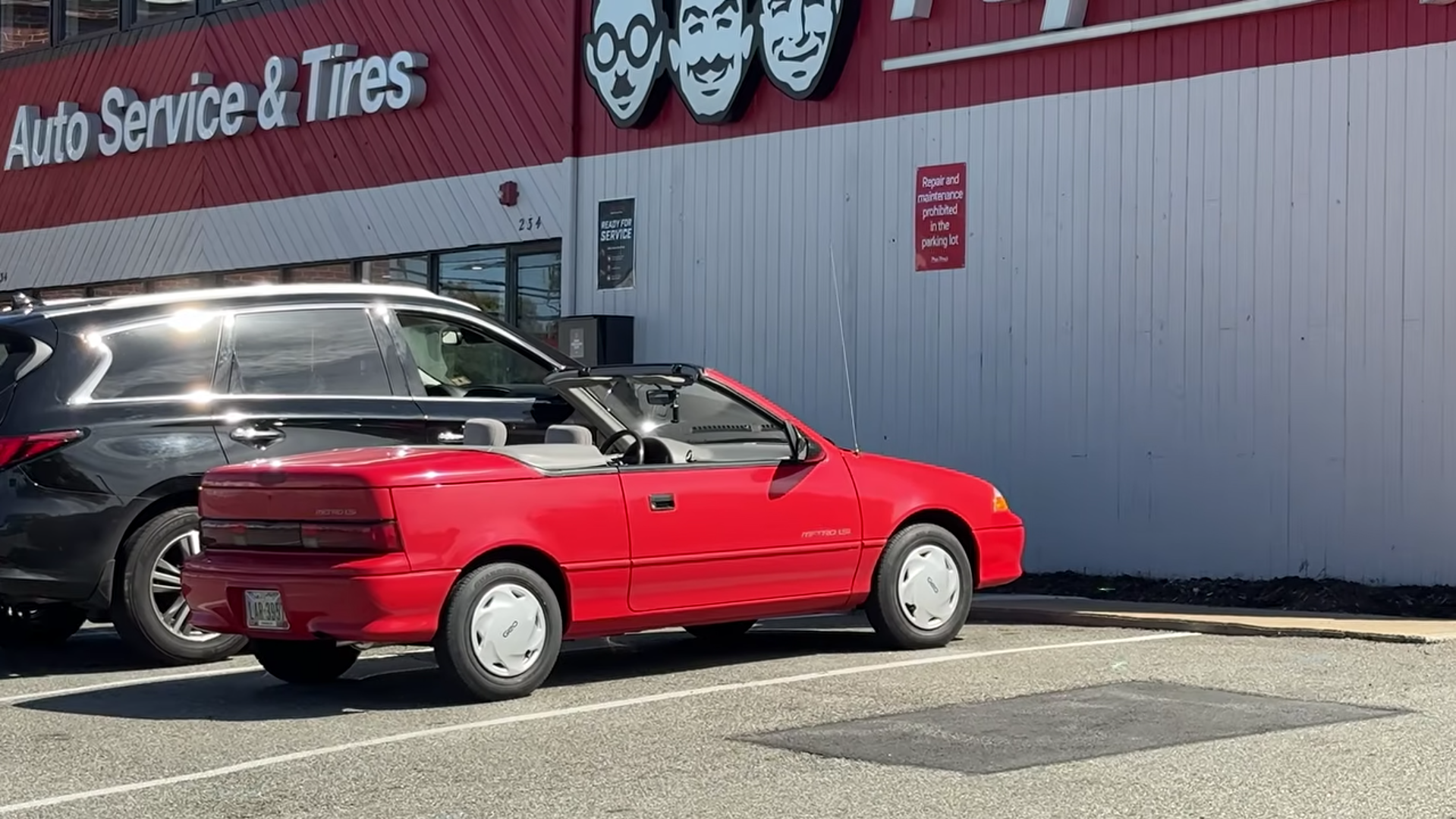
Before the attempt, Kohrmann replaced the timing belt, serviced the ignition system, and refreshed the fluids. He also discovered that the apparently fresh tires were dangerously old, forcing him to find replacement 155/80R13 Kumho tires near New York.
The Metro’s air conditioning soon became another headache, with its evaporator repeatedly freezing and restricting airflow. Kohrmann had to switch it off periodically, sometimes simply to recover enough power for uphill stretches.
A Breakdown in the Middle of Iowa
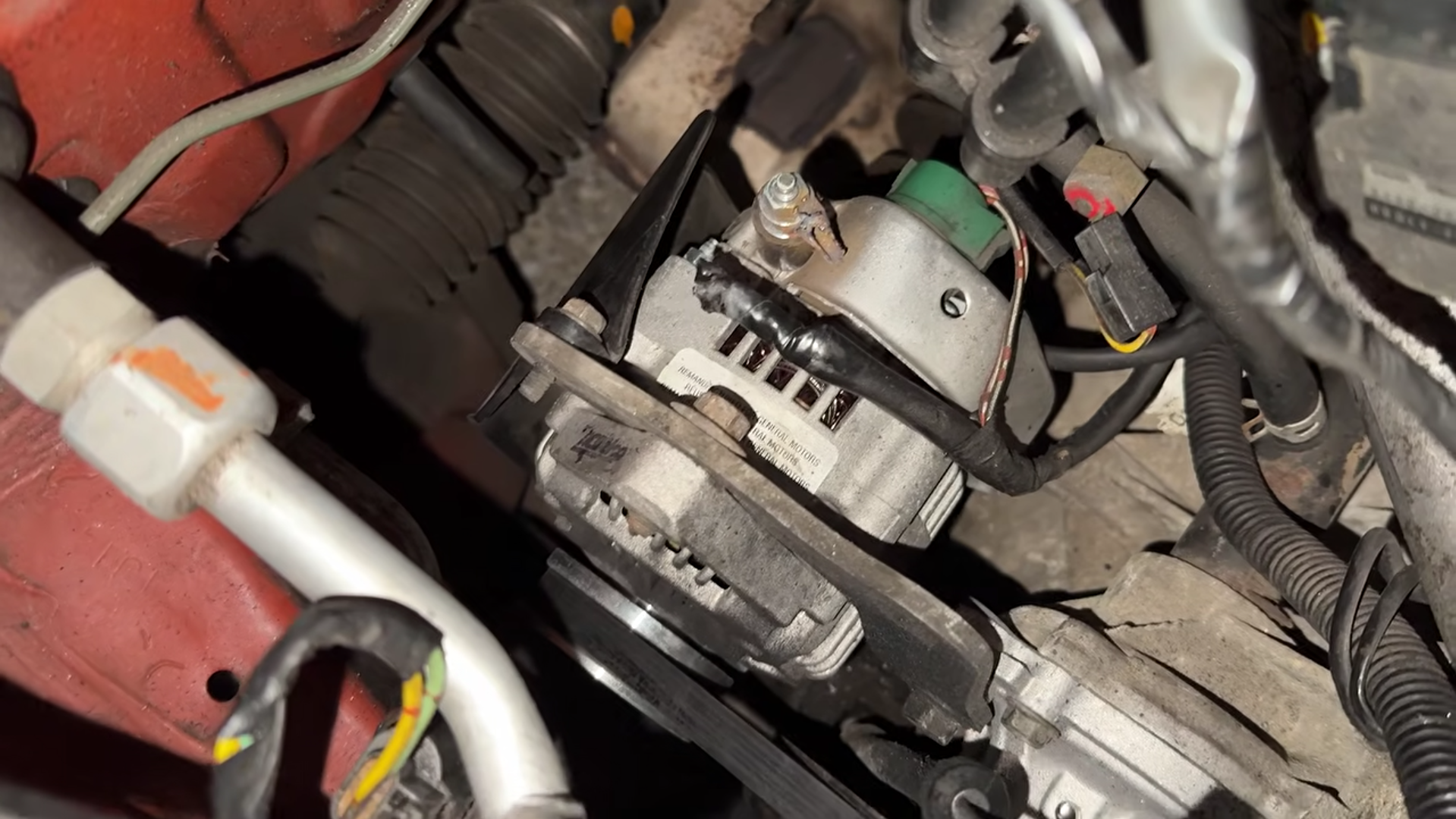
The first serious mechanical failure arrived when the headlights dimmed and the charging system stopped working. Kohrmann discovered that the alternator’s charging wire had disconnected, leaving the battery discharged.
He improvised a roadside repair and push-started the lightweight convertible himself. Further inspection revealed that the alternator had been improperly mounted, leaving one of its mounting ears broken and allowing the assembly to move enough to disconnect the charging wire.
The Rocky Mountains Were Brutal
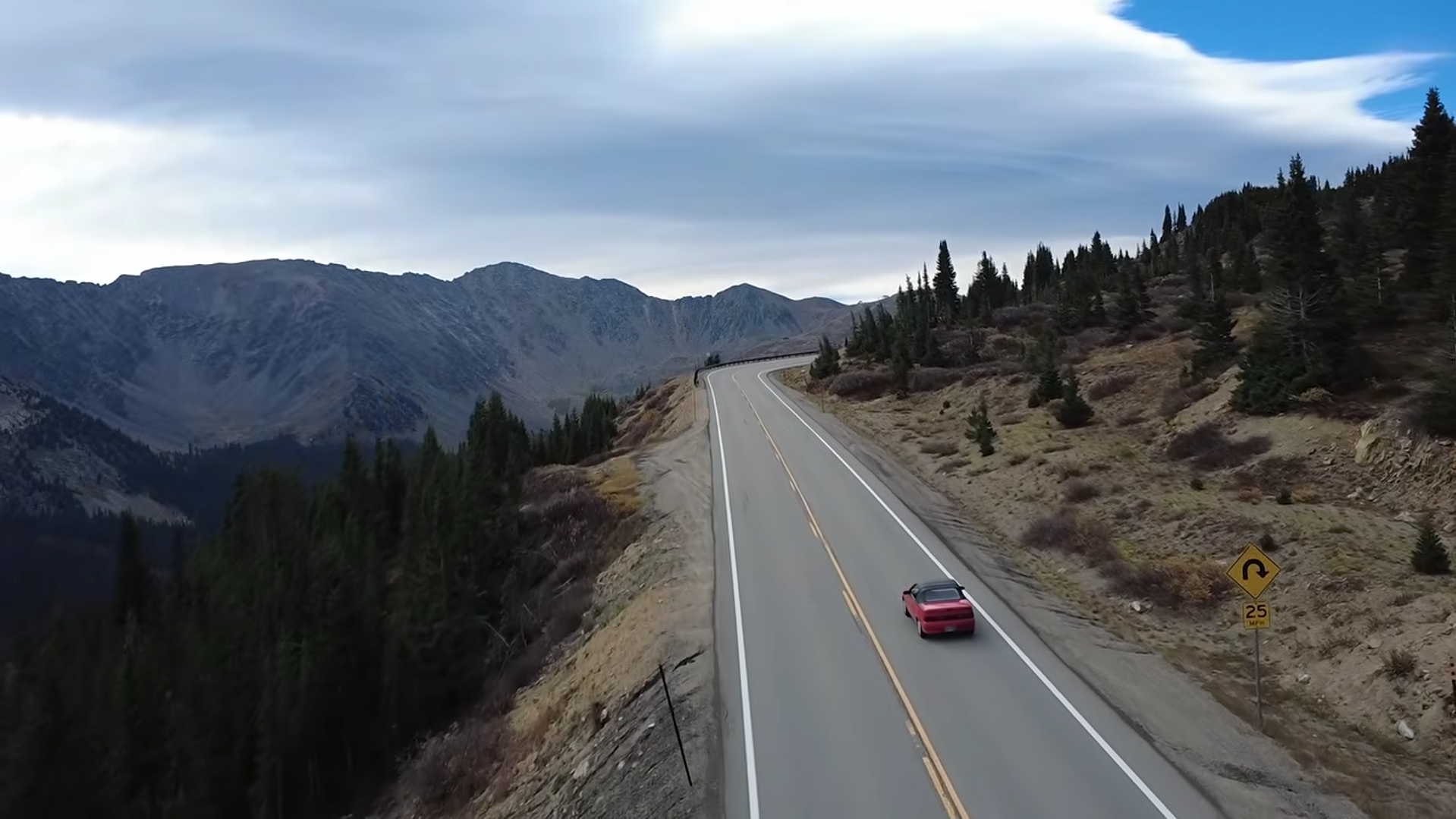
Colorado presented the challenge Kohrmann had feared most: climbing toward elevations exceeding 11,000 feet with an engine already short on power. He estimated that the thin mountain air could leave the Metro with less than 20 horsepower, forcing him into lower gears as it struggled up the steep grades, sometimes struggling to maintain 50 mph with the accelerator fully depressed.
A major traffic delay on Interstate 70 added hours to the journey. By then, the Metro was also consuming roughly a quart of oil every 1,000 miles, while Kohrmann was surviving on brief roadside naps.
The Little Metro Actually Made It
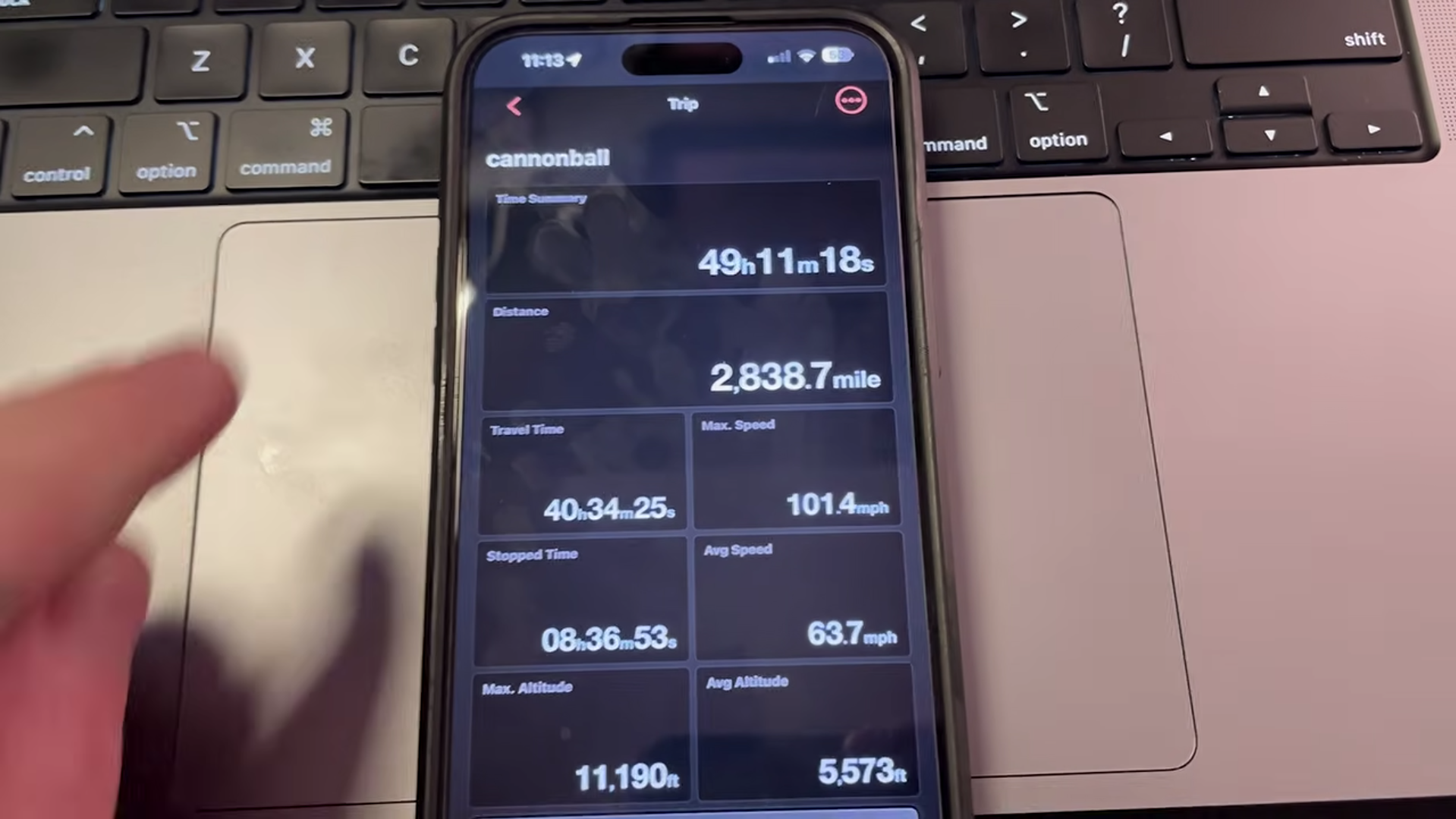
Despite further traffic delays in California, Kohrmann reached the Portofino Hotel in 49 hours, 11 minutes, and 18 seconds, completing the 2,838-mile journey in under 50 hours. His GPS tracker also recorded a surprising 101.4 mph maximum speed, achieved with substantial downhill assistance in Utah.
He missed the historical 48-hour, nine-minute, 53-second benchmark set in a sub-one-liter Sunbeam Imp by just over an hour, although that run used different starting and finishing points. For Kohrmann, completing his long-awaited coast-to-coast adventure in a 43-horsepower Geo Metro was an achievement worth celebrating.