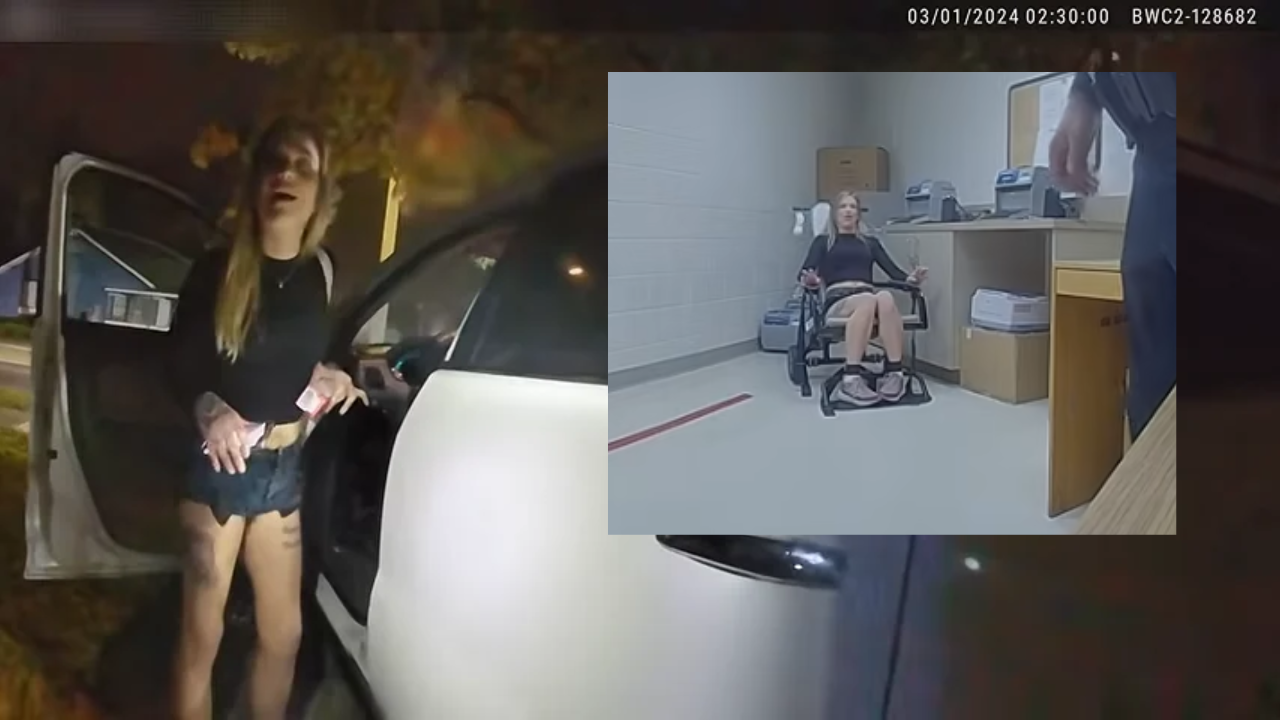
Bodycam footage from a March 1, 2024, Florida DUI stop is getting fresh attention after a woman told police she was not “drunk enough” to be arrested. The remark came after a long argument with officers that began when one of them spotted her car swerving across a road.
The driver, identified in the video as Rachel, insisted she had done nothing wrong. As officers questioned her, she grew upset, cursed at them, and threatened to sue several people at the scene.
At one point, Rachel argued that she needed to get home to her children. She also insisted that officers had already made her complete a sobriety test, even though they were still trying to explain how the exercises worked.
What began as a traffic stop ended with Rachel in handcuffs. According to the YouTube channel that published the footage, she faced three charges, including DUI and possession of THC oil.
Just Let Me Leave
Embedded media follows; please allow a moment to load.
The footage, published by Bodycam Horizon on November 6, 2026, shows the officer explaining why he stopped Rachel. According to him, she crossed toward the opposite side of the road, forcing him to stop his patrol car. He later said she nearly struck a curb before pulling over onto someone’s grass.
Rachel had an explanation. She told the officer she had been visiting a friend and might have swerved while trying to adjust her music. As for stopping on the grass, she argued that she was simply trying to stay out of other drivers’ way.
When another officer asked where she had been, Rachel questioned his age and laughed at him. Soon, the questions turned into an argument over whether she could leave.
“Did I kill somebody? Did I hurt somebody?” she demanded.
Rachel also told officers that her children needed medicine and that she had been shopping at Walgreens. Despite her repeated requests to go home, police continued investigating whether she was impaired.
Turn That Light Off
As officers prepared the field sobriety exercises, Rachel insisted she had already completed them. She appeared to mistake an earlier request to walk toward an officer for the actual test.
The officer explained that the exercises had not started, but Rachel kept arguing. When he instructed her to follow an object with her eyes, she became upset about another officer’s light shining toward her.
“Pull a judge out here. Tell me what they think,” she demanded.
Rachel then threatened to sue multiple officers if the light stayed on. The officer moved to another exercise, but the argument continued as she interrupted his instructions.
When Rachel tried to call her husband, an officer told her to put her hands behind her back. She resisted being handcuffed, repeatedly insisting that she was trying to complete the test.
Not Drunk Enough
The confrontation continued after Rachel was taken into custody. During processing, she questioned why officers were removing her earrings and complained that nobody was listening to her.
Then came one of the video’s more unusual remarks.
“I wasn’t even drunk enough to be pulled over,” Rachel told officers.
Later, while speaking with an officer trained to operate the breath-testing machine, she insisted that police had stopped her from completing the roadside exercises. She eventually provided a breath sample, though the video does not establish the numerical result.
Rachel continued asking to contact her husband and return to her children. Even after the breath test, she maintained that she had passed and should be allowed to leave.
Three Reported Charges
According to Bodycam Horizon, Rachel faced charges of second-offense DUI, resisting an officer without violence, and possession of THC oil.
Under Florida’s DUI law, a driver can face charges for driving while impaired by alcohol or controlled substances. The state’s resisting statute also covers obstruction without violence.
The video identifies the THC oil allegation as a third-degree felony. Florida’s controlled-substance law allows felony charges for certain forms of unlawful drug possession.
The channel does not provide an official arrest affidavit or court disposition. As a result, the reported charges have not been independently matched to a public case record.