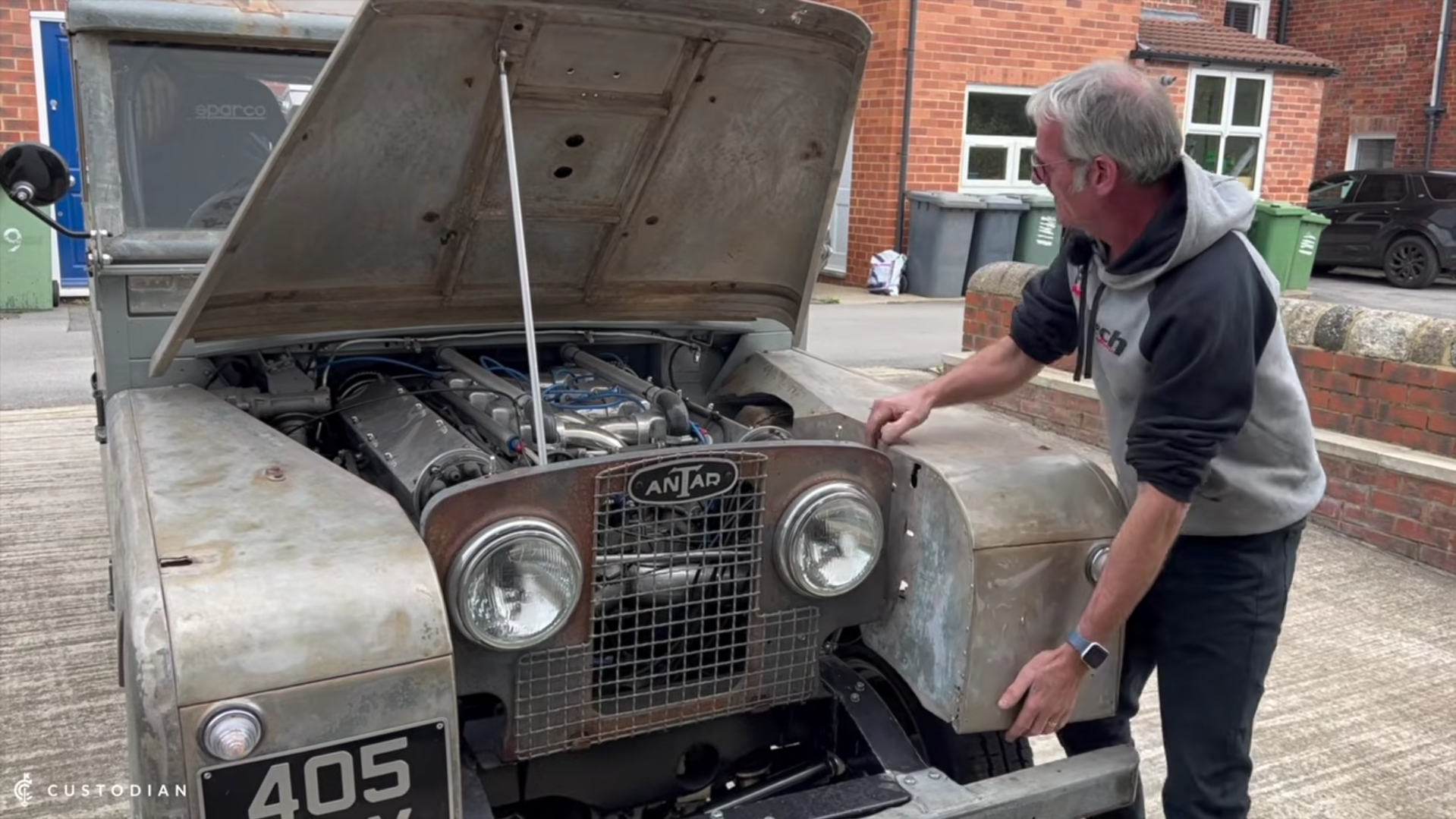
The original Land Rover Series I wasn’t exactly known for its neck-snapping acceleration. Its modest four-cylinder engine was perfectly adequate for farm work and crawling through muddy fields, but nobody bought one expecting supercar performance.
Peter Grieve, however, had something rather different in mind for his 1956 Land Rover. Instead of fitting a conventional V8, he somehow managed to squeeze an enormous 18-liter Rolls-Royce Meteorite engine under its hood.
As documented by the Practical Performance Car YouTube channel, this isn’t some static showpiece with a ridiculous engine sitting in the front. It’s a running, road-driven machine with twin turbochargers and enough power potential to make modern performance cars nervous.
The engine has already produced around 1,080 horsepower on an engine dynamometer, although Peter’s latest rolling-road session proved that taming such a monster isn’t easy. Sometimes, the biggest challenge isn’t making horsepower but keeping everything together.
From Military Transporter to Land Rover
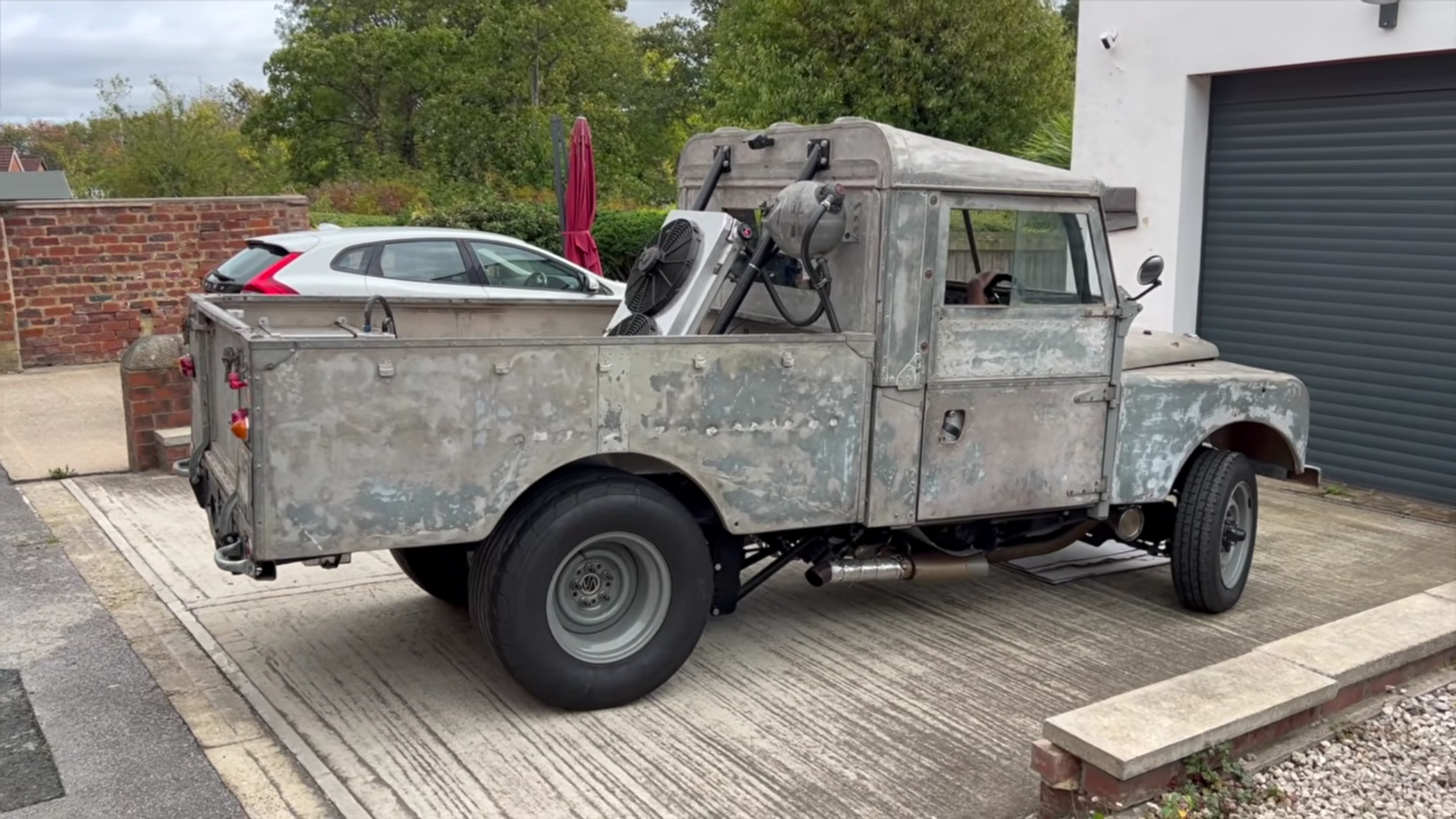
The Meteorite V8 originally powered the Mighty Antar tank transporter, which hauled Centurion tanks equipped with the related 27-liter Meteor V12. Both engines descended from Rolls-Royce’s famous Merlin aircraft engine family.
Sharing components between transporter and tank made maintenance easier for military crews. Decades later, that same enormous V8 has found a far less practical home.
Making 18 Liters Fit
Peter couldn’t simply lower the Meteorite into the engine bay and tighten a few bolts. Its bulky rear-mounted camshaft drive had to go, so he designed and manufactured a replacement system.
He also replaced the original carburetors with programmable fuel injection, added twin turbochargers, and installed water-methanol injection, but getting all that power to the wheels presented another challenge. His solution was a 2.6:1 overdrive system that increases output speed while reducing the torque reaching the modified GM TH400 automatic, while a Ford nine-inch-based rear axle and four-link rear suspension help handle the power.
The Dyno Session Gets Messy
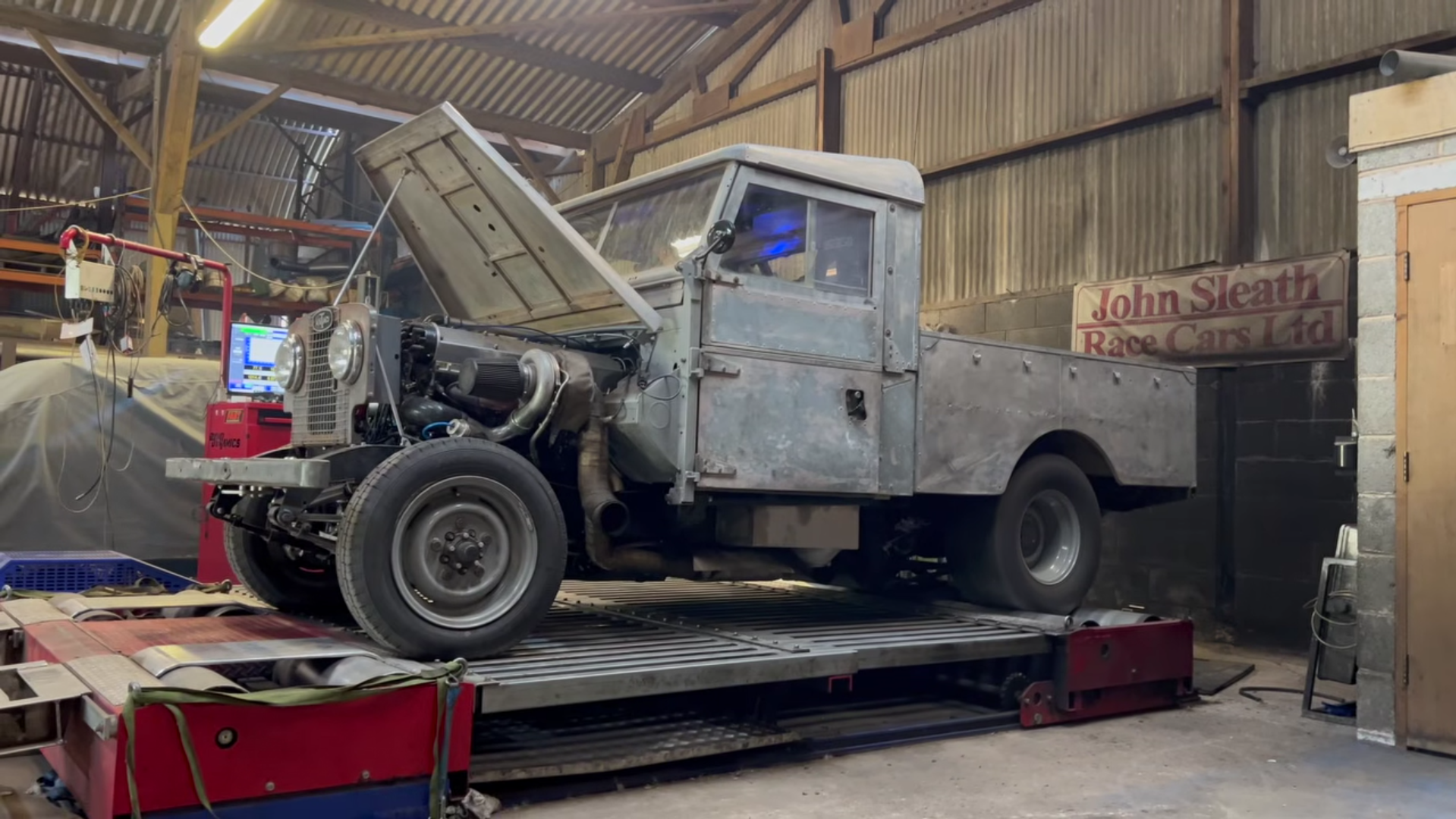
The Land Rover produced roughly 580 horsepower at the wheels on around eight psi of boost, compared with its earlier 1,080-horsepower engine-dyno result at approximately 15 psi. The figures aren’t directly comparable, but Peter was pleased with the improvements to its fuel mapping.
The session wasn’t trouble-free, though. Fueling adjustments fouled several spark plugs, forcing Peter to replace eight of the engine’s 16 plugs. Fortunately, he’d designed the front fenders to be removable, making the job a little less painful.
Then the cooling system expelled coolant during another run, apparently because of an airlock in the rear-mounted radiator. Fortunately, there was no lasting damage, and Peter decided to drive the Land Rover home rather than risk another pull.
Next Stop: The Drag Strip
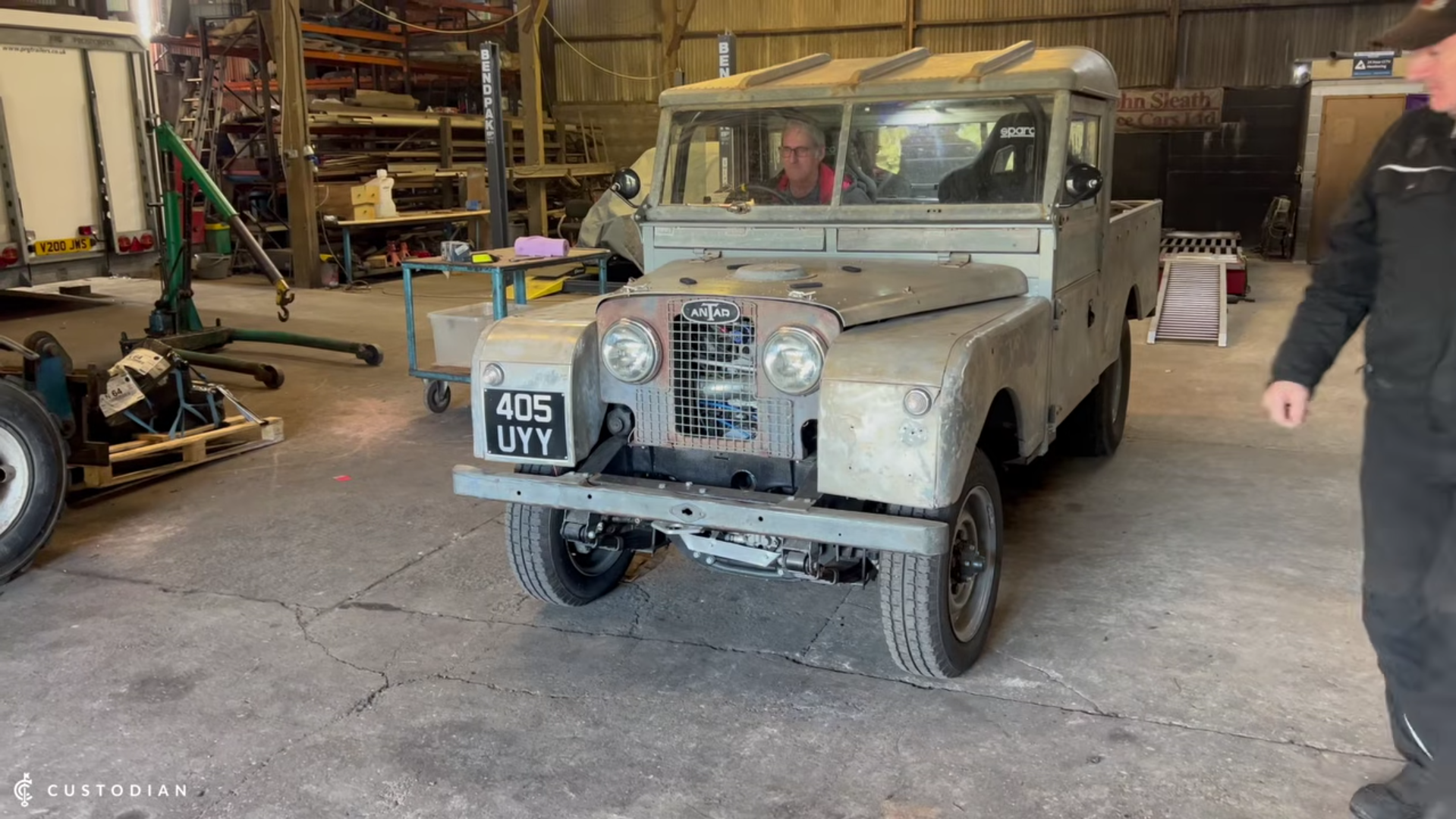
Peter isn’t interested in extracting every ounce of power from the Meteorite V8 unit. He’s looking for reliability, especially because removing that enormous engine would be a nightmare.
Peter still wants to improve the suspension, which tends to wallow, before taking the Land Rover drag racing. He plans to start with 60-foot launches, then gradually increase the distance as he learns how the machine behaves.
“I’m not going to be bothered by what the crowd is thinking,” he says. Considering this is his first complete vehicle build, that’s probably a sensible attitude when you’re sitting behind an 18-liter military V8.