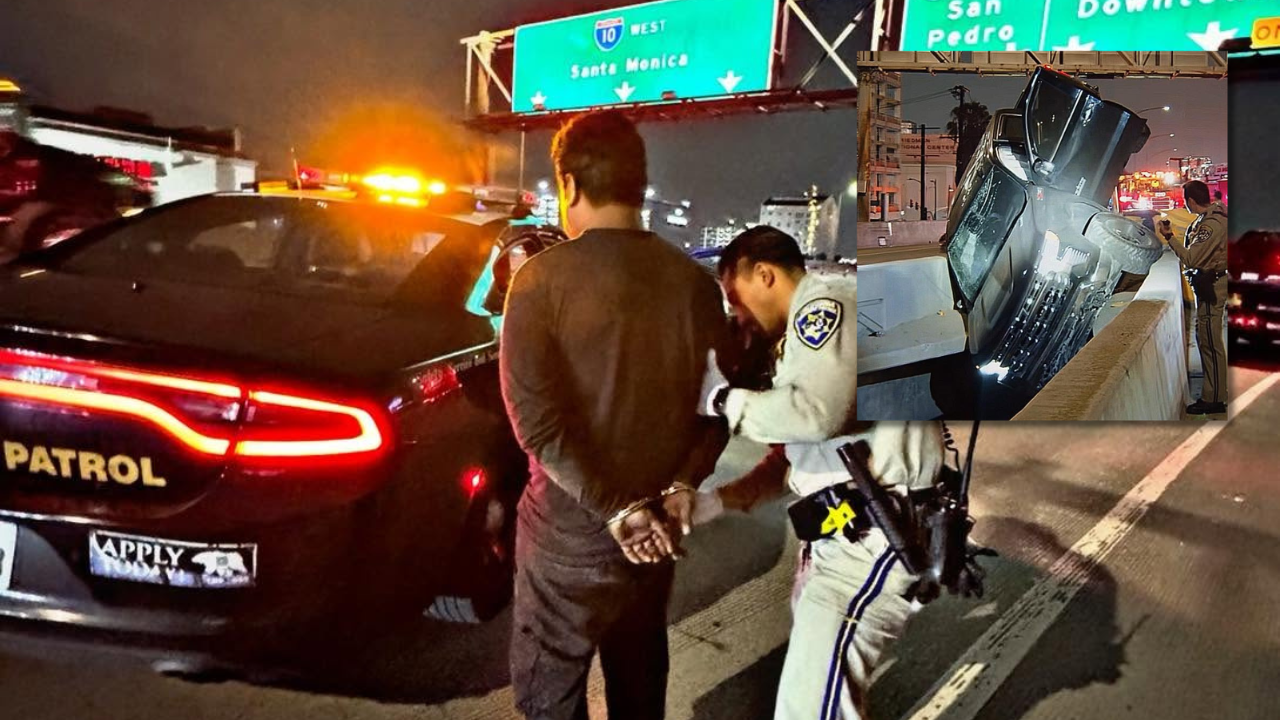
Three vehicles struck sand-filled crash barriers at the same Los Angeles freeway transition in less than two weeks. Each collision happened where westbound Interstate 10 connects to Interstate 110.
Two of the crashes led to arrests on suspicion of DUI, according to CHP Central Los Angeles. No major injuries were reported across the three collisions.
That sand-filled equipment is known as crash attenuators, built to absorb an impact and reduce the severity of a collision. CHP cautioned that the equipment cannot replace responsible driving.
CHP used the cluster of collisions to warn drivers about impairment, distractions, and speed. The warning covered driving at any hour, including overnight travel.
A Softer Landing
Embedded media follows; please allow a moment for it to load.
Sand-filled barrels have a specific job when a vehicle leaves its intended path. Caltrans explains that crash cushions shield fixed objects that cannot be removed or protected with another suitable system. In a sand-filled system, moving the sand takes energy from the striking vehicle and slows it down.
Their layout matters, too. The Caltrans maintenance manual specifies that each barrel’s position and sand weight are critical to how the system works during an impact. Crews need plans showing the barrel arrangement and the amount of sand required in each one.
Even the condition of that sand matters. It must remain loose so the system can dissipate energy, and barrels with cracks that allow sand to leak out should be replaced as soon as possible.
Even at Three
“Whether it’s rush hour or 3:00 a.m., speed limits are not optional,” CHP wrote. It urged drivers to slow down near freeway transitions and curves, while changing lanes, and when approaching stopped emergency vehicles.
Alongside that warning, CHP asked motorists to put their phones down and keep their attention on the road. It also warned against driving while impaired by alcohol or drugs and pledged continued enforcement against impaired and dangerous drivers.
All parties are presumed innocent unless and until proven guilty in a court of law.