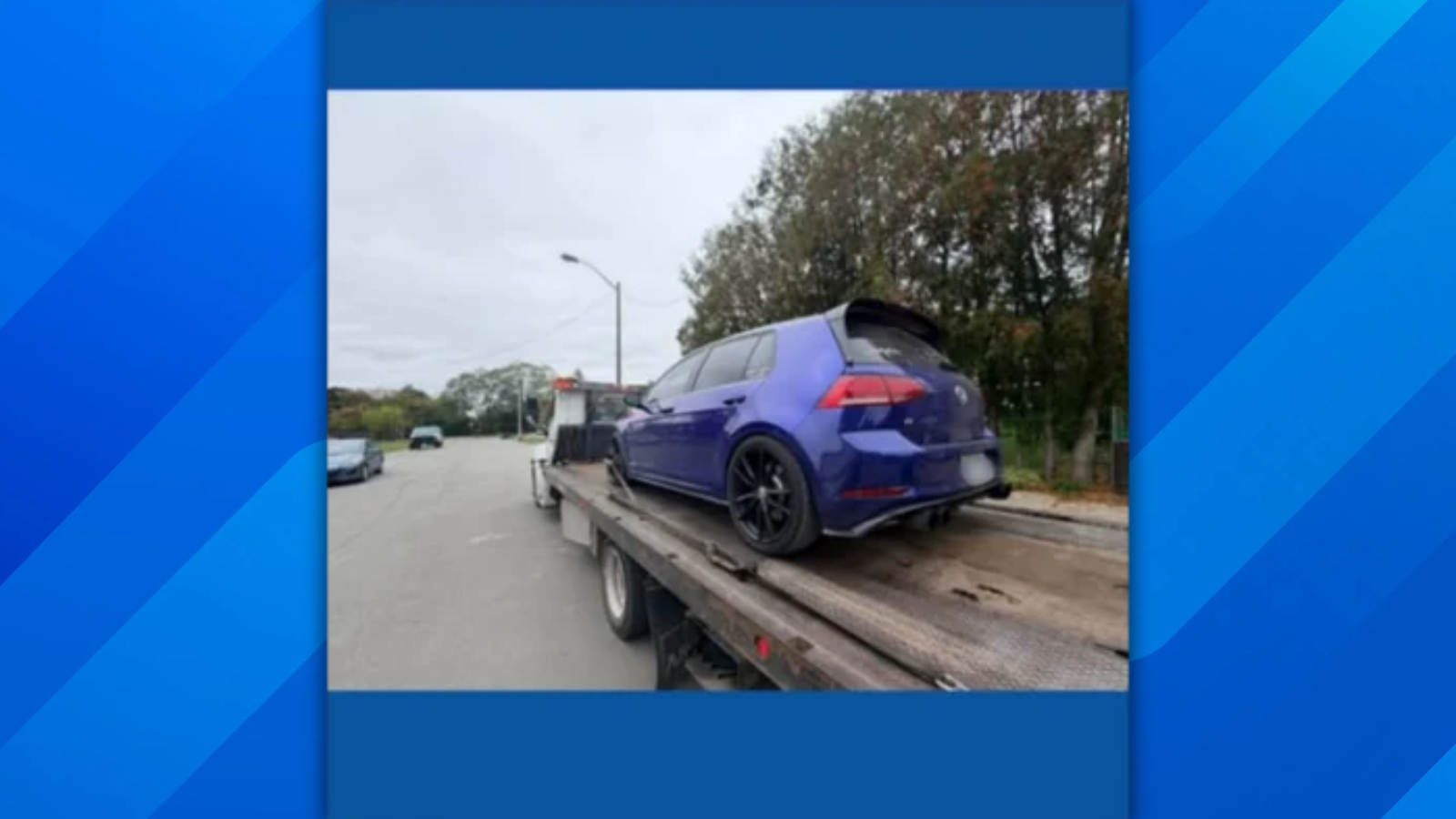
Canadian police seized a blue Volkswagen Golf R after investigators said its driver participated in a late-night street race near pedestrians in Mississauga, Ontario. The 21-year-old Toronto man was already under a court restriction prohibiting him from attending car meets and other locations where stunt driving might occur.
Peel Regional Police said officers spotted the vehicle racing other cars near Meadowpine Boulevard and Meadowvale Boulevard around 2 a.m. on October 4, 2026. The Golf R, photographed on a flatbed tow truck, appeared to have aftermarket wheels and a prominent rear spoiler.
Investigators identified the driver as Anthony Fuellos Knox, 21, who was arrested on October 15. He faces charges of dangerous operation, failure to comply with an undertaking, racing a motor vehicle, and performing a driving stunt. Police seized the Volkswagen and suspended his driver’s license for 30 days.
Knox was released on an undertaking pending a court appearance in Brampton. His previous court restriction stemmed from earlier dangerous-driving and street-racing allegations. The case highlights Ontario’s unusually broad stunt-driving laws, which can impose substantial financial penalties and take vehicles off the road before their drivers are convicted.
Ontario Can Impound a Car Before a Conviction
Under Ontario’s stunt-driving laws, qualifying offenses trigger an immediate 30-day license suspension and 14-day vehicle impoundment, even if the driver does not own the car.
A conviction brings fines ranging from C$2,000 to C$10,000, roughly US$1,400 to US$7,100, plus a mandatory one- to three-year license suspension for a first offense. Repeat convictions can lead to lifetime suspensions.
Drivers do not even have to race another car to trigger these penalties. Under Ontario Regulation 455/07, driving at least 40 km/h (about 25 mph) over the limit on roads posted below 80 km/h (roughly 50 mph) qualifies. On roads posted at 80 km/h or higher, the threshold is 50 km/h (about 31 mph) over the limit. Traveling at least 150 km/h (about 93 mph) anywhere in the province also qualifies, regardless of the posted limit.
The law covers deliberate doughnuts, loss of traction, and other dangerous maneuvers. Police did not specify how long Knox’s Volkswagen was impounded.
All parties are presumed innocent unless and until proven guilty.
How Do American Street Racing Laws Compare?
Several American states have increased penalties for street racing and intersection takeovers, although the conduct triggering those laws varies.
Maryland expanded its statewide racing and exhibition-driving laws in 2024. Under the revised legislation, racing can result in fines of up to $1,000 and up to 60 days in jail. Exhibition driving near crowds is also prohibited when drivers perform at least two specified behaviors, such as burning tires, abrupt acceleration, or excessive engine noise.
Minnesota treats racing as reckless driving, punishable as an ordinary misdemeanor with fines of up to $1,000. Drivers can be charged even when they don’t exceed the speed limit. Around Minneapolis, particularly disruptive street takeovers have also resulted in more serious criminal prosecutions.
Nevada, including Las Vegas, imposes $250 to $1,000 in fines for a first unauthorized speed contest, along with community service and license suspension. Its reckless-driving laws also target organizers and people who facilitate certain stunt-driving events by blocking traffic or arranging displays.
Texas prohibits races, acceleration contests, and certain speed exhibitions under Transportation Code Section 545.420. A first offense can result in fines of up to $2,000 and 180 days in jail. Qualifying repeat offenses can become felonies.
Florida has some of the toughest penalties among the states examined. Under Florida Statutes Section 316.191, racing, drifting, burnouts, and prohibited street takeovers can carry fines of $500 to $2,000 for a first offense. A second qualifying violation within one year of a prior conviction is a felony carrying fines of $2,500 to $4,000. Certain coordinated street takeovers involving at least 10 vehicles can also trigger felony charges.
California imposes base fines of $355 to $1,000 for a first speed contest under Vehicle Code Section 23109, plus community service. The state also allows vehicle impoundment in qualifying cases, and court assessments can raise the actual amount owed.
These are base fines for specific offenses and exclude additional court costs, towing, storage, and other charges. Unlike Ontario, many American racing statutes require competition, exhibition driving, or other specified conduct, not just excessive speed.
Should American Street Racing Laws Be Tougher?
Ontario’s approach raises a question for American drivers. Its laws let police take a vehicle off the road for two weeks and suspend the driver’s license for a month before a court decides the underlying offense.
Supporters of tougher enforcement can point to cases like Knox’s, where police say a driver already facing street-racing allegations was accused of another street race, this time near pedestrians.
But immediate penalties also affect drivers who have not been convicted. Losing a car for two weeks can mean towing bills, storage fees, missed work, and other expenses, even if the charges are eventually dismissed.
Should more American states adopt Ontario’s approach to street racing, or are the penalties already tough enough?