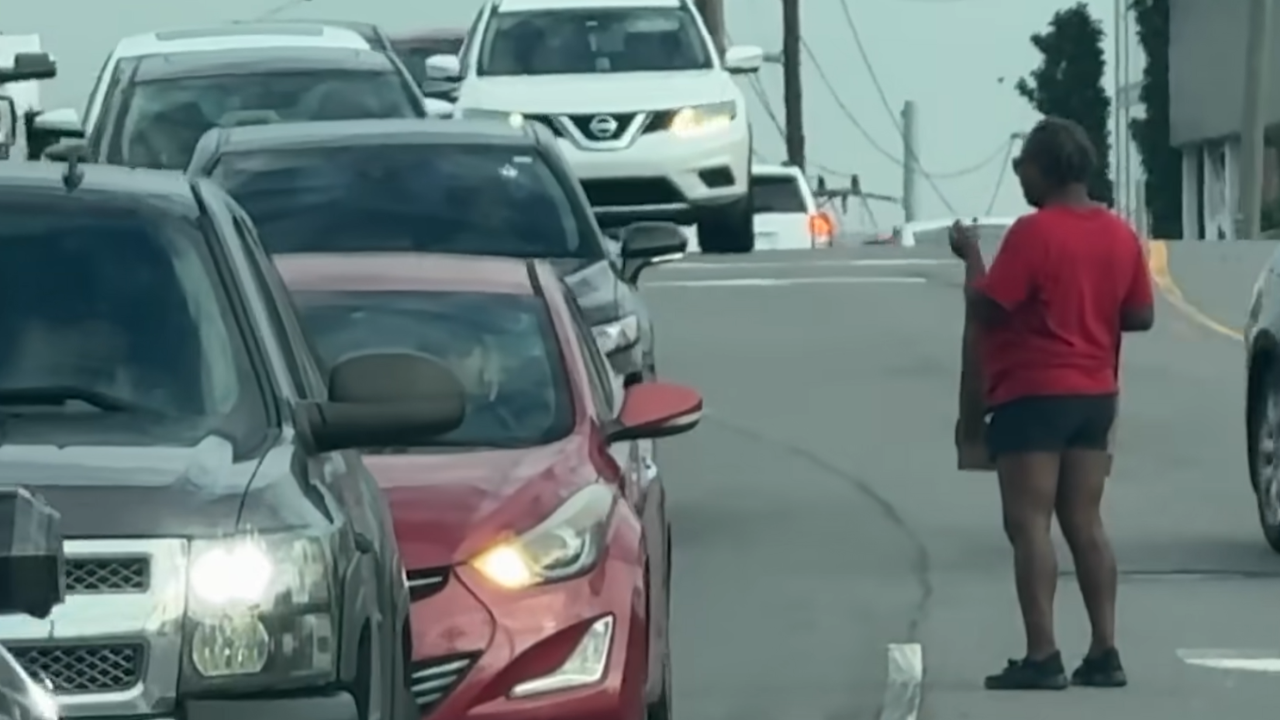
A Nashville driver says she had to swerve to avoid a panhandler who stepped into the road.
Speaking with WKRN News 2, she said her Dodge Challenger hit a bump and bottomed out as she swerved. She pointed to a man on a nearby bridge as the person she had tried to avoid.
Another driver said Nashville has long had panhandlers, but that recent encounters seemed more aggressive. She did not want people walking up to her car while she was driving.
Over a week of reporting, WKRN documented several encounters, including one at Fesslers Lane in South Nashville. The station described a woman holding a sign in a turning lane, where at least one driver maneuvered around her.
Between Cars
Embedded media follows; please allow a moment for it to load.
In another encounter, the station described a man starting in a median before walking between moving vehicles. Drivers also complained about people knocking on windows while asking for money.
“They’re going to cause a wreck,” one driver warned in the report.
When the reporter approached the man on the bridge about the Challenger driver’s account, he said he needed to get money.
Where Laws Apply
Tennessee’s aggressive-panhandling law covers intentionally blocking a person or that person’s vehicle while seeking a donation. It also covers intentionally touching someone without consent, following someone who walks away unless they have indicated they want to donate, and communications that would make a reasonable person fear harm for refusing.
Nashville’s written ordinance includes continuing after someone says no, blocking someone’s passage, and intimidation. It also addresses performing a service on a vehicle without prior consent, such as washing a windshield, and then asking for payment.
The city ordinance excludes passively standing or sitting with a sign from its definition of panhandling when there is no spoken request beyond answering an inquiry.
Housing Needs
For broader context, the Nashville Office of Homeless Services reported 2,298 people experiencing homelessness in its 2026 count, including 655 people without shelter. The total rose by 118 people, or 5.4%, over 2025.
That count measures homelessness on one night, rather than panhandling. It does not establish the housing status of the people in the report. The city also says expanded outreach, additional shelter capacity, and more complete counting helped it identify people.
Nashville’s outreach teams work with people in encampments, on streets, and in vehicles, connecting them with shelter, health care, supportive services, and housing opportunities.