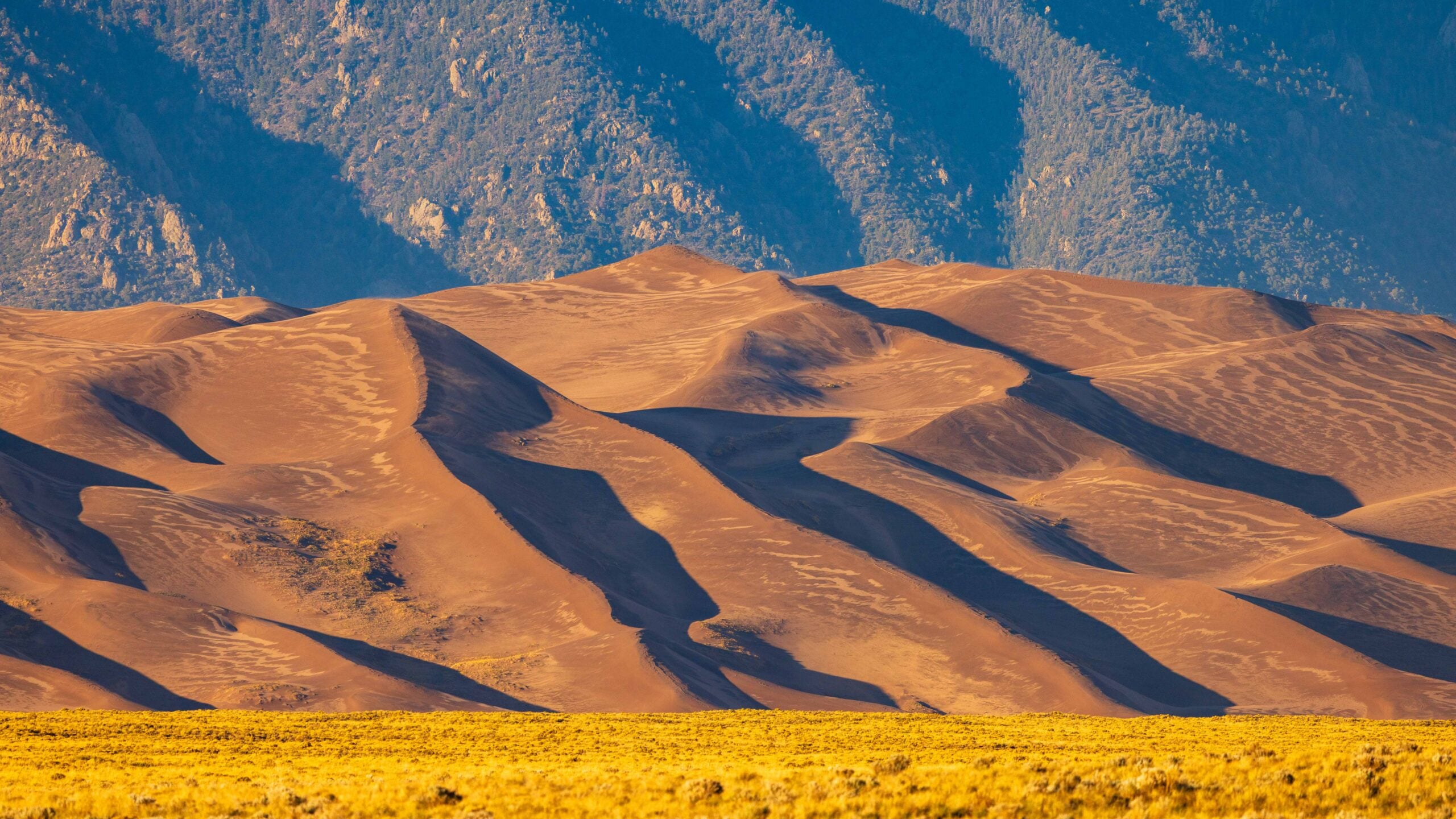
And the last domino finally fell. Great Sand Dunes National Park was the last Colorado park I hadn’t visited, and in October 2026, I finally got to see the giant dunes so many adore.
With the tallest sand dunes in North America, it’s one heckuva place, especially as you drive in and see the towering spires of the Sangre de Cristo range above. And lucky for me, they were snowcapped, creating a truly mesmerizing scene.
If you’re thinking about visiting or already planning, my first-timer’s guide to Great Sand Dunes National Park should give you everything you need to plan a trip. I have the best things to do, itineraries, and lodging options.
That said, this is a much more low-key national park than Yellowstone, Yosemite, or Mount Rainier. You really don’t need more than 1-2 days to get a good sense of what it offers. With that, happy travels and thanks for reading!
First-Timer’s Guide to Great Sand Dunes National Park
Let’s cover everything you need to know for your first visit.
What to know before you visit
How many days to spend in Great Sand Dunes National Park?
Two nights and three days is perfect for exploring the dunes. This lets you hike out onto the dunes, enjoy the beautiful surroundings, hike up the Mosca Pass Trail, check out the visitor center, and get to Zapata Falls. Honestly, you could do it in one night, but if you want to take it slow, spend two nights and enjoy this special place.The best time to visit
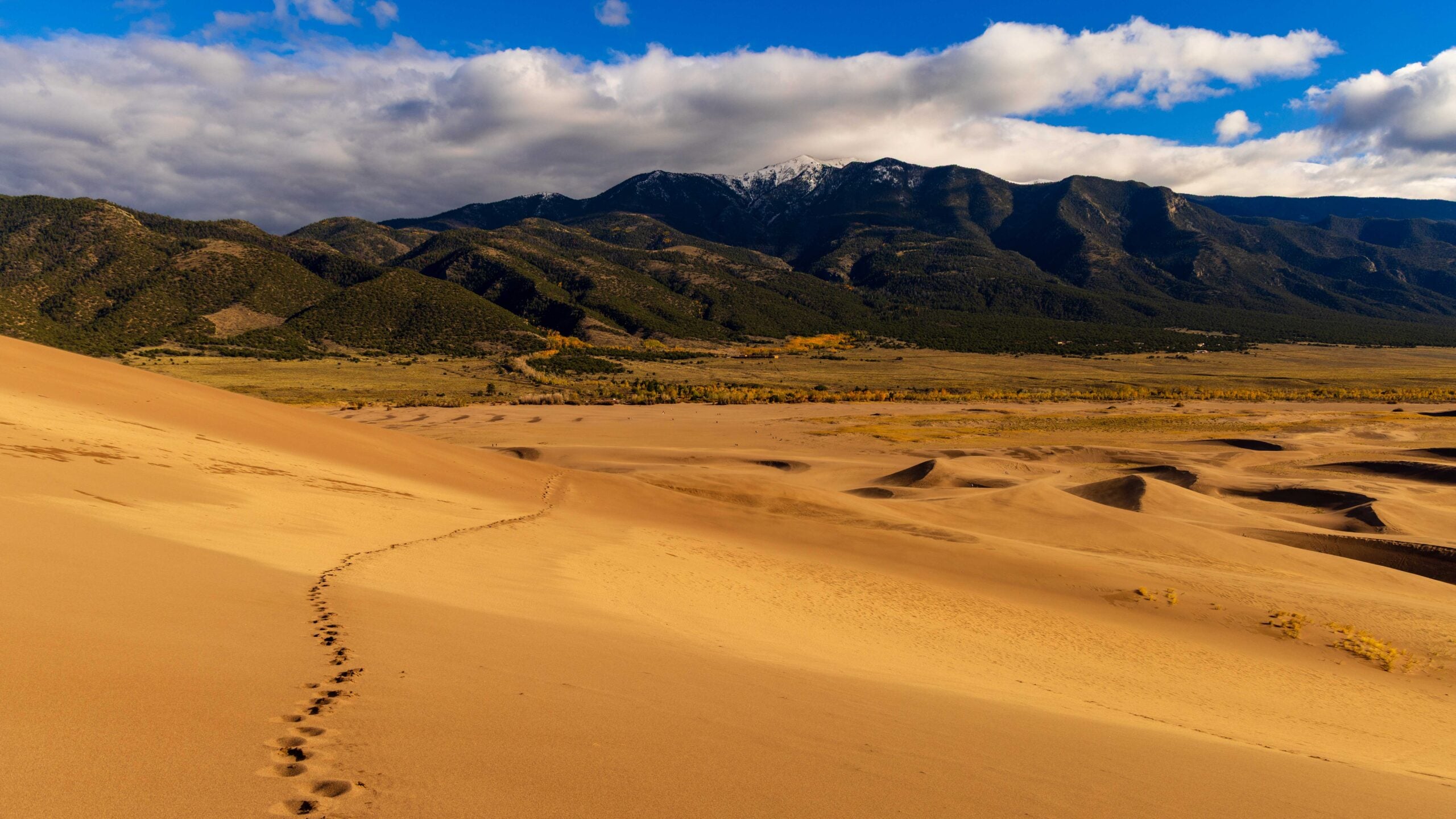
Honestly, spring and fall are best, though summer is totally fine if you can stay off the dunes between 1-4pm. Plus, this means you’ll avoid kids and families on their summer break!
I went in mid-October; the crowds were sparse, lows were in the upper 30s/low 40s, and the skies were blue.
What should I wear?
I wore my standard hiking gear. Many people think to wear sandals to hike the dunes, but that isn’t recommended. Just be prepared for A LOT of sand in your shoes and socks afterward.How to get to the Great Sand Dunes
From Denver, it’s a haul. I left mid-day, and with gas and food stops, it took me 4.5-5 hours (though I drove in heavy rain, which slowed me down).
The quickest route for most people coming from Denver or the airport is to drive south on I-25 and head west at Walsenburg.
Another route, almost the same drive time, is Albuquerque, New Mexico. This is a smidge under 4 hours.
Sand Dunes vs. the Alpine
When you think about Great Sand Dunes National Park, you think about the sandy part. Most visitors go for that. But there’s an alpine area with snowy peaks and frigid lakes that sits above 10,000 feet. To do both, you need at least a 2.5-hour drive, even though it’s not too far as the crow flies.
If you’re short on time and it’s your first visit, I’d recommend sticking to the lower-elevation dunes and coming back for the alpine part another time.
Entrance Fees
If you have an America the Beautiful Pass, you’re all set on your entrance fees. This covers entry to all federal lands in the United States. (Don’t have a pass, buy one here.) If you don’t have one and don’t want to buy one, it’s $25 per vehicle, or $45 for a park annual pass. The America the Beautiful pass is $80, or $250 for non-US residents.
Other things to know about Great Sand Dunes National Park
If you’re coming in an RV or camper van, you can’t fill up your water tank inside the national park. They have drinkable water, but no hose system with a threaded connection. Either fill up your water tank at the Maverick in Alamosa or bring a jug you can fill.Dogs are allowed in more of Great Sand Dunes than in most national parks, but not everywhere. They must be on a leash 6 feet or shorter at all times, and owners must clean up after them.
Where dogs can go
-
- The main day-use area of the dunefield, up to the first high ridge
-
- Piñon Flats Campground
-
- Mosca Pass Trail and the rest of the preserve
-
- Dunes Overlook Trail (on trail only)
-
- Along the Medano Pass Primitive Road
Best Things to Do in Great Sand Dunes National Park For a First-Timer
For first-time visitors, I’m guessing you want to hike on the actual Dunes. There’s the entire alpine section that is not really accessible from the lower elevation region. If you want to explore that area, keep scrolling.
Get out onto the dunes: High Dune, Star Dune, or Hidden Dune
There’s no limit to adventure out there. The only limit is how far you want to walk.
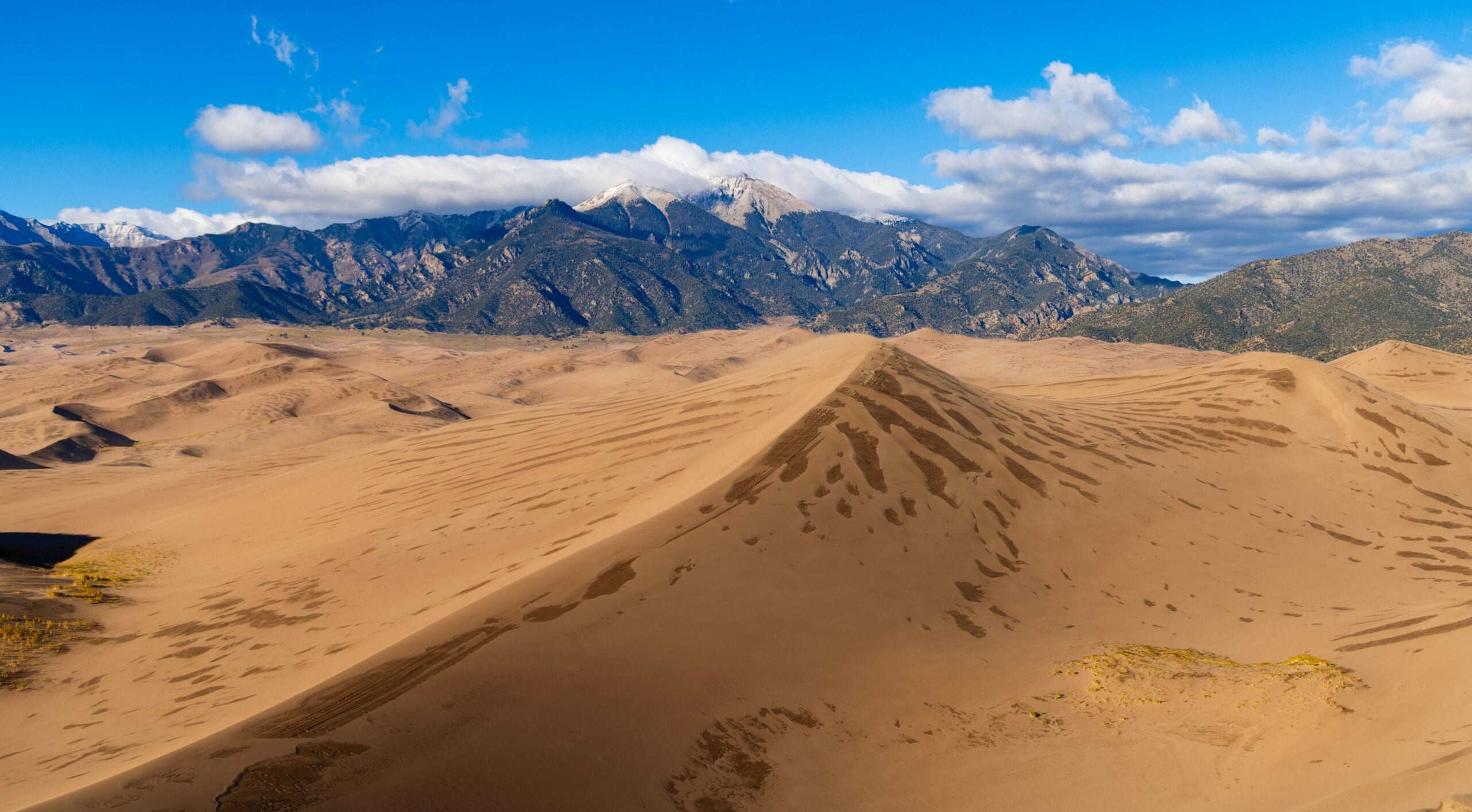
Most people wander a little bit up the dunes and stop once they realize how exhausting it is. I made it 95% up to High Dune before turning back, thanks to 40mph wind gusts that had sand in every crevice of my body. Overall, the elevation gain is about 700 feet over 1.5 miles. But it’s slow-moving.
In windy conditions, as I had, it’s zero fun and not worth it.
Other notable dunes are Star Dune and Hidden Dune. Hidden Dune is the tallest dune in North America at 741 feet, with Star Dune just five feet below it. Both require a much longer day of hiking.
Both locations are about a 6-7 mile hike, but plan for at least 1 mile per hour in the sand, if not longer. Remember, there’s no official trail to these (even though I link AllTrails below).
Many people, not me, like to go sandboarding on the dunes. If you have the equipment, this looks like a super fun time!
Dune Trails:
Enjoy the Stars at this International Dark Sky Park
Holy smokes! When it gets dark, it gets DARK. Spend some time outside after sunset to soak up the night sky. It’s an official International Dark Sky Park, Gold Tier as of 2019.
You can see the Milky Way with your naked eye, and it’s rated Bortle Class 2.
Hike to Mosca Pass and/or the Montville Nature Trail
I wanted some time hiking on non-sand, so I went up the Mosca Pass Trail. Now, this is fine, but it’s nothing too exciting. It’s 3.5 miles to the pass (7 miles round trip), though I only went up 1.6 miles before turning around. It’s nice that you’re in a canyon, but there’s not much to see, and the dunes are mostly out of view, except for one section with views.
The Nature Trail, from the same trailhead, is a lovely half-mile loop trail, great for families and those looking for a walk rather than a hike. It offers nice views of the dunes from above and spots to sit by the creek.
Visit Zapata Falls
Zapata Falls sits just outside the park boundaries on BLM land, tucked away in a narrow canyon. It’s a very short walk, though you’ll get your feet wet. Because of that and the chilly temperatures, I opted not to hike in.
It’s very popular in the winter when the waterfall freezes, creating some really cool photo opportunities.
Cool off in Medano Creek (Seasonally)
Thanks to snowmelt, Medano Creek swells in late spring, making it a fun place to cool off as temperatures warm up. It was totally dry when I visited, but it looks like fun for the whole family.
Go Backpacking in the Dunes
Want to sleep out in the dunes? You can! All you have to do is get a backpacking permit and hike out of the day-use area.
This usually means getting past the highest ridgeline you can see from the parking lot. There are other places to camp, as shown in the image below.
Drive the Medano Pass Primitive Road
If you’re heading from the Great Sand Dunes into the high country, take this road. It’s 22 miles to reach Colorado State Highway 69 and requires 4WD. AWD or 2WD are not allowed, as the road gets sandy and has nine water crossings.
Do plenty of research before you decide to tackle this road.
Stop at the Visitor Center
The visitor center is fantastic. They have a great 15-20 minute video about Great Sand Dunes National Park, its history, formation, and so much more. I highly recommend it. There’s also a nice half-mile walk with informational signs.
Find the Elk Herd
I didn’t expect elk in the area until I heard bugles break the dawn’s quiet. They weren’t too close as I photographed the dunes from the park road, but the herd looked like a decent size. If you go during September or October, keep an eye out for the Elk Rut.
Visit nearby San Luis State Wildlife Area
If you want to explore another area while you’re in the San Luis Valley, the wildlife area is a cool place to visit. You can camp, hunt, and fish with the correct permits.
Summit a nearby peak
The Sangre de Cristo Range has a LOT of peaks to summit, including plenty of 14ers. The most popular and closest to the main section of Great Sand Dunes NP is Blanca Peak. This is quite a long approach, or you could spend a night backpacking to shorten it.
Much of the alpine in the Sangre de Cristo Range lies outside the park boundaries. The main regions are Medano Pass and Music Pass. These offer easier access to places like Medano Lake, Mount Herard, Sand Creek Lakes, and more. You’ll want a 4WD to access these higher-elevation areas more easily.
Visiting the Alpine Area
Forewarning, I haven’t been up to the alpine yet, though I plan to before we move out of Colorado. So stay tuned for the photos. But I can still offer some assistance and guidance.
Inside the national park and preserve, the highlights are Medano Pass or Music Pass. Both offer camping, hiking, and much cooler weather. These are around 10,000 feet and above. Come prepared with rain jackets in summer and download maps offline, as cell service is spotty.
The top hikes are:
I wouldn’t recommend doing this if you’re staying the night in the park. It is better to do this on the way to or from the park so you’re not driving a 5-hour round trip.
Great Sand Dunes National Park Itineraries
Here are two options for planning your time in the park. I combined these since I was there for two nights but left early on the third day.
2-Day Great Sand Dunes Itinerary
Day 1 – Drive Down and Enjoy the Dunes
-
- Stop by the Visitor Center. It closes at 4:30pm.
-
- Spend sunset on the dunes, whether it’s high dunes or somewhere in between, or in the parking lot.
-
- Look for a night sky talk from a park ranger, or enjoy the stars on your own.
Day 2 – Dunes + Zapata Falls
-
- Enjoy the morning in nature. If you wake up early, take photos of the dunes
-
- Hike back out onto the dunes to a different spot
-
- Stop at Zapata Falls on your way out and do the 1-mile trail
3-Day Great Sand Dunes Itinerary
Day 1 – Drive Down and Enjoy the Dunes
-
- Stop by the Visitor Center. It closes at 4:30pm.
-
- Spend the afternoon and evening on the dunes, whether it’s a high dune, somewhere in between, or in the parking lot.
-
- Look for a night sky talk from a park ranger, or enjoy the stars on your own.
Day 2 – Dunes + Mosca Pass Trail
-
- Hike the Mosca Pass Trail. It’s 7 miles round trip, with a steep start, but eases up after that.
-
- For a less arduous hike, the Nature Trail is a great option.
-
- This is also a good opportunity to drive up to Music Pass. It’s a 2.5-hour drive each way, but if you’re feeling adventurous, go for it! (4WD required.)
Day 3 – Zapata Falls
-
- Enjoy the morning in nature. If you wake up early, take photos of the dunes
-
- Take one more walk on the dunes before heading out
-
- Stop at Zapata Falls on your way out and do the 1-mile trail
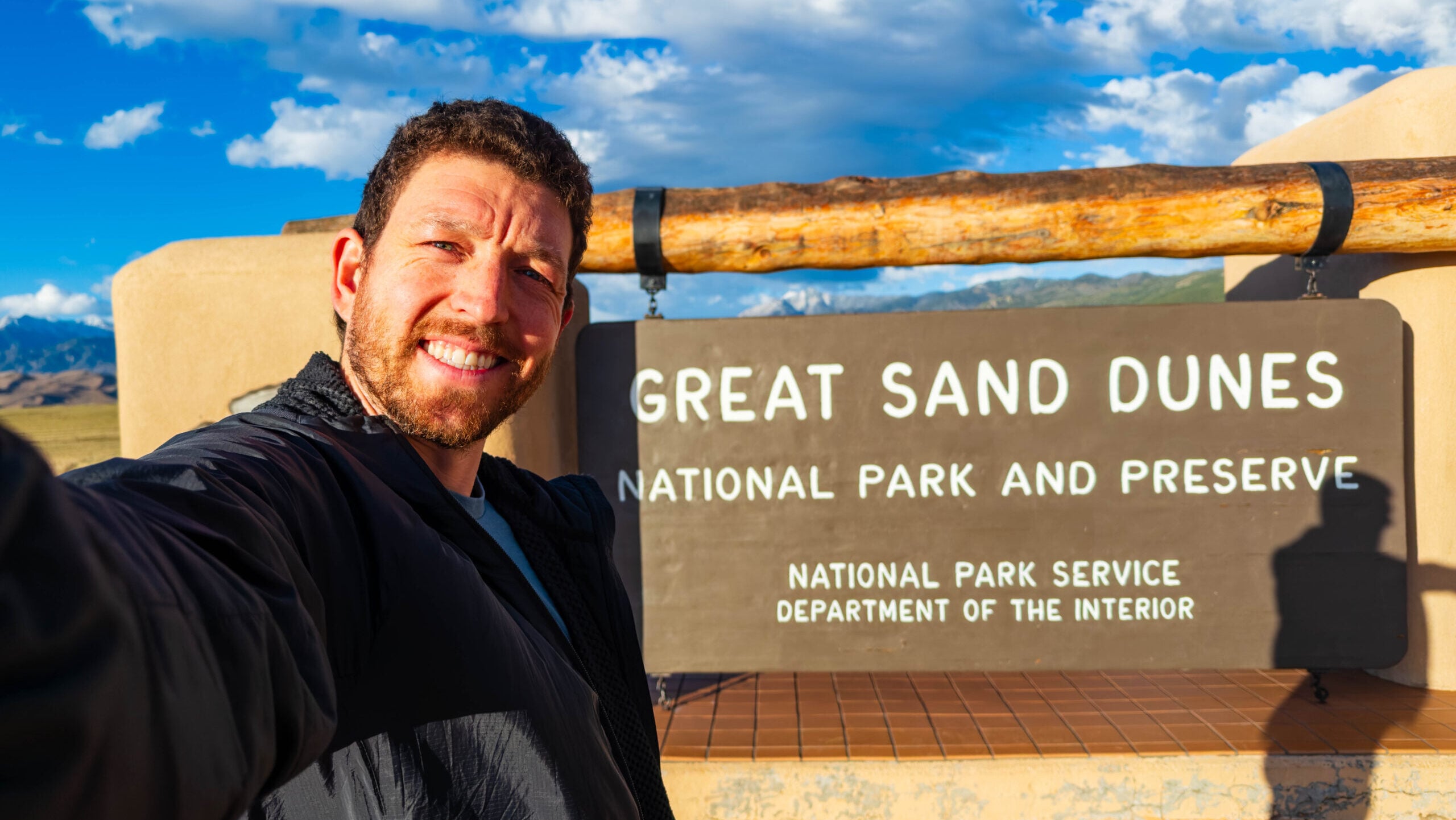
Final Thoughts on Visiting Great Sand Dunes National Park
I definitely had a fun time in the park, but after my visit, I don’t know if I need to come back to the dunes. I do want to see the alpine, go backpacking to the lakes, and summit some peaks.
The Great Sand Dunes National Park is striking, but once you’ve seen it, you’ve seen it.
This first appeared on Explorewithalec.com. Click to read the full article with more photos.