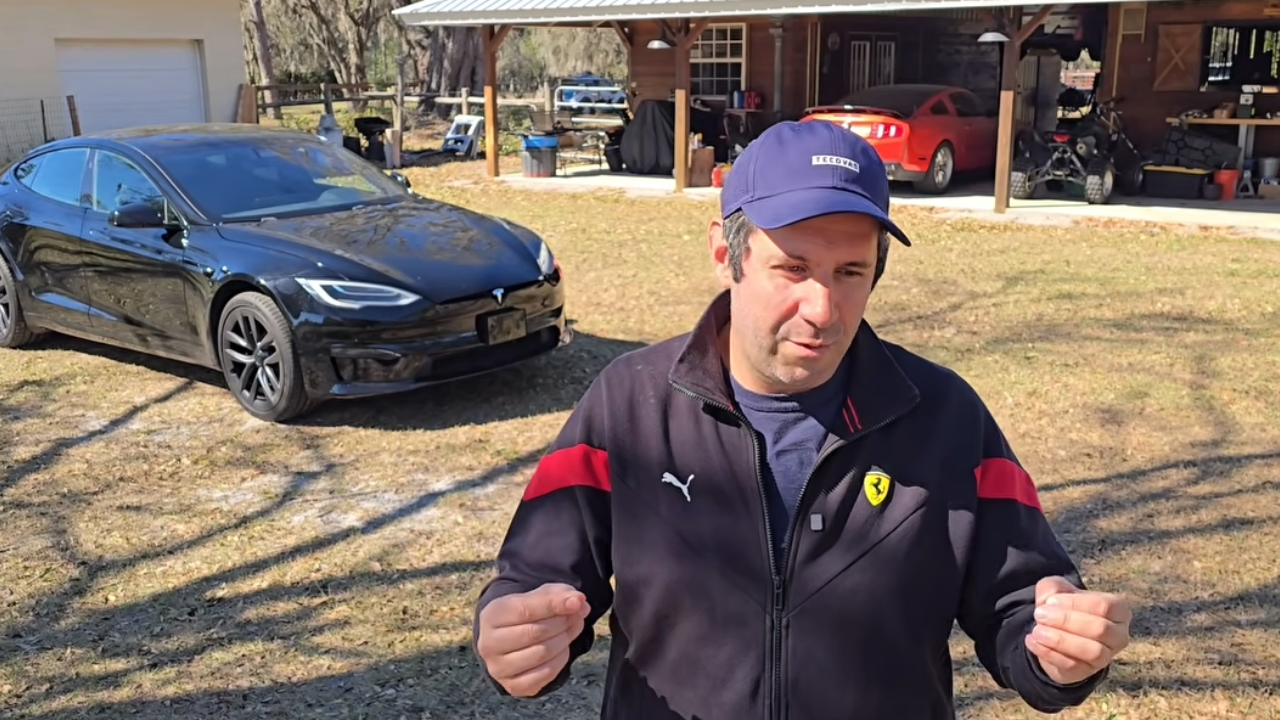
A Tesla Model S that originally cost more than $140,000 nearly ended up at a junk auction after its owner received a $5,500 motor replacement estimate. Instead, a $70 part from Mercedes-Benz helped bring the electric car back to life.
Automotive YouTuber Samcrac purchased the aging Tesla for just $10,300, a fraction of its original price. The car came equipped with expensive options, including the $10,000 Ludicrous Speed upgrade.
The bargain became considerably less attractive when the front drive motor began shutting down while he was driving. A warning appeared on the dashboard, and the car lost power from its front wheels.
Tesla’s remote diagnosis indicated that the entire front motor needed replacement. With the quoted repair costing more than half what he paid for the car, Samcrac parked it in a field and listed it for sale at a junk auction.
A Different Diagnosis
Embedded media follows; please allow a moment to load.
Before accepting an offer for the damaged Tesla, Samcrac discovered a video from Out of Spec Renew, an electric vehicle repair channel featuring technician Alex.
Alex had encountered a similar failure and suggested the problem might not require an entirely new motor.
After connecting remotely via Tesla Toolbox and examining the vehicle’s diagnostic logs, Alex confirmed that the front drive unit’s encoder sensor was the issue.
The sensor monitors motor speed and provides information to the inverter. When that signal becomes unreliable, the vehicle disables the affected motor.
Instead of replacing the entire assembly, Samcrac could access the failed sensor and install a replacement.
A $70 Solution
There was one major obstacle. Reaching the sensor required removing the Tesla’s large high-voltage battery pack, which Samcrac estimated weighed approximately 1,200 pounds.
He used a vehicle lift and a makeshift wooden support platform to lower the battery. Although the process involved several complications, he managed to remove the pack and reach the front drive unit.
During disassembly, he accidentally broke an electrical connector. Fortunately, he located a replacement design online and used his 3D printer to produce a new plastic housing.
Once he reached the failed encoder sensor, he discovered that the replacement part was available through a Mercedes-Benz dealership for approximately $70.
The connection was possible because the electric Mercedes-Benz B-Class used a Tesla-supplied drive motor, sharing the relevant sensor with his Model S.
Samcrac installed the new sensor, reassembled the inverter, and returned the battery pack to its original position.
Back on the Road
With everything reconnected, the Tesla powered on without displaying the previous motor warning.
An initial test confirmed that the front wheels were receiving power again. However, the repair uncovered another problem: a coolant leak from a separate component.
Samcrac purchased a replacement coolant valve for approximately $50 and installed it before taking the vehicle on a longer drive. He also replaced a faulty headlight bulb.
During the road test, the Tesla traveled more than 10 miles without the front motor warning returning. Before the repair, the same warning appeared after the vehicle was moved only a few feet.
The successful test suggested that the $70 encoder sensor had resolved the original drive motor failure, avoiding the quoted $5,500 replacement.
The repair was far more involved than the price of the part suggests, requiring specialized equipment, extensive disassembly, and work around high-voltage components. Samcrac did not provide a comparable professional labor estimate.
For his particular Tesla, however, replacing a single sensor rather than the complete drive unit was enough to restore operation during the test drive.