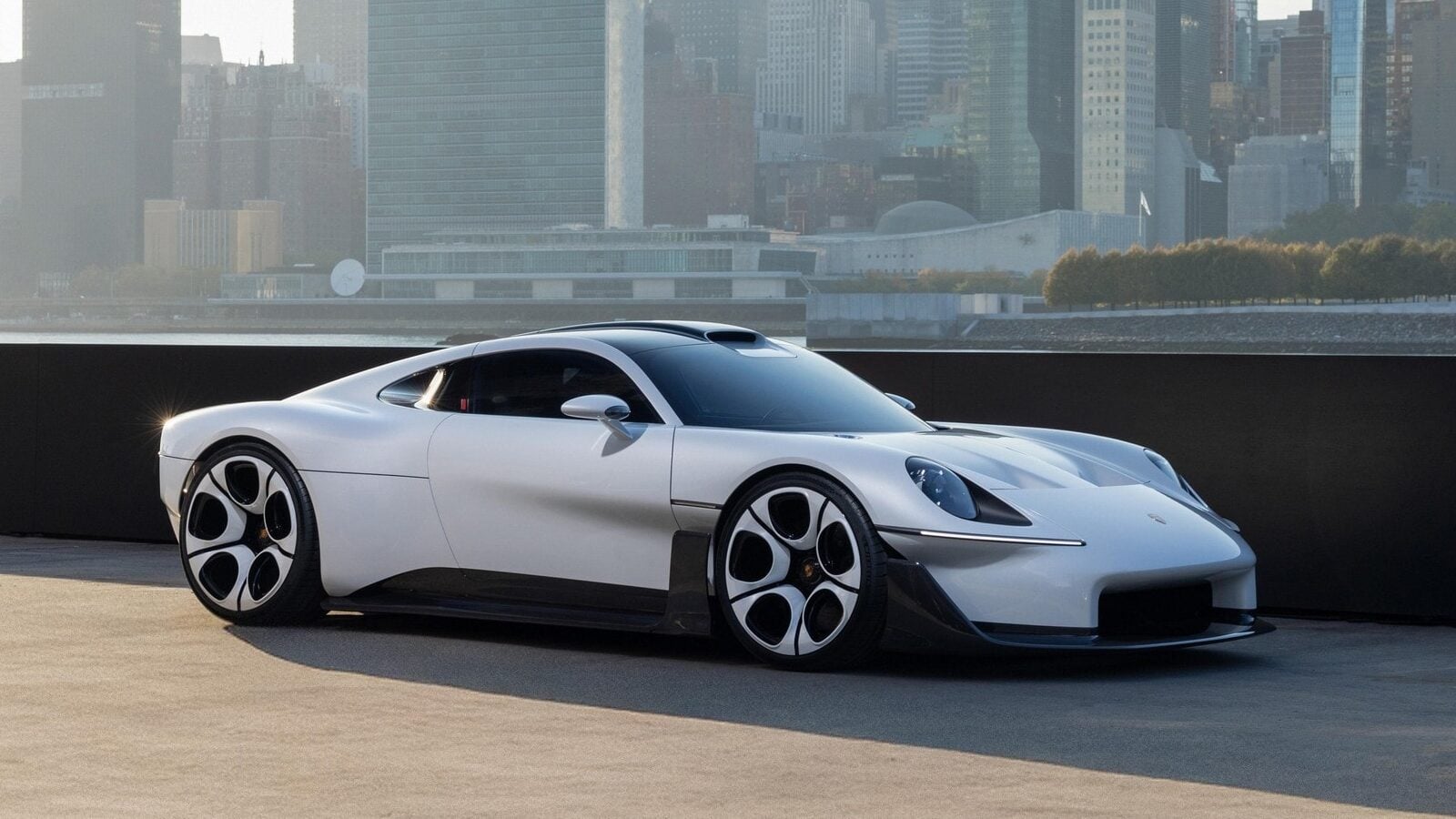
Porsche has unveiled the Mission S, a striking new concept that previews the future of the brand’s sports cars. With dramatic proportions, a mid-engined layout, and an interior that prioritizes driving over touchscreen technology, it looks like exactly the kind of machine enthusiasts have been asking for.
The Mission S also signals something significant for Porsche’s future lineup. The German automaker is developing a new supercar platform positioned above the 911, creating a permanent addition to its range rather than another limited-production hypercar.
Unveiled in New York on October 15, the concept introduces a fresh design direction under Porsche’s new styling chief, Tobias Sühlmann. Its appearance draws inspiration from several legendary models, including the 911 GT1, 959, 917, and 550 Spyder.
Perhaps most excitingly, Porsche is developing the new supercar platform with combustion engines in mind. Both conventional gasoline and hybrid powertrains are under consideration, although specific engine details and performance figures haven’t been announced.
A Modern Porsche With Classic Supercar Proportions
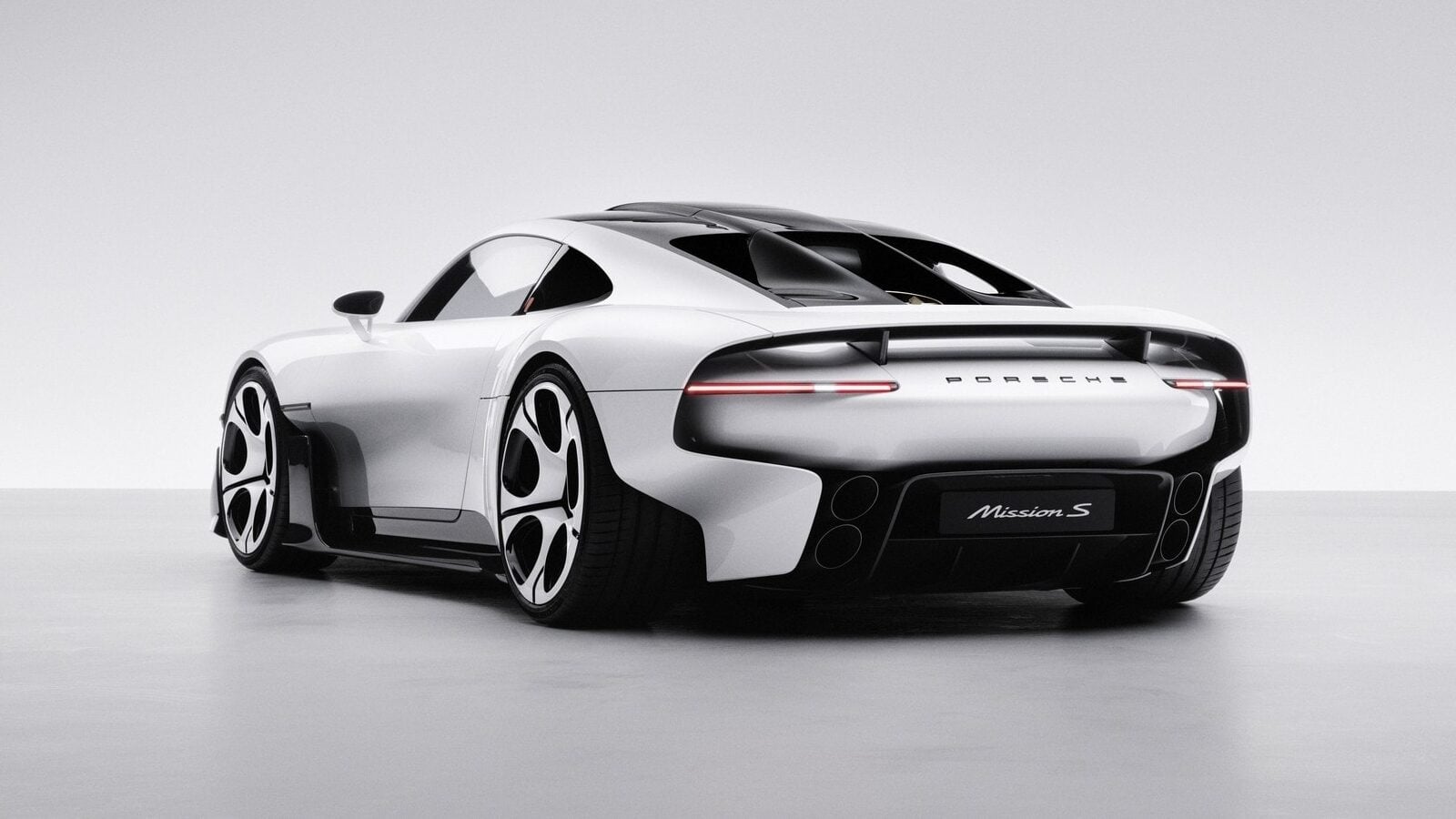
The Mission S combines a low nose, muscular fenders, and flowing bodywork with a distinctly mid-engined silhouette. Its rounded headlights recall classic Porsches, while the wide rear end incorporates an active wing and prominent aerodynamic elements.
Look closely, and you’ll find references to Porsche’s racing heritage throughout the design. A visible cooling fan recalls the legendary 917, while the wheels take inspiration from the distinctive dial-style design of the 928.
Finally, A Supercar Without A Giant Touchscreen
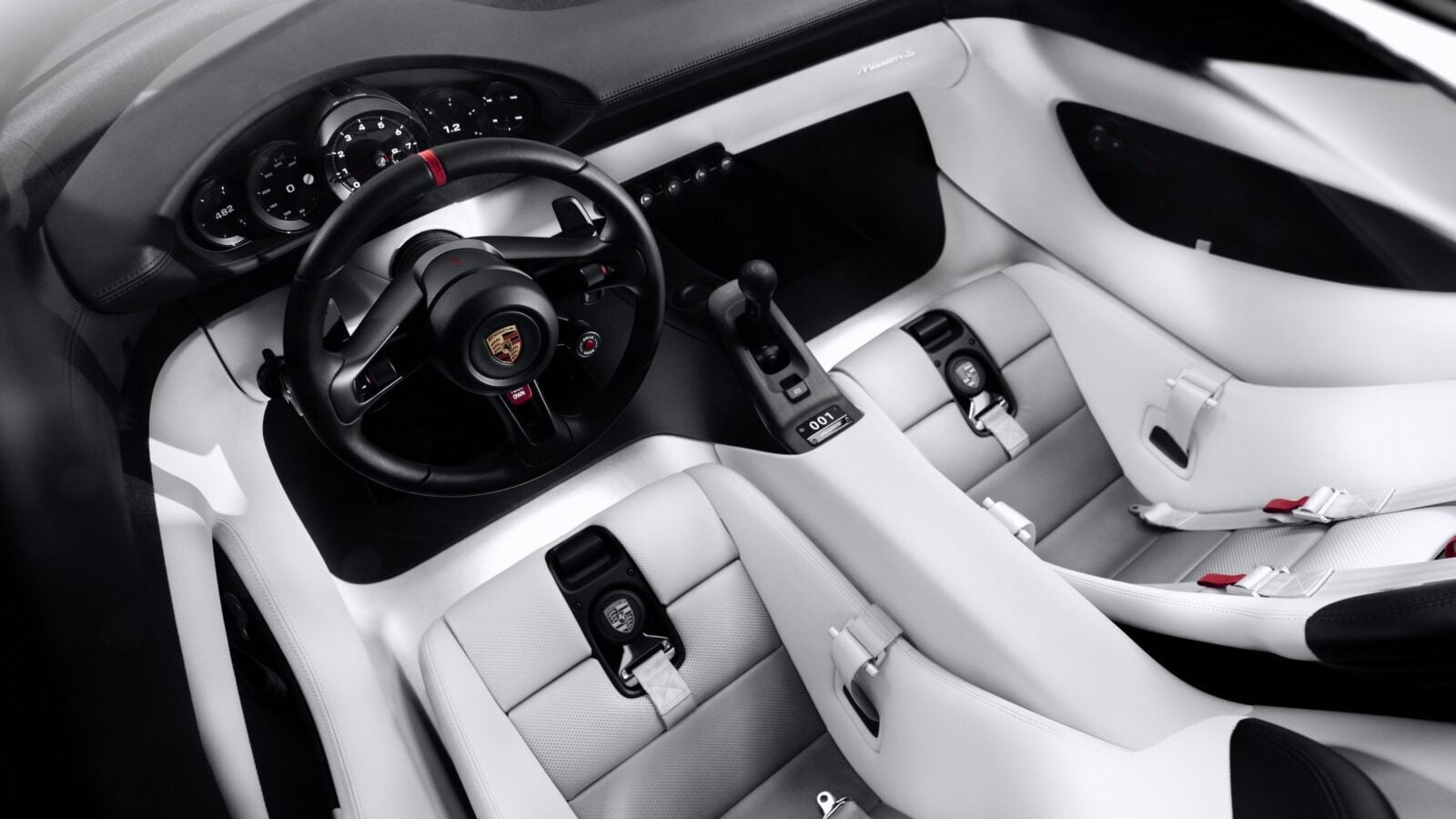
The interior might be the Mission S’s most appealing feature. Instead of filling the dashboard with enormous displays, Porsche has embraced physical switches, traditional instruments, and a cockpit designed around the driver.
Five circular gauges sit behind the steering wheel, with a central tachometer featuring an analog needle. The instruments can physically reposition themselves depending on the selected driving mode, bringing essential information closer to the driver’s attention.
There’s no permanently installed central infotainment screen, either. A retractable MagSafe-compatible smartphone holder provides navigation and other digital functions when needed, leaving the dashboard refreshingly uncluttered.
Porsche Is Planning Something Bigger Than The 911
Unlike the Carrera GT and 918 Spyder, Porsche’s next flagship isn’t intended to be a limited-production halo car. CEO Michael Leiters envisions a permanent supercar offering that can accommodate different powertrains and evolve over time.
Porsche has yet to reveal which engine will power the production model, although the platform’s flexibility leaves several possibilities open. The company also hasn’t provided a launch date or indicated how much its new flagship might cost.
If the finished car preserves the Mission S’s striking design and driver-focused philosophy, it could become one of the most appealing additions to Porsche’s lineup in years. Enthusiasts will certainly be hoping that the production version stays true to the concept’s old-school priorities.