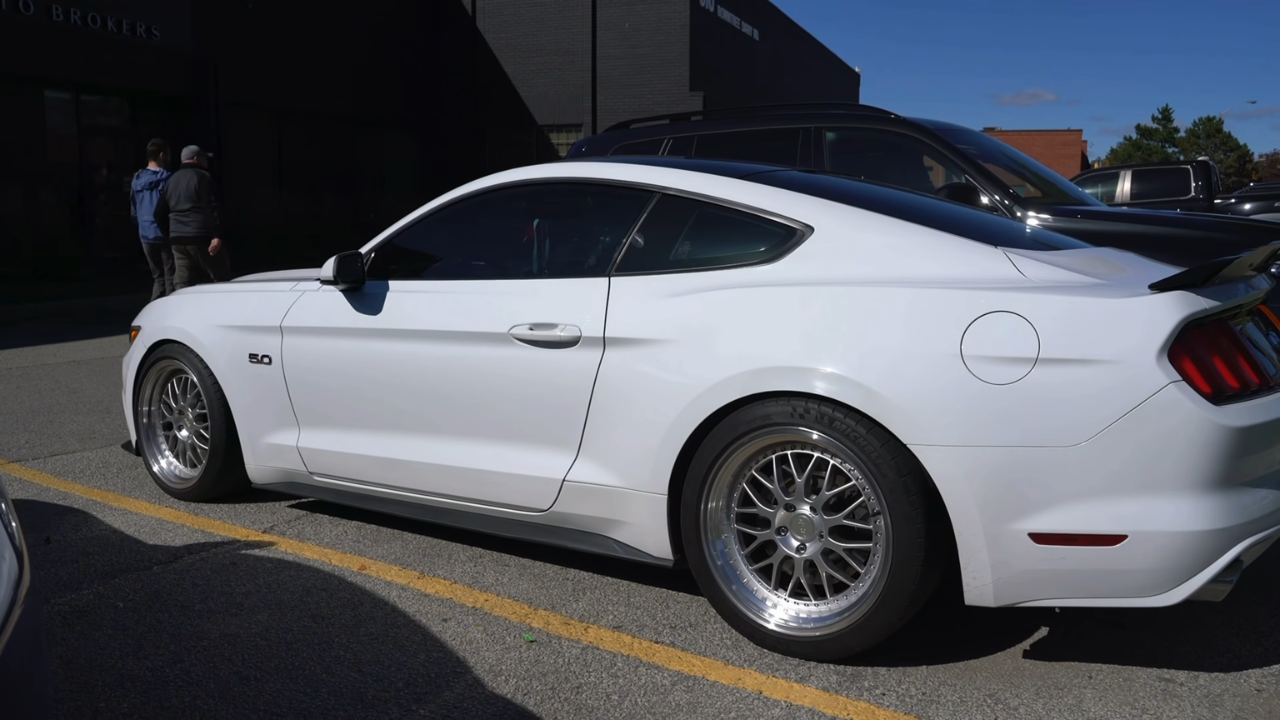
A Mustang owner brought his GT to a dealership believing it had the “PP2” performance package. Before the sale was over, he learned that the package he thought he had owned for six years did not match the car’s factory equipment.
In a video published Oct. 6 by Toronto Auto Brokers, the owner brings in a 2017 Mustang GT and asks for about US$21,100. Gideon, the appraiser, starts at a considerably lower figure, even while initially accepting the owner’s description of the performance package.
The owner says he bought the Mustang in 2020 and calls it his “weekend baby.” A Mazda handles everyday driving, while the Mustang has received different wheels, lowered suspension, and a spoiler. Its Borla exhaust was already installed when he bought it.
He had sold the factory wheels but kept the original suspension parts, allowing the ride height to be restored. As negotiations continue, Gideon discusses a tentative price of about $17,200, contingent on a mechanical inspection going well.
The Appraisal
Embedded media follows; please allow a moment for it to load.
The Mustang checks out well mechanically, according to Gideon. However, after consulting a Ford contact and obtaining an options list, he returns with a different assessment of its equipment: the car has the lower-performance package, which he calls PP1.
“They told me at the dealership it was a PP2,” the owner responds, referring to the business that sold him the car.
Gideon responds: “For the past 6 years, you thought you were driving a PP2.”
The Package Names
The car’s stated model year presents a more basic problem with that description. Ford introduced Performance Pack Level 2 for the 2018 model year, announcing it in October 2017. A 2017 Mustang GT therefore would not have left the factory with that package.
The factory upgrade included specially tuned MagneRide dampers, wider Michelin Pilot Sport Cup 2 tires, and revised aerodynamic components.
Separately, Ford Performance offered a Power Pack 2 for 2015–2017 Mustang GTs, combining intake hardware and an engine calibration. That is a different product; its existence does not establish what was installed on this owner’s car or what the original seller told him.
Back to Negotiating
Gideon revises his offer to about $15,800. The owner tries contacting the original dealership, then reports that five calls went unanswered. When they resume negotiating, he asks for about $700 more.
They agree to about $16,500. Gideon says the dealership will pay off the outstanding lien and give the owner the remaining equity.