Imagine driving an electric vehicle down the highway and watching its battery receive power without ever plugging into a charger. Honda is working on technology that could make this possible, potentially changing how electric vehicles are charged.
The Japanese automaker has announced progress on a wireless charging system that transfers electricity to EVs directly from equipment embedded beneath the road surface. Unlike conventional wireless charging pads, the system is designed to work while vehicles are moving.
Honda is developing the technology alongside Japanese construction companies Taisei Corporation and Taisei Rotec Corporation. The three companies plan to begin public-road demonstration testing during Japan’s 2027 fiscal year, which starts in April 2027.
The project could eventually benefit passenger cars, but Honda is initially targeting commercial vehicles and transportation fleets. Keeping electric trucks charged during their journeys could reduce charging stops and improve operational efficiency.
How Honda’s Wireless Charging Roads Work
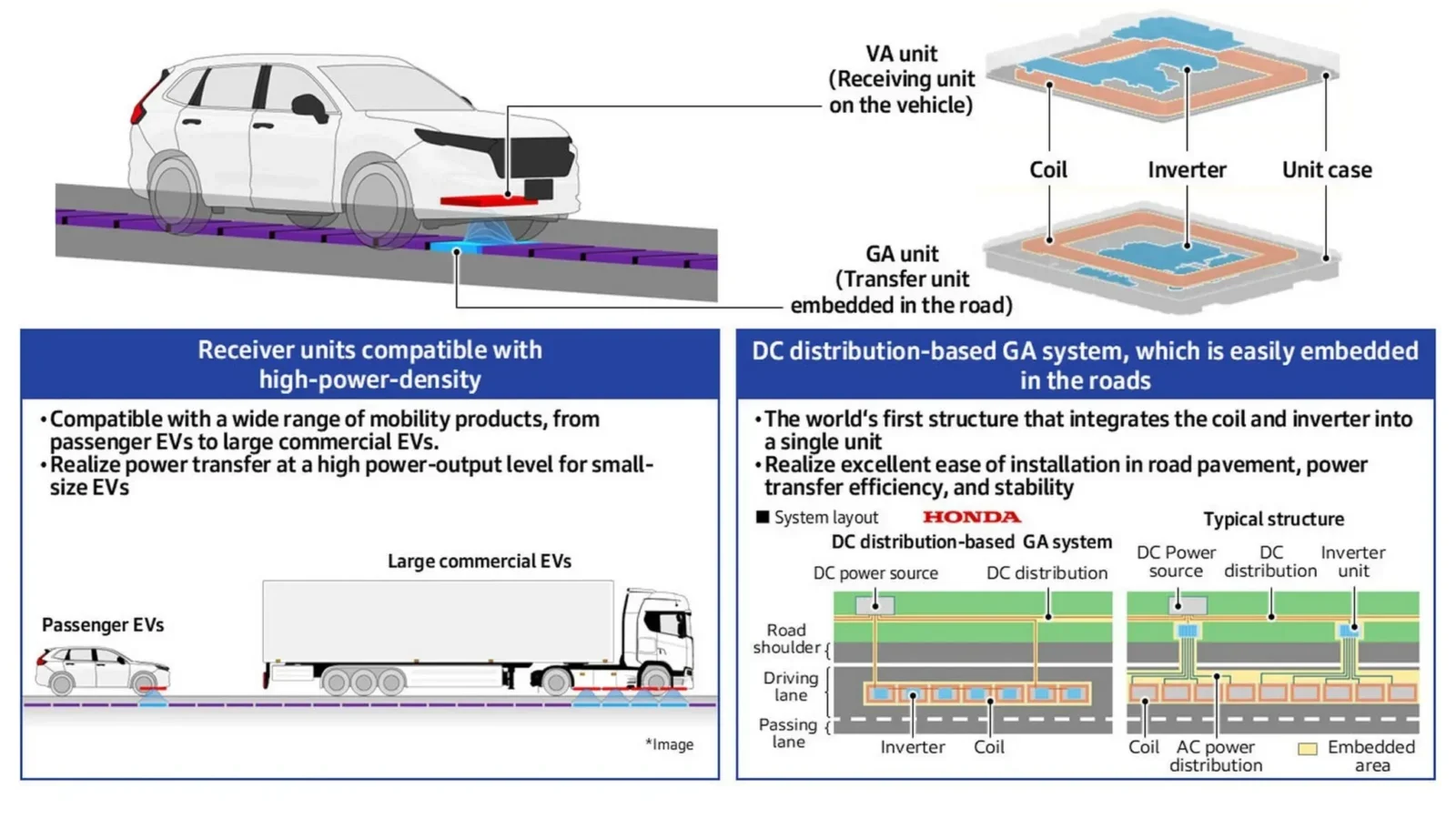
The system uses magnetic coupling to transfer electricity between transmitter units embedded in the pavement and a receiver installed underneath the vehicle. Power is supplied through a direct-current distribution network connected to the road equipment.
Honda has developed compact transmitter units that combine an inverter and charging coil into a single assembly. According to the automaker, this design simplifies installation and makes it easier to upgrade existing roads.
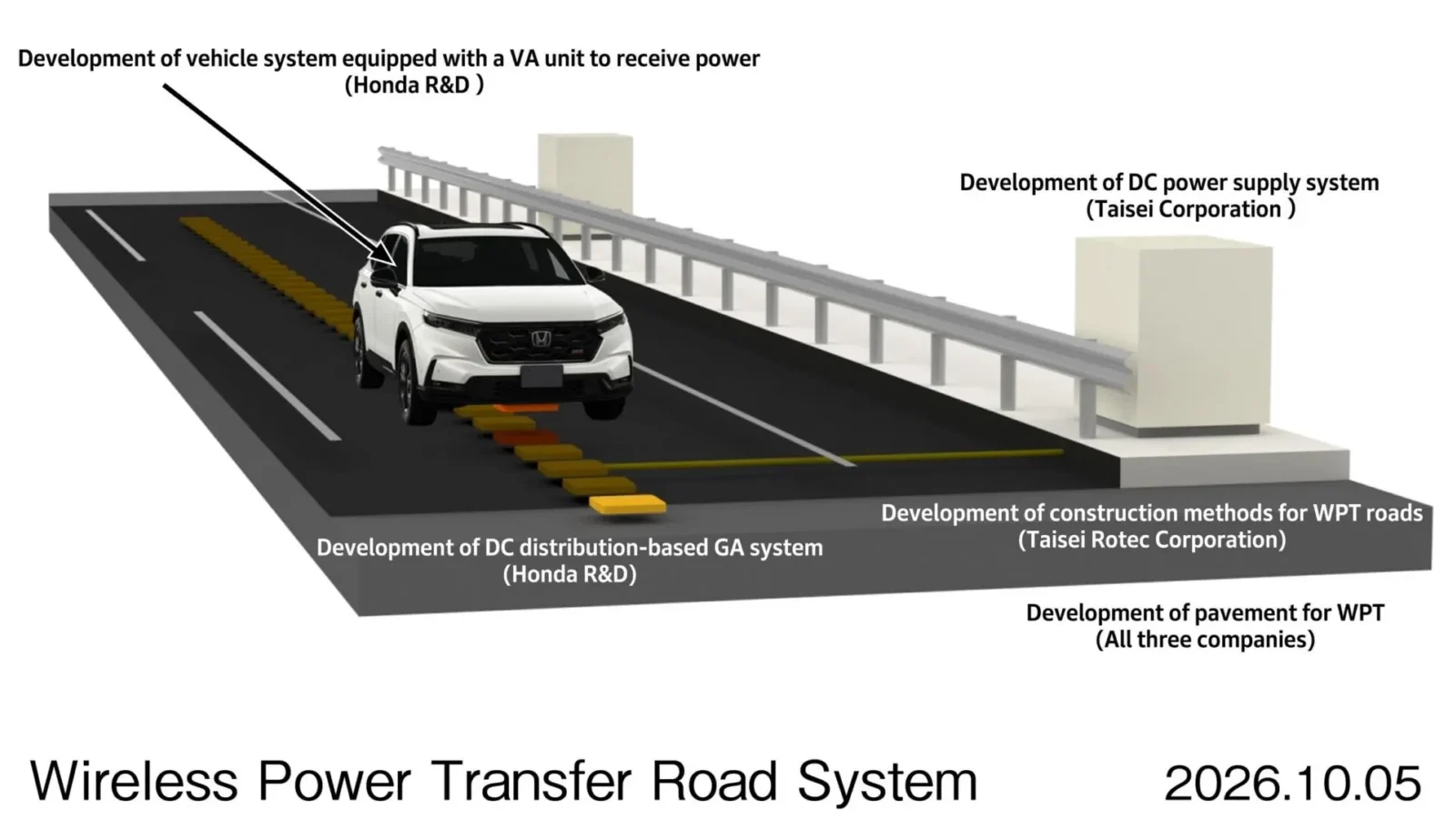
Taisei is responsible for the power supply system, while Taisei Rotec is developing methods for embedding the equipment into road surfaces. The companies have already conducted verification testing at a dedicated facility in Japan.
Wireless Charging Could Deliver Up To 150 kW
Honda and its partners are working toward demonstrating wireless power transfer at outputs of up to 150 kW. However, that figure is currently a target for future testing, not a confirmed capability during highway driving.
Engineers must also ensure that the equipment survives heavy traffic, including commercial vehicles weighing 20 metric tons. A new test facility scheduled for construction in late 2026 will subject the pavement to the equivalent of one million wheel loads.
Additional evaluations will examine electromagnetic field leakage and charging performance at higher vehicle speeds. These tests will help determine whether the technology can operate safely and reliably outside controlled environments.
Public Highway Testing Begins In 2027
Honda will participate in the Tateyama Project, a wireless charging demonstration planned for Japan’s Tateyama Expressway in Chiba Prefecture. Public-road trials are scheduled to begin during the fiscal year starting April 2027.
The automaker believes dynamic wireless charging could eventually reduce the frequency of stops at conventional charging stations. However, it hasn’t disclosed how much additional driving range vehicles might gain from traveling over an electrified road.
Could This Reduce The Need For Large EV Batteries?
If wireless charging roads become widespread, electric vehicles could potentially rely on smaller battery packs without sacrificing as much practical driving range. That could reduce vehicle weight and battery costs, although such benefits are purely hypothetical at this point.
Installing and maintaining charging equipment beneath public roads would also require substantial investment. At the moment, Honda hasn’t announced commercial deployment dates or estimated infrastructure costs.