A driver who decides to carry only the minimum insurance on an older car is making a fairly ordinary financial calculation: pay less every month and accept that a bad day could leave a repair bill sitting squarely in his own lap.
That calculation becomes considerably more expensive if, after the bad day arrives, someone tries to move the calendar.
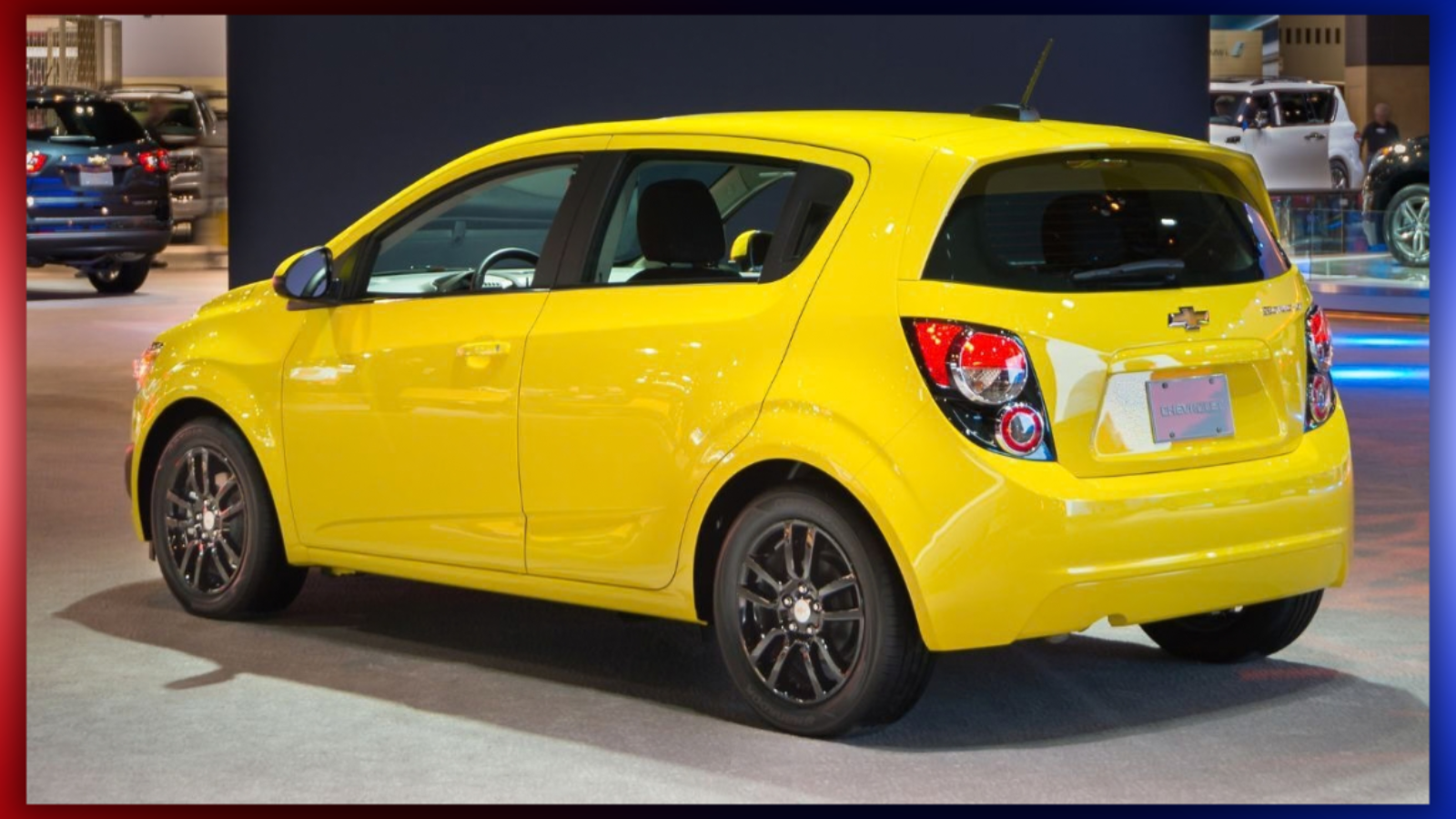
Utah insurance investigators say that is what happened after a 2015 Chevrolet Sonic sustained heavy front-end damage.
The resulting case is also an unusually clean example of a fraud pattern the Utah Insurance Department tracks as “Crash & Buy”: obtaining coverage after a loss and then representing that the loss occurred later.
Then The Dates Shift
Harold Leroy Carter, 75, obtained a liability-only Progressive policy for his 2015 Chevrolet Sonic on Jan. 6, 2026, according to a criminal Information filed by the Utah Attorney General’s Office.
Liability generally covers losses a driver causes to other people rather than collision damage to his own vehicle, so Carter was effectively carrying that repair risk himself when Troy’s Custom Body & Paint prepared a $7,319.10 estimate for the Sonic at 9:27 a.m. on May 27.
Six days later, Progressive’s records show Carter changed the policy from liability-only to comprehensive and collision coverage, which could protect against future losses but could not retroactively insure existing damage.
At 1:11 p.m. on July 10, Carter filed a claim reporting that the Sonic had sustained heavy front-end damage on June 26 at 11 a.m., placing the reported accident more than three weeks after the coverage change.
Progressive found the May 27 body-shop estimate.
That sequence fits what Utah’s Insurance Fraud Division calls auto-accident “past posting,” or “Crash & Buy”: obtaining coverage after damage occurs, then presenting the loss as though it happened after the policy took effect.
The insurer referred the matter for investigation, and Dennis Barrera of the Utah Department of Insurance Fraud Division reviewed Progressive’s claim file and audio recordings supplied by Loretta Horton-Moore, identified in the filing as an SIU investigator.
Barrera said the records confirmed both the June 3 policy change and that Carter had represented the accident as happening later. On Sept. 8, he obtained the body-shop estimate and supporting timestamped records, confirming that they predated the accident date reported to Progressive.
When Barrera contacted Carter the next day, the investigator said Carter confirmed that the accident occurred May 27, while he still had liability-only coverage. Carter said he had “panicked,” added comprehensive and collision coverage, and then made the report. Barrera wrote that Carter admitted he was trying to gain coverage.
The Bill Gets Bigger
The Utah Attorney General’s Office charged Carter with one count of insurance fraud, and the $7,319.10 estimate affects more than the size of the disputed claim.
Under the version of Utah’s insurance-fraud statute cited in the charging document, seeking $5,000 or more through this type of fraudulent claim can make the offense a second-degree felony, carrying a possible prison term of one to 15 years and a fine of up to $10,000.
So a $7,319 repair bill has become a criminal case carrying substantially greater financial and legal exposure.
Recent Utah car-insurance cases show what similar schemes have cost defendants even when the final convictions were misdemeanors.
In one case documented by Utah’s Insurance Fraud Division, a driver bought insurance for a 2024 Hyundai Elantra after the vehicle had already been damaged, then reported the accident as occurring after the policy began. The $4,219 case was initially filed as felony insurance fraud before the defendant pleaded guilty to a Class A misdemeanor and received 18 months of probation, a $500 fine, $451 in investigative costs and a required thinking-errors class.
Another case involved an uninsured driver who crashed and then had someone else add the vehicle to an insurance policy. Investigators said the pair changed the timing of the accident while seeking $38,538 from Progressive. Both pleaded guilty to Class A misdemeanor insurance fraud and each received 18 months of probation, a $750 fine and $606 in investigative costs.
Dropping collision coverage on an older car can still make financial sense when the premium is high relative to the vehicle’s value, but the savings only work if the owner can absorb the loss personally.
Someone who saves $50 a month by declining collision coverage saves $600 a year. Put aside, that money becomes a reserve for the risk the driver chose to keep. Spent elsewhere, the premium disappears while the risk remains.
One Stop Before Court
Carter’s case was filed in Washington County’s Fifth Judicial District Court under case No. 261501898, where Judge Bryan Pattison ordered him to appear Oct. 29 at 1:30 p.m.
Before that appearance, the summons requires Carter to report to the Purgatory Facility, Washington County Jail in Hurricane, to be booked and then released on his own recognizance. Failure to complete the booking process could result in an arrest warrant.
All parties are presumed innocent unless and until proven guilty in a court of law.