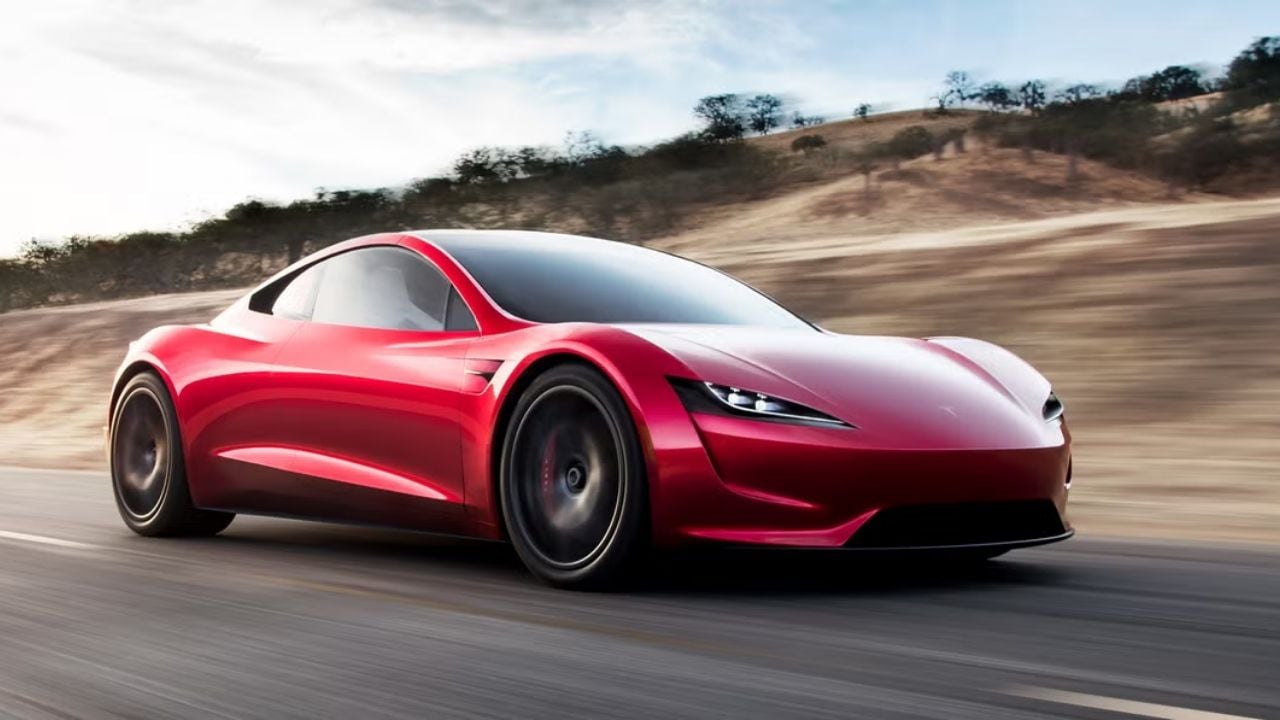
Tesla is preparing to show us its latest take on the long-awaited second-generation Roadster on October 1. Just days before that event, an interesting patent has given us something else to talk about.
Published by the U.S. Patent and Trademark Office on September 24, the filing describes a sophisticated deployable rear wing. It can hide against the body when it isn’t needed before extending into the airflow at higher speeds.
The drawings depict a low, two-door Tesla that bears a strong resemblance to the upcoming Roadster. Tesla never actually identifies the vehicle as a Roadster, however, so there’s no guarantee the system will appear on the production car.
If it does, this isn’t going to be a simple pop-up spoiler. Tesla’s patent describes an active aerodynamic system capable of changing its position to prioritize downforce, reduce drag, and even protect itself during a collision.
Up To 1,540 Pounds Of Downforce
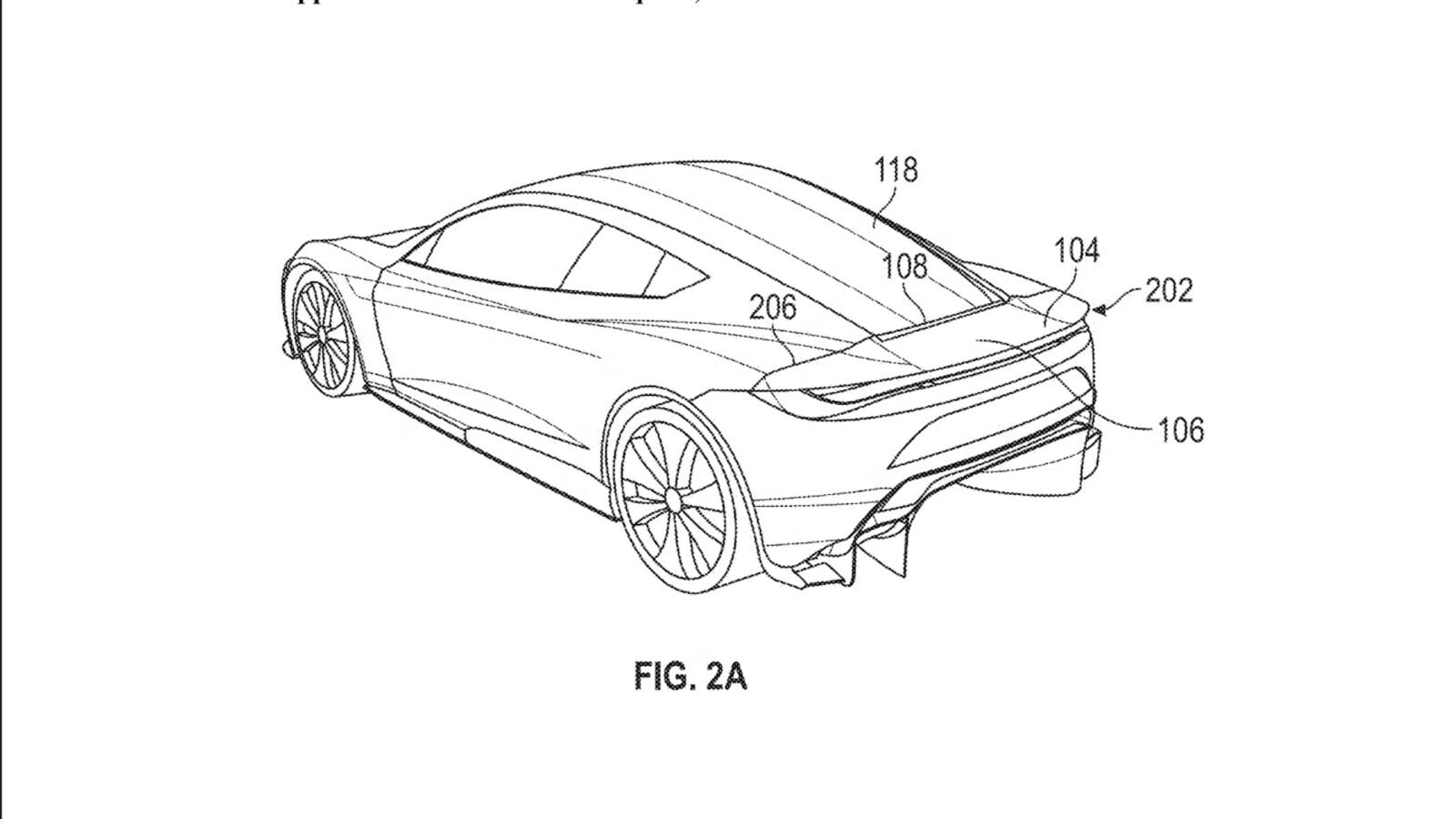
The assembly uses a main wing element accompanied by a smaller leading-edge slat. When stowed, the main element sits flush against the rear bodywork while the slat is tucked underneath.
Once deployed, the system can alter the wing’s angle depending on what the car is doing. Tesla says it could produce anywhere from effectively zero downforce in a low-drag DRS configuration to as much as 700 kilograms, or roughly 1,540 pounds, in its maximum-downforce setting at high speed.
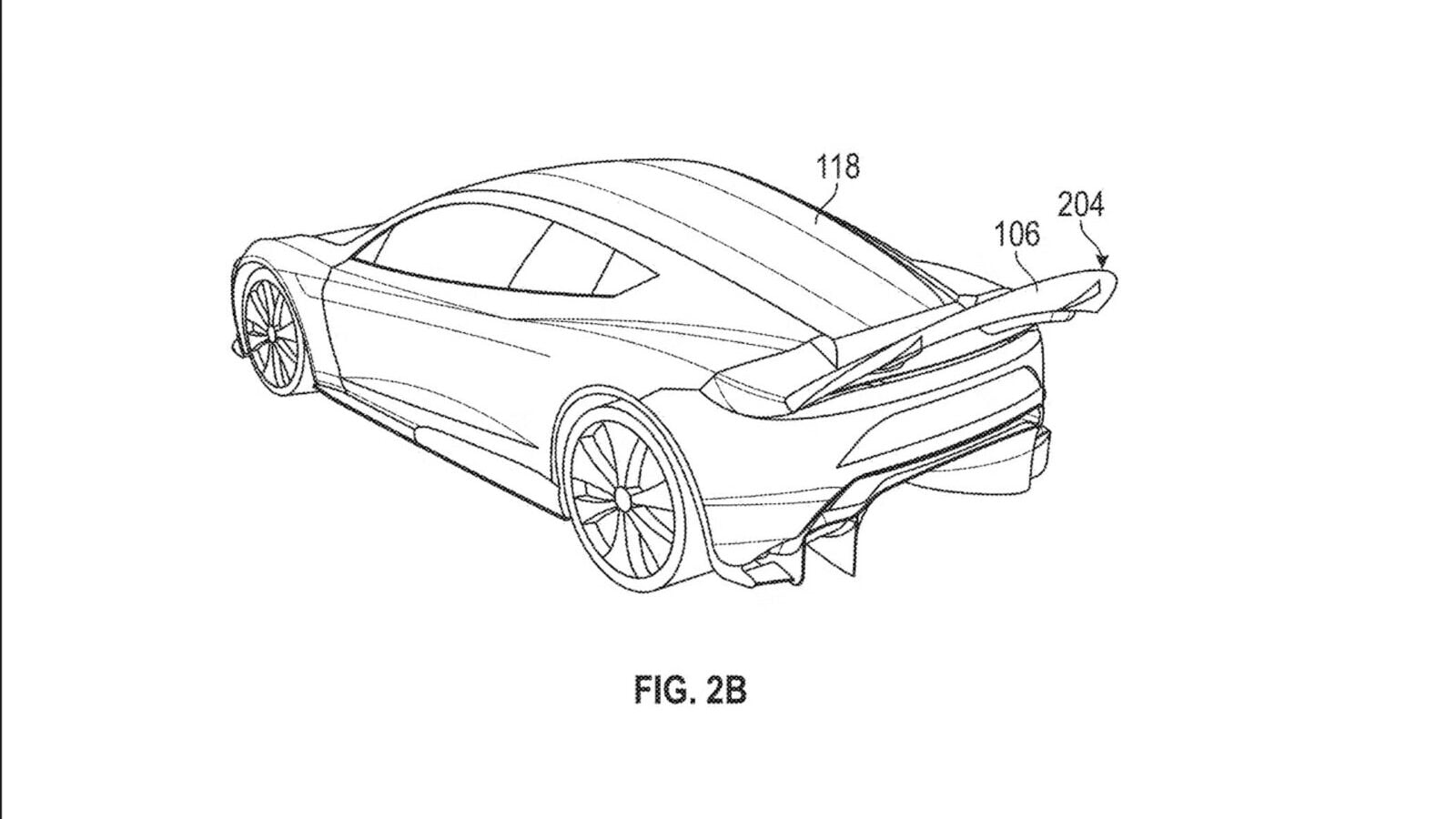
The patent says deployment can take less than three seconds, while changes to the wing angle can happen in under a quarter of a second. Inputs, including vehicle speed, steering angle, braking, acceleration, GPS location, and driver-assistance sensor data, could determine how the wing behaves.
It Can Even Protect Itself
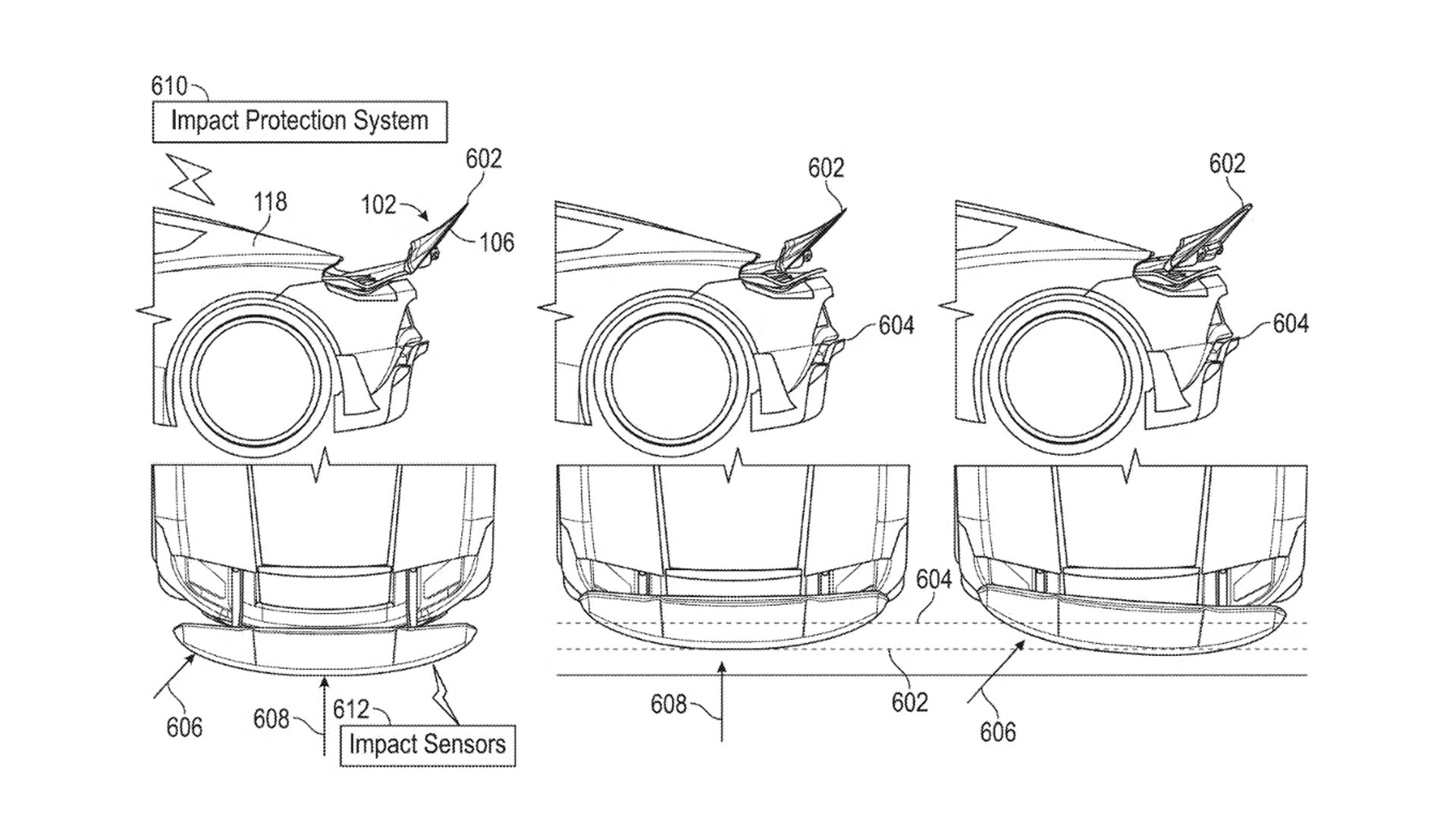
A wing extending far behind a car creates an obvious safety problem. Tesla has come up with some unusual solutions for that, too.
The patent describes mechanical releases that allow the wing to fold away when subjected to a sufficiently strong impact. The car could also use its sensors to predict an impending rear collision and begin retracting the wing beforehand.
Tesla even describes the possibility of automatically recognizing when the vehicle has arrived at a racetrack using GPS. The system could then switch into a more aggressive track-oriented configuration.
Is This Really For The Roadster?
The timing certainly raises eyebrows. Tesla originally revealed the second-generation Roadster back in 2017, and the company is finally preparing another major event for the car on October 1.
Still, patents frequently cover technologies that never reach production, and this filing doesn’t explicitly connect the wing to the Roadster. Until Tesla shows the finished car, this remains an intriguing clue rather than confirmation.
At least we won’t have to wait long to find out. After nearly nine years of waiting for the new Roadster, another few days should be manageable.