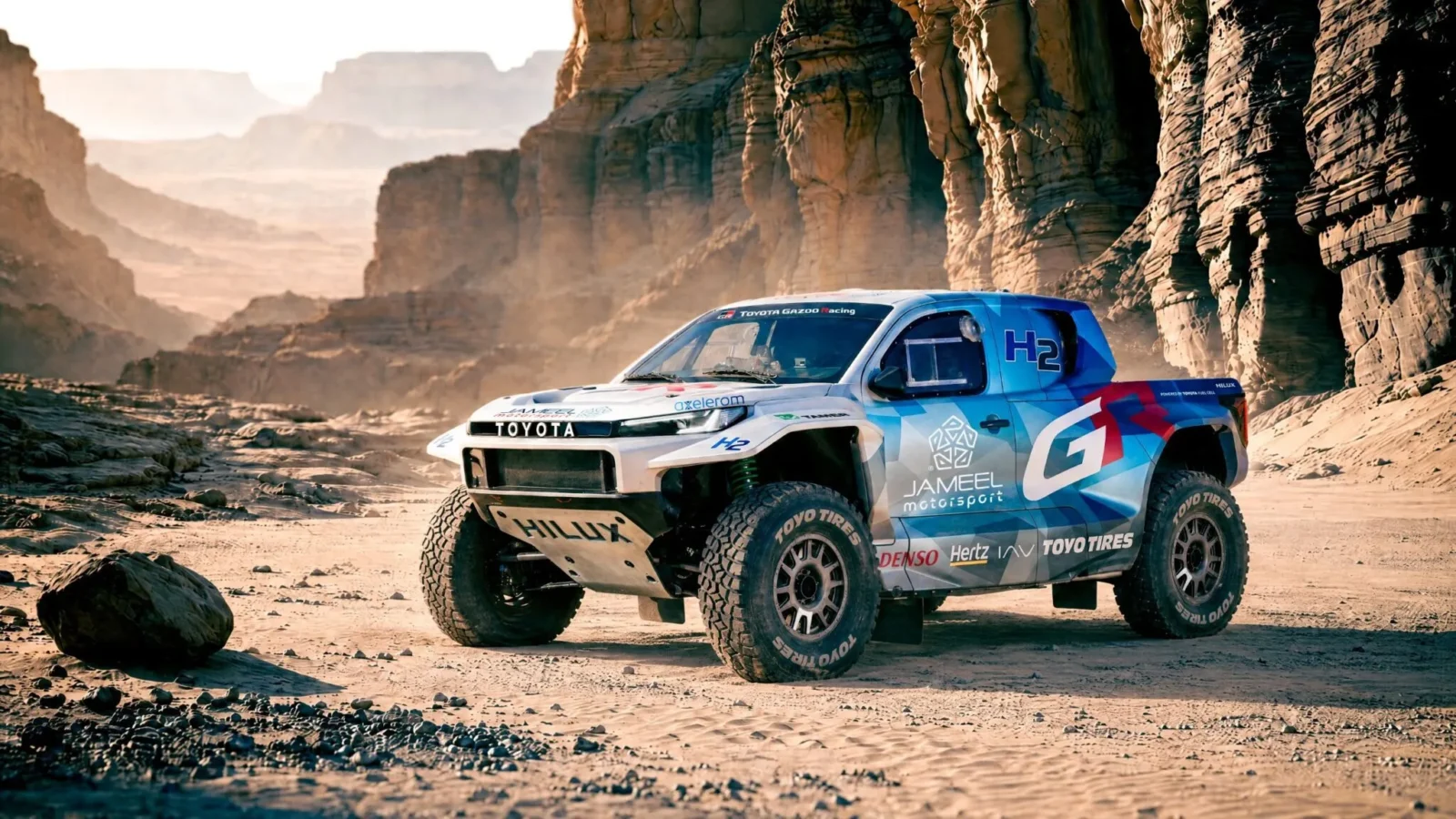
The Dakar Rally has never been particularly kind to machinery. Thousands of kilometers of sand, rocks, heat, and punishing terrain make it one of the toughest places imaginable to test a new powertrain.
Toyota knows those conditions well. Its Hilux-based competition trucks have become familiar sights at Dakar, where the company has spent years developing its rally-raid machinery in some of the harshest environments motorsport can provide.
For 2027, Gazoo Racing is bringing something very different to Saudi Arabia. The new machine shares its foundations with Toyota’s existing Dakar Hilux, but its familiar combustion powertrain has been removed.
In its place is a fuel-cell electric drivetrain, creating the DKR GR FC Hilux. Instead of filling up with gasoline, Toyota’s experimental racer will use hydrogen to generate the electricity needed to tackle the desert.
The V6 Has Been Replaced By A Fuel Cell
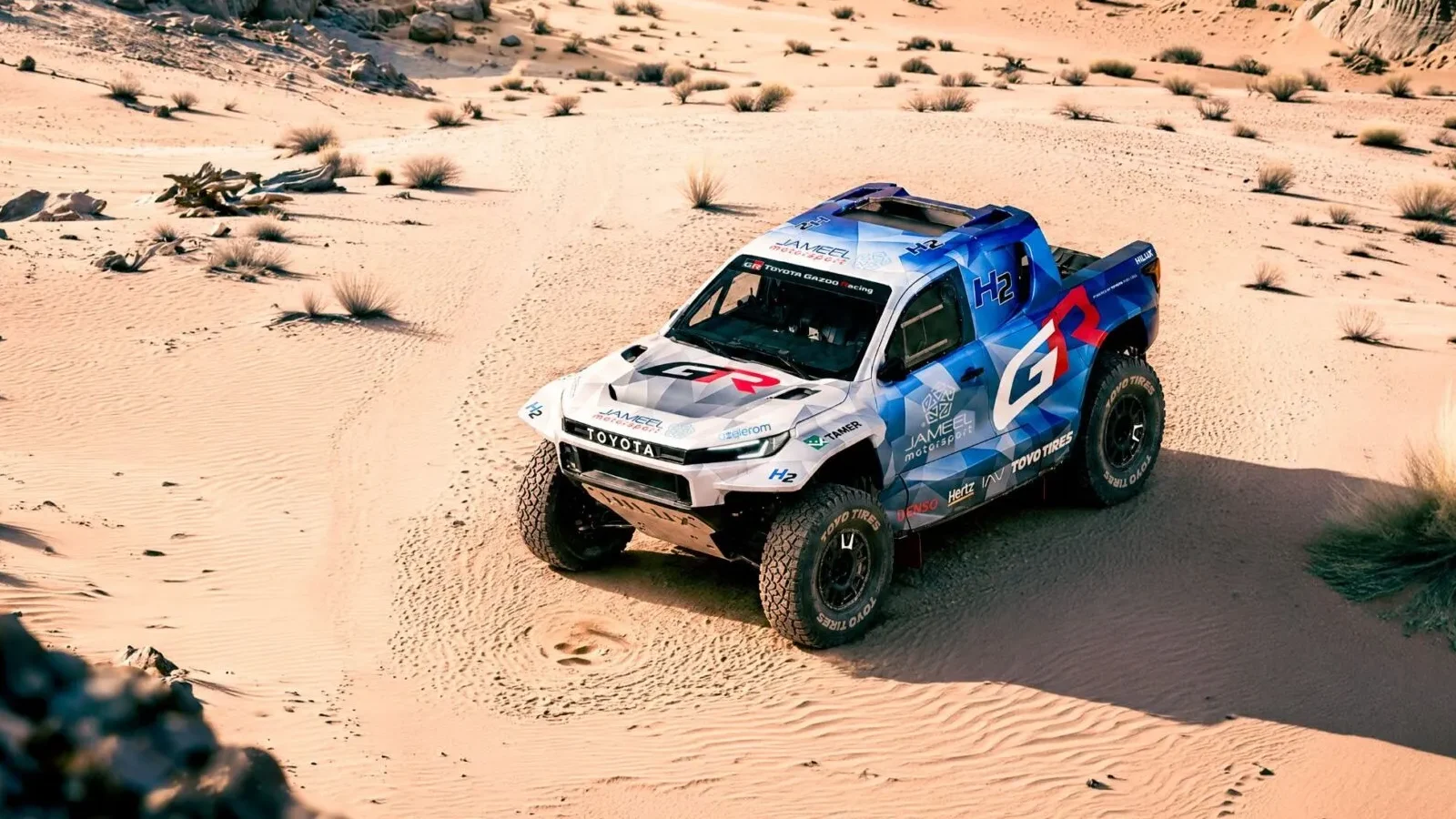
The DKR GR FC Hilux is based on Toyota’s proven DKR GR Hilux competition platform, keeping the specialized body and chassis developed for rally-raid competition. The major difference is found underneath, where Toyota’s fuel-cell system replaces the conventional gasoline engine.
Hydrogen stored onboard is fed into the fuel-cell system, which generates electricity to power the vehicle. Toyota says the Hilux emits no CO2 while driving, with water being the only tailpipe emission.
Gazoo Racing hasn’t disclosed the output of the electric motors, hydrogen capacity, or expected range between refueling stops. It will be interesting to see how they solve the logistical challenges involved with refueling a hydrogen race vehicle in the Saudi desert.
It Won’t Compete For The Overall Dakar Win
The hydrogen Hilux won’t be lining up directly against the conventional GR DKR Hilux EVO T1+ for overall honors. Instead, it will compete in the Dakar Future Mission 1000 category, which was created for experimental vehicles demonstrating alternative technologies.
Toyota plans to cover 1,000 competitive kilometers, or about 621 miles, across 13 stages during the January 1-15 event. The company wants to determine how its fuel-cell hardware handles extreme heat, vibration, sand, and prolonged off-road punishment.
Final assembly is currently underway at Toyota’s European research and development headquarters near Brussels, Belgium. A pre-Dakar testing program will follow before the truck heads to Saudi Arabia.
Toyota Wants A Hydrogen Hilux On The Road
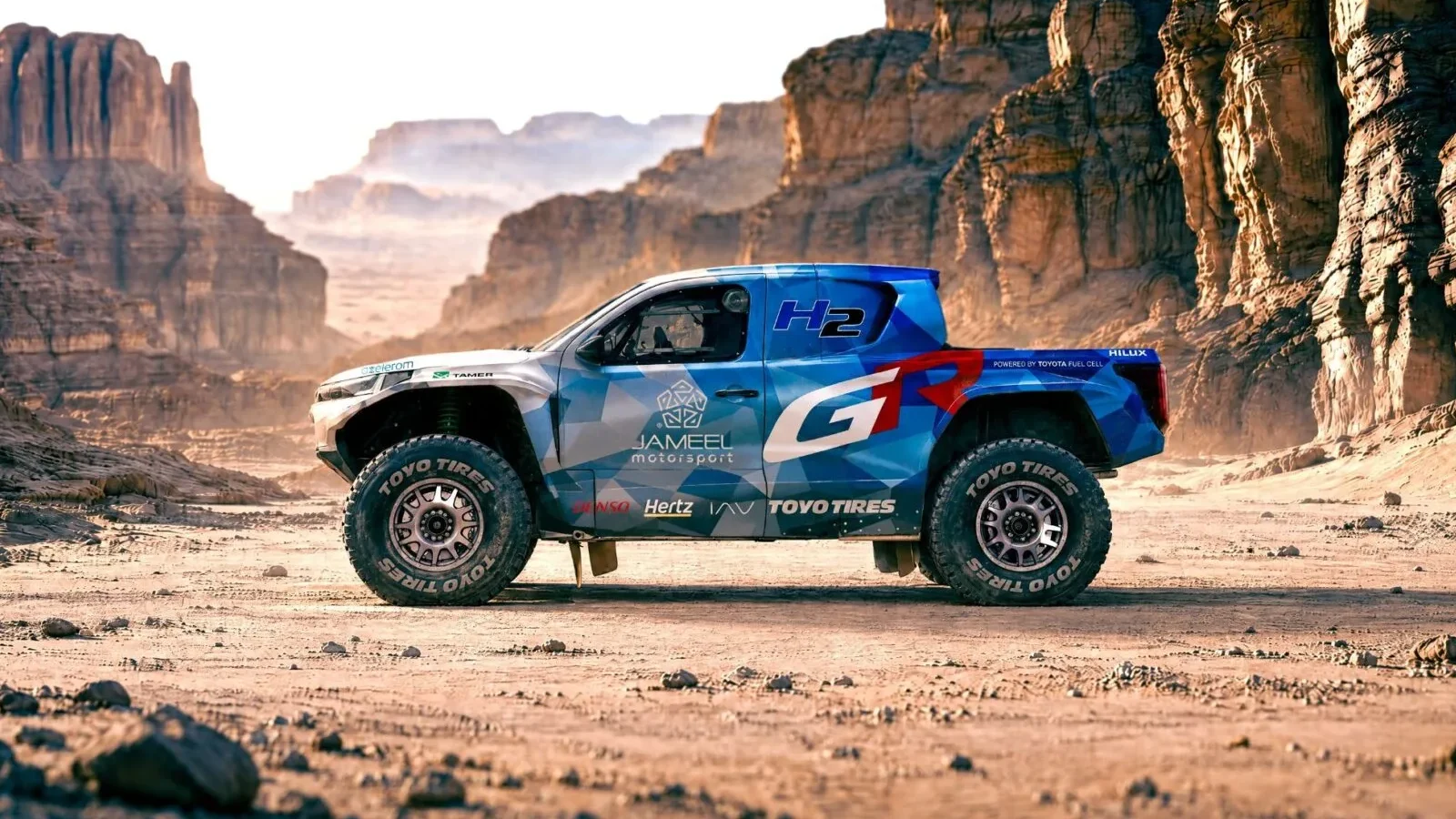
The project isn’t solely a motorsport experiment. Toyota has already confirmed plans for a production fuel-cell Hilux targeted for 2028, giving the Dakar program a direct connection to technology intended for future road vehicles.
Gazoo Racing will have help developing its competition version. Jameel Motorsport, Denso, Toyo Tires, and engineering company IAV have joined the program as official partners, with Toyo supplying its Open Country M/T-R rally-raid tires.
Toyota’s regular gasoline-powered Dakar Hilux isn’t disappearing either. The fuel-cell prototype will run alongside the company’s conventional competition effort rather than replacing it.
That means Toyota will arrive at Dakar with two very different ideas of what a rally truck can be. One will be chasing outright victory with combustion power, and the other will use the desert as a laboratory for a Hilux that doesn’t need a single drop of gasoline.