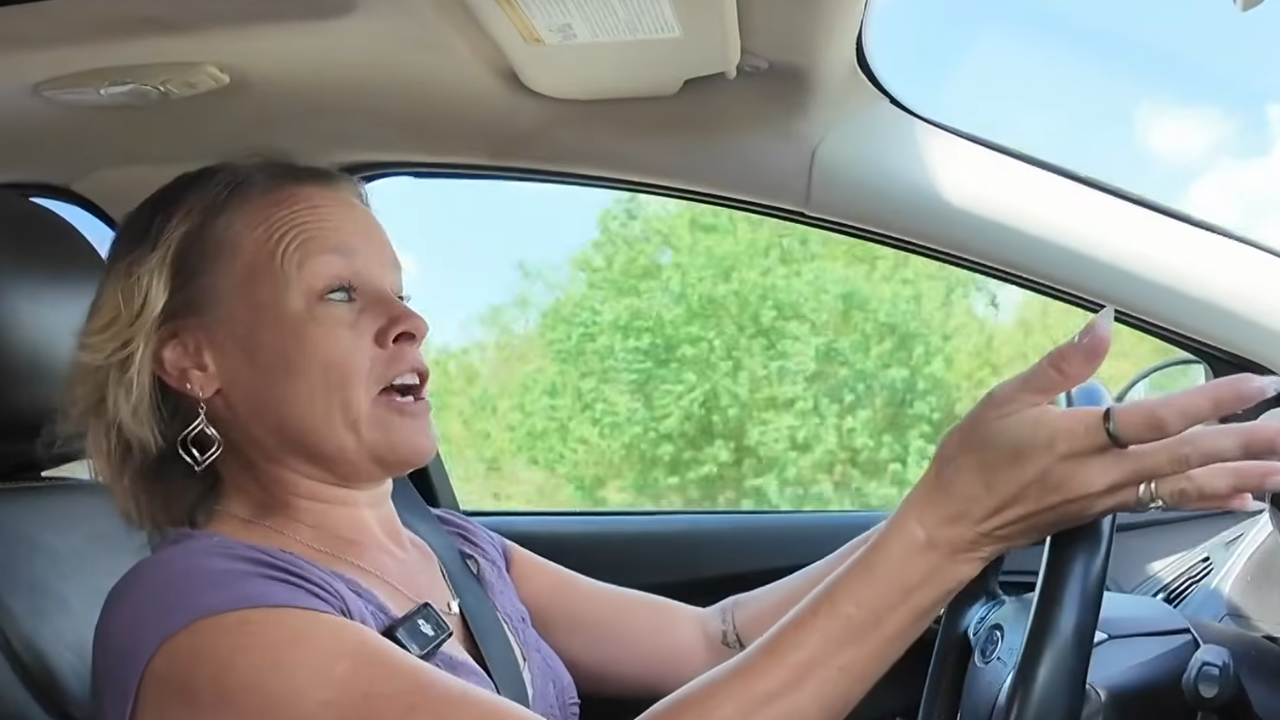
An Uber driver heading home says a feature designed to help her earn money along the way instead sent her crawling across miles of badly damaged Texas back roads.
Ashley Marrocelli was driving from Katy toward Waller when she turned on Uber’s Destination Mode, which can match drivers with riders traveling in the same general direction. Instead of following the route she normally uses, Marrocelli said the app steered her away from the highways and onto isolated roads.
Some stretches were so rough that she dropped to about 10 mph in an effort to protect her vehicle. “There are small patches where I can maybe, like, 15, 20 miles an hour,” Marrocelli told KPRC 2. “But other than that, I was going about 10 miles an hour.”
What bothered her was not simply the condition of the roads. Destination Mode was supposed to help her find passengers headed toward Waller, yet she said the route took her through areas with few homes, businesses or apparent opportunities to pick anyone up.
The difference between that route and the one she normally takes was only about two miles, she said. By the end of the trip, however, her car had a much bigger problem.
The Rough Route
Embedded media follows; please allow a moment to load.
KPRC identified Pennick Road near Hebert Road in Waller as one of the stretches Marrocelli traveled. Video from the area showed an uneven road surface broken up by potholes and cracks.
Marrocelli said her usual trip would have kept her on larger roads. She questioned why the app selected the back-road route when another option would have taken her to the same destination without the same conditions.
She then tried to get an explanation from Uber.
Marrocelli showed KPRC messages from her attempts to contact the company and said she initially struggled to reach a person rather than a chatbot. When she eventually reached a representative, she said she was told drivers are not required to follow the route suggested by the app.
Along The Way
Uber describes Destination Mode as a tool that lets drivers select where they are heading and receive trip requests that move them closer to that destination. The company updated the feature in May with separate Flexible and Faster route options, with the former designed to widen the search area for additional trip opportunities.
That was the point Marrocelli said she had in mind when she switched the feature on: make some money by finding riders headed her way while she traveled home.
Instead, she ended up taking the car to a shop.
A Costly Detour
KPRC reported that a mechanic estimated transmission-related repairs would cost between $4,000 and $6,000. Uber told Marrocelli she could file a claim concerning the vehicle damage.
For a driver who depends on the car to earn money, the repair problem carries another cost while the vehicle is out of service.
“It’s difficult,” Marrocelli told KPRC. “You have to put in the hours to make the money.”
She said she decided to speak publicly about the trip because she did not want another driver to wind up dealing with the same problem.