The muscle-car era created its share of rarities, but production numbers alone do not always explain why certain cars become coveted collector pieces. Factory history, specification, and provenance can turn an already scarce model into something virtually impossible to replace.
That description fits a Pontiac preparing to return to public auction after an absence of more than a decade. The last time it crossed the block, bidding reached an extraordinary figure without convincing its owner to sell.
Since then, the collector market has changed considerably, while highly documented American performance cars continue to command serious attention. This Pontiac also carries a history stretching directly back to the company that built it.
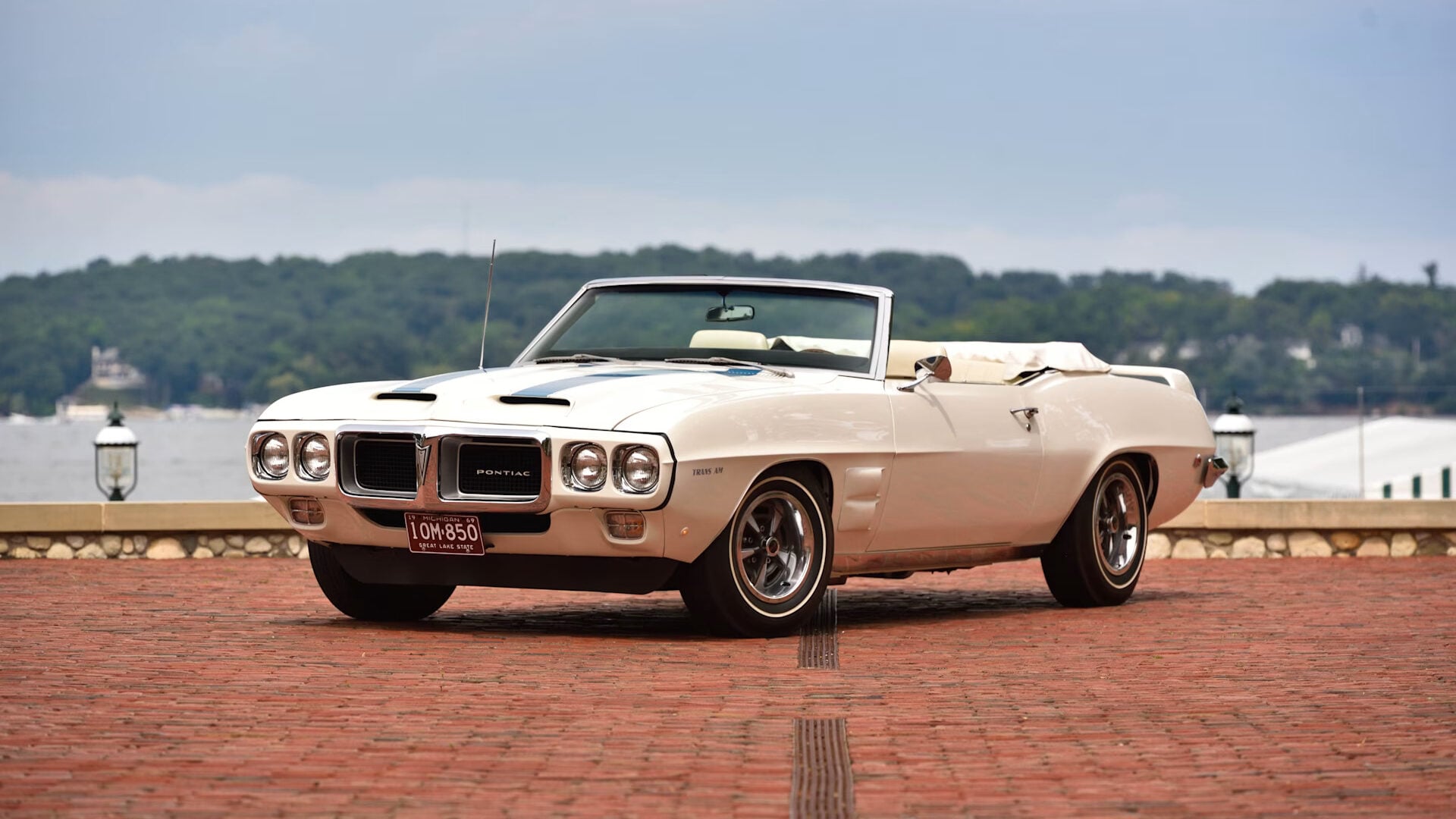
Mecum will offer the car at its Kissimmee 2027 auction on January 15. It is one of just eight 1969 Pontiac Trans Am convertibles ever produced, and its unique specification could make it a multimillion-dollar prize.
One Of Eight, Yet Still Unique
Pontiac built only 697 Trans Ams for 1969, including eight convertibles. Four of those open-top cars received automatic transmissions, while the remaining four were equipped with four-speed manuals.
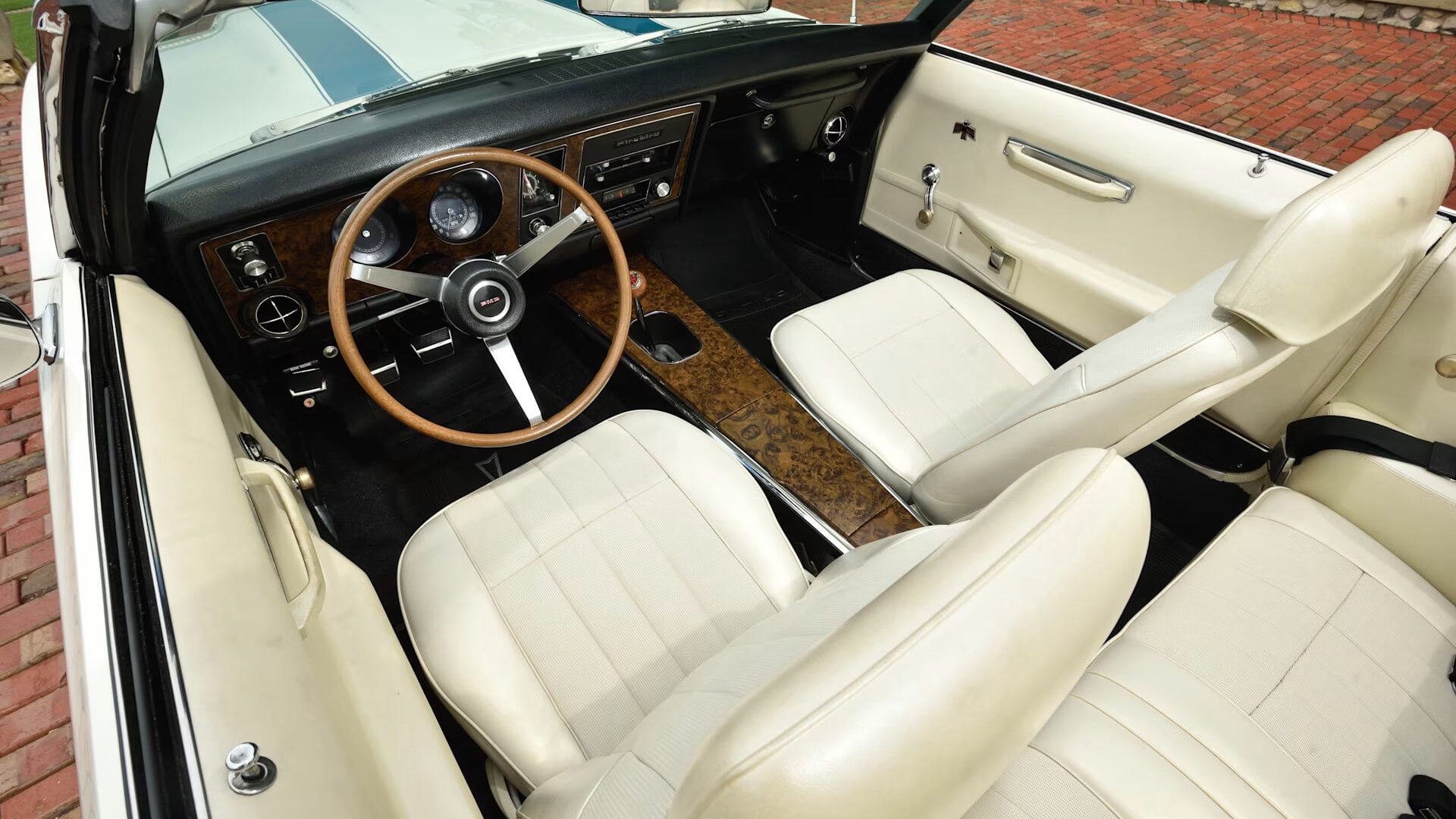
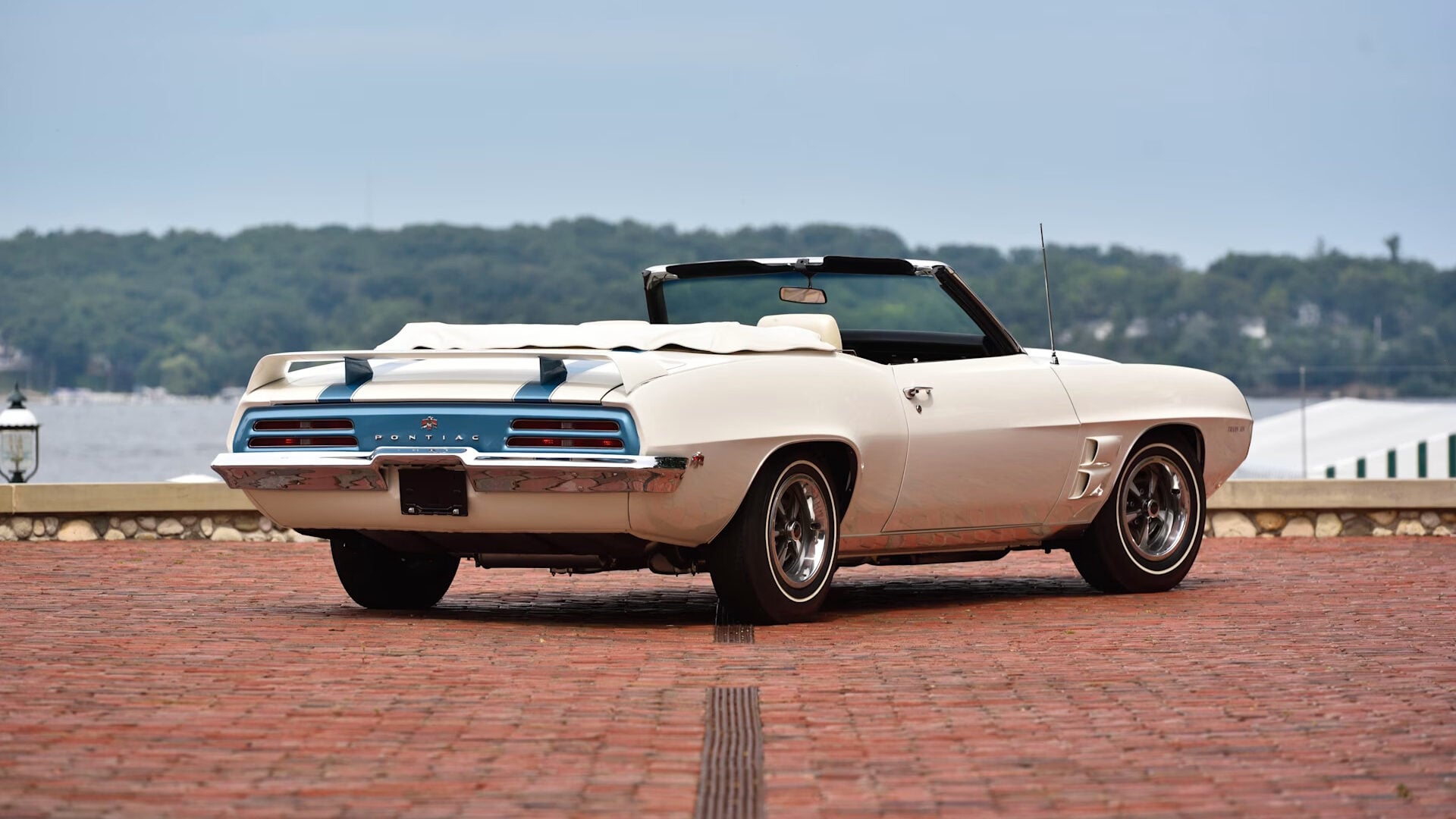
This example was the first of the four-speed convertibles produced and is identified by Mecum as the only triple-white example. Cameo White paint is paired with a white convertible top and Code 217 Parchment Custom interior, alongside the Trans Am’s distinctive blue graphics.
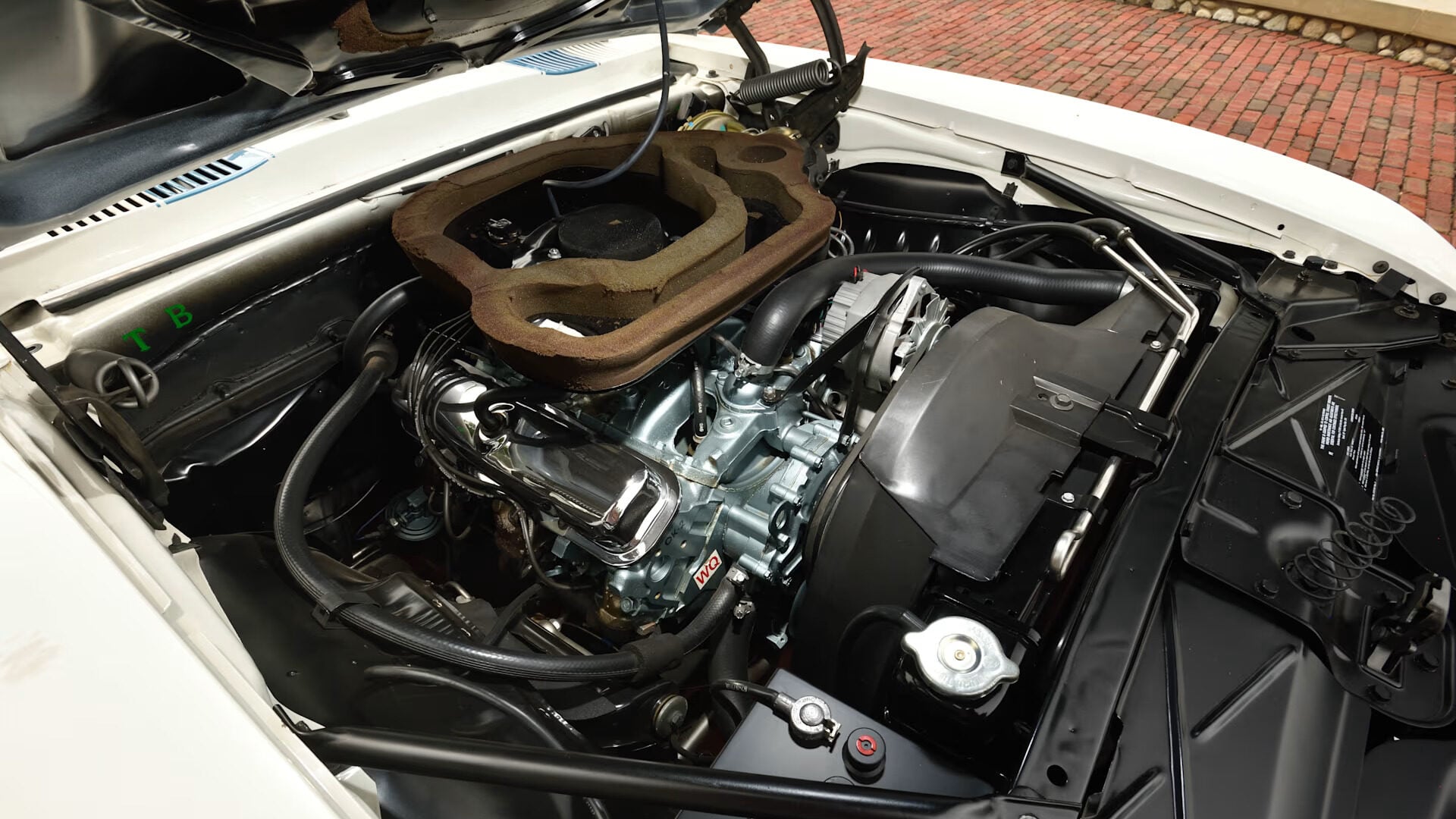
Power comes from a 400-cubic-inch Ram Air III V8 rated at 335 horsepower. Other equipment includes Rally II wheels, a console, walnut shift knob, AM radio, tinted windshield, and Deluxe seatbelts with shoulder harnesses.
Its Story Began At Pontiac
Pontiac engineer Tom Goad originally ordered the Trans Am as a company vehicle, commonly known as a “brass hat” car. It entered company service in June 1969 before being invoiced to Pontiac’s Pittsburgh Zone office that December and eventually reaching Arnold Pontiac in Houston, Pennsylvania, in April 1970.
Robert Lauze purchased it on April 30, trading his 1967 Firebird and paying $3,295 for the Trans Am. Documentation discovered decades later showed that the Pontiac had accumulated 9,725 miles during its approximately 10 months of company use.
That paperwork resurfaced in Arnold Motor Company’s files in 2015 and included the original dealer invoice, bill of sale, and warranty transfer application. Combined with Pontiac Historical Services records, the documents provide an unusually detailed account of the car’s earliest years.
A Restoration Saved A Rare Trans Am
The convertible could easily have suffered a very different fate. During the 1970s, then-owner Ted Gallas contacted Hot Rod after the magazine discussed the rarity of Trans Am convertibles, revealing plans to race his example.
Hot Rod encouraged him to restore the Pontiac instead, and the car subsequently appeared in the magazine. Collector Dick Bridges acquired it in 1991 before commissioning Pontiac specialist Scott Tiemann to complete a concours-quality restoration, which was finished in 1994.
The Trans Am later passed through several respected collections and was displayed at the Floyd Garrett Muscle Car Museum. Mecum says it has traveled only 321 miles since its restoration.
A $1.9 Million Bid Wasn’t Enough
When the car appeared at Mecum Kissimmee in 2016, bidding climbed to $1.9 million. Remarkably, the offer failed to meet the reserve, and the Pontiac left without changing hands.
Now it is returning to Kissimmee as part of the F-Body Collection from Dana and Patti Mecum. No sale price is guaranteed, but its previous performance suggests the winning bidder may need to venture well into seven-figure territory.
For collectors seeking an early Trans Am, opportunities hardly get scarcer. With eight convertibles built, four four-speeds and only one triple-white example, January’s auction could establish a new benchmark for one of Pontiac’s rarest muscle cars.