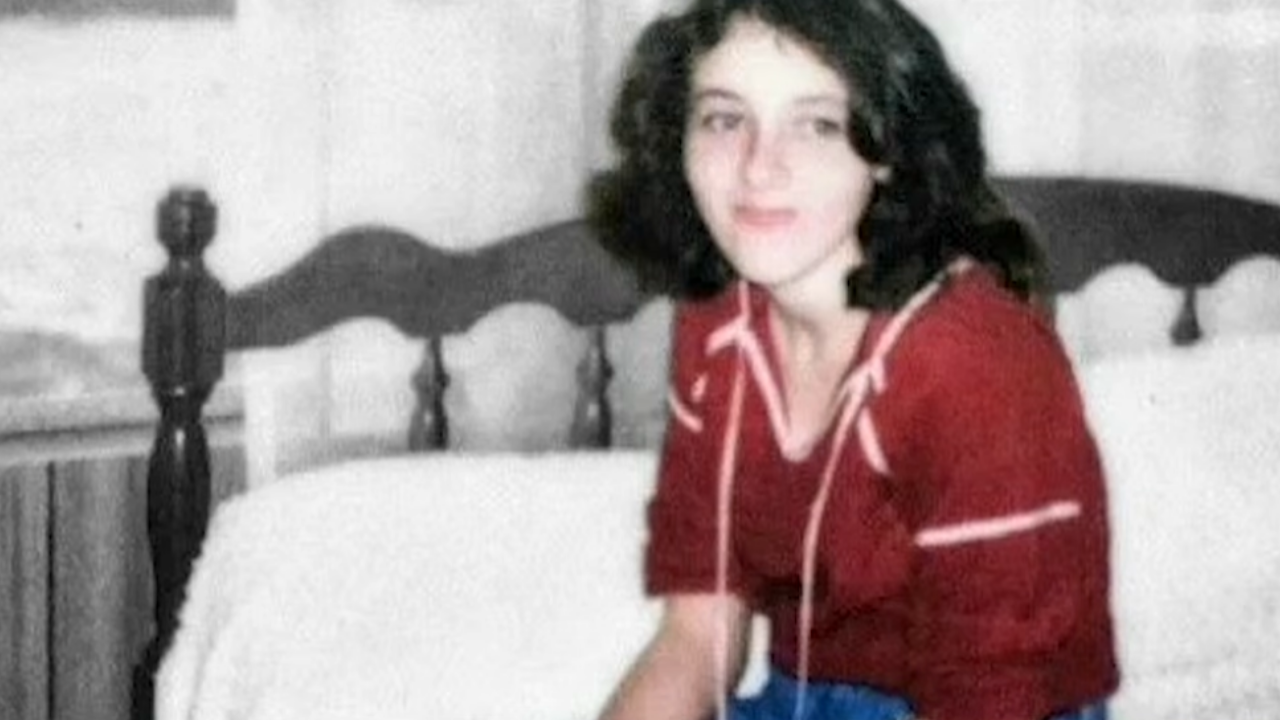
Keith Hunter Jesperson had already told investigators he killed her.
He had already pleaded guilty to her murder.
He had already been sentenced for it.
There was just one fairly major problem left with the case: Nobody knew who the victim was.
For more than three decades, the woman whose body was found beside a California highway existed in the case under the name Jesperson gave investigators: “Claudia.”
On Thursday, investigators finally gave her back her real one.
She was Lydia Jane Wade McWhorter, a 26-year-old woman from Texas.
Her Killer Had A Name For Her
McWhorter’s body was discovered Aug. 30, 1992, along Highway 95 about seven miles north of Blythe, California, according to the Riverside County District Attorney’s Office.
Jesperson, a long-haul truck driver who became known as the “Happy Face Killer,” later confessed to killing her.
When Riverside County cold-case investigators interviewed Jesperson again in 2023, he gave them a fairly detailed account of what he said happened.
According to prosecutors, Jesperson said he met the woman at a brake-check area along Interstate 15 south of Victorville in August 1992.
She wanted a ride toward Los Angeles. Jesperson said his route was taking him toward Arizona instead, and the pair eventually traveled through Cabazon and to a rest stop in the Indio-Coachella area.
Jesperson claimed they argued over money there and that he killed her inside his truck before driving east and leaving her body near Blythe.
There was one part of Jesperson’s story investigators could never nail down.
Her name.
He called her “Claudia,” but authorities had no way to establish whether she had ever called herself that.
McWhorter remained unidentified even after Jesperson pleaded guilty to her murder in Riverside County on Jan. 8, 2010.
He received 25 years to life for that killing and is serving multiple life sentences in Oregon.
So investigators were left with a strange kind of solved cold case.
They knew who the killer was.
They still didn’t know who he killed.
DNA Got Investigators Halfway There
The breakthrough did not happen in one clean DNA hit.
By 2024, advances in genetic genealogy had allowed the Riverside County Regional Cold Case Homicide Team to identify relatives connected to the victim through her biological father.
Investigators even determined who that father was.
But the paternal family could only get them so far.
The living half-siblings investigators located did not share McWhorter’s biological mother and apparently had no knowledge of the unidentified woman.
Authorities still needed to connect the other side of the family tree.
That is why investigators took the unusual step in January 2024 of publicly releasing what they knew about “Claudia.”
They described her as roughly 20 to 30 years old, approximately 5-foot-6 to 5-foot-7 and around 140 to 150 pounds. She had been found wearing a T-shirt with a motorcycle on it and had two small tattooed dots near her right thumb.
Investigators said the paternal side of her family had roots in Texas, while evidence suggested her maternal relatives could have connections to Louisiana or southeastern Texas.
They also released several facial approximations in hopes somebody might recognize her.
A Reconstruction Is Not A Portrait
One reaction to the renewed coverage has focused on those reconstructions — specifically, whether they actually looked much like McWhorter.
That misunderstands what forensic facial approximation is supposed to accomplish.
Forensic artists and anthropologists can use skeletal remains, biological information and other available evidence to estimate how an unidentified person may have looked in life. The National Institute of Justice describes facial approximation as one of the tools that can help establish the identity of unknown remains.
It is not a commissioned portrait.
The objective is to produce enough potentially recognizable features to generate leads from people who may have known the person.
And in McWhorter’s case, the pictures were only one part of a much larger identification effort.
The family tree ultimately became far more important.
The Other Side Of The Family Tree
Riverside County investigators said an investigative lead eventually brought them to a direct maternal relative of McWhorter.
From there, investigators established a possible genetic connection with her maternal family.
Then came the confirmation.
People reported that McWhorter’s sister, Brenda Burks, provided the cheek swab used to confirm the relationship.
The resulting DNA comparison established that the unidentified woman found beside Highway 95 nearly 34 years earlier was Lydia Jane Wade McWhorter.
That answer arrived just days before the anniversary of the discovery of her body.
It also answered a question her sisters had been carrying since McWhorter disappeared from Texas in the 1990s.
They had spent decades without knowing where she went.
Investigators now know.
The Last Nameless Victim
Jesperson murdered eight known women between 1990 and 1995.
His “Happy Face Killer” nickname came from smiley faces he drew on letters sent to the media while writing about his crimes.
That name has proved durable enough that some viewers encountering the case for the first time have confused Jesperson with the so-called “Smiley Face Killer” theory surrounding a number of drowning deaths.
They are not the same thing.
Jesperson is an identified and convicted serial murderer whose crimes have been established through criminal investigations and court cases.
The “Smiley Face Killer” is a controversial theory proposed to connect drowning deaths of young men in different locations. Authorities have not established the existence of a single unidentified serial murderer responsible for those cases.
McWhorter’s case needed no such theory.
Investigators knew precisely which killer they were dealing with.
They just spent 34 years trying to identify the woman he killed.
Lydia Gets Her Name Back
The identification closes the final case involving an unidentified victim among the murders for which Jesperson was convicted, according to Riverside County prosecutors.
The California Department of Justice Missing Persons DNA Program and the Lamar County Sheriff’s Office assisted the cold-case team.
Investigators have also turned their attention to McWhorter’s family.
The Riverside County District Attorney’s Office says its Division of Victim Services is working with them as they decide how they want to honor her and lay her to rest.
That may be the part of the investigation that matters most now.
For decades, practically everything publicly known about this woman came through the man who murdered her.
Where he said he met her.
Where he said they traveled.
How he said he killed her.
Even the name investigators used for her came from him.
Now it doesn’t.
Her name was Lydia Jane Wade McWhorter.