Houston police officers are more than 1,000 miles from Lucas County, Ohio, but their searches showed up in the county’s license plate camera records more often than those of any other outside agency.
An analysis by ABC13’s 13 Investigates found that the Houston Police Department accounted for more than 71,000 entries in Lucas County’s Flock Safety audit logs during a 30-day period between June and July 2026. Texas agencies collectively accounted for a sizable share of the activity, leaving county officials with a fairly reasonable question: Why is Houston showing up so often in northwest Ohio?
The answer may be less about Houston officers taking a sudden interest in Ohio license plates and more about how Flock’s enormous network works. It also helps explain why the cameras have become the center of a growing national argument over how much vehicle-location data police should be able to search.
Houston Tops the List 1,000 Miles Away
Lucas County Board of Commissioners President Pete Gerken requested data from the sheriff’s office showing how the county’s Flock system was being searched. The numbers caught his attention.
“Houston, there is a problem,” Gerken told ABC13.
Lucas County, home to Toledo and roughly 423,000 people, recorded more than 900,000 searches of its Flock system between June and July. ABC13 found that Houston police accounted for more than 71,000 searches during a 30-day span.
Houston wasn’t the only Texas agency appearing frequently. The Texas Department of Public Safety accounted for more than 13,000 searches, while the Harris County Sheriff’s Office accounted for more than 10,000. Altogether, agencies in the Houston area were responsible for about 16% of searches appearing in the Lucas County data.
That doesn’t necessarily mean Houston officers sat at computers and deliberately searched Ohio’s cameras 71,000 separate times.
The Harris County Sheriff’s Office told ABC13 that Flock offers agencies the ability to run searches through a national network of participating camera systems. The sheriff’s office could not confirm that this explained the numbers, but said it was the likely reason.
In other words, an officer searching the national network for a vehicle could generate an entry in Lucas County’s records because Lucas County participates in that network, even if the officer wasn’t specifically interested in Ohio.
Houston police did not make anyone available for an interview with ABC13 to explain its search activity.
What Exactly Are Flock Cameras Recording?
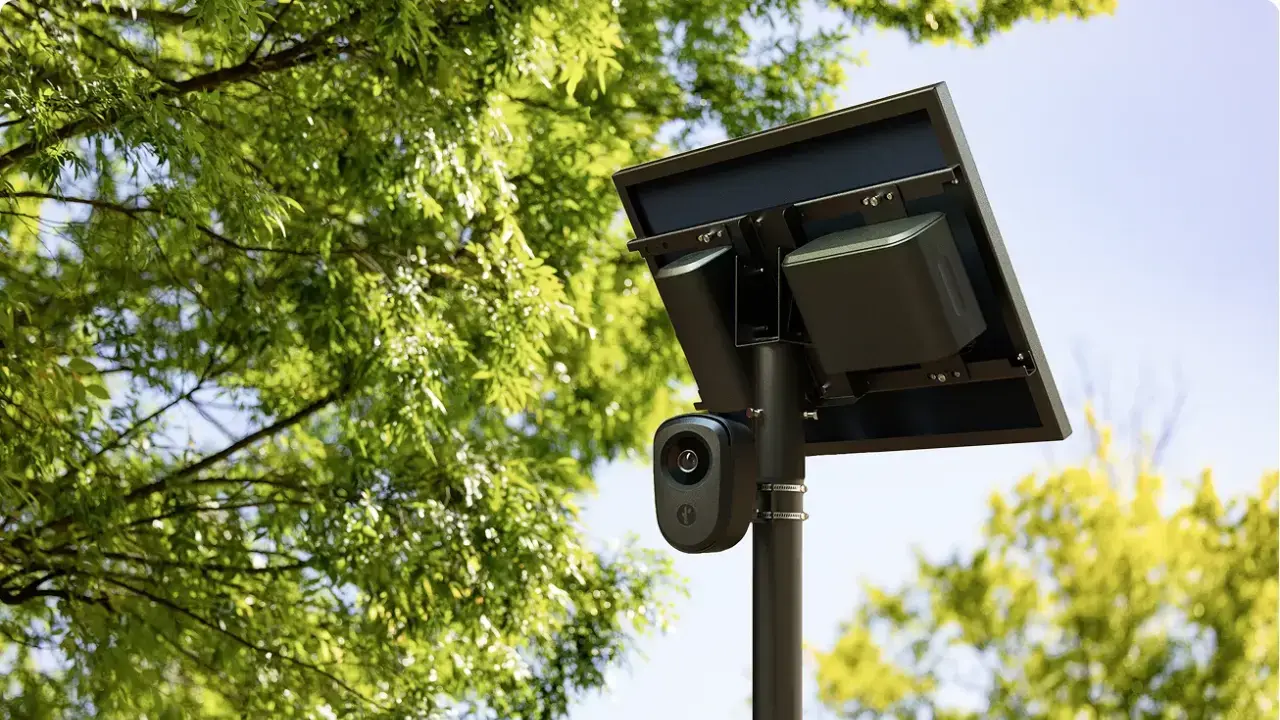
Flock’s automated license plate readers are different from red-light and speed cameras. They photograph passing vehicles and collect information that can be searched later by law enforcement.
The company’s network has grown far beyond individual police departments. Flock says its technology is now used in more than 6,000 communities across 49 states.
Participating agencies can share access beyond their own jurisdictions, turning cameras installed on roads in one community into pieces of a much larger searchable network.
That helps explain the Ohio records. It also raises a question that goes well beyond Ohio and Texas: When a community installs cameras to help its own police department solve crimes, how far should the resulting data travel?
Howard Henderson, director of the Center for Justice Research at Texas Southern University, told ABC13 that the growth of privately operated surveillance infrastructure has blurred the line between law enforcement and corporate surveillance.
“It allows law enforcement to circumvent public oversight and build a massive surveillance footprint on private property without a warrant,” Henderson said.
The Harris County Sheriff’s Office told the station that its Flock searches must be connected to ongoing criminal investigations.
There is another reason that safeguard is receiving scrutiny.
Police Have Used License Plate Readers for Personal Reasons

The possibility of officers misusing license plate-reader databases isn’t hypothetical.
A Washington Post investigation identified at least 50 law enforcement officers who had been charged with or accused of unauthorized use of license plate readers. Flock systems were involved in 46 of the cases the newspaper examined.
Twenty-six involved officers searching for wives, girlfriends, former partners, their new partners, or women the officers wanted to meet.
One particularly striking case surfaced in Florida this month.
Haines City Police Officer Christopher Goodson is accused of using Flock searches 717 times to track his estranged wife’s vehicle between September 2024 and June 2026, according to an affidavit reported by Gray Media.
Investigators said the woman wasn’t the subject of a criminal investigation. Goodson reportedly told a supervisor he had been checking her vehicle to determine where his children were when they were with her.
He now faces charges of official misconduct and an offense against users of computer systems.
Houston-area residents don’t have to look as far as Florida for an example.
In nearby Pasadena, Texas, police Sgt. Michael Palitz resigned while under investigation over accusations that he improperly used the city’s Flock system to monitor a female police officer. Pasadena City Council Member Emmanuel Guerrero told KPRC that investigators believed Palitz had used the system to “track and stalk a female officer.”
Palitz later surrendered his Texas law-enforcement license under an agreement in which prosecutors declined to pursue criminal charges, according to the Houston Chronicle.
Those cases don’t establish anything improper about the thousands of Houston-area searches appearing in Lucas County’s records. They do help explain why audit logs showing who searches these databases, and why, have attracted so much attention.
Flock Is Changing Its Rules
The scrutiny has reached Flock itself.
The company announced a series of changes in August intended to make unauthorized searches easier to detect and reduce the amount of vehicle-location data retained by default.
Flock said it is reducing its recommended default retention period for license plate data from 30 days to seven. Agencies will still be able to choose different retention periods where permitted by law.
The company is also making its Audit Assistance system mandatory. The tool is designed to identify unusual search patterns that could indicate misuse.
By the end of 2026, Flock says searches will also require a case code connecting them to an investigation. Emergency searches without one will be permitted, but flagged for review.
Flock CEO Garrett Langley acknowledged that relying on agencies to voluntarily use some of those protections had not been enough.
“We got this one wrong,” Langley told The Verge.
The 71,000 Searches May Say More About the Network Than Houston
The enormous number that caught Gerken’s attention remains notable, but the audit logs don’t necessarily show 71,000 deliberate attempts by Houston police to look into Lucas County.
They may instead show just how interconnected Flock’s system has become.
A police officer in Texas can search for a vehicle, and that query can reach cameras operated by participating agencies hundreds or thousands of miles away. From the perspective of the community that installed the camera, the resulting audit trail can make it look as though distant police departments have developed an extraordinary interest in local traffic.
That explanation makes the number less mysterious. It doesn’t make the questions surrounding access disappear.
As Flock’s network has expanded, communities are increasingly confronting not only whether they want license plate readers on their roads, but who should be allowed to search the information those cameras collect, how long it should exist, and what safeguards should stand between a legitimate investigation and someone with access to a very powerful search box.