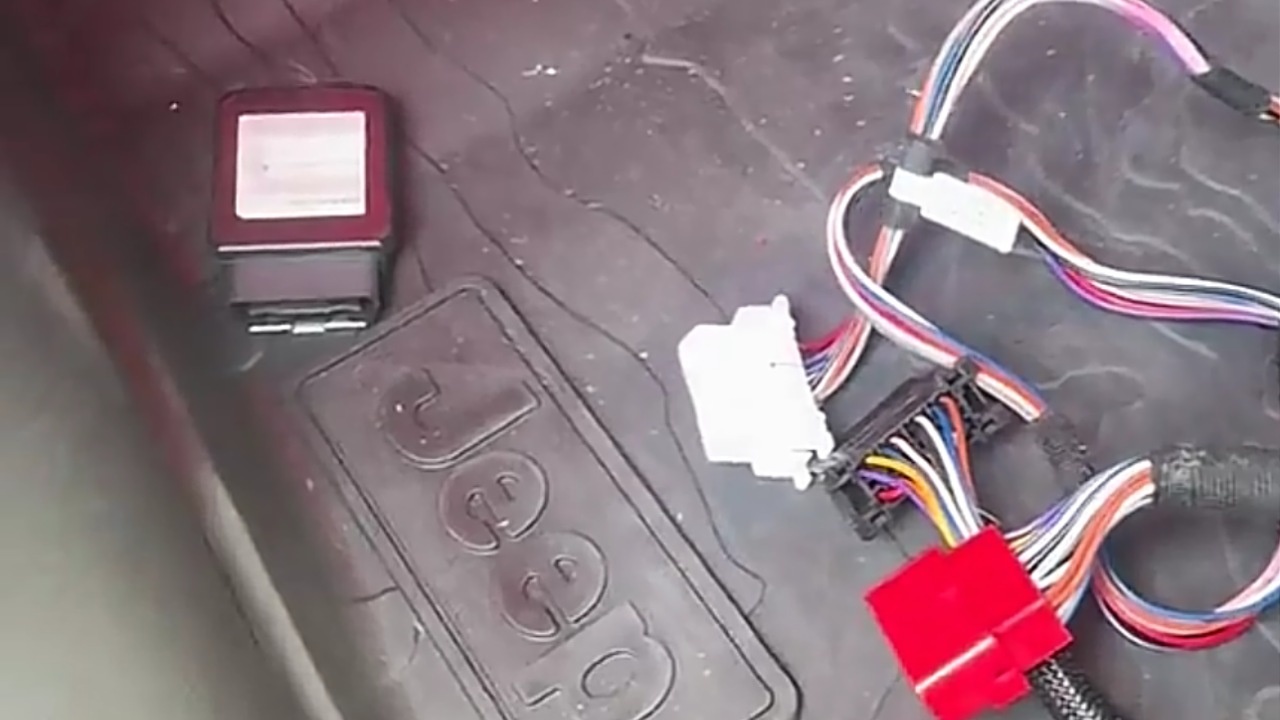
A Texas Jeep Gladiator owner says he made a disturbing discovery after years of watching his insurance premiums climb despite having no traffic tickets. While investigating whether his driving data might somehow be reaching insurers, he found an aftermarket tracking device connected beneath the dashboard of his truck.
The owner, who runs Down 2 Earth Roofing and Remodeling in Corpus Christi, shared the discovery on TikTok. He says he bought the 2023 Jeep Gladiator roughly two years earlier from a Dodge dealership and had become suspicious after hearing about automakers collecting driving information and providing it to third parties.
Under the dash, he found the Jeep’s original OBD diagnostic connector unplugged. In its place was a bridge-style connector leading to a small electronic module that had been installed in a way that made the diagnostic port appear largely factory-original.
What remains unproven, however, is the most important part of the story. The video does not establish that the dealership sold data from this particular device to an insurance company, nor does it demonstrate that the tracker was responsible for his rising premiums.
The Tracker Was Hidden Behind the OBD Port
@d2earthroofandremodeling #corpuschristi #361 #viralvideo #texas #boost ♬ original sound – down2earthroofingandremodeling
In the video, the owner shows the factory OBD-II connector disconnected behind the dashboard. A replacement connector occupies its normal position and runs through additional wiring to a small black module hidden nearby.
He argues that the device was not simply a payment-enforcement tracker commonly associated with some high-risk financing arrangements. According to him, the Jeep was financed through a conventional bank, with the dealership paying for the vehicle in full and his loan payments going to the lender.
Commenters claiming experience with GPS installations identified the wiring arrangement as a bridge connector, which allows another device to connect through the factory diagnostic circuit while leaving an accessible OBD port in place. Such hardware can be used for vehicle location and telematics, though the exact capabilities of the unit shown in the video have not been independently verified.
His Insurance Premiums Kept Increasing
The discovery followed years of insurance increases that the owner says he could not explain. He emphasizes that he had received no traffic tickets during that period, leading him to wonder whether another source of information was influencing his premiums.
Driving behavior can affect insurance pricing when insurers have access to telematics information such as acceleration, braking, mileage, speed, and other vehicle-use data. Specialty consumer reporting agencies can also collect information related to driving and insurance, which insurers may use when determining rates.
That does not prove such a system was involved in this Gladiator owner’s case. Insurance rates can change for many reasons unrelated to an individual’s driving record, and no evidence presented in the video connects the discovered module directly to his insurer.
Driver-Data Concerns Are Not Imaginary
The concern about automakers collecting and sharing driving information is well documented. In 2024, Texas Attorney General Ken Paxton sued General Motors, alleging the company unlawfully collected driving data from more than 1.5 million Texans and sold information to companies that could provide it to insurers.
Federal regulators separately pursued GM and OnStar over similar practices. The Federal Trade Commission alleged that GM collected precise location and driving-behavior information from millions of vehicles without adequately obtaining informed consent before sharing that data with third parties, including consumer reporting agencies.
In January 2026, the FTC finalized an order that, among other restrictions, bars GM for five years from providing consumers’ geolocation and driving-behavior data to consumer reporting agencies. The order remains in effect for 20 years.
There Is No Confirmed Jeep Connection Here

Those GM cases provide important context, but they should not be confused with what happened to this Jeep owner. Neither the TikTok video nor the available information proves that Jeep, Stellantis, the selling dealership, or an insurance company participated in a similar data-sharing arrangement involving his vehicle.
The module’s exact manufacturer, intended purpose, stored information, and data recipients have not been established. Claims that it could record conversations inside the cabin are also unsupported by the evidence shown.
Anyone concerned about what information insurers or other companies hold about them can request reports from relevant consumer reporting agencies. The Consumer Financial Protection Bureau maintains a list of specialty reporting companies and explains that consumers can obtain and dispute information held in their reports.
The Discovery Raises More Questions Than Answers
Finding an unfamiliar tracking module connected to your own vehicle would understandably raise concerns, especially when it was apparently installed without the owner’s awareness. In this case, the placement behind the OBD connector made the device particularly easy to overlook.
The more explosive claim — that the dealership was selling this driver’s information to his insurance company — is an allegation rather than an established fact. Determining that would require identifying the device, tracing where its data was transmitted, reviewing the purchase paperwork, and comparing that information with records held by the insurer or consumer reporting agencies.
The incident nevertheless arrives amid growing scrutiny of connected-car privacy and automotive data collection. Even without proof that this particular tracker affected his premiums, the discovery is another reminder that modern vehicles can generate and transmit far more information about their drivers than many owners realize.