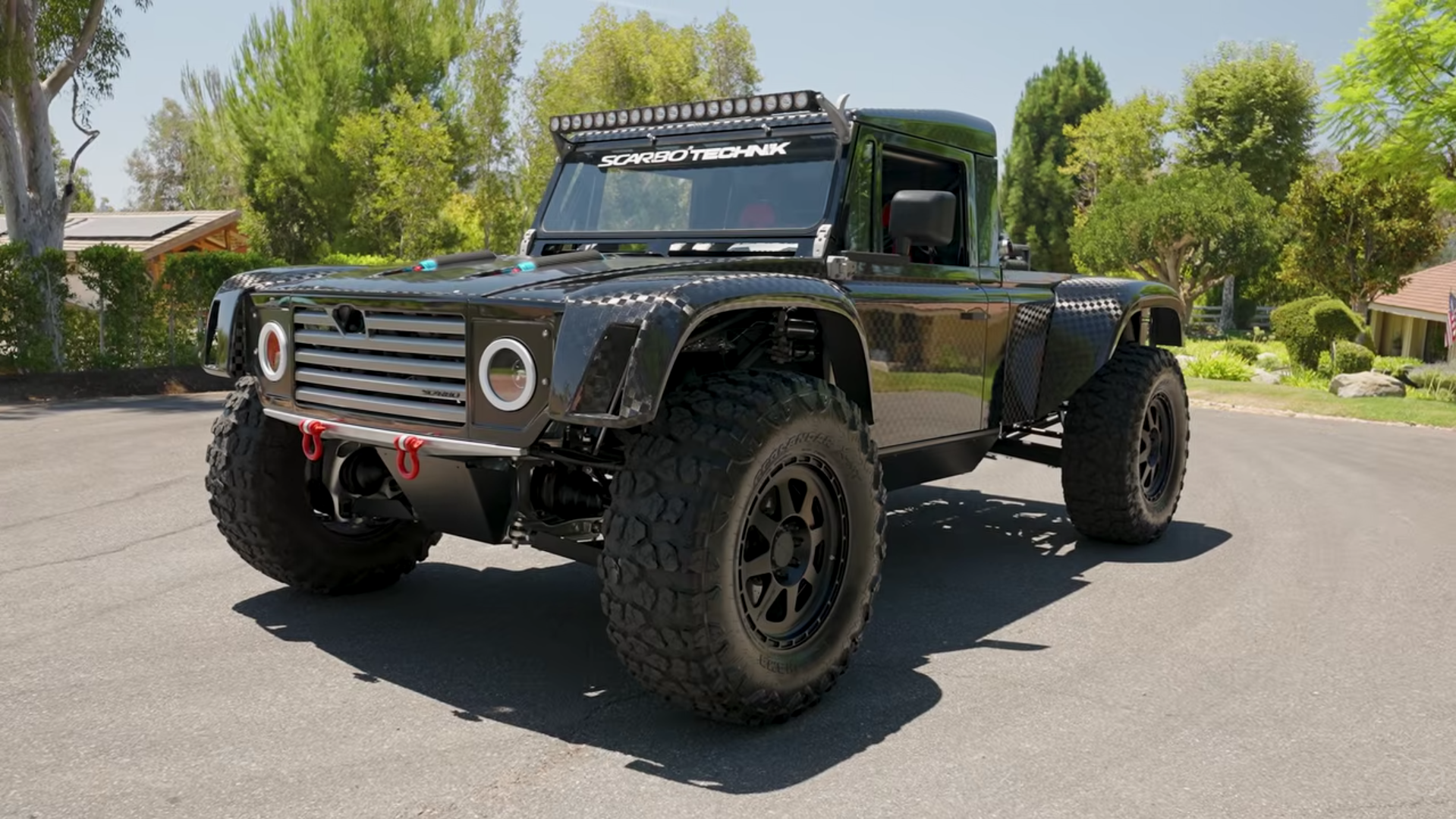
The Scarbo SV Rover may resemble a radically modified Land Rover Defender, but beneath its boxy body is something far more extreme. Scarbo Vintage designed it as a street-legal hypertruck blending trophy-truck suspension, rock-crawling ability, hypercar power, and extensive bespoke engineering.
Depending on specification, the SV Rover reportedly costs between roughly $1.5 million and $2.2 million. For that money, buyers get carbon-fiber bodywork, four-wheel steering, 30 inches of suspension travel, 40-inch tires, and a twin-turbocharged V8 producing up to 1,500 horsepower.
The project grew out of founder Joe Scarbo’s experience working on Volkswagen Motorsport’s Baja Race Touareg TDI program. After that effort ended, he began developing a personal vehicle around ideas he had wanted to explore further, gradually turning the concept into a machine capable of high-speed desert running, technical off-roading, and road use.
Autotopia LA recently spent time with the SV Rover and highlighted how little of it is conventional. Nearly every major system has been designed or heavily reworked specifically for the truck, helping explain why its price sits deep in exotic-car territory.
A 1,500-HP Mid-Engine V8
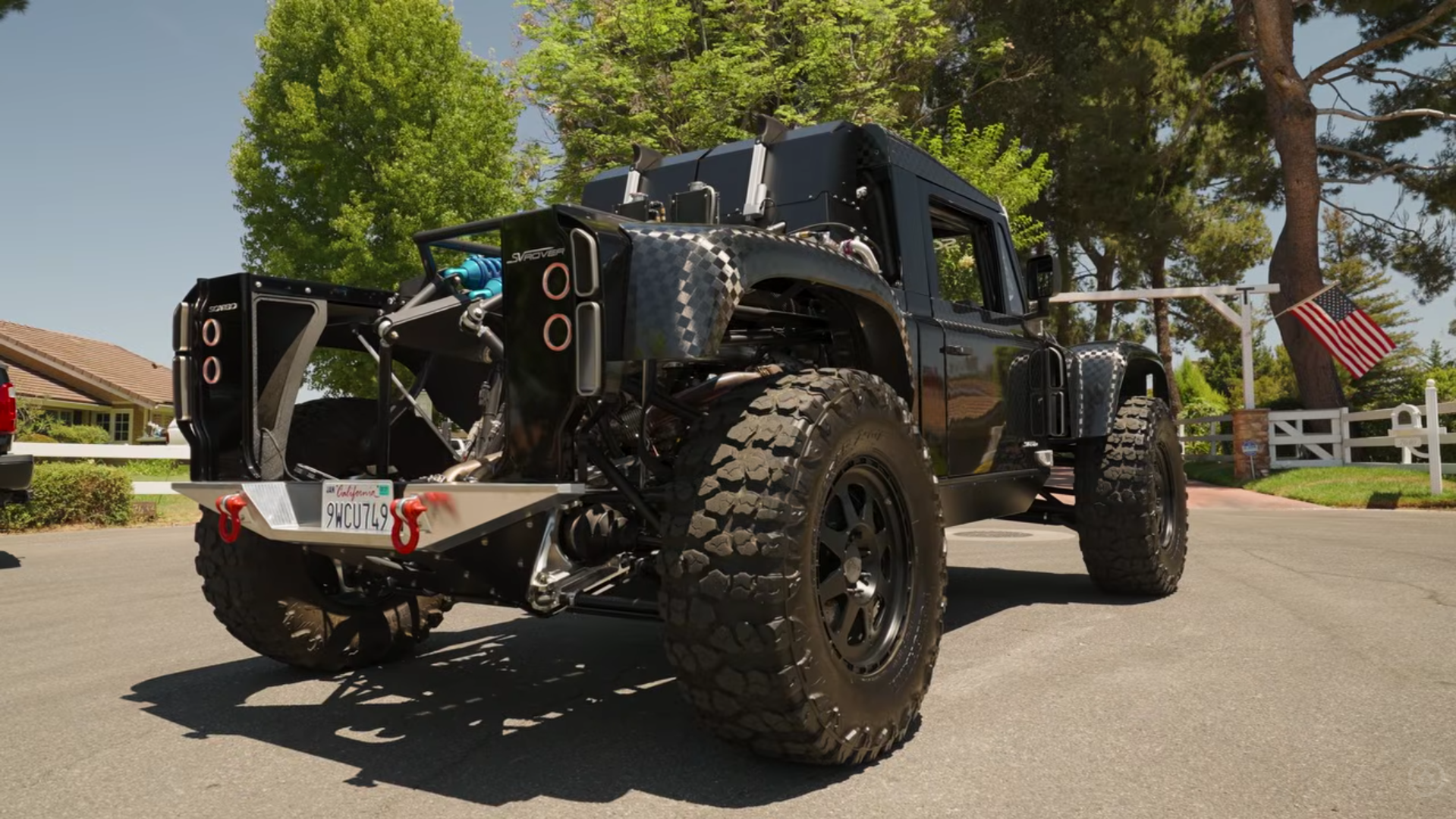
Power comes from a custom GM-based V8 mounted behind the front occupants in a mid-engine layout. The hand-built twin-turbo engine uses extensive billet hardware and produces around 1,500 hp on E85, while pump fuel output is approximately 1,260 hp.
A dry-sump lubrication system allowed Scarbo to position the engine about five inches lower, improving packaging and lowering the center of gravity. The V8 sends power through a GM 8L90 eight-speed automatic transmission that has been integrated with the truck’s custom electronics.
Scarbo selected the transmission for its broad spread of ratios, allowing the Rover to crawl slowly over technical terrain while still supporting high-speed desert use. The company says it can reach around 140 mph in eighth gear, although tire capability becomes a concern at those speeds.
Thirty Inches of Suspension Travel
The SV Rover features a remarkable 30 inches of suspension travel at both the front and rear. Packaging that much movement beneath relatively low fenders required Scarbo to develop mechanically articulating body panels.
When a tire approaches the fender during compression, a mechanical linkage moves the panel upward and out of the way. Nitrogen struts hold the fenders in their normal position, allowing the truck to maintain a cleaner profile without restricting wheel travel.
It rides on 40-inch tires fitted to 20-inch wheels, while carbon-ceramic brakes help reduce unsprung mass. Scarbo also designed many suspension and drivetrain components to be shared across multiple corners, simplifying spare-parts requirements during racing or remote off-road use.
Four-Wheel Steering Adds Another Layer
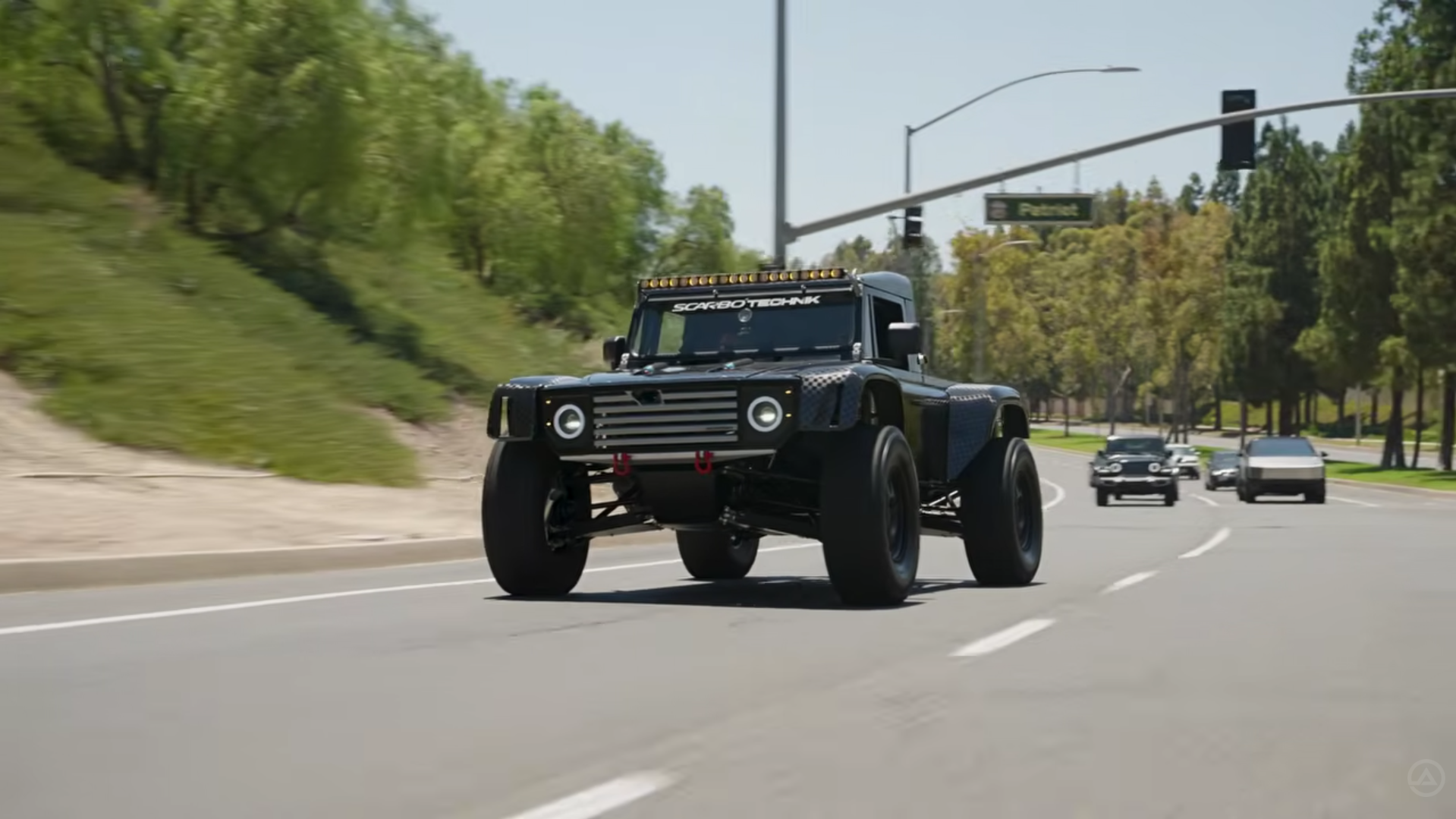
The rear-steering system is hydraulically controlled and offers several operating modes. Drivers can use conventional front-wheel steering, automatic four-wheel steering, or a manual setting that allows independent control of the rear wheels.
At low speeds, the rear wheels can steer significantly to improve maneuverability. At higher speeds, the programming can transition into a crab-style mode that helps the truck move laterally across loose terrain without dramatically changing its heading.
MoTeC and Bosch Motorsport electronics manage the engine, transmission, suspension functions, and rear steering. Scarbo suggested the truck may contain close to $100,000 worth of computers, wiring, and control hardware alone.
Carbon Fiber and Billet Everywhere
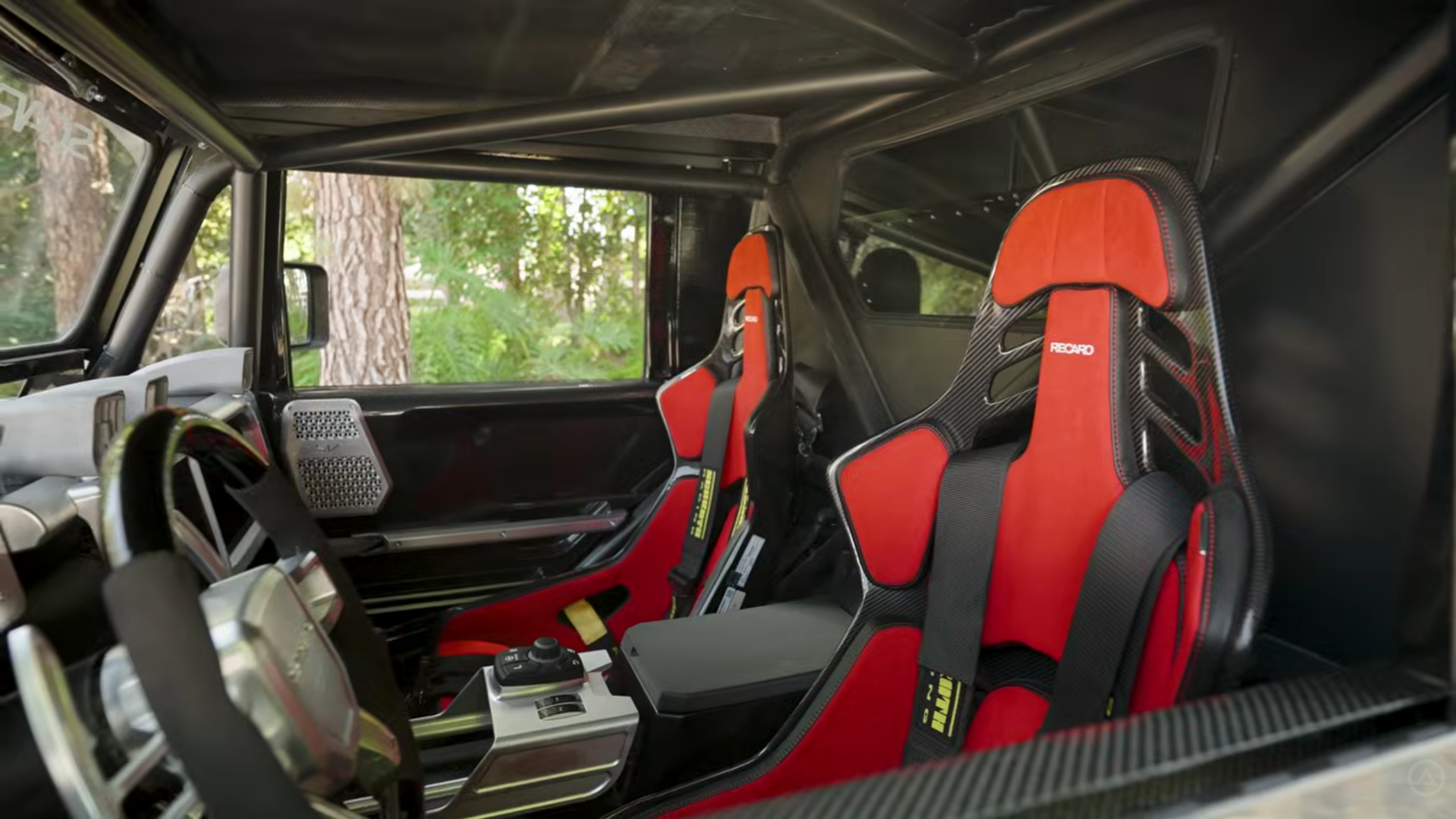
The body is made extensively from carbon fiber using a coarse spread-tow weave, while numerous structural and interior components are machined from billet aluminum. Scarbo estimates that around 15,000 pounds of raw aluminum may be consumed during production before machining removes most of the material.
Even relatively small parts receive unusual attention. The steering wheel is machined from multiple billet pieces, while the center console, differential housings, bumpers, and other components are similarly bespoke.
The cabin combines motorsport functionality with luxury touches, including premium seats, a custom digital display, navigation, media functions, and power windows. It is still a developmental machine, however, with Autotopia LA noting significant mechanical noise and heat from areas where final insulation had not yet been installed.
A Hypertruck Unlike Almost Anything Else
With massive tires, heavy-duty suspension, twin-turbo V8, and four-wheel-drive hardware, the SV Rover weighs around 5,000 pounds. Scarbo has focused heavily on removing unnecessary mass while maintaining the durability required for aggressive off-road driving.
Categorizing it is difficult because it borrows ideas from several very different types of vehicles. It has Defender-inspired styling, trophy-truck suspension travel, race-car electronics, rock-crawling ability, and the kind of horsepower normally associated with modern hypercars.
That combination also makes its seven-figure price easier to understand, even if it places the SV Rover well beyond the reach of most enthusiasts. Few street-legal trucks combine 1,500 hp, 30 inches of suspension travel, four-wheel steering, and this level of bespoke engineering in one package.