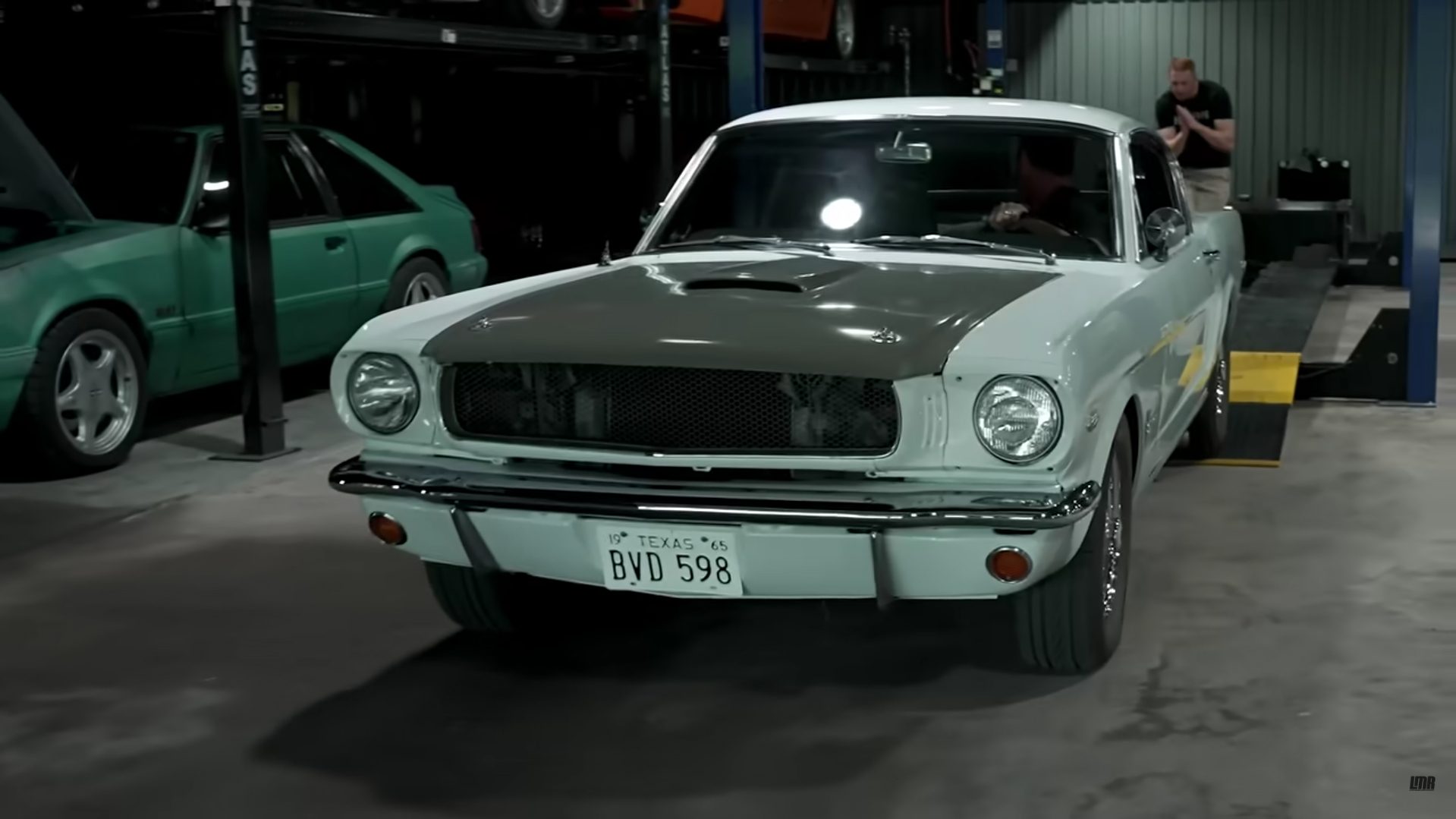
The 289 Hi-Po is already one of the most desirable engines Ford offered in the early Mustang, but one carefully rebuilt example has shown just how much potential was hiding in that compact small-block. Late Model Restoration recently strapped a genuine 1965 K-Code Mustang fastback to its chassis dyno, and the result comfortably exceeded what its owner expected.
The car belongs to Scott Springer, who purchased it from its original owner in 2018 with roughly 64,000 miles showing. Springer even calls the Mustang “Walter,” after the man who originally bought it.
K-Code Mustangs were serious performance machines by 1965 standards, pairing the high-output 289 with a four-speed Toploader transmission and heavy-duty 9-inch rear axle. Ford originally rated the engine at 271 horsepower, while Shelby’s modified version of the same basic package was advertised at 306 hp in the GT350.
Walter is no longer completely factory underneath the hood, although the upgrades deliberately preserve the character of a period hot-rodded K-Code. After receiving a professionally rebuilt and subtly upgraded engine, the Mustang put down nearly 289 horsepower at the rear wheels.
A Genuine K-Code Mustang
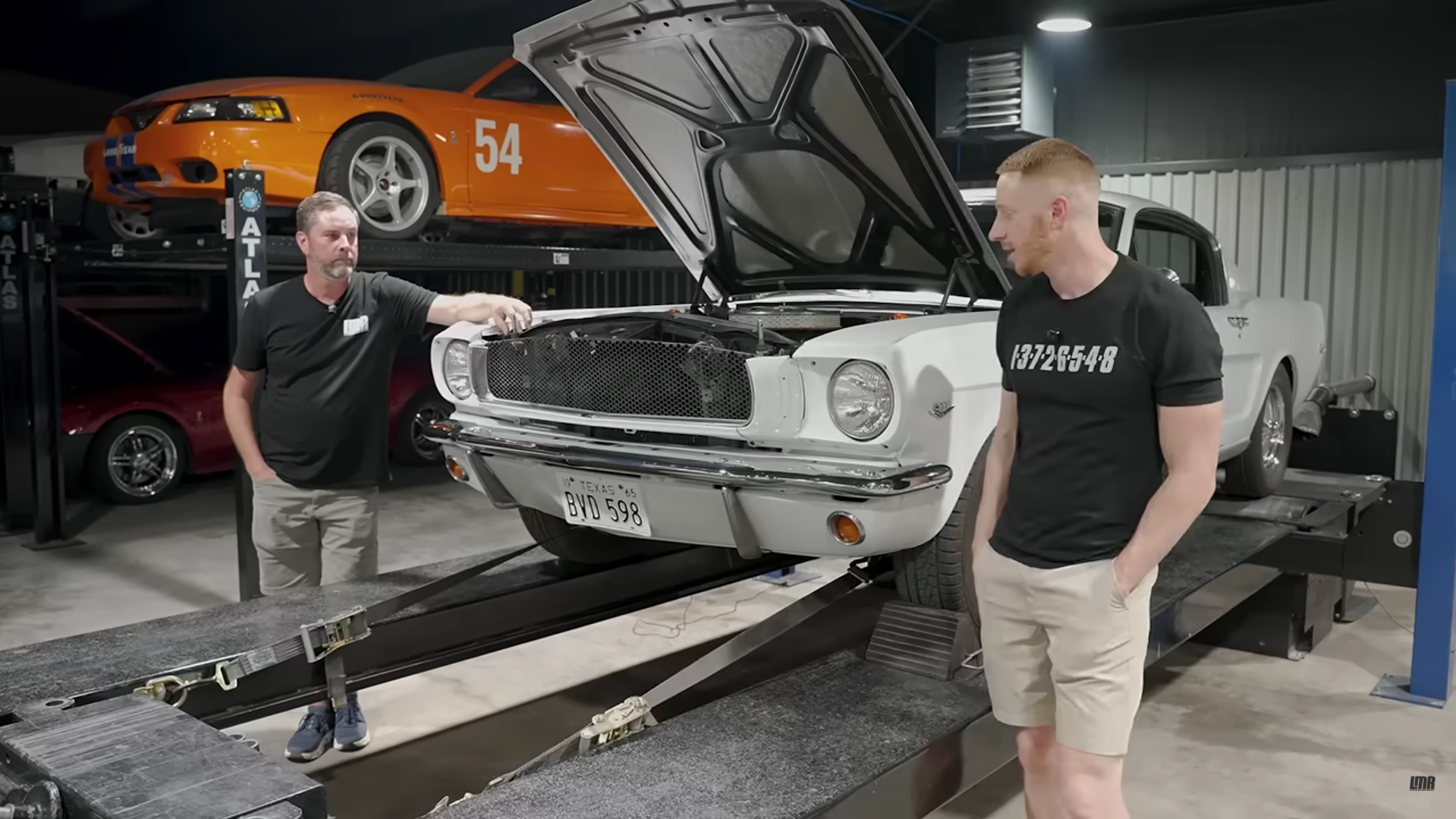
The “K” in K-Code refers to the fifth character of the Mustang’s VIN, identifying cars originally equipped with Ford’s high-performance 289 cubic-inch V8. These engines received performance-oriented hardware, including solid lifters, and were intended for drivers far more interested in RPM than air conditioning or effortless cruising.
Springer’s fastback also carries the sort of hardware that made the K-Code special, including the four-speed manual and 9-inch rear end. He notes that these were the basic cars sent to Shelby before being transformed into the original GT350, giving the K-Code an important place in early Mustang performance history.
The car was originally finished in Springtime Yellow, although the first owner later repainted it white following damage to the front portion of the body. Springer eventually wants to return it to its factory color, though he enjoys driving the Mustang too much to take it apart right now.
The 289 Was Rebuilt With Some Modern Tricks
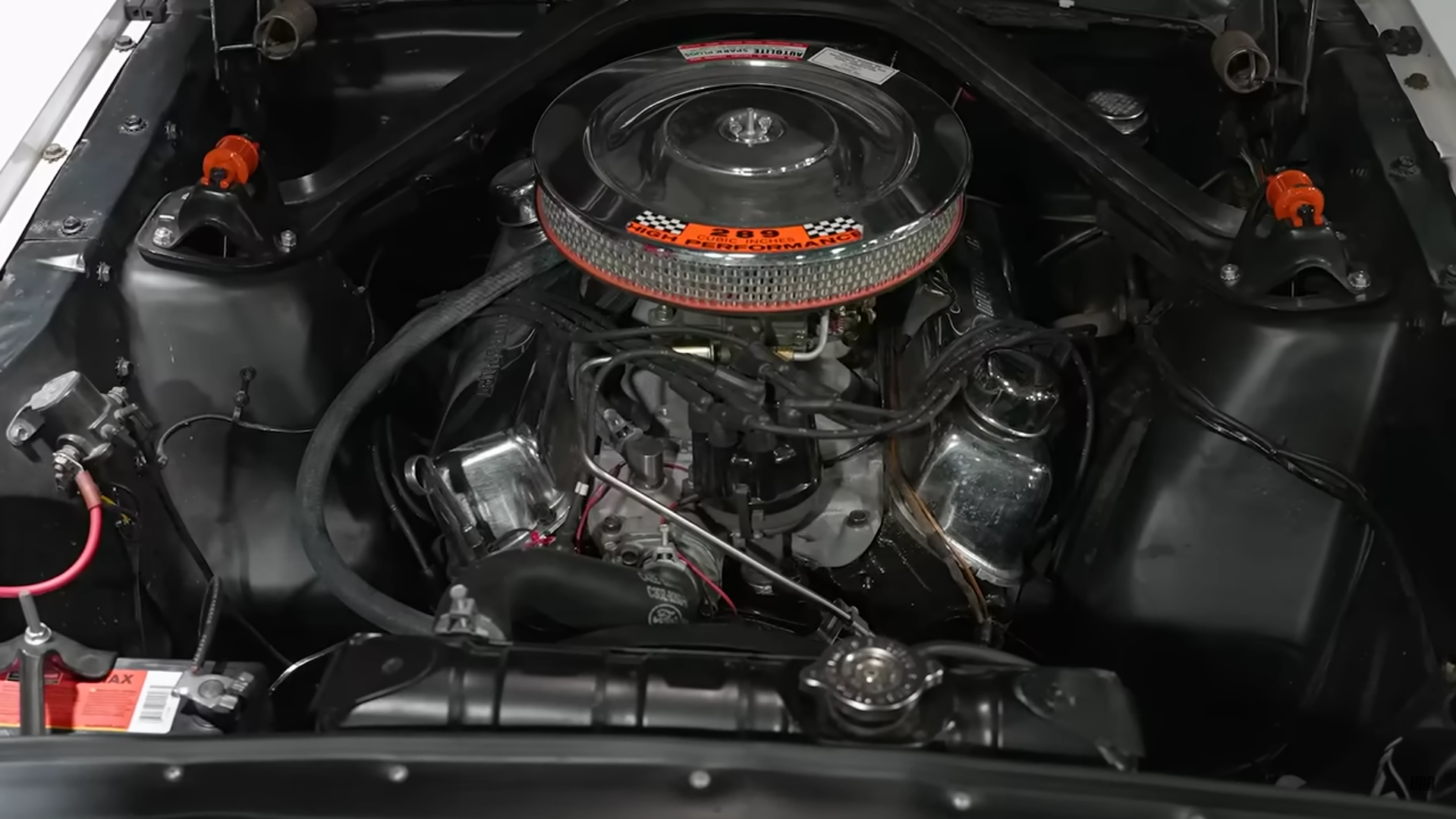
The original engine had grown tired by the time Springer acquired the Mustang, so it was removed and sent to BES Racing Engines for rebuilding. Rather than creating a completely modern powerplant, the builders retained the vintage character while introducing improvements that should increase durability and performance.
The rebuilt engine uses a solid-lifter roller camshaft, roller rockers, reworked original cylinder heads, and a one-piece rear main seal conversion. Displacement is now approximately 290 cubic inches, according to LMR, while the original intake and carburetor have been retained by Springer rather than permanently discarded.
For regular driving, the engine wears a Shelby Cobra-style intake along with JBA Tri-Y headers and a JBA side-exit exhaust system. Springer describes the changes as period-style “day two” modifications, similar in spirit to the upgrades an enthusiast might have made shortly after buying the car new.
The Dyno Numbers Were Surprisingly Strong
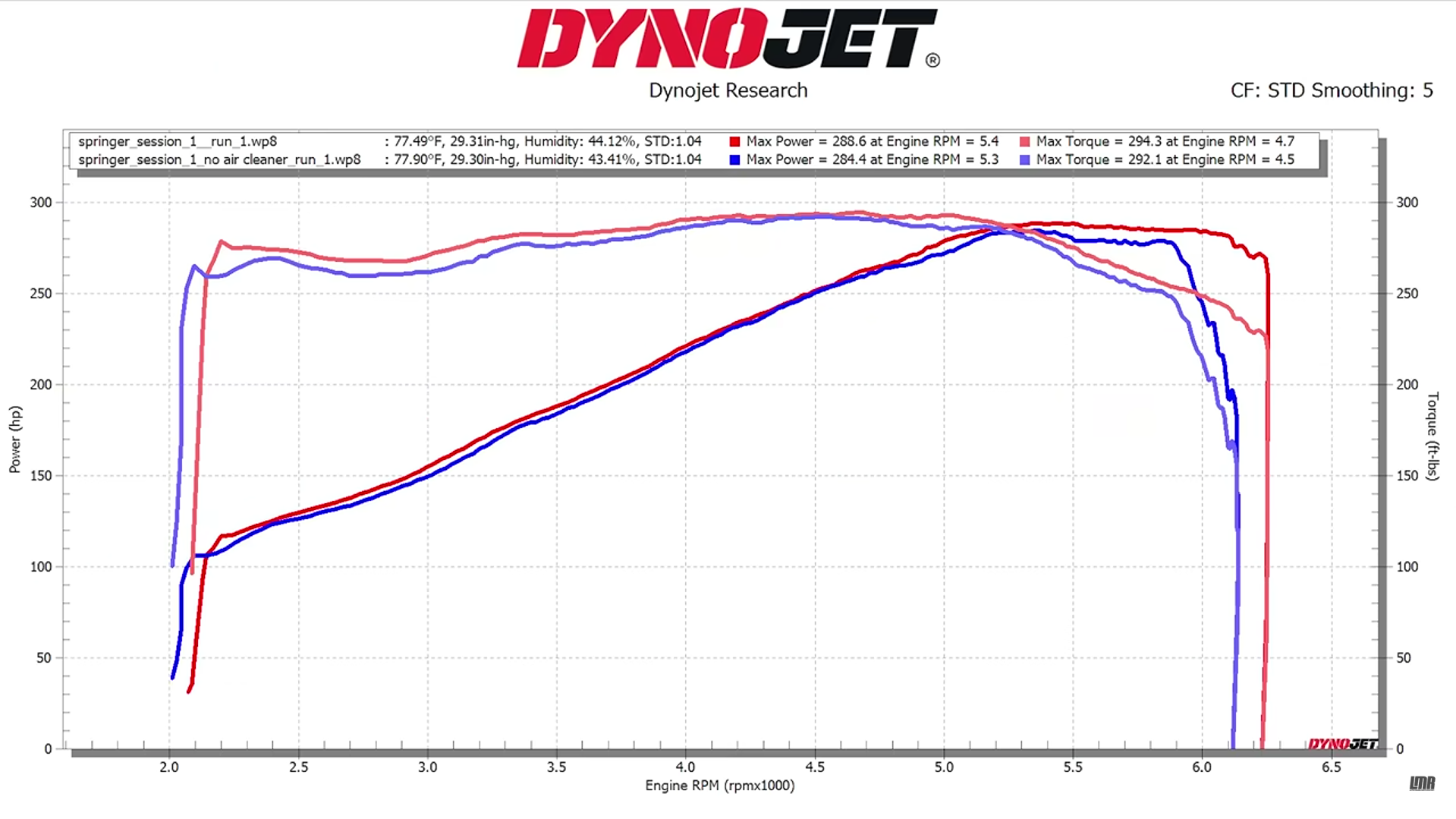
LMR performed the chassis dyno pull in fourth gear, giving the Toploader’s direct 1:1 ratio the job of transferring power through the rear axle. The Mustang was running 93-octane fuel and wearing 15-inch wheels during testing.
On its first pull, the Mustang produced 288.6 horsepower at 5,400 rpm and 294.3 lb-ft of torque at 4,700 rpm at the rear wheels. Springer admitted that figure was higher than he had expected, particularly considering the old-school drivetrain and relatively restrained nature of the engine build.
The team removed the air cleaner for the second run to see whether additional airflow would help. Surprisingly, output slipped slightly to 284.4 hp and 292.1 lb-ft, with LMR ending the pull early after hearing a slight breakup rather than risking unnecessary stress on the vintage Mustang.
Nearly 290 Horsepower At The Tires
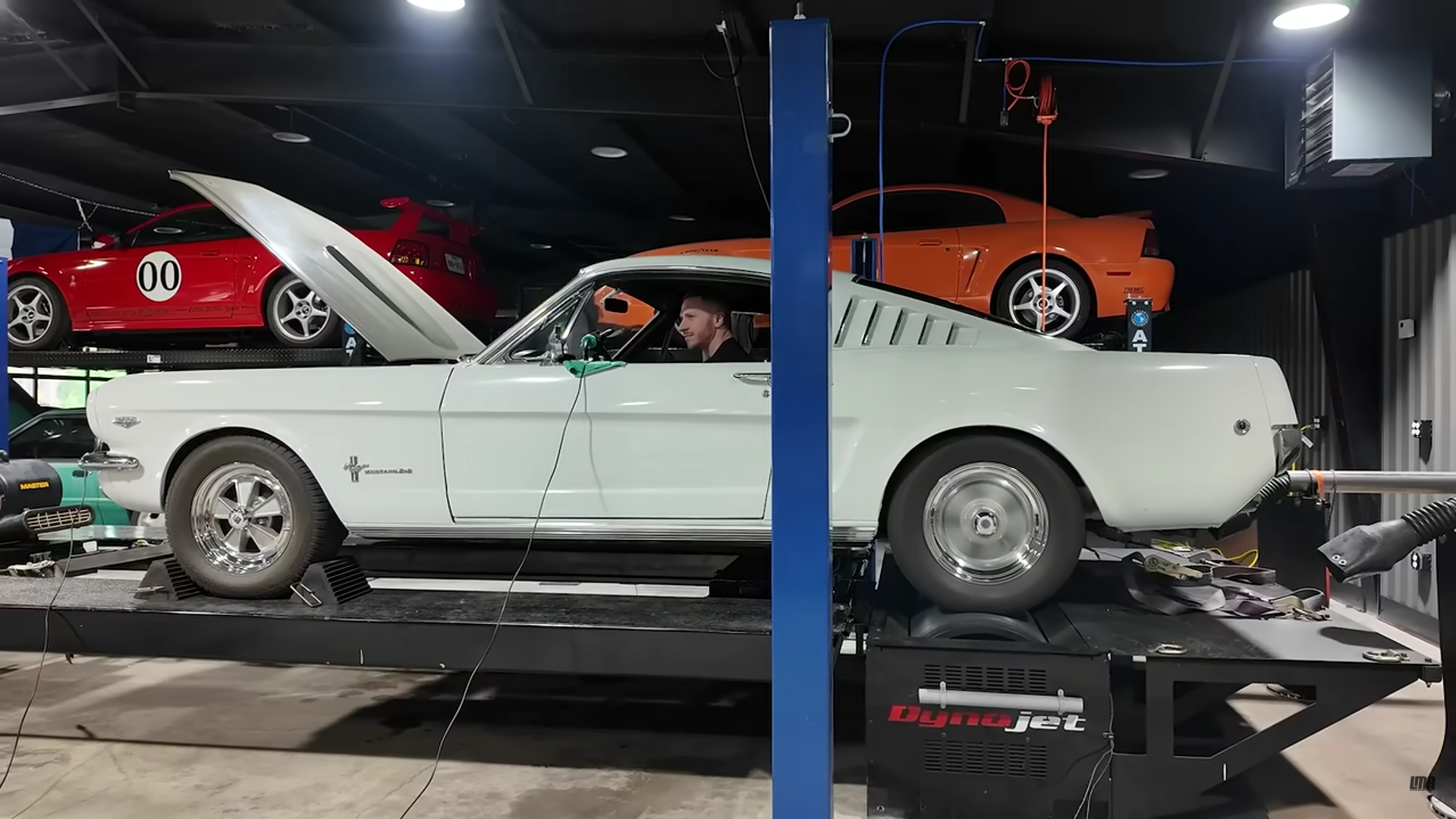
Previous engine-dyno testing reportedly showed roughly 356 horsepower at the flywheel, which makes the chassis result especially useful for examining drivetrain losses. LMR calculated that approximately 19 percent of the engine’s output disappears through the transmission, driveshaft, rear axle, and other rotating components before reaching the tires.
That is somewhat greater than the commonly quoted 15-percent rule of thumb for a manual-transmission rear-wheel-drive car. Even so, 288.6 rear-wheel horsepower works out to nearly one horsepower per cubic inch at the tires, an impressive achievement for an engine that still follows a distinctly 1960s recipe.
Comparing the result directly with Ford’s original 271-hp claim isn’t especially useful because the rebuilt engine has several performance upgrades and the measurement methods are different. What the test does demonstrate is how capable the old 289 architecture remains when carefully rebuilt without turning it into something unrecognizable.
For Springer, that seems to be the ideal balance. Walter still looks, sounds, and drives like an early K-Code Mustang, only now it has enough power at the rear tires to eclipse the factory flywheel rating of the original Hi-Po engine.
Would you keep this K-Code Mustang exactly as it is, or return it completely to factory specification? Do you think the owner should repaint it in its original Springtime Yellow or preserve the white finish that has become part of its history? Let us know in the comments.