
It’s hard enough to find a cheap V8 Mustang, but sourcing one with a ProCharger already bolted to the engine, a manual gearbox, and enough old-school modifications to hint at serious power is a whole other kettle of fish.
Still, that is exactly what The Backspeed Boys YouTube channel stumbled across when the team bought a neglected 1994 Ford Mustang GT for just $3,500. The car had reportedly been off the road since 2012, looked rough from years of sitting outside, and ran badly enough that it needed to arrive on a tow truck.
The challenge was straightforward: keep the total budget around $4,000 and turn the broken Mustang into a running, burnout-capable muscle car within 72 hours. Considering the car’s unknown history, questionable wiring, ancient modifications, and high idle, there was plenty that could have gone wrong.
What made the deal irresistible was what sat under the hood. The 5.0-liter V8 was already equipped with an older ProCharger centrifugal supercharger setup, headers, a GT40 intake, upgraded ignition hardware, and several other period performance modifications that suggested the Mustang had once been a seriously quick street car.
A $3,500 Mustang With A Lot Of Mystery
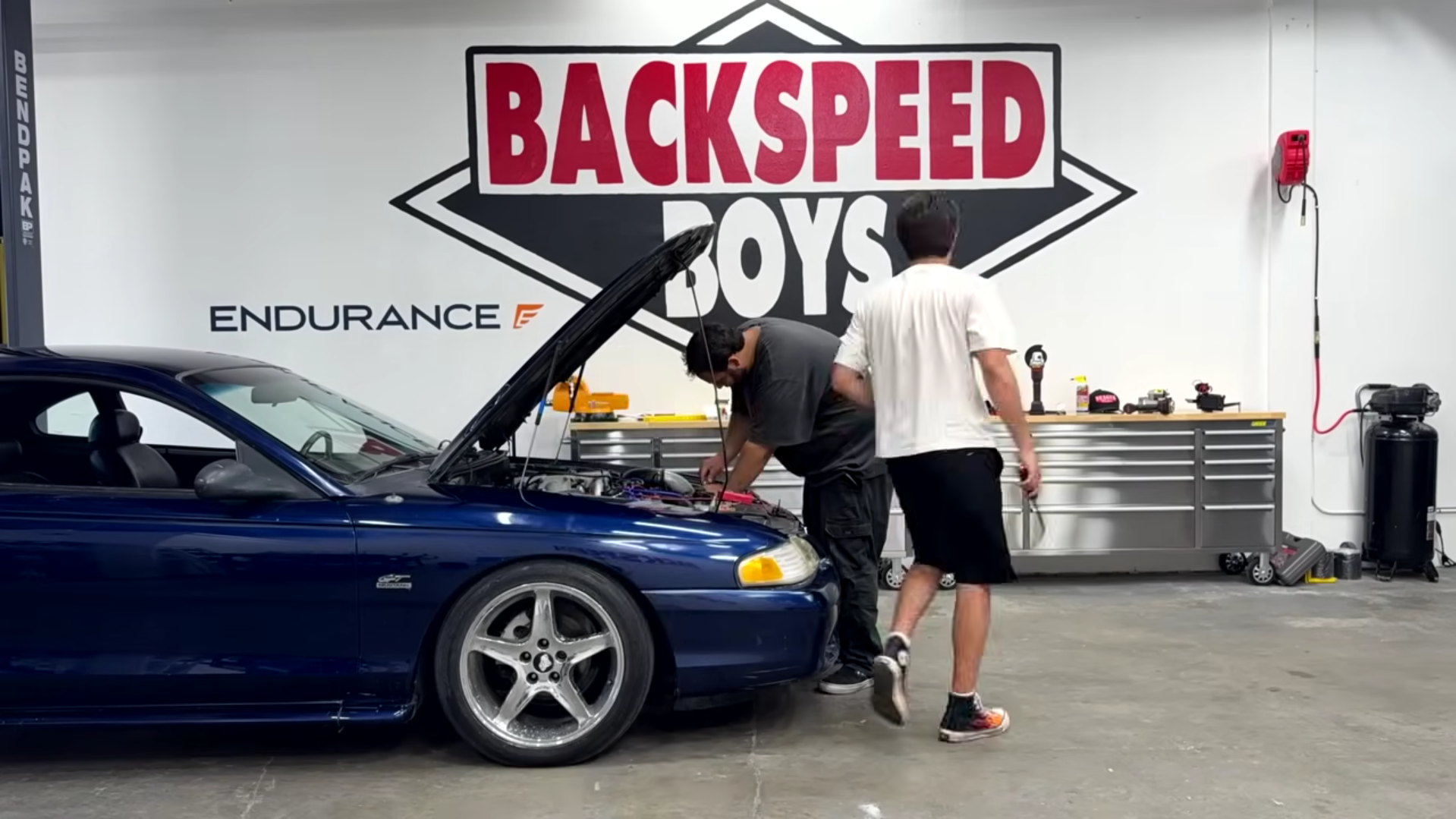
The car’s condition reflected its long period of inactivity. White residue covered much of the exterior, various pieces of interior trim were loose, wiring was scattered throughout the cabin and engine bay, and the trunk-mounted battery looked anything but professionally installed.
Still, the Mustang cleaned up surprisingly well. Its metallic blue paint was imperfect but presentable, while the leather interior had survived considerably better than expected.
The paperwork revealed another interesting detail: this GT originally left the factory with an automatic transmission. At some point during its life, somebody converted it to a manual, making the current configuration even further removed from stock.
Once started, however, the main problem became obvious. The engine idled at roughly 2,000 rpm and fell flat when the throttle was applied, making the car effectively undrivable.
The Problem Looked Like A Massive Vacuum Leak
The team initially suspected unmetered air was entering the engine, so they connected a smoke machine to the intake system. That test quickly revealed a leak around the EGR system.
The leaking component was removed and replaced with a homemade block-off plate, but the Mustang continued to run badly. A second, more thorough smoke test exposed another leak beneath the intake manifold, eventually traced to a hardened PCV vacuum hose.
Replacing that line improved the system but still did not completely solve the high-idle problem. Attention then shifted toward the idle air control valve and throttle position sensor.
Testing the TPS with a multimeter finally produced the breakthrough. Instead of showing roughly one volt at closed throttle and rising smoothly toward five volts as the throttle opened, the old sensor was providing incorrect readings.
A replacement cost only around $20. Once installed, the engine’s behavior changed dramatically, with the idle finally dropping and throttle response returning to something resembling normal.
An Old Build Sheet Revealed Serious Modifications
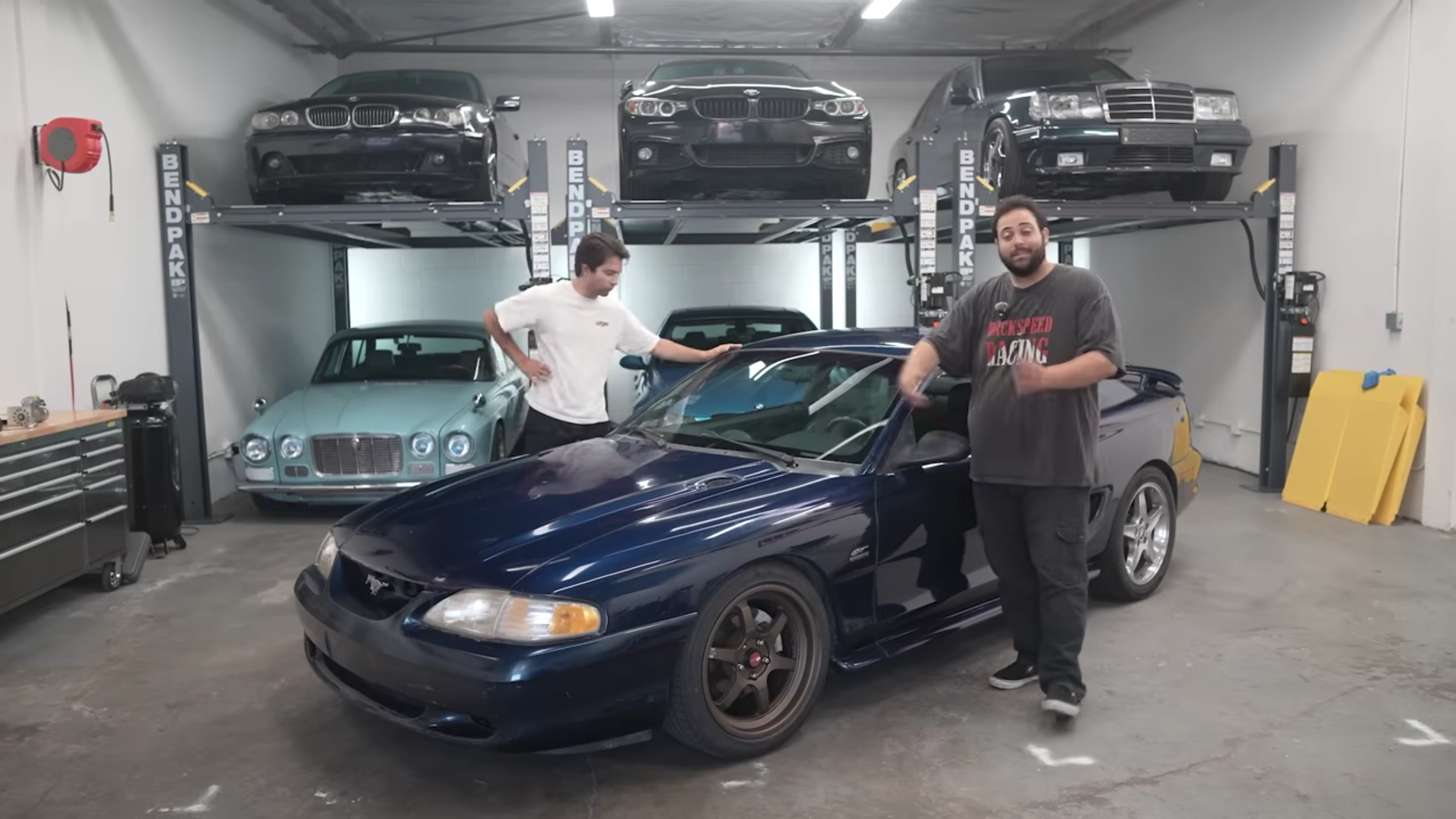
While replacing the Mustang’s worn serpentine belt, the team discovered paperwork documenting many of the car’s earlier upgrades. It painted a picture of a Mustang that had been extensively modified long before they purchased it.
The list included the ProCharger, GT40 intake, upgraded fuel pump, MSD ignition components, performance headers, upgraded front brakes, subframe connectors, a larger sway bar, and revised rear gearing. Several gauges and electronic controls had also once been installed.
Some of those parts had disappeared over the years, while others remained. The documentation also showed how much the car had changed since that particular owner had it, including the later manual-transmission conversion and different wheels.
The odometer now shows around 175,000 miles, while the old modification sheet referenced roughly 90,000 miles. That suggests the Mustang lived quite a life between its earlier performance build and being parked more than a decade ago.
72 Hours Later, It Was Doing Burnouts
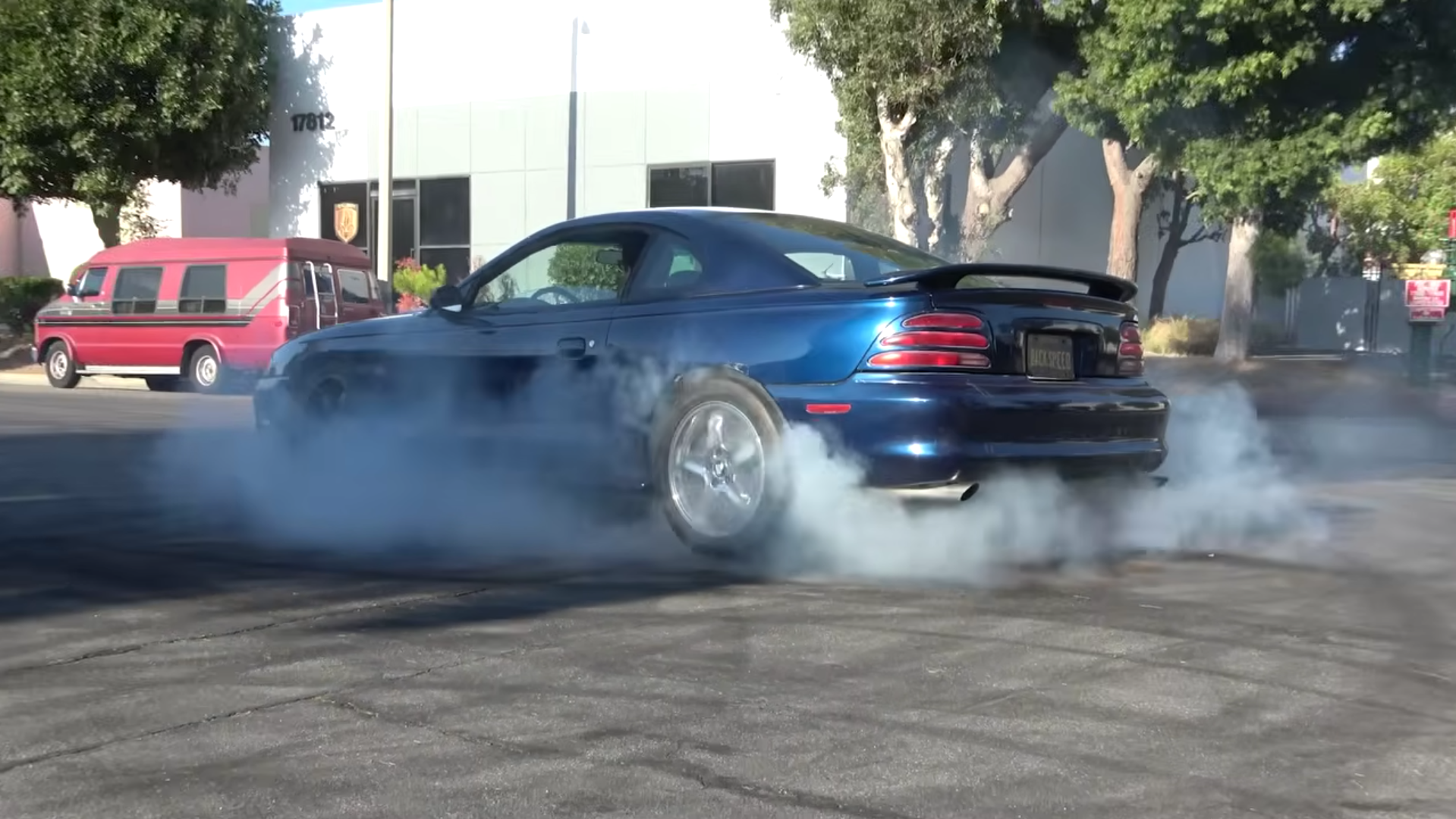
With the running problem solved, the team changed the engine oil and replaced the badly worn supercharger belt before putting the Mustang back on the road. The old ProCharger uses engine oil for lubrication, making fresh oil particularly important after such a long period of inactivity.
The first drive revealed a few minor issues, including a small power-steering leak, but temperatures and oil pressure remained healthy. More importantly, the ProCharger was making all the right noises and the Mustang finally pulled properly under throttle.
The channel describes the car as a roughly 500-horsepower build based on its combination of modifications, although no dyno test was performed during the episode to verify current output. What was verified was that the Mustang could run, drive, build boost, and roast its thoroughly aged rear tires.
From tow-truck delivery to a working supercharged manual Mustang in 72 hours, the project stayed remarkably close to its original $4,000 challenge. Considering the $3,500 purchase price and relatively inexpensive fixes that brought it back to life, it may be one of the better performance bargains the channel has found.
Would you gamble $3,500 on an abandoned supercharged Mustang with unknown history? How much power do you think this 5.0-liter GT is actually making today? Let us know in the comments.