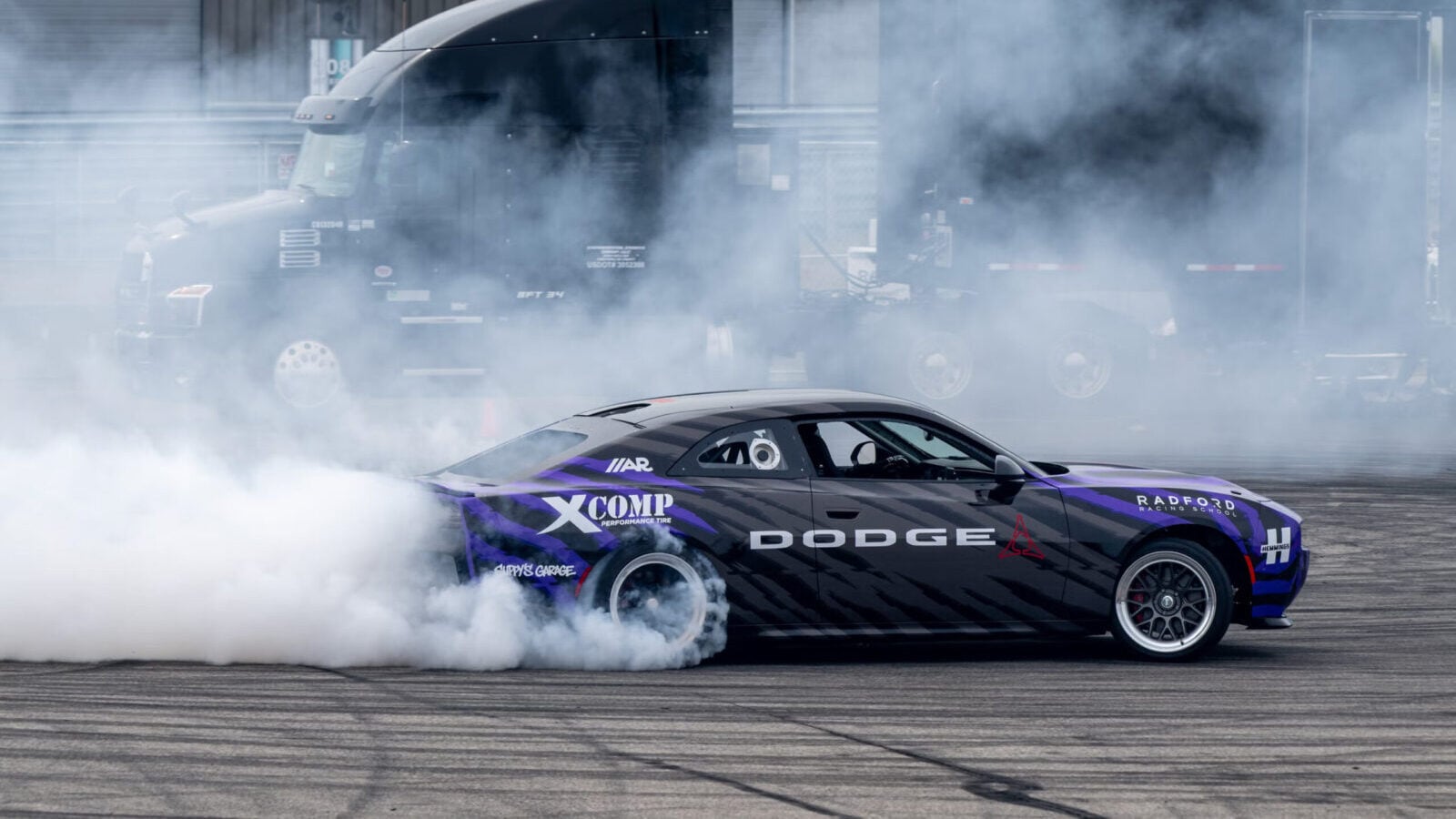
Dodge has taken the new Sixpack-powered Charger in a very different direction, turning two production-based Scat Packs into 750-horsepower drift cars with manual transmissions and rear-wheel drive. According to the Stellantis announcement, the pair was developed with Hemmings and Suppy’s Garage for a debut at Roadkill Nights.
The builds are called BOOST and RPM, short for Rapid People Mover. BOOST is the two-door competition-focused coupe, while RPM is a four-door drift taxi designed to carry passengers during exhibition runs.
Both started life as 550-hp Charger Scat Packs powered by Dodge’s twin-turbocharged 3.0-liter Sixpack inline-six. From there, nearly everything beyond the basic engine architecture, body panels, and windshield was reworked for professional drifting.
The result is significant for another reason: these are the first manually shifted Sixpack Chargers. Dodge’s production cars use an eight-speed automatic, so fitting stick shifts required substantial custom engineering rather than a simple transmission swap.
750 HP And Two Different Turbo Setups
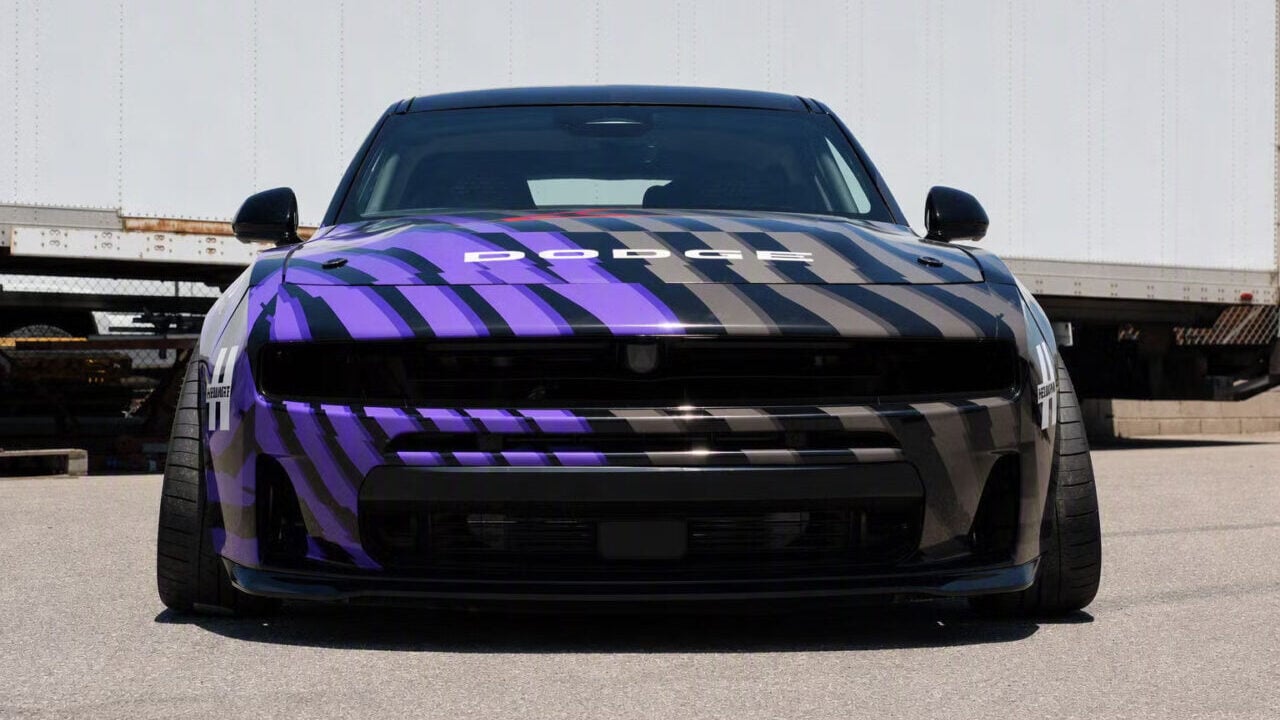
Although both cars target roughly 750 horsepower, they reach that figure in different ways. The BOOST Coupe abandons the factory twin-turbo system in favor of a high-output single-turbo arrangement developed with Turbosmart.
RPM keeps a twin-turbo configuration, although the setup has been heavily modified. Both cars also receive custom intake systems, bespoke intercoolers, race-fuel systems, and MoTeC engine management, while they run on C16 racing fuel.
Dodge describes the 750-hp figure as a conservative estimate. That represents a considerable jump over the production Scat Pack’s 550 horsepower and 531 lb-ft of torque.
Cooling was another major focus because drift cars spend long periods at high engine load with relatively little airflow. Both Chargers therefore use rear-mounted cooling systems intended to improve thermal management while also helping redistribute weight.
Dodge Finally Put A Stick Shift In The New Charger
The biggest departure from the road-going Sixpack may be found between the seats. Engineers converted both cars from the stock all-wheel-drive, automatic layout into dedicated rear-wheel-drive machines with competition manual transmissions.
Custom bellhousings, clutches, driveshafts, axles, and hubs were required to make the conversion work. Each Charger also gets a three-pedal setup and a hydraulic handbrake, giving the drivers the traditional controls expected in a serious drift car.
Power reaches the rear wheels through a Bulldog quick-change differential, allowing the team to rapidly alter gearing depending on the course. Extreme steering geometry provides the additional steering angle necessary to maintain control at large slip angles.
That means these cars are not previews of a factory manual Charger, at least based on anything Dodge has announced. They are heavily modified one-offs demonstrating what builders can achieve with the Sixpack platform.
Almost Nothing Inside Remains Stock
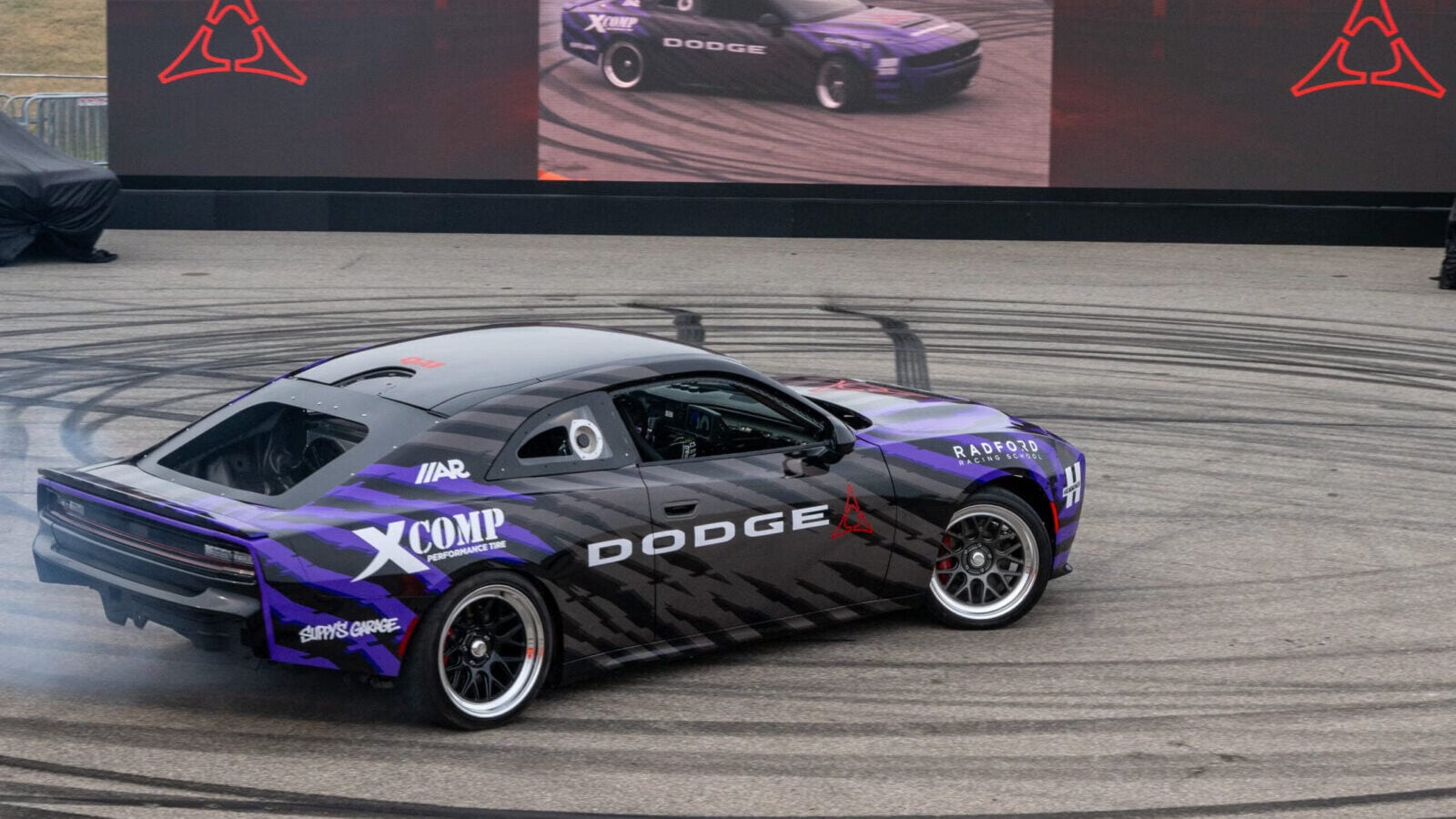
The road-car interiors have been stripped away and replaced with full motorsports equipment. Roll cages, containment racing seats, multi-point harnesses, simplified controls, and 12-inch MoTeC displays transform the cabins into proper competition environments.
RPM includes passenger safety equipment because its primary role involves giving demonstration rides. That makes the four-door layout useful for reasons extending beyond simply proving that a large sedan can drift.
Outside, both cars receive widened fenders to create clearance for the extreme steering angle and drift-oriented wheel setup. Custom hoods, hand-fabricated rear wings, revised taillights, and additional aerodynamic and cooling modifications further separate them from production Chargers.
American Racing wheels wrapped in X-Comp HP tires complete the setup. Their liveries also incorporate Dodge’s Purple Haze color, with BOOST getting a more aggressive drift-inspired design and RPM leaning into its passenger-ride mission.
They Were Built In Just 60 Days
Perhaps the most impressive part of the project is the development timeline. Dodge says the two Chargers went from concept to completed drift machines in only 60 days.
The project involved Hemmings programming director Mike Musto, builder Suppy Wejpanich, and professional drifters Corey Hosford and Micah Diaz. A nine-part video series documents the builds from initial concept through fabrication and testing.
The Chargers debuted around Roadkill Nights and are scheduled to make additional appearances at Gridlife at Laguna Seca in September and FuelFest in Arizona in December. Dodge says the cars were engineered for professional drifting, exhibitions, and potentially competition use.
For enthusiasts still getting used to the idea of a Charger without a HEMI V8, these builds offer a very different argument for the new platform. A 750-hp straight-six, manual transmission, rear-drive conversion, and clouds of tire smoke may not recreate the old Charger formula, but it certainly proves the new one has room for some serious experimentation.
Would you want Dodge to offer a factory manual transmission in the Sixpack Charger? Which build would you rather drive, the two-door BOOST Coupe or the four-door RPM drift taxi? Let us know in the comments.