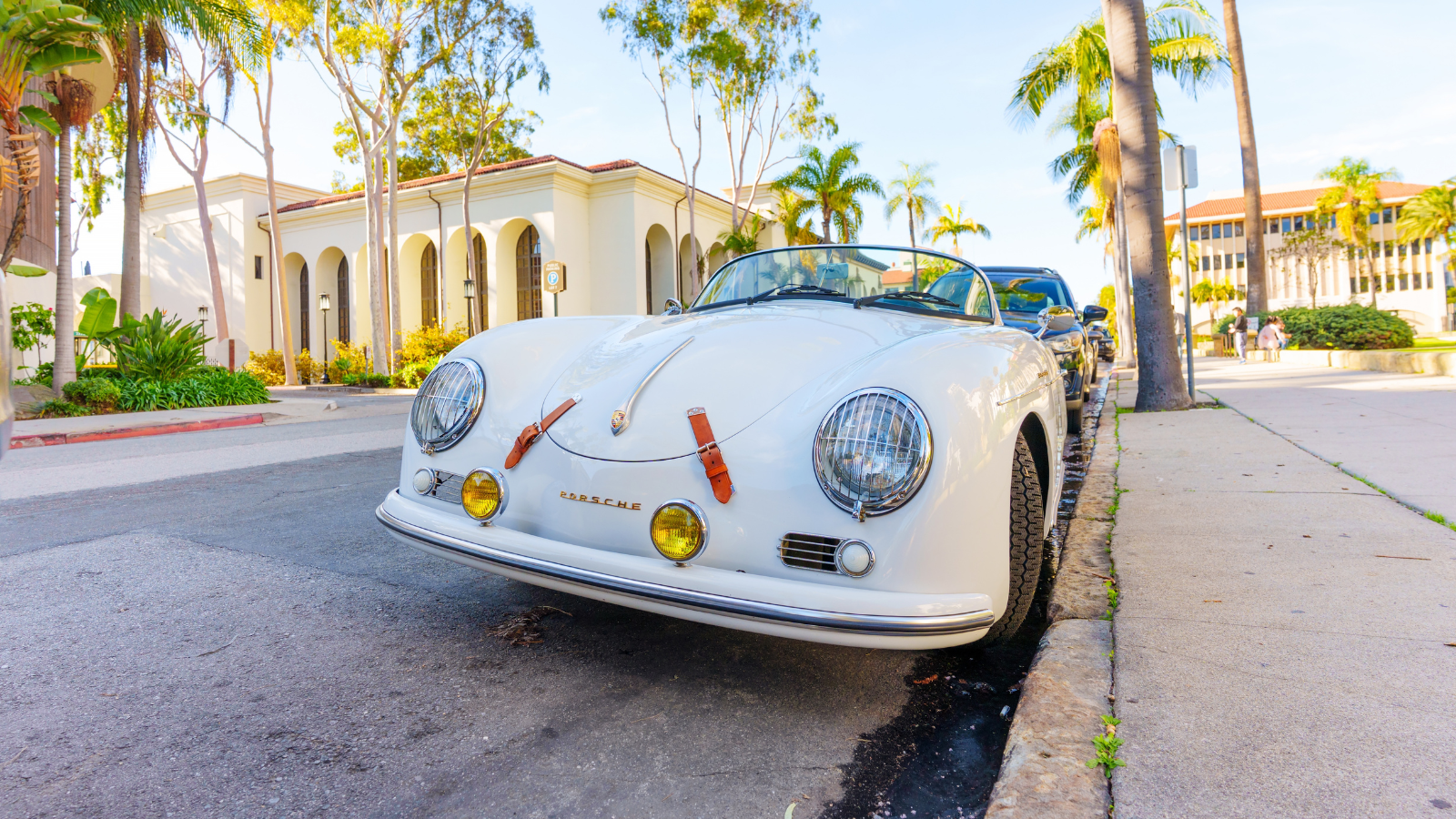
A Fallbrook, California business owner who ran a classic Porsche restoration and resale operation is heading to federal prison after admitting to a scheme involving consigned cars, unpaid sellers, multiple buyers, and title problems that ultimately left dozens of customers seeking restitution.
Andrea Nicole Doherty, 38, was sentenced on July 24, 2026, to 21 months in federal prison after pleading guilty to three counts of wire fraud tied to her former business, CPR Classic. According to the U.S. Attorney’s Office for the Southern District of California, Doherty admitted pocketing more than $827,000 through several classic Porsche transactions.
Doherty’s business, CPR Classic, operated as a California-licensed used vehicle dealership that specialized in the restoration, consignment, and sale of classic Porsches.
At sentencing, U.S. District Judge Andrew G. Schopler ordered her to pay $9,951,763.04 in restitution to 66 people, including dozens of former CPR Classic customers beyond the victims directly tied to the three wire fraud counts.
Long before the federal case reached sentencing, however, customers were already raising concerns. Lawsuits, online reviews, and local media reports described many of the same issues that later appeared in court filings.
Federal Case Involved Multiple Porsche Transactions
Doherty took over CPR Classic after her father’s death in 2021.
Federal prosecutors said one transaction involved a 1973 Porsche 911E Targa that Doherty sold to two different buyers while accepting payment from both without informing or paying the vehicle’s owner. The owner eventually transferred the title after receiving a check from Doherty, but prosecutors said the check later bounced.
Another transaction involved a 1972 Porsche 911S placed on consignment. Prosecutors said a buyer wired Doherty $280,000 in February 2023 and received the car, but the title was never transferred, and the owner was not paid. Months later, Doherty sold the same Porsche to a second buyer for $275,000. Part of that money was then used to pay the original owner, who transferred the title without knowing the vehicle had already been sold.
A third case involved a 1983 Porsche 930 Turbo Slantnose. Doherty admitted selling the consigned vehicle for $130,000 without informing or paying its owner and forging the seller’s signature on title-transfer paperwork.
According to prosecutors, the owner only learned what had happened after the buyer contacted him more than a year later. By that point, the Porsche had already been delivered even though it was still listed as available on CPR Classic’s website.
Customers Were Complaining Long Before Charges Were Filed
By the time federal prosecutors brought charges, complaints against CPR Classic had been piling up for more than a year.
In September 2024, an NBC 7 Responds investigation found dozens of lawsuits accusing the company of failing to pay consignors, failing to deliver vehicles, and leaving buyers without titles. The station calculated that customers alleged more than $11.7 million in losses across San Diego County lawsuits alone.
Among the cases highlighted by the station was a dispute involving a 1960 Porsche 356 Roadster. The owner alleged the vehicle had been left with CPR Classic for restoration and was sold without authorization, while another person reportedly paid $160,000 for the same Porsche but never received either the vehicle or a refund.
Public Google reviews raised similar concerns. Some customers claimed they paid for cars they never received, while others said they consigned vehicles through CPR Classic but never received the proceeds. Multiple reviewers complained about title issues, delayed payments, and repeated assurances that money was on the way.
Federal prosecutors later said the California Department of Motor Vehicles suspended CPR Classic’s dealer license in September 2024, and the business ceased operating shortly afterward.
Online reviews and civil lawsuits are not proof of wrongdoing, and individual complaints can involve disputed facts. Taken together, however, they painted a picture that closely resembled many of the allegations later outlined in federal court.
Lessons for Collector-Car Buyers and Sellers
Collector-car transactions often involve large sums of money and a significant amount of trust, especially when vehicles are being sold on consignment. The CPR Classic case highlights why buyers and sellers should look beyond a business’s reputation and inventory before completing a transaction.
Buyers and sellers can reduce risk by reviewing recent customer feedback, searching court records, verifying dealer licenses, and confirming who actually holds title to a vehicle before money changes hands. For high-dollar purchases, buyers may also want to consider escrow services or other safeguards that prevent funds from being released until the agreed-upon documents and vehicle are delivered.
None of those steps guarantee a transaction will go smoothly, but they can help identify potential problems before a six-figure wire transfer is sent or a valuable collector car is handed over to a third party.
For the 66 people included in the restitution order, those precautions came too late. Whether they will ever recover the nearly $10 million they are collectively owed remains an open question, but the lawsuits, reviews, and complaints that surfaced before the federal case offer a reminder that warning signs often appear long before an arrest or conviction.