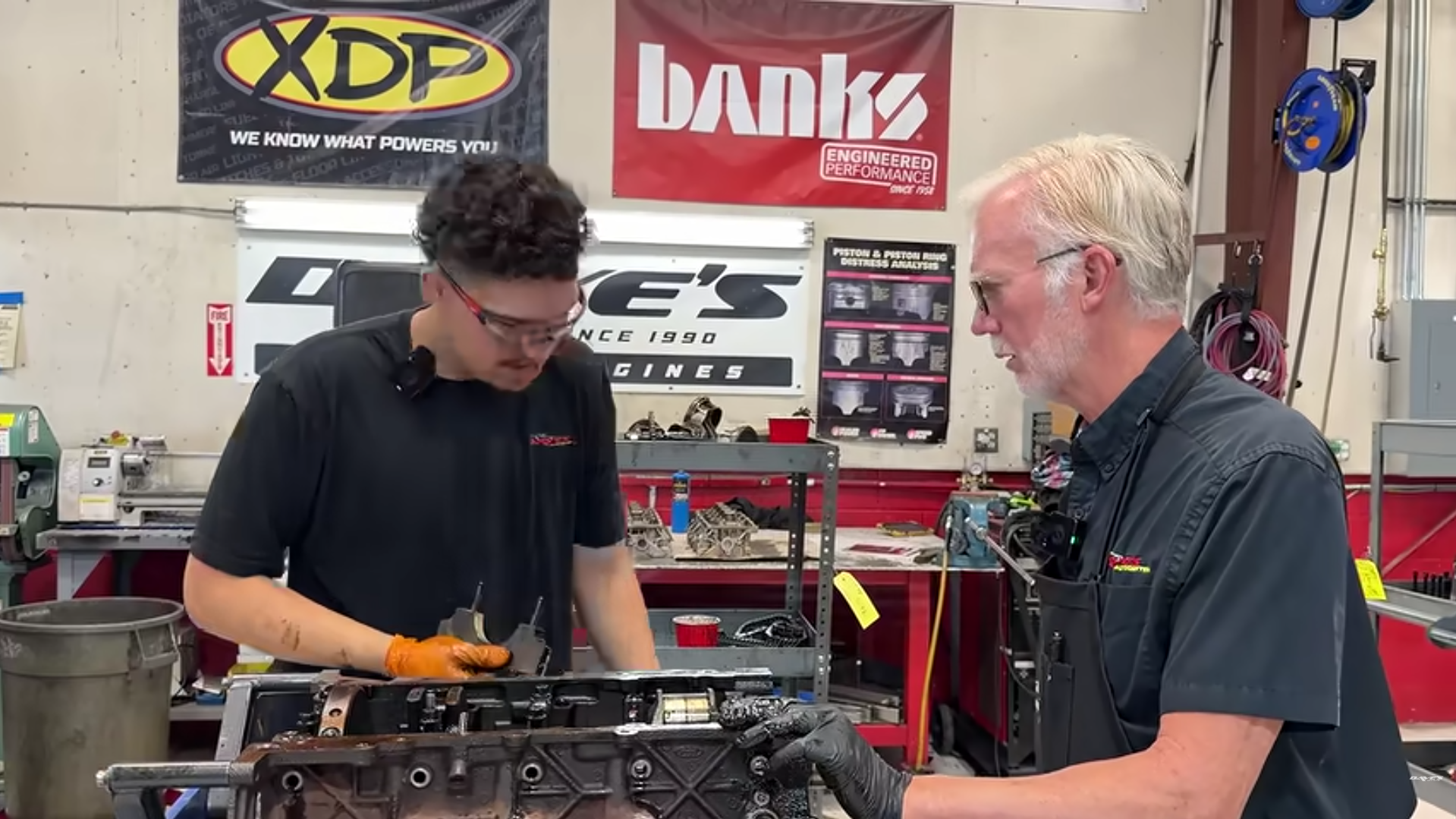
Ford’s 5.4-liter Triton V8 has spent years being treated like a mechanical punchline. Mention the engine around longtime truck owners or technicians, and stories about blown-out spark plugs, rattling timing chains, failed cam phasers, and expensive repairs usually follow.
A recent teardown from Dave’s Auto Center argues that the reputation is only partly deserved. According to Dave, the key is separating the earlier 2-Valve engine from the later 3-Valve version, because they share a name without sharing the same level of complexity.
The shop dismantled a worn 5.4-liter 2-Valve that clearly needed a full rebuild. Even with heavy sludge, scoring, damaged spark plug threads, and years of poor maintenance, the engine’s basic architecture appeared tough enough to save.
Dave’s conclusion was straightforward: the 2-Valve Triton can still be a dependable truck engine when maintained correctly and repaired properly. The 3-Valve version is where oil-pressure problems and variable valve timing hardware created the failures that damaged the entire Triton name.
The 2-Valve Triton Has A Strong Foundation
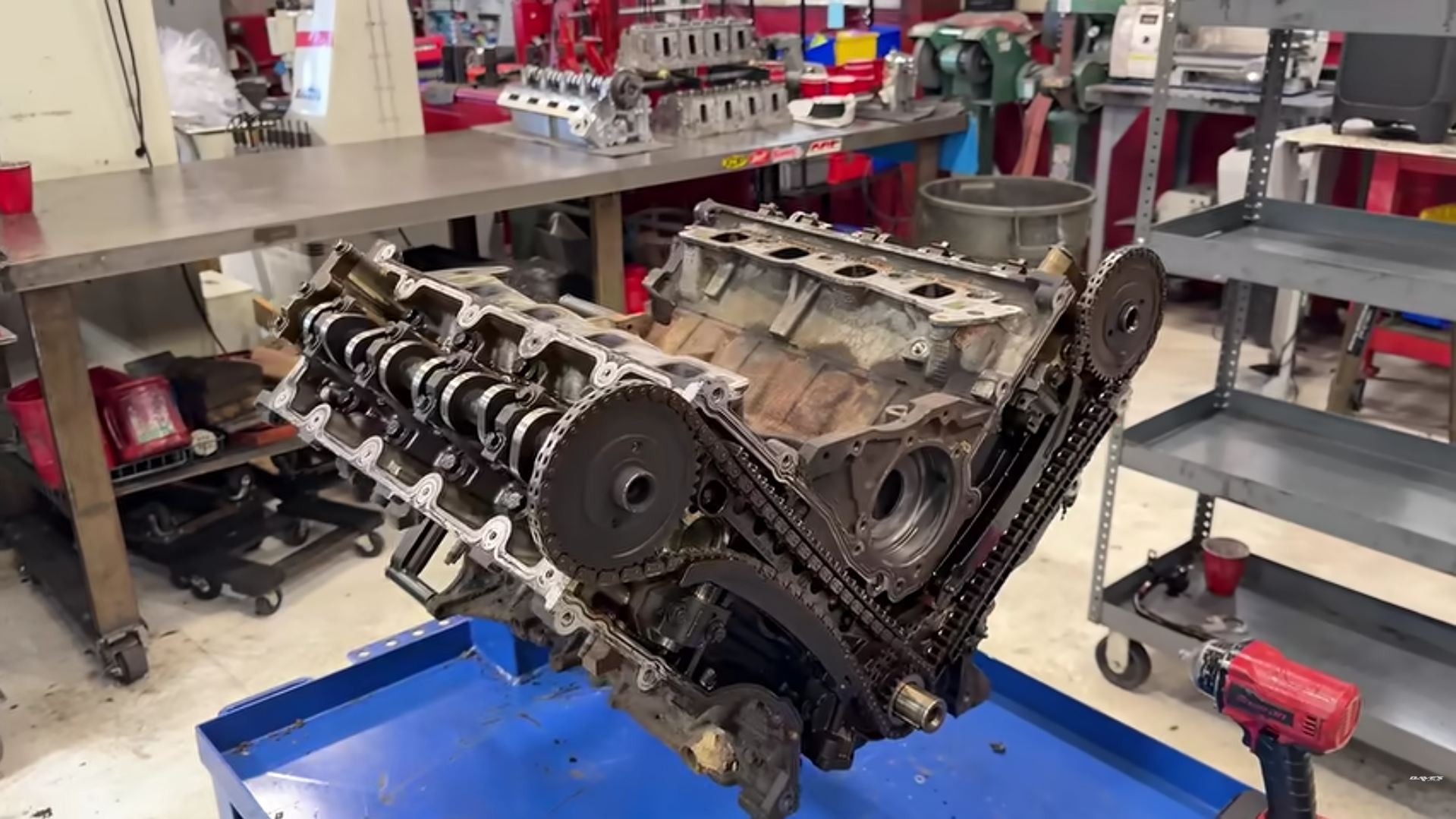
Ford used the 5.4-liter 2-Valve Triton across trucks and SUVs beginning in the late 1990s. Its layout is relatively simple, with one intake valve and one exhaust valve per cylinder, a single overhead camshaft for each bank, and no variable valve timing system.
Dave described the bottom end shared by both major 5.4-liter versions as durable. The block, crankshaft, connecting rods, and pistons generally were not the components responsible for the engine’s worst reputation.
During the teardown, the cylinder walls still showed traces of their original crosshatch pattern despite significant wear. The thrust bearing also remained in reasonable condition, supporting the idea that the engine had worn out gradually rather than suffering one catastrophic internal failure.
The shop expects to rebuild the engine with a machined crankshaft, oversized pistons, corrected cylinder heads, and fresh internal components. Once completed, Dave believes it should return to service as a reliable truck motor.
Neglected Oil Changes Did Serious Damage
The teardown also showed how badly poor maintenance can hurt an otherwise durable engine. Heavy varnish, sludge, and debris appeared throughout the assembly, while several oil-control rings were stuck tightly inside their piston grooves.
Those rings are supposed to move freely while regulating the oil left on the cylinder walls. Hardened deposits had blocked small oil passages in the pistons, reducing lubrication and contributing to visible scuffing on the pistons, bearings, crankshaft, and cylinder walls.
Dave said the engine likely could have lasted longer with more frequent oil changes and better overall care. Its condition appeared to reflect neglect rather than an unavoidable design failure.
That’s something to keep in mind when shopping for an older Ford truck. A well-maintained 2-Valve may be a safer bet than its reputation suggests, while an abused example can still become an expensive rebuilding project.
Spark Plug Threads Remain A Real Weakness
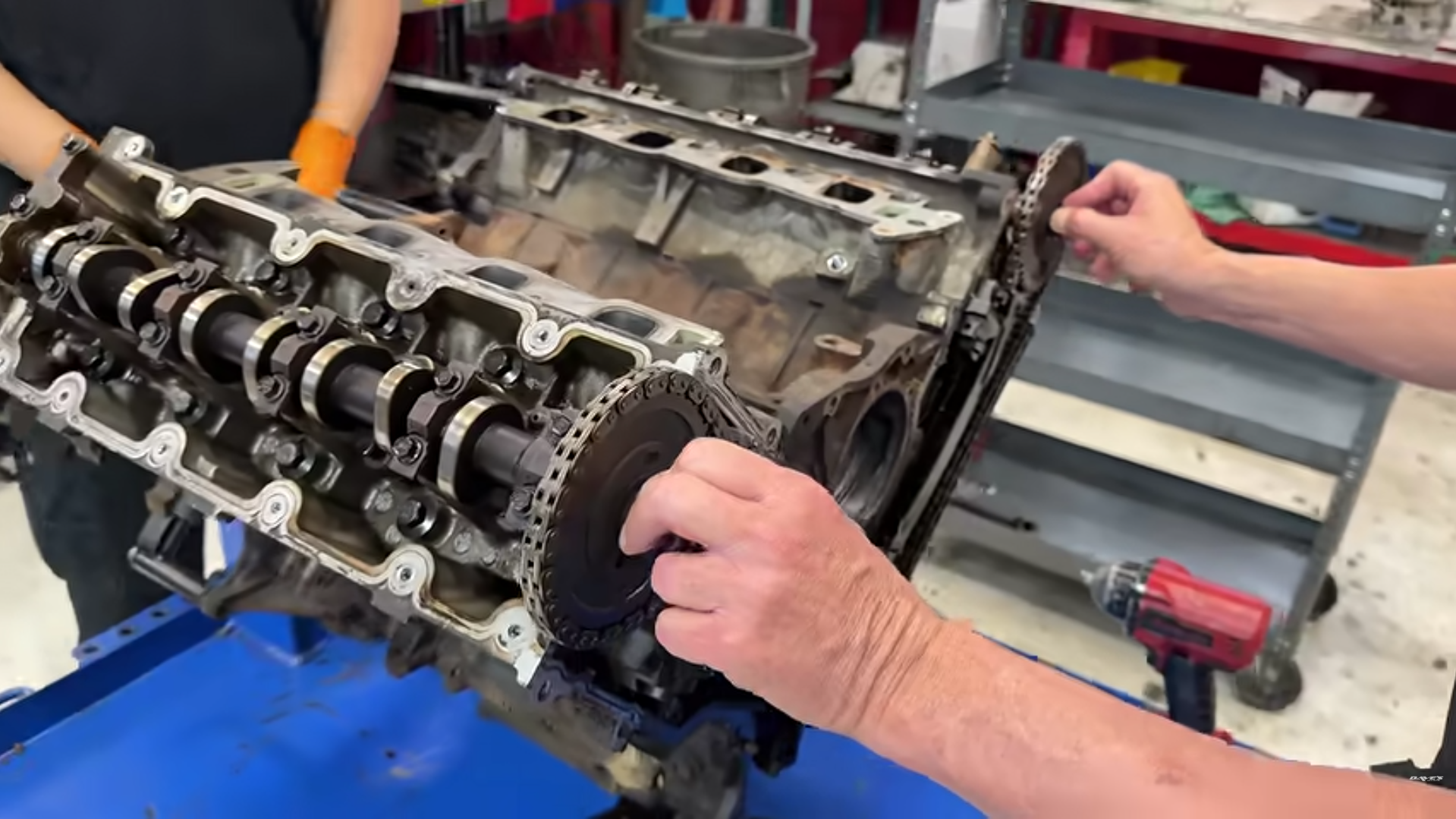
The cylinder heads revealed one of the Triton’s best-known problems. Several spark plug holes had already been repaired with threaded inserts, although Dave said the previous work had not been completed correctly.
Another head showed why these engines became famous for ejecting spark plugs. Some factory holes contained only a few threads at the bottom, leaving very little material to hold the plug securely under combustion pressure.
One side of the engine also appeared to have received prior cylinder-head work while the other had not. Different head gaskets and earlier repairs suggested someone had addressed only part of the problem before returning the engine to service.
Dave’s view was not that the issue should be ignored. Instead, he argued that properly installed full-length inserts can correct the weakness and make the repaired heads dependable again.
The 3-Valve Engine Created Bigger Problems
The later 3-Valve Triton added airflow and variable valve timing, bringing a noticeable increase in output. That extra performance also introduced cam phasers, oil-controlled timing hardware, and a much greater dependence on consistent lubrication at the top of the engine.
Dave identified the factory oil pump as a major concern. He said its rear plate can flex at higher engine speeds, allowing pressure to bleed away before enough oil reaches the camshaft journals and phasers.
As wear develops around the front cam caps, internal clearance increases and oil pressure escapes even faster. New timing chains, sensors, or cam phasers may fail to solve the problem if the cylinder heads are already badly scored.
His recommendation is to inspect the cam caps before replacing parts on a 3-Valve with rattling noises or camshaft-correlation faults. Severe wear may require new cylinder heads, a complete timing set, fresh phasers, and an upgraded oil pump with a rigid steel rear plate.
The Triton Name May Be Too Broad A Target
The teardown does not erase the 5.4-liter Triton’s legitimate faults. Weak spark plug threads, lubrication sensitivity, and the 3-Valve’s timing-system problems can all lead to major repair bills.
It does suggest that the earlier 2-Valve engine deserves a better reputation than it often receives. With clean oil, correctly repaired heads, and attention to known weak points, Dave considers it a solid and rebuildable truck V8 rather than the hopeless design its critics sometimes describe.
Have you owned a Ford truck or SUV powered by the 5.4-liter Triton V8? Let us know in the comments whether your engine proved dependable, which problems you encountered, and whether you would consider buying another 2-Valve or 3-Valve Triton today.