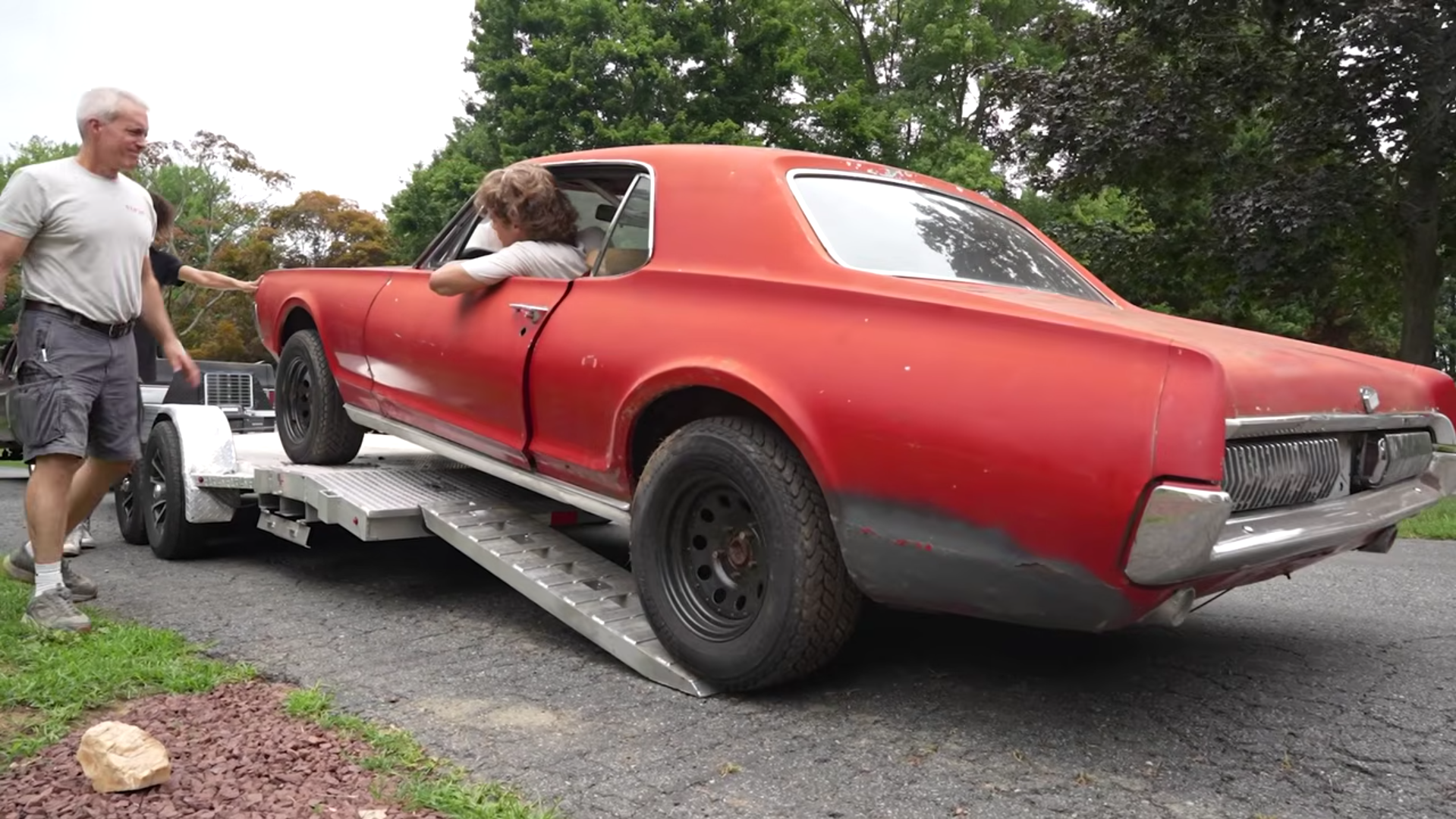
A neglected 1967 Mercury Cougar that had reportedly spent years rotting in the woods has been dragged back into the daylight and made to run again. The car was discovered on Facebook Marketplace and purchased for just $3,500.
The Cougar is a 289-powered, three-speed manual example, making it an appealing foundation despite its rough condition. Its long period of storage had left the fuel system contaminated, the brakes seized, and the body hiding far more rust than initially expected.
Tom’s Refurb took on the rescue with a straightforward goal: get the Mercury running, make it move under its own power, and see whether it could survive a cautious road test. What followed was a mix of mechanical progress, improvised repairs, and several discoveries that made the project significantly more dangerous than it first appeared.
The engine had not run in at least a decade, while the car itself had apparently been out of regular use for much longer. Even so, the old Cougar still had enough life left in it to make the recovery worthwhile.
A Cheap Classic With Plenty of Potential
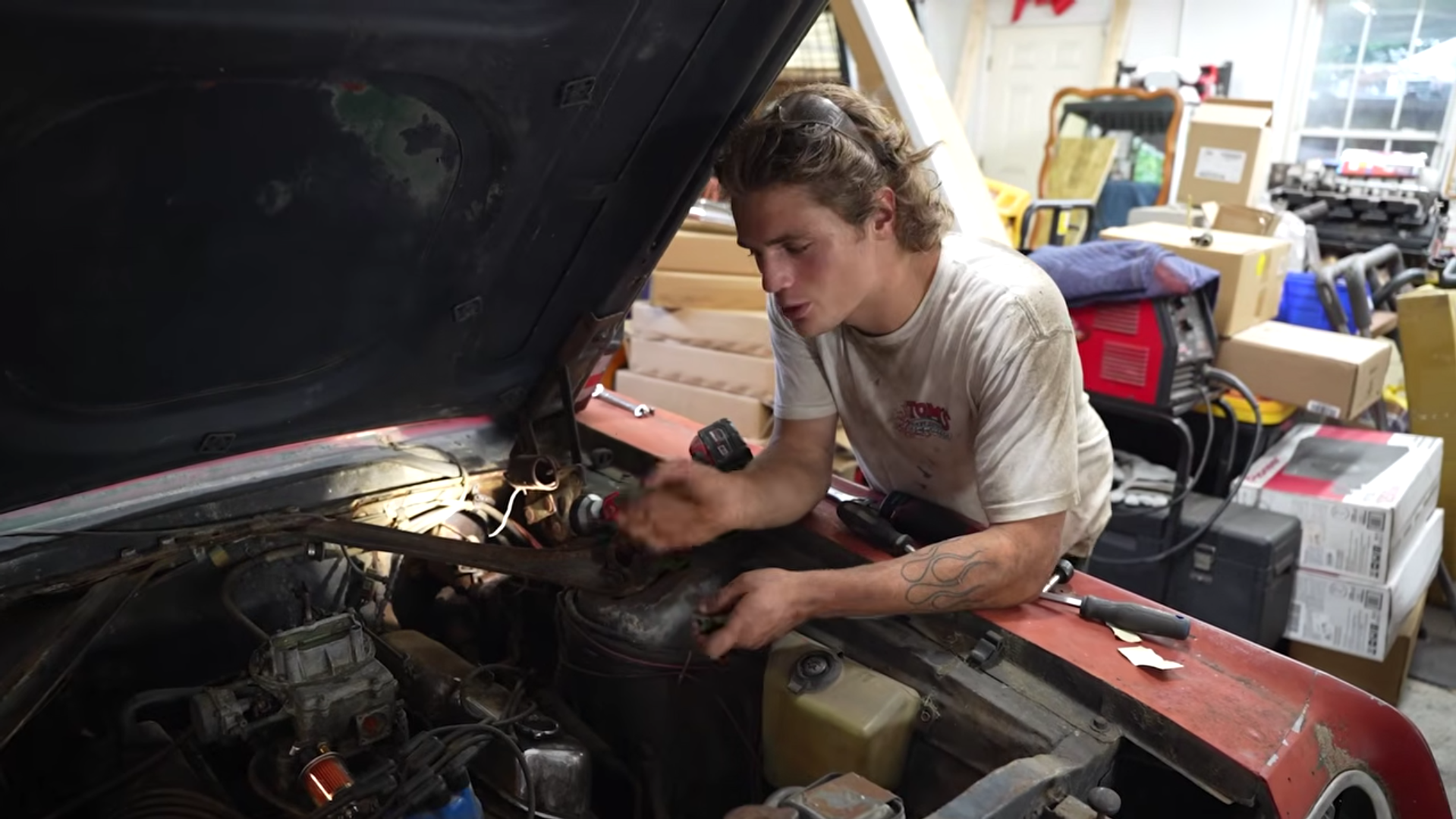
The car initially appeared to be a solid candidate for a low-budget hot rod build. Its body wore honest patina, the interior was surprisingly complete, and the small-block Ford V8 still turned over by hand.
A fresh battery, cleaned ignition points, and a little fuel were enough to prove that the engine wanted to run. The early noises that raised concerns were eventually traced to what appeared to be a major exhaust leak rather than catastrophic internal damage.
The original fuel tank was full of rust and debris, so it was replaced with another tank from the shop’s parts supply. Several brittle fuel hoses were also changed before fresh gasoline could successfully reach the engine.
Fuel and Brake Problems Quickly Surface
The original two-barrel carburetor briefly worked before flooding, with a failed accelerator-pump diaphragm ending its comeback. A low-cost replacement carburetor was installed the following day, allowing the 289 V8 to start easily and idle smoothly.
The engine ran well, although it produced a substantial amount of oil smoke. Despite that issue, the alternator charged properly, and the clutch appeared to function after years of inactivity.
The brakes proved far more troublesome, as the master cylinder was completely frozen, and replacing it revealed a ruptured rear brake line along with seized front wheel cylinders and badly deteriorated hoses.
New front wheel cylinders, brake hoses, and fabricated hard lines restored partial braking capability. The rear circuit was blocked off rather than fully repaired, leaving the Cougar with front brakes only for its brief test drive.
Severe Rust Changes the Plan
Once the front wheels were removed, the true condition of the structure became clear. The front frame rail near the steering box was heavily corroded, with portions rusted through and sections of the torque boxes and floor pan also badly compromised.
The damage was serious enough that the car appeared to be flexing when lifted. Its uneven ride height after being placed back on the ground suggested the weakened structure may have shifted during the repair process.
A jack also damaged the already questionable radiator, forcing another replacement before the Cougar could be driven for more than a few moments. A budget aluminum radiator was installed and, surprisingly, fit with the original mechanical fan still in place.
The interior received a basic cleanup, including the removal of mouse debris and repairs to the glovebox and sagging headliner. The rare factory center console was also removed for use in a healthier Cougar in exchange for a set of performance cylinder heads.
The Cougar Returns to the Road
With the engine running, the cooling system repaired, and the front brakes operational, the Mercury finally moved under its own power. The test drive was deliberately kept slow because of its poor alignment, weak structure, and limited stopping ability.
Even with those concerns, the three-speed manual shifted cleanly, and the V8 continued to run without overheating. The car completed several miles, reached a gas station, and returned without suffering a major mechanical failure.
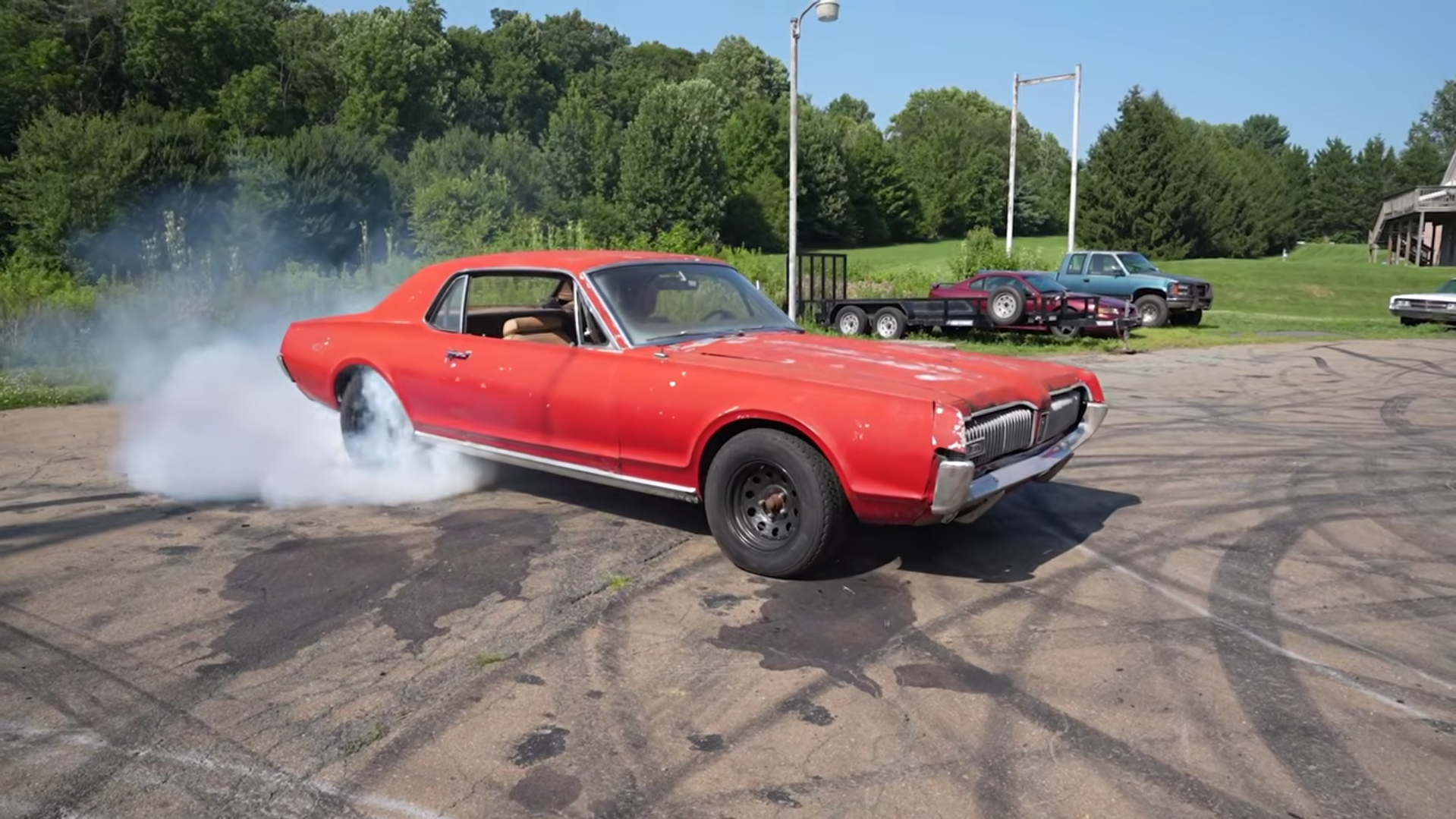
The Cougar was then subjected to a few informal performance tests, including a hard shift, a panic stop, a burnout, and a few donuts. It managed each one with varying degrees of success, although the compromised steering-box mounting ultimately brought the experiment to an end.
The revival did not turn the 1967 Cougar into a safe or fully restored classic. It did, however, prove that a car abandoned for decades could still fire up, drive, shift, and lay down some tire smoke before its structural problems demanded retirement.