Winning the lottery is one of those dreams almost everyone has entertained at some point. Even if you don’t play, chances are you’ve imagined the question: “If I won the lottery, what would I buy?”
Here at Guessing Headlights, we’ve had plenty of conversations that start exactly that way. The dream garage gets bigger, the budget disappears, and suddenly anything seems possible.
For former Circle K store manager Robert Gawlitza, that dream seemed to come true when he purchased a lottery ticket worth $12.8 million.
Instead of figuring out what to spend the money on, however, Gawlitza found himself in the middle of a legal nightmare. While he maintains he lawfully purchased the winning ticket under Circle K’s employee policies, the convenience store chain has asked an Arizona court to determine who legally owns the jackpot.
A Customer Left $25 Worth of Lottery Tickets Behind
The dispute began at a Circle K near 56th Street and Bell Road in Phoenix on Nov. 24, 2025.
Court filings reviewed by Guessing Headlights state that a customer asked store clerk Marline Ybarra to generate $85 worth of tickets for that evening’s Arizona Lottery game, The Pick drawing. The customer paid for and accepted only $60 worth of tickets, leaving another $25 in tickets behind.
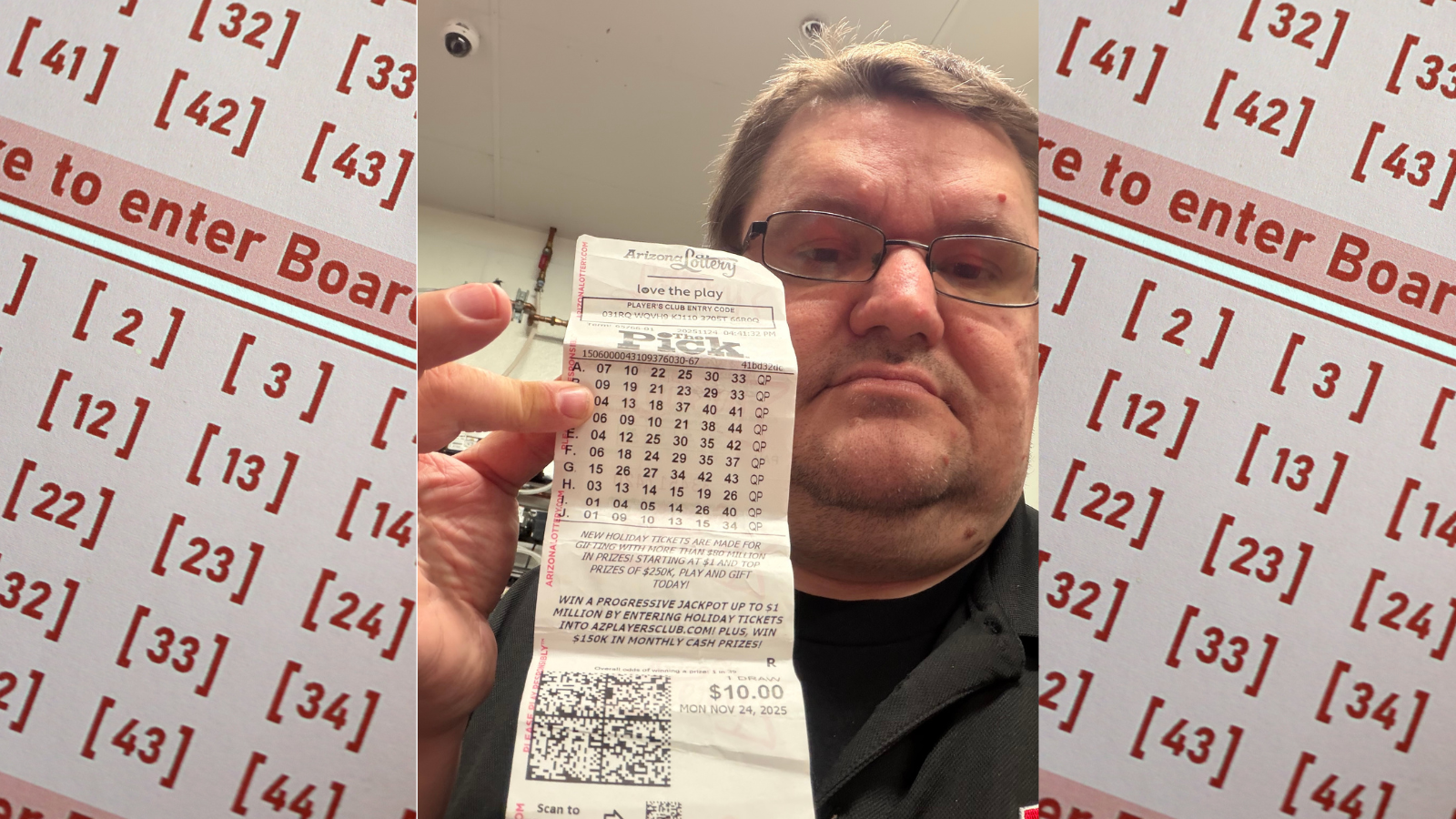
The additional tickets remained unsold at the store overnight. One of them matched all six winning numbers: 3, 13, 14, 15, 19, and 26.
The prize was worth $12.8 million and tied for the fourth-largest jackpot in The Pick’s history, Arizona’s Family reported shortly after the drawing.
By the following morning, Gawlitza knew that the winning ticket had been printed at his store and discovered that the unsold tickets from the previous night were still there.
That is when a dream scenario became considerably more complicated.
Manager Says Circle K Required Employees to Buy Unsold Tickets
The problem wasn’t whether the ticket won. Everyone agrees it did. Instead, the dispute centers on who legally owns it and whether Circle K’s policies allowed Gawlitza to purchase the winning ticket in the first place.
While Gawlitza says he lawfully purchased the winning ticket after clocking out, Circle K later asked an Arizona court to determine ownership of the $12.8 million jackpot. Gawlitza and fellow employee Marline Ybarra, meanwhile, argue the purchase followed both the company’s written employee handbook and a longstanding workplace practice.
Gawlitza and Ybarra’s recently filed Answer, Counterclaims, and Cross-Claims describe what they say was a longstanding Circle K practice involving accidentally generated lottery tickets.
Their filing alleges that when at least $20 worth of tickets were accidentally printed and remained unsold, employees were required to purchase enough of them with their own money to bring the remaining value below $20.
The most expensive ticket was supposed to be purchased first. If the employee responsible for printing the tickets could not afford them, the store manager allegedly covered the cost of the purchase.
Gawlitza’s attorneys say that is why he bought the $10 winning ticket.
The filing states that he clocked out, changed out of his Circle K uniform, had another employee ring up the sale, paid the full $10 price, and received a receipt.
Gawlitza and Ybarra also say they had agreed before the purchase to split any prize equally. The court filing asks the judge to declare them joint owners of the ticket and its proceeds.
Circle K’s Written Guidebook Allowed Off-Duty Purchases
Although the alleged requirement to purchase accidentally printed tickets was unwritten, Circle K’s August 2024 Employee Guidebook contains a written policy governing employees’ lottery purchases.
“Employees are prohibited from purchasing or playing lottery/lotto games or purchasing money orders while on duty,” the guidebook states. “These purchases can be made before or after the purchasing employee’s shift while off duty and must be rung up by another employee except where prohibited by law.”
That language is central to Gawlitza’s position because his attorneys argue he followed the written procedure exactly: he clocked out, removed his uniform, and had another employee complete the transaction.
His legal team also submitted six sworn affidavits from current and former Circle K employees and managers who said the unwritten practice of making employees pay for accidentally printed tickets was well known and repeatedly enforced.
One former store manager said he once purchased $110 worth of unsold tickets to prevent another employee from being written up. Other witnesses said employees who bought tickets under the policy were allowed to keep any prizes they won.
One Circle K employee recalled winning $9 from a ticket purchased under the practice and keeping the money without the company objecting.
The witnesses also said they were never told that Circle K would retain an ownership interest if an employee purchased a ticket known or suspected to be a winner.
Text Messages Could Become Important Evidence
Gawlitza’s filing includes text messages with his district manager, Dawn Crosby, that his attorneys say further support his account.
In the exchange, Gawlitza asked whether an employee could clock out, remove their work shirt, purchase a lottery ticket, and then clock back in.
Crosby allegedly replied, “Yes.”
Gawlitza then revealed that the ticket he had purchased was the $12.8 million jackpot winner. The district manager responded that the company had never encountered a situation like it and would need to consult higher management.
Gawlitza later turned the ticket over to Circle K while the ownership question was being reviewed. Circle K has retained possession of it during the dispute.
Circle K Manager Was Fired After Nearly 20 Years
The case is not limited to ownership of the jackpot.
Gawlitza’s counterclaims state that Circle K terminated him on Jan. 31, 2026, after nearly two decades with the company. Circle K allegedly told him he violated store policy because it considered him to still be working when he purchased the ticket.
His attorneys dispute that explanation and accuse Circle K of applying its policies inconsistently after discovering the prize’s size.
Gawlitza is seeking damages over his termination in addition to a ruling that he and Ybarra own the ticket. The filing also requests the return of the ticket, attorneys’ fees, and punitive damages on some of the claims.
Those remain allegations that Circle K will have an opportunity to challenge in court.
Attorney Says Circle K Completed a Valid Sale
Joshua Kolsrud, an attorney representing Gawlitza and Ybarra, provided Guessing Headlights with the court filings and a photograph of Gawlitza holding the winning ticket.
“Our position is that Circle K lawfully sold the winning ticket to Mr. Gawlitza pursuant to its own written employee policies and longstanding store practices,” Kolsrud said in a statement to Guessing Headlights.
“We believe the evidence will show that the sale was valid, ownership transferred upon the completed purchase, and that Circle K asserted an ownership claim only after learning the ticket was the jackpot winner.”
Kolsrud emphasized that the court will ultimately decide ownership based on the evidence and applicable law.
Circle K Says It Wants Guidance From the Court
Circle K filed the lawsuit in Maricopa County Superior Court in February, asking a judge to determine who owns the ticket and is entitled to collect the prize.
The company has publicly characterized the case as a request for judicial guidance rather than a lawsuit aimed at one particular person.
“It is not accurate to characterize this as a lawsuit against any specific party,” a Circle K spokesperson previously told KTAR in a statement reported by ABC15 Arizona.
Circle K said it was “committed to doing the right thing.”
The Arizona Lottery is reportedly holding the $12.8 million prize in an interest-bearing account while the case proceeds. The court has also suspended the normal prize-claim deadline, so the jackpot will not expire before the ownership dispute is resolved.
For now, the winning numbers are settled, but the identity of the winner is not. What started as the kind of lottery dream people debate with friends has become a legal fight over company policy, employee practices, and whether paying $10 for a ticket was enough to transfer ownership of a $12.8 million fortune.
If he bought the ticket only after learning it was a winner, that would seem to be like insider trading. He knew the ticket was from his store and sounds like he went through the ones left behind and picked out the winner for himself. Unjust enrichment in my opinion.